
TL;DR

Get kitchen gear delivered free with Prime
- Fast, free delivery on millions of items
- Prime Video, Amazon Music and more included
- Member-only deals all year
Most home cooks only need three or four well-chosen knives: a chef’s knife, paring knife, bread knife, and possibly a utility knife. Proper care, sharpening, and understanding their roles make these tools last a lifetime, especially when hand-maintained off-grid.
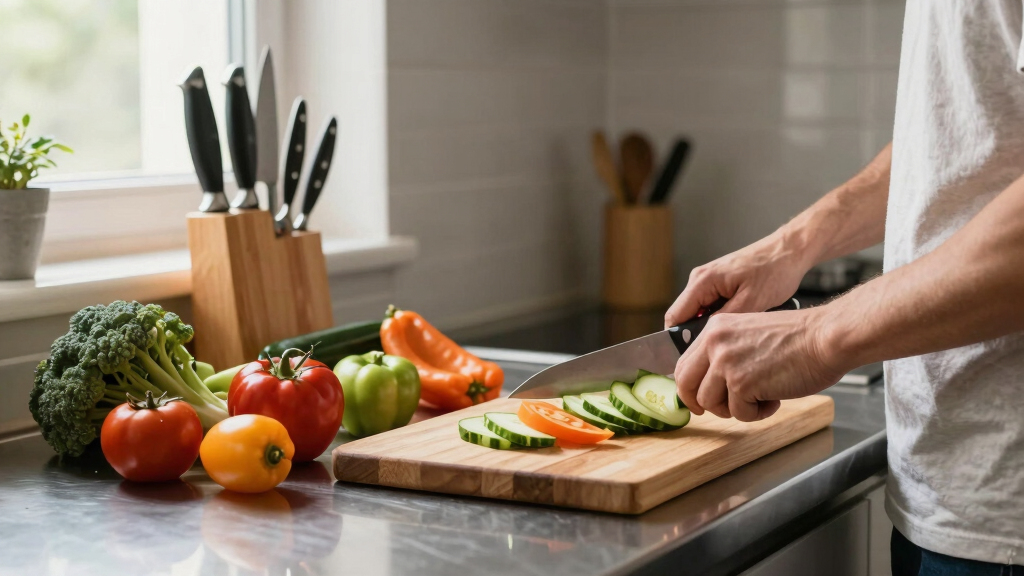
Imagine slicing a loaf of crusty bread, peeling a stubborn root vegetable, or dicing vegetables for a stew—all with tools you trust. Your knives are the backbone of your kitchen, especially when power tools or fancy gadgets aren’t an option. Choosing just a handful of durable, versatile blades can transform your cooking experience from frustrating to satisfying.
This guide cuts through the hype to focus on what you truly need. No fluff, no overcomplication—just simple, effective knives and the know-how to keep them sharp, safe, and ready for action. Whether you’re off-grid, off the grid enough to avoid electricity, or just want tools that last a lifetime, you’ll find practical advice here.
Start with a high-quality chef’s knife, a paring knife, and a bread knife—they cover 90% of kitchen tasks.
Choose knives made from durable, easy-to-sharpen steels, and prioritize comfort and balance for off-grid use.
Regular honing with a steel rod keeps your knives sharp daily; full sharpening every 6-12 months restores their edge.
Serrated blades excel at bread and soft-skinned produce, but a plain edge offers more control for most other tasks.
Invest in skill, not gadgets—sharp knives and proper technique make all the difference in manual kitchens.
The 3 Knives That Cover 90% of Your Cooking Needs
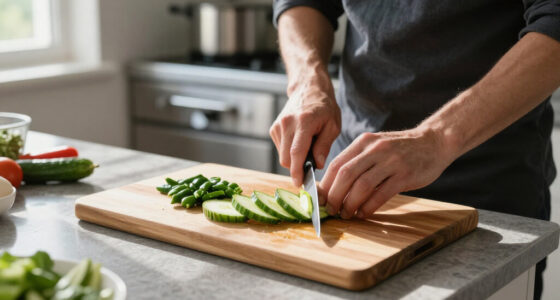
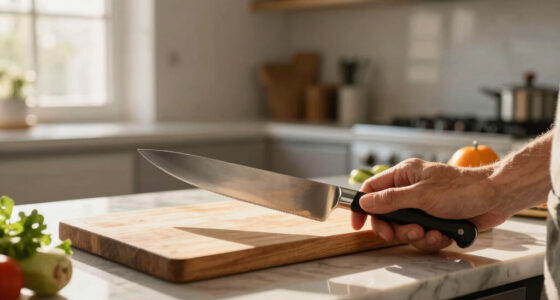
The core of a practical knife set is surprisingly small. Focus on these three, and you’ll handle most tasks with confidence. First up is the chef’s knife. It’s the workhorse—big enough for chopping vegetables, slicing meat, and mincing herbs. Think of it as your all-purpose partner, usually 8-10 inches long, with a curved blade that lets you rock it through ingredients.
The second is the paring knife. Small, nimble, and perfect for detailed work—peeling, trimming, or deveining. Its 3-4 inch blade gives you control over delicate tasks that a larger knife would turn clumsy.
Finally, the bread knife with its serrated edge. It slices through crusty loaves without squishing the soft inside. If you bake your own bread or often buy artisan loaves, this blade becomes a daily essential.
In real-world use, these three knives can handle most chores—saving space, money, and clutter. When you master their care and sharpening, they last decades.
As an affiliate, we earn on qualifying purchases.
What Makes a Knife Good for Off-Grid or Manual Use?
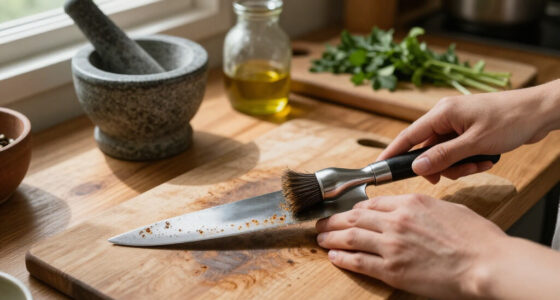
Knives suited for off-grid kitchens must be tough, simple, and easy to maintain. A high-carbon stainless steel blade resists rust, holds an edge, and is durable enough for daily use. This steel type balances ease of sharpening with longevity, which is crucial when you lack access to specialized equipment. The tradeoff is that high-carbon steels can rust if not properly dried, so regular cleaning and drying are essential—this emphasizes the importance of good maintenance routines in off-grid settings.
Handle comfort matters. Look for ergonomic designs that fit your grip—especially if you cook for hours. Handles made from natural materials like wood or micarta are durable and get better with age, unlike cheap plastic that cracks or becomes sticky. The handle’s material impacts not just comfort but also how well it withstands the elements and regular use over decades.
Balance and weight are your friends. A well-balanced knife reduces fatigue, especially when chopping firewood-sized quantities of vegetables or meat. And a full tang—where the blade extends into the handle—means more strength and control. This design not only enhances durability but also ensures the knife can withstand the rigors of a manual kitchen, where tools are often subjected to more force and less frequent sharpening.
Regular honing with a steel rod keeps the edge sharp. When it’s time for a real sharpen, use a whetstone or a portable sharpener—no power needed. Developing a routine for honing and sharpening is vital, as it prolongs the life of your blades and ensures consistent performance, which is especially critical when you can’t replace tools easily.
As an affiliate, we earn on qualifying purchases.
How to Pick Your Perfect Workhorse Knife
- Determine your typical tasks: chopping, peeling, slicing bread, or detailed work?
- Choose a blade length that feels comfortable—8 inches for general, 3-4 inches for detail.
- Test handle comfort. Grip it, twist it, see if it feels natural.
- Consider material and construction—stainless, high-carbon, or ceramic; full tang or not.
- Decide on maintenance ease: Can you sharpen it with your available tools?
For example, if you often process root vegetables in a root cellar, a sturdy 8-inch chef’s knife with a comfortable handle and a manageable weight will make prep faster and safer. The right choice depends on balancing comfort, task-specific design, and ease of maintenance, ensuring your knife remains reliable over years of off-grid use.
As an affiliate, we earn on qualifying purchases.
Serrated vs. Plain Edge: Which Is Better for Your Bread and More?
| Type | Strengths | Best For |
|---|---|---|
| Serrated | Cuts through crusts without crushing, stays sharp longer | Bread, tomatoes, soft fruits |
| Plain | Precise, easier to sharpen, versatile | Meat, vegetables, cheese |
If you bake bread regularly or deal with crusty loaves, a serrated bread knife is a must. Its serrations grip and saw through tough crusts while minimizing damage to the soft interior, which is crucial for maintaining the bread’s texture. Conversely, a plain-edged knife offers cleaner cuts and easier sharpening, making it more suitable for tasks requiring precision, such as slicing cooked meats or delicate produce. Understanding these distinctions helps you select the right tool—choosing a serrated blade for bread and softer foods, and a plain edge for general and finer slicing tasks, ensuring efficiency and quality in your manual kitchen.
manual kitchen knife sharpening kit
As an affiliate, we earn on qualifying purchases.
As an affiliate, we earn on qualifying purchases.
Keeping Your Knives Sharp Without Power Tools
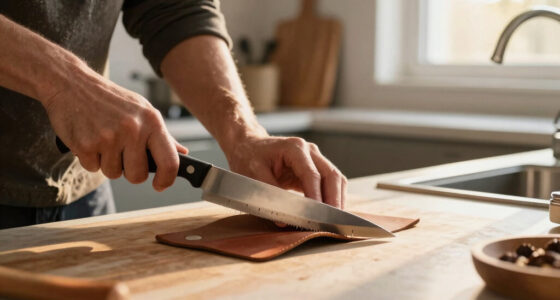
In a manual or off-grid kitchen, sharpening is a skill you can’t skip. Use a whetstone for the best results—aim for an angle of about 15° for Japanese-style blades or 20° for Western. Wet the stone, hold the knife at the correct angle, and draw it across with gentle pressure. Repeat on both sides until you get a clean, sharp edge. The deep understanding of angles and pressure ensures you don’t damage the blade or create an uneven edge, which could compromise safety and cutting efficiency. Practicing this technique not only keeps your knives performing optimally but also deepens your connection to your tools, turning maintenance into a mindful ritual.
If you prefer a quicker fix, a manual sharpening rod can restore a dull edge fast. Honing regularly keeps the edge aligned and sharp, which means less frequent full sharpening. Think of honing as a daily tune-up, while sharpening is a deep service. Developing consistency in honing and sharpening routines ensures your knives remain effective, reducing the need for costly replacements and maintaining safety during use.
Practice makes perfect—your knives will thank you with years of reliable service, especially when you understand the nuances of manual sharpening techniques suited for off-grid living.
The One Knife You Might Not Need (But Love Anyway)
Many aspiring cooks think they need a specialized fillet or boning knife. While handy for fish and meat prep, it’s often unnecessary in a simple, manual kitchen. If you regularly process large cuts of meat or fish, then yes, go for it. Otherwise, a flexible paring knife or a small chef’s knife can handle most tasks. The tradeoff is that a specialized fillet or boning knife often requires more delicate handling and precise sharpening, which may not be practical in an off-grid setting where resources are limited. Prioritizing versatile, durable knives that can tackle multiple tasks with ease simplifies your toolkit and reduces clutter. Think of this as a balance between specialization and practicality—opt for tools that serve multiple purposes and can be maintained easily over decades, ensuring your kitchen remains efficient and reliable without unnecessary extras.
Frequently Asked Questions
How do I know if a knife is good quality?
Look for high-carbon stainless steel, a full tang, and an ergonomic handle. A well-balanced knife with a sharp, durable edge indicates good craftsmanship. Testing the handle in your hand and feeling the balance helps determine quality before buying.How often should I replace my knives?
With proper care, a good knife can last 50+ years. Signs you need a replacement include persistent dullness despite sharpening, cracks in the handle, or difficulty controlling cuts. Regular honing extends lifespan greatly.Can I sharpen my knives without electricity?
Absolutely. A whetstone or sharpening rod is perfect for manual sharpening. Practice the proper angle and technique—it’s a skill that improves quickly and keeps your knives cutting like new.What’s the best way to store my knives?
Use a magnetic strip, a knife block with slots, or a protective sheath. Keep knives dry and avoid loose drawers to prevent dulling and accidental cuts.Are Japanese knives really better than Western ones?
Japanese knives are typically sharper, thinner, and lighter, suited for precision work. Western knives tend to be thicker, heavier, and more robust, ideal for heavy-duty tasks. The best choice depends on your style and needs.Conclusion
Your knives are your most trusted tools in a manual kitchen. Pick a few versatile, durable blades and learn to care for them—your cooking will become more satisfying and reliable. When you master sharpening and maintenance, these tools become lifelong companions, ready to serve through seasons of preservation, firewood chopping, and off-grid feasts.
Imagine a quiet morning, a sharp knife in hand, slicing through vegetables with ease—no power needed. That’s the beauty of a well-chosen, well-loved knife set. Keep them sharp, handle them with respect, and they’ll serve you for decades to come.
Columbus Day / Indigenous Peoples' Day Picks
long weekend sales
As an affiliate, we earn on qualifying purchases.