
TL;DR

Get kitchen gear delivered free with Prime
- Fast, free delivery on millions of items
- Prime Video, Amazon Music and more included
- Member-only deals all year
Caring for a Japanese kitchen knife means regular cleaning, proper storage, honing, and sharpening with a whetstone. Good maintenance extends its sharpness and prevents damage, ensuring it stays a trusted tool for decades.
Regular honing with a whetstone maintains your knife’s sharpness without removing too much steel.
Always dry and oil your high-carbon steel blades immediately after cleaning to prevent rust.
Use a water-soaked whetstone and a consistent 15-20 degree angle for effective sharpening.
Store your knife in a magnetic strip or sheath to protect the blade and keep it ready for use.
Stay updated with modern coatings and tools that extend your knife’s lifespan and ease maintenance.
How to Keep Your Japanese Knife Sharp Without Harming It
Japanese knives are designed for sharpness, but they need regular upkeep to stay that way. The best way? Honing frequently to realign the edge, and sharpening less often to reshape it.
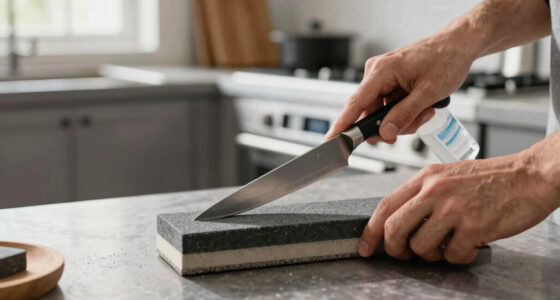
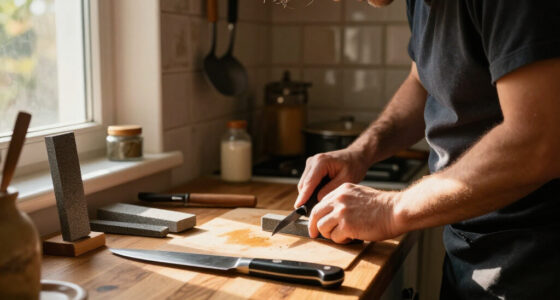
Use a whetstone with water to sharpen. The trick is maintaining a 15-20 degree angle—a slight tilt that preserves the blade’s delicate edge. Every few months, give it a thorough sharpening, then hone weekly. This keeps the edge aligned without removing too much steel, which is the key to longevity.
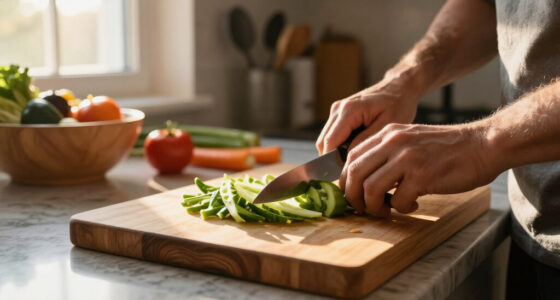
Imagine slicing a ripe tomato with a well-honed knife—gliding through with minimal pressure, every slice perfect. That’s the result of consistent honing. Think of honing as a quick tune-up, and sharpening as a full-service overhaul.
Japanese kitchen knife sharpening whetstone
As an affiliate, we earn on qualifying purchases.
As an affiliate, we earn on qualifying purchases.
The Best Way to Clean and Store Your Knife for Long Life
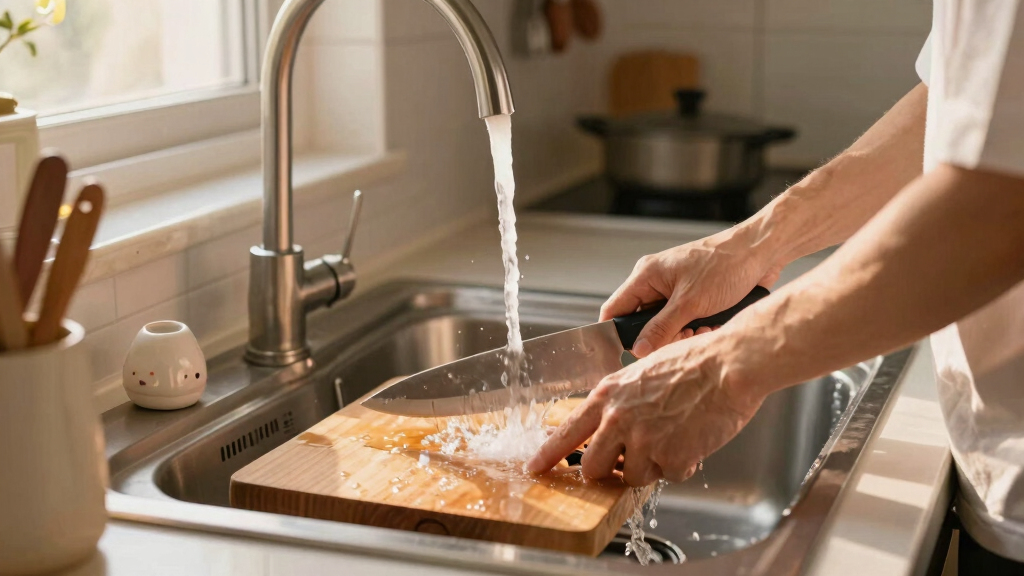
Cleaning your Japanese knife right after use is simple but vital. Rinse it with warm water and a drop of mild dish soap—never soak or put it in the dishwasher. The heat and harsh detergents can weaken the steel and damage the handle.
Dry it thoroughly with a soft cloth—any lingering moisture invites rust. For high-carbon steel blades, a light coat of camellia oil or mineral oil keeps rust at bay.
Store your knife in a magnetic strip, knife block, or a protective sheath. Avoid loose drawers, which can nick or dull the edge. Picture sliding your knife in and out of a dedicated slot—no accidental bumps, no dulling.
Proper cleaning and storage aren’t just about appearance—they directly impact the knife’s lifespan. Moisture and improper storage are the main culprits behind rust and dulling. Using the right methods creates a barrier against these issues, ensuring your knife remains sharp and rust-free for years. The tradeoff? Slight extra effort after each use, but the payoff is a blade that performs like new every time, avoiding costly replacements or professional refurbishing.
As an affiliate, we earn on qualifying purchases.
Sharpening Like a Pro — Step-by-Step with a Whetstone
- Soak your whetstone in water for 10-15 minutes until bubbles stop. This prevents overheating and keeps the stone effective.
- Set the stone on a damp cloth or non-slip base. Hold your knife at a 15-20 degree angle against the stone.
- Push the blade across the stone in a sweeping motion, covering the entire edge. Repeat 10-15 times per side.
- Flip the knife and repeat on the other side, maintaining the angle.
- Finish by honing the edge with a steel or a finer stone to polish the edge.
Remember, consistency beats force. A gentle, steady hand produces a sharper, more durable edge. Think of it as sharpening a pencil—slow and controlled wins the race. Over time, mastering this technique not only maintains your blade’s sharpness but also minimizes the risk of uneven wear or accidental damage, which can happen with hurried or forceful sharpening. The tradeoff? Investing time in proper technique yields a longer-lasting, more reliable edge that performs beautifully in daily use.
magnetic knife strip for Japanese knives
As an affiliate, we earn on qualifying purchases.
As an affiliate, we earn on qualifying purchases.
Compare Common Storage Options and What They Mean for Your Knife
| Storage Method | Pros | Cons |
|---|---|---|
| Magnetic strip | Easy access, air circulation, reduces dulling | Requires wall space, can nick blade if not careful |
| Knife block | Protects blade, keeps knives organized | Can dull blades if knives rub against each other, takes up counter space |
| Protective sheath | Great for storage in drawers, travel | Requires extra step to remove and insert |
Choosing the right storage depends on your kitchen setup. For daily use, a magnetic strip keeps your blade sharp and ready. If space allows, a wooden knife block offers safety and style. For off-grid or travel, a sheath works best—just remember to dry and oil the blade before storage. The key is to balance convenience with blade preservation. Proper storage minimizes accidental nicks, dulling, and exposure to moisture, which are major threats to your knife’s longevity. The tradeoff? Slightly more effort in choosing and maintaining your storage solution but significant benefits in maintaining edge sharpness and rust resistance over time.
As an affiliate, we earn on qualifying purchases.
Latest Innovations That Make Caring for Japanese Knives Easier
New coatings and materials are changing the game. Ceramic coatings or titanium overlays add durability and reduce sticking, making cleaning easier. Many modern knives now come with rust-resistant finishes, especially stainless steel varieties.
Sharpening technology has evolved with electric Japanese knife sharpeners designed specifically for delicate edges. They keep your knife sharp without the guesswork, offering consistent results. These innovations reduce the risk of damaging the delicate edge during maintenance and make routine care more accessible for everyday cooks.
Natural oils, like camellia oil, are now popular among enthusiasts for rust prevention—safe, easy, and effective. Plus, online tutorials and local workshops help you master maintenance without costly trips to a professional. Embracing these modern tools and materials not only simplifies the process but also extends your knife’s functional lifespan, making maintenance less of a chore and more of an investment in your kitchen’s longevity.
Frequently Asked Questions
How often should I hone my Japanese knife?
Honing weekly or after every few uses helps realign the edge and keeps it slicing smoothly. It’s quick and preserves the blade’s sharpness longer.
Can I sharpen my Japanese knife at home?
Yes. Use a whetstone with water, maintain a 15-20 degree angle, and follow proper technique. Avoid electric sharpeners unless designed specifically for Japanese blades.
How do I prevent my high-carbon steel knife from rusting?
Dry it thoroughly immediately after cleaning, apply a light coat of oil, and store in a dry place. Regular maintenance is key to avoiding rust spots.
What’s the main difference between honing and sharpening?
Honing realigns the microscopic edge, keeping it straight with minimal material removal. Sharpening, however, actually reshapes or rebuilds the edge by removing steel, making it sharper.
Are Japanese knives suitable for everyday use?
Absolutely. With proper maintenance—regular honing, careful cleaning, and correct storage—they can last a lifetime and handle daily kitchen tasks with ease.
Conclusion
Treat your Japanese knife like a trusted partner—regular care, proper storage, and gentle sharpening keep it slicing smoothly for decades. With just a little attention, your blade will reward you with perfect cuts and lasting durability. Every slice becomes a small act of craftsmanship—cherish it.Halloween Picks
halloween
As an affiliate, we earn on qualifying purchases.