
TL;DR

Get kitchen gear delivered free with Prime
- Fast, free delivery on millions of items
- Prime Video, Amazon Music and more included
- Member-only deals all year
Gravity water filters use gravity to push water through media that trap or neutralize contaminants. They effectively remove sediment, chlorine, bacteria, and organic compounds but may not eliminate viruses or dissolved salts without additional treatment. Regular filter maintenance is key to staying safe.
Gravity water filters use passive filtration, relying solely on gravity to remove contaminants without electricity.
They are highly effective at eliminating sediment, chlorine, bacteria, and organic compounds, but may not reliably remove viruses or dissolved salts without ad…
Regular maintenance and timely media replacement are key to keeping your filter functioning well.
Innovations like multi-stage media and portable designs extend the usefulness of gravity filters in off-grid and emergency scenarios.
Choose your filter based on your water source, specific contaminants, and how much water you need daily.
How Gravity Water Filters Work—and What They Remove
Dirty water goes in. Gravity pulls it through carefully selected media. Cleaner, better-tasting water collects below—without a pump, plug, or pressurized line. The result is simple and dependable, but only when the filter matches the source water.
A slow downward journey does the work
Gravity creates enough pressure to move water through porous media. Each stage tackles a different class of contaminant before the treated water reaches the lower chamber.
Fill
Source water enters the covered upper reservoir. Large debris should be allowed to settle or be pre-screened.
Strain
Ceramic pores or fine membranes physically block sediment, many bacteria, and larger protozoa.
Adsorb
Carbon and specialist media bind chlorine, odors, organic compounds, and selected metals.
Collect
Filtered water drips into a protected lower chamber and is dispensed through a clean spigot.
Different media perform different jobs
No single layer handles every threat. Broader protection comes from combining mechanical, adsorptive, chemical, and biological processes.
Activated carbon
A highly porous surface captures chlorine, many volatile organic compounds, unpleasant flavors, and odors.
Best for: taste + chemicalsCeramic
Microscopic pores strain suspended particles and help block bacteria and protozoa from passing through.
Best for: microbes + sedimentExchange resin
Charged beads swap undesirable ions for safer ones, reducing selected heavy metals and dissolved contaminants.
Best for: targeted metalsBio-sand
Sand layers strain particles while a beneficial biological layer helps break down organic matter and pathogens.
Best for: community systemsStrong coverage—with important gaps
Performance varies by pore size, media formulation, contact time, water quality, and certification. A check means commonly effective when the correct media is present—not a guarantee for every model.
| Contaminant | Common source | Typical gravity filter | Primary media | Important condition |
|---|---|---|---|---|
| Sediment & rust | Soil, pipes, creek beds | ✓ Strong | Ceramic / pre-filter | Cloudy water can shorten filter life |
| Chlorine & odors | Municipal treatment | ✓ Strong | Activated carbon | Carbon must be replaced on schedule |
| Bacteria | Human or animal waste | ✓ Strong | Fine ceramic / membrane | Verify tested pore size and claims |
| Protozoa | Surface water | ✓ Strong | Ceramic / membrane | Includes Giardia and Cryptosporidium |
| VOCs & pesticides | Industry, agriculture | ~ Variable | Activated carbon | Compound and contact time matter |
| Heavy metals | Old plumbing, geology | ~ Specialist | Ion exchange / composite | Requires contaminant-specific media |
| Viruses | Sewage contamination | ✗ Usually not | Special membrane / disinfection | Standard ceramic may be insufficient |
| Salts & nitrates | Seawater, fertilizer, wells | ✗ Usually not | RO / distillation | Dissolved molecules pass through |
Effectiveness follows particle size and media chemistry
This relative capability profile illustrates where a well-matched multi-stage gravity system is strongest. Actual reduction percentages must come from the specific product’s independent test data.
Typical relative capability
If sewage, viruses, toxic chemicals, or saltwater may be present, combine certified filtration with an appropriate second barrier such as disinfection, reverse osmosis, or distillation.
From source risk to safe routine
What is in the water?
Choose around measured risks—not appearance alone. Clear water can still contain microbes or dissolved chemicals.
How much is needed?
Match chamber capacity and flow rate to daily drinking, cooking, and household demand.
Where will it be used?
Portable bags suit trails; durable countertop systems suit households, cabins, and emergency reserves.
Clean hardware. Fresh media. Safe water.
Reduced flow, changed taste, damaged elements, or expired media are signals to stop and service the system.
Keep unfiltered water, hands, and tools away from the lower chamber and spigot.
Wash reservoirs and spigot according to the manufacturer’s instructions; inspect seals and elements.
Replacement timing varies with source quality, volume, and model. Follow capacity limits first.
How Do Gravity Water Filters Actually Work?
Gravity water filters operate on a simple yet effective principle: water flows downward through a filtering medium driven solely by gravity. This process relies on the physical force of gravity to push water through layers of media designed to trap or neutralize various contaminants. The importance of this mechanism is that it provides a steady, passive flow of clean water without any power source, making it highly reliable in off-grid scenarios.
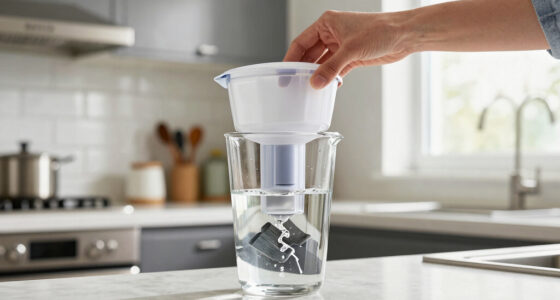
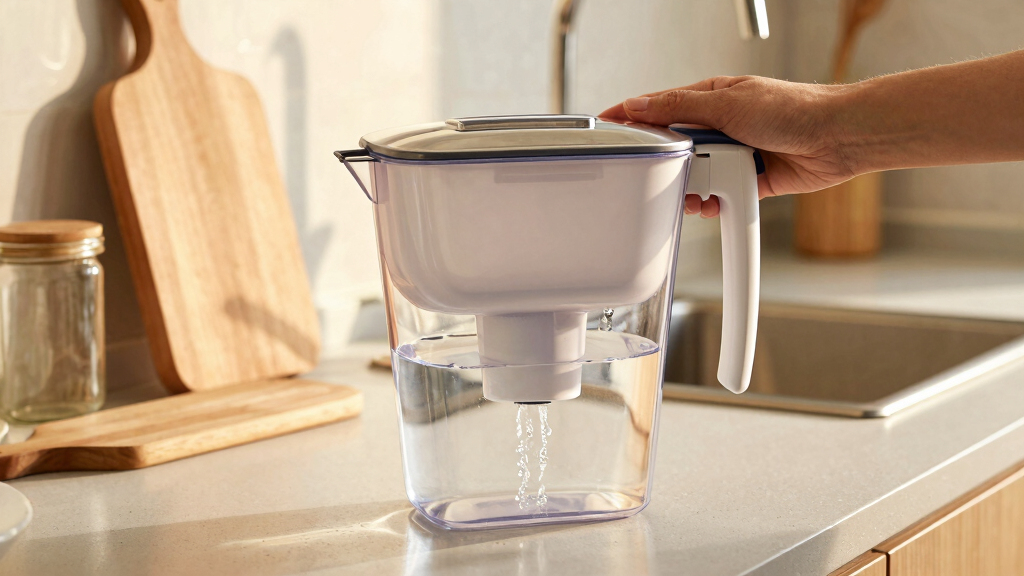
Imagine a large, clear jug with a spigot at the bottom. When you pour muddy creek water into the top, gravity pulls the water through activated carbon, ceramic, or bio-media layers. These media are engineered to remove specific impurities—some trap particles physically, others chemically neutralize contaminants. As the water passes through, impurities such as sediment, chemicals, and microbes are captured or broken down. The clean water then drips into the bottom chamber, ready for use. This process not only clarifies water but can significantly improve its safety and taste, depending on the media used.
The simplicity of gravity filtration is a double-edged sword: while it’s reliable and low-maintenance, it also means the filtration process is limited to what the media can physically or chemically remove. Understanding this helps you appreciate both its strengths and its limitations in various water quality scenarios.
As an affiliate, we earn on qualifying purchases.
What Are the Key Components Inside a Gravity Filter?
Inside a typical gravity filter, you’ll find several core components working together to deliver clean water. Each part plays a vital role in ensuring effective filtration and ease of use, and understanding their function helps in maintaining the system and troubleshooting issues.
- Upper reservoir: This is where you pour in your dirty water. Its lid helps prevent debris and insects from contaminating the source, maintaining water quality from the start.
- Filtration chamber: The heart of the system, packed with media such as activated carbon, ceramic disks, or bio-media. The choice and quality of media directly influence what contaminants are removed and how effectively they are neutralized. For example, activated carbon is excellent for removing chemicals and odors, while ceramic disks trap bacteria and protozoa physically.
- Outlet spigot: This valve controls the flow of filtered water into your collection container. Its design influences flow rate and ease of use, affecting how quickly you can access clean water.
- Lower collection chamber: The container where the filtered water collects. Its capacity determines how much clean water you can access at once, which is especially important in larger households or extended off-grid living.
Think of it like a two-tiered system: water moves from the top reservoir through the media layers, which act as a series of filters, then drips into the lower chamber. The effectiveness of this process hinges on the quality and maintenance of each component, making it essential to choose a system suited to your needs and to keep it clean and functional.
portable gravity water filtration system
As an affiliate, we earn on qualifying purchases.
As an affiliate, we earn on qualifying purchases.
What Contaminants Can Gravity Filters Remove?
Gravity filters are powerful tools for improving water safety, but their effectiveness depends on the types of media used and the specific design of the system. They are particularly adept at removing a range of common impurities, which can significantly impact health, taste, and aesthetic qualities of water. Recognizing what they can and cannot remove helps you select the right filter for your water source and understand the tradeoffs involved.
- Sediment and dirt: Rust, sand, silt—these physical particles make water look murky and can clog pipes or damage equipment. Removing sediment prevents these issues and improves clarity, which is often the first step toward potable water.
- Chlorine and bad tastes: Activated carbon media are excellent at chemically adsorbing chlorine, volatile organic compounds (VOCs), and other chemicals responsible for foul odors and flavors. This not only makes water more palatable but also reduces chemical exposure.
- Organic compounds: Pesticides, herbicides, and other chemicals that cause odors or health concerns are often effectively reduced, especially with carbon-based media, improving both safety and taste.
- Bacteria and protozoa: Ceramic and bio-media physically trap or neutralize these microorganisms, significantly reducing the risk of waterborne illnesses.
- Heavy metals: Filters with specialized media can reduce lead, mercury, and arsenic, which pose serious health risks if ingested over time.
- Odors and flavors: The removal of chemical contaminants often results in fresher-tasting water, encouraging more consistent consumption and hydration.
For example, in rural settings, a gravity filter can turn muddy, foul-smelling creek water into clear, palatable drinking water. However, it’s important to note that while these filters are effective against many contaminants, they are not infallible. Some viruses and dissolved salts may pass through unless the filter is specifically designed or combined with other treatment methods. Therefore, understanding the specific contaminants in your water source is crucial for selecting the most appropriate filtration system.
As an affiliate, we earn on qualifying purchases.
What Are the Limits of Gravity Water Filters?
While gravity filters are versatile and valuable, they are not a catch-all solution. Many models excel at removing bacteria, sediment, and chemicals but face limitations when it comes to viruses, dissolved salts, or nitrates. These limitations stem from the physical and chemical properties of the media used and the design of the system.
For instance, a standard ceramic filter can physically trap bacteria and protozoa but often cannot reliably block viruses like hepatitis or norovirus unless it includes additional treatment media. Viruses are much smaller and require more specialized membranes or chemical disinfectants to be effectively neutralized. Relying solely on basic ceramic or carbon filters in high-risk environments could lead to a false sense of security.
Similarly, dissolved salts such as sodium, chloride, or nitrates pass through most media because they are dissolved in the water at a molecular level. To address these, you need filters with ion exchange resins or other chemical treatment media, often in multi-stage systems.
Understanding these limitations is critical. If your water source contains high levels of nitrates, salts, or viruses, a simple gravity filter may be insufficient and could require supplementary treatment like UV sterilization, reverse osmosis, or chemical disinfectants. Recognizing the tradeoffs allows you to design a filtration approach that truly meets your safety and quality needs, rather than assuming all gravity filters are universally effective.
As an affiliate, we earn on qualifying purchases.
Latest Innovations Making Gravity Filters Smarter and Better
Recent technological advancements are expanding the capabilities of gravity water filters, making them more effective, user-friendly, and adaptable to various needs. Manufacturers are incorporating nanomaterials and composite layers that can trap or neutralize even tiny viruses and chemical contaminants, previously out of reach for standard models. Multi-stage filters now combine activated carbon, ceramic, and resin media into a single unit, broadening the spectrum of contaminants they can handle.
Design improvements focus on portability and ease of maintenance. Portable models now feature quick-attach filters, making setup and media replacement faster—crucial in emergency or outdoor scenarios. Some newer systems include flow rate indicators or filter life monitors, providing real-time feedback on performance and when to replace media. Eco-friendly materials are increasingly used, reducing waste and environmental impact, which is vital for sustainable off-grid living.
These innovations significantly enhance the safety, convenience, and effectiveness of gravity filters, enabling users to obtain cleaner, safer water even in challenging environments. As technology continues to evolve, the gap between simple passive filtration and high-tech purifiers narrows, giving off-grid users more reliable options for safe drinking water.
How to Pick the Right Gravity Filter for Your Needs
Selecting the best gravity filter depends on understanding your water source, the contaminants it contains, and your specific needs. Consider these key questions to guide your choice:
- What contaminants are present? Conduct water testing or assess your source—rural creek, well, rainwater—and identify potential risks.
- Do you need virus removal? If yes, opt for filters with additional treatment media like multi-stage systems or those incorporating UV or chemical disinfection.
- How much water do you require daily? Larger capacity units or multiple filters may be necessary for families or extended off-grid living.
- Is portability a priority? For camping, hiking, or emergency kits, lightweight, compact models are preferable.
- What is your budget? Basic models are affordable, but advanced filters with multi-media layers and additional features cost more. Balance cost with your safety needs.
For example, a hiker heading into remote mountains will prioritize portability and virus reduction, while a homesteader may focus on heavy metal removal and high capacity. Matching the filter’s capabilities to your specific water challenges ensures safe, reliable access to drinking water in any situation.
Frequently Asked Questions
Can gravity water filters remove viruses?
Most standard gravity filters are effective against bacteria and protozoa but struggle with viruses unless they incorporate specific media designed for virus removal. For off-grid use, consider multi-stage systems if virus safety is a concern.
How often should I replace the filter media?
It varies based on water quality and usage, but a typical recommendation is every 3 to 6 months. Regularly check for signs of clogging or reduced flow to know when to swap out media.
Will a gravity filter improve the taste of my water?
Yes, activated carbon media in gravity filters can remove chlorine and organic compounds that cause foul tastes and odors, making your water taste fresh and neutral.
Are gravity filters suitable for emergency preparedness?
Absolutely. They’re portable, simple to operate, and don’t require power—making them ideal for off-grid living, camping, or disaster kits.
What contaminants can I expect a gravity filter to remove?
They typically remove sediment, chlorine, organic chemicals, bacteria, protozoa, and some heavy metals. Always check your specific filter’s media and capabilities to match your water source.
Conclusion
A simple gravity filter can turn muddy, foul-tasting water into something safe and drinkable—no tech degree required. Remember, understanding its limits helps you avoid surprises and stay healthy off-grid. Think of it as your reliable, silent partner in the quest for clean water in any situation.Columbus Day / Indigenous Peoples' Day Picks
long weekend sales
As an affiliate, we earn on qualifying purchases.