TL;DR

Get kitchen gear delivered free with Prime
- Fast, free delivery on millions of items
- Prime Video, Amazon Music and more included
- Member-only deals all year
Honing realigns your knife’s microscopic edge, keeping it straight and effective. Unlike sharpening, it doesn’t remove metal. Regular honing extends the time between sharpening sessions and maintains cutting performance.
Honing realigns your knife’s microscopic edge, preventing dullness from rolling or bending out of shape.
Regular honing, about twice a week, can dramatically extend the time before you need to sharpen.
Use the correct angle—usually 15° to 20°—and gentle pressure for best results.
Choose the right honing tool: steel for daily maintenance, ceramic for gentler, longer-lasting realignment.
Recognize when honing isn’t enough—dull, torn, or resistant cuts mean it’s time for sharpening.
How to Hone a Knife and Why It Is Not Sharpening
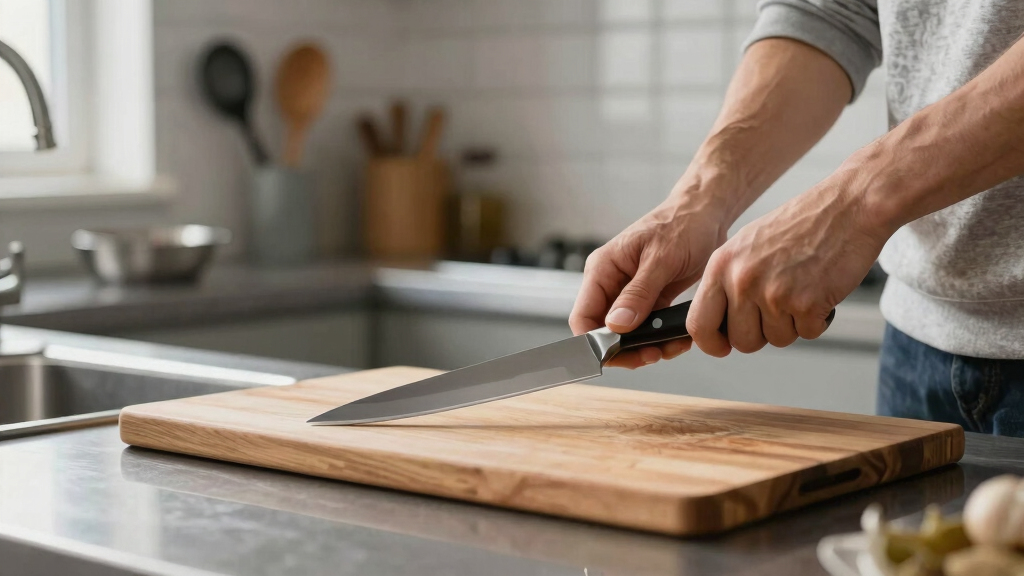
Honing realigns the microscopic edge of your knife so it cuts cleanly again. It does not grind away metal. That difference matters: regular honing keeps a blade effective between true sharpening sessions and helps your knife last longer.
Honing is the quick reset. Sharpening is the rebuild.
Metal removed during proper honing. The goal is alignment, not abrasion.
A short session before cooking can restore clean slicing feel.
Match the bevel: lower for many Japanese knives, higher for Western blades.
Use gentle, even strokes from heel to tip.
Twice weekly is enough for many regular home cooks.
If the knife stays dull after honing, sharpen it instead.
Honing straightens. Sharpening reshapes.
A knife can feel dull because its fine edge has rolled out of line. Honing stands that edge back up. Sharpening removes steel to create a new edge when alignment is no longer enough.
Realigns the edge
Like straightening a bent paperclip, honing corrects a rolled microscopic edge without replacing it.
Creates a new edge
Sharpening removes metal with stones, belts, wheels, or abrasive systems to form a fresh bevel.
Less wear, better cuts
Hone often and sharpen only when needed. You preserve blade life while keeping daily cutting performance high.
Five steps to hone like a pro
Gentle pressure and a steady angle do the work. Think smooth guide, not forceful scraping.
Choose the rod
Steel for daily Western-knife maintenance, ceramic for a gentler touch.
Set the angle
Hold 15-20 degrees and keep that angle steady through each pass.
Move heel to tip
Draw the blade down the rod in one smooth motion, following the full edge.
Repeat gently
Use 5-10 passes per side with light, even pressure.
Test the cut
Slice paper or tomato skin. If it tears after honing, sharpen.
Pick the right honing tool
Steel, ceramic, and guided electric honers can all work. The best choice depends on your knife, skill level, and how much control you want.
| Tool | Best Use | Pros | Watchouts | Beginner Fit |
|---|---|---|---|---|
| Steel Rod | Daily maintenance for many Western knives | ✓ Durable, common, fast | ~ Wrong angle or heavy pressure can damage softer blades | ~ Good with practice |
| Ceramic Rod | Gentle realignment and fine maintenance | ✓ Softer feel, consistent surface, blade-friendly | ~ More fragile if dropped | ✓ Excellent |
| Guided Honer | Angle consistency for less confident users | ✓ Helps lock in 15-20 degrees | ~ Less tactile feedback | ✓ Strong |
| Electric Honer | Fast upkeep in busy kitchens | ✓ Quick, repeatable, often guided | ✗ Costly and easier to overuse | ~ Use carefully |
When honing helps most
The better the edge alignment, the more likely honing restores performance. Once the edge is rounded, torn, or chipped, sharpening takes over.
A common target angle for chef’s knives with sturdier bevel geometry.
Often suited to thinner edges, but always match the maker’s bevel.
From dull feeling to clean slicing
Most maintenance decisions follow a simple chain: diagnose the edge, choose the lightest fix, and only remove metal when honing cannot restore the cut.
Common honing questions
Use honing as routine maintenance, then sharpen when resistance, tearing, or visible damage remains after a proper honing pass.
How often should I hone?
For regular home use, twice a week is a sensible rhythm. Daily cooks can hone briefly before prep.
Can I use regular steel?
Yes. Steel works well with proper technique. Ceramic is gentler and more forgiving for delicate edges.
How do I know sharpening is needed?
If the knife still crushes tomatoes, tears paper, or feels resistant after honing, the edge needs new geometry.
Can I hone a serrated knife?
Usually no. Serrated knives need specialized tools that match the scallops rather than a standard honing rod.
What is honing, and how does it keep your knife sharp?
Honing is a gentle realignment of the tiny, microscopic edge of your knife. Think of it like straightening a bent hairpin—nothing is removed, but the edge is straightened out. Imagine trying to cut through a piece of paper with a slightly bent or rolled edge; it tears or crushes the paper instead of slicing cleanly. Proper honing will straighten that tiny bend, much like how you might straighten a bent paperclip so it can function again. Regular honing restores this alignment, ensuring your knife slices smoothly and safely. If you neglect honing, the microscopic edge can become misaligned or slightly bent, which makes cutting harder and can cause the blade to wear out faster. By honing regularly—say, after chopping vegetables or preparing ingredients—you keep the edge straight and maintain optimal performance, much like tuning a musical instrument to keep it sounding perfect.
As an affiliate, we earn on qualifying purchases.
Why honing is different from sharpening—and why it matters
Think of your knife’s edge like a tiny, delicate road that guides your cuts. Over time and use, the edge can become slightly bent or rolled, similar to a small bump or wave on a smooth highway. Honing is like smoothing out those bumps with a straightening tool—no removal of material, just re-aligning what’s already there. For example, if you’ve used your knife to cut through a tough piece of meat, the microscopic edge might bend or fold over slightly. Honing will gently straighten this edge, restoring its ability to cut cleanly. Sharpening, on the other hand, is like resurfacing that highway entirely—removing metal to create a new, sharper edge. If you sharpen too often or too aggressively, you risk thinning the blade too much, making it more fragile. Conversely, neglecting honing allows the microscopic edge to become misaligned, leading to tearing rather than slicing, much like trying to cut with a slightly crooked knife blade. Properly understanding these differences means you can keep your knives performing well longer—imagine regularly straightening a bent nail instead of filing it down every time; both are important, but they serve different purposes.
As an affiliate, we earn on qualifying purchases.
How to hone your knife like a pro — step-by-step
- Pick the right honing tool: a steel rod for Western knives, ceramic for gentler maintenance, or guided honing guides for consistency. For example, using a steel rod is like using a comb to straighten hair—quick and effective for daily maintenance.
- Hold the honing rod vertically or at a consistent 15-20 degree angle for Western blades, matching the knife’s bevel. Imagine aligning a slanted picture frame; keeping the angle steady ensures the edge is properly straightened without causing damage.
- Draw the blade down the rod from heel to tip, maintaining the same angle throughout. Think of it as guiding a paintbrush smoothly across a canvas; consistent motion prevents uneven wear or micro-chipping.
- Repeat 5-10 times per side, applying gentle, even pressure. Like tuning a guitar string, too much force can bend or micro-chip the edge, while too little won’t do much. Finding the right pressure is like adjusting a faucet—gentle but steady.
- Check your progress by slicing through paper or a tomato; if the cut is smooth and clean, your edge is properly honed. It’s similar to testing a freshly baked loaf by tapping the crust—if it sounds hollow and feels firm, it’s ready.
Practice makes perfect. For example, in a busy kitchen, a quick 30-second honing session before cooking can make a big difference—your knife will glide through ingredients like butter. Consistent technique and attention to detail will prevent damage and help your blades last for years, much like maintaining a well-tuned bicycle keeps it running smoothly.
As an affiliate, we earn on qualifying purchases.
Latest tools and tricks for perfect honing every time
| Tool | Pros | Cons |
|---|---|---|
| Steel Rod | Widely available, durable, effective for daily use. When used correctly, it maintains the microscopic edge by realigning it without removing material, which is essential for prolonging blade life. For example, a chef might run the steel from heel to tip after chopping to keep the edge straight and sharp. | Requires proper angle, can damage softer blades if misused. For instance, pressing too hard or at the wrong angle can cause micro-chipping or bending, similar to pressing too hard with a brush and damaging the bristles. |
| Ceramic Rod | Softer on blades, longer-lasting, gentle realignment. For example, using a ceramic rod is like using a fine-tooth comb on delicate hair—it gently straightens without causing damage. | More fragile, less forgiving for beginners. Dropping or using at an improper angle can cause chipping, akin to dropping a glass ornament and cracking it. |
| Electric Honers | Fast, consistent, easy for busy kitchens. They often incorporate built-in angle guides, ensuring proper technique and reducing user error. Imagine a powered hair straightener that automatically maintains the right temperature and angle for perfect results. | Costly, less tactile control. Overuse or incorrect settings can lead to micro-damage or uneven honing, much like overusing a power tool can cause unintended damage if not carefully controlled. |
Recent innovations include guided honing guides that lock in the perfect angle—like a training wheel for your knife—and ceramic rods with textured surfaces for better realignment, similar to textured sandpaper smoothing out rough edges. These tools help you avoid common mistakes, such as honing at the wrong angle or applying too much pressure, ensuring your honing sessions are both effective and safe for your blades.
As an affiliate, we earn on qualifying purchases.
Frequently Asked Questions
How often should I hone my knife?
For regular home use, honing twice a week is enough. If you cook daily, a quick honed edge before each meal keeps your knife sharp and effective. Adjust based on how much you use your blades.
Can I hone my knife with a regular steel or does it need to be ceramic?
Both work, but ceramic rods are gentler and better for maintaining the edge without causing micro-damage. Think of it like using a gentle comb on delicate hair—it’s less likely to cause damage, especially with softer blades. Steel rods are effective but require proper technique to avoid micro-chipping, much like using a rough comb that can snag fragile hair.
Is honing the same as sharpening?
No. Honing realigns the existing edge without removing metal, while sharpening involves grinding away metal to create a new, sharper edge. Think of honing as straightening a bent nail or hairpin—no material is lost—while sharpening is like filing down a nail to make it pointy again. Use honing regularly to keep the edge aligned and prolong the sharpness, and sharpen when cutting performance declines significantly.
How do I know if my knife needs sharpening?
If your knife tears food or requires excessive pressure, despite honing, it’s dull. For example, if you’re slicing a tomato and it tears or drags instead of cutting smoothly, that’s a sign. You can also test with paper—if the knife drags or causes jagged cuts, it’s time for sharpening. Dull blades are not only inefficient but can also be dangerous because they require more force, increasing the risk of slips.
What is the best angle for honing my kitchen knives?
Most Western-style knives are honed at around 20°, which is like tilting a picture frame slightly for a perfect view. Japanese knives often require a lower angle, around 15°, similar to adjusting a camera lens for clarity. Matching the angle to your knife’s bevel ensures effective realignment and helps preserve the blade’s structural integrity over time. Think of it as fitting the right key into a lock—proper alignment ensures smooth operation and longevity.
Conclusion
Keep your blades performing their best with simple, regular honing. It’s the low-hanging fruit of knife care—easy, quick, and effective. Remember, a well-maintained knife is safer, more enjoyable, and lasts longer. So pick up that honing rod, and give your knives the care they deserve—your kitchen will thank you.Halloween Picks
halloween
As an affiliate, we earn on qualifying purchases.