
TL;DR

Get kitchen gear delivered free with Prime
- Fast, free delivery on millions of items
- Prime Video, Amazon Music and more included
- Member-only deals all year
Carbon steel knives excel at sharpness and edge retention but require diligent maintenance to prevent rust. Recent coatings and hybrid steels aim to combine their benefits with better durability. Knowing how they behave helps you keep them in top shape.
Carbon steel knives can be sharpened to a finer edge and hold it longer than many stainless steels, but they are more vulnerable to rust if neglected.
Proper maintenance includes immediate cleaning, thorough drying, and oiling after every use to prevent corrosion.
Developments like protective coatings and hybrid steels help combine sharpness with better rust resistance, making them more user-friendly.
A patina is a natural oxidation layer that adds character and some protection, often appreciated by enthusiasts.
Choose your knife based on your willingness to care for it—carbon steel rewards diligent owners with superior performance.
What Makes Carbon Steel Knives Sharper and Why They Keep Their Edge
Carbon steel is known for its ability to be sharpened to a super-fine edge. This is because its alloy composition allows it to be honed to a microscopic level, resulting in a cutting edge that is incredibly thin and precise. Unlike some stainless steels, which contain elements that can make the edge more durable but less sharp, carbon steel’s softer nature means it can be shaped into an ultra-sharp edge with less effort and more finesse.
This fine edge translates into cleaner, more effortless cuts, especially on delicate ingredients like herbs or fish. The tradeoff, however, is that this edge is more susceptible to dulling quickly if not maintained properly. The ability to sharpen to a finer point also means that with each honing, you can restore a razor-sharp edge that stays longer because the initial sharpening creates a more refined edge geometry. This is why many professional chefs prefer carbon steel for tasks requiring precision, as it allows for a level of sharpness and edge retention that’s difficult to match with stainless steels.
Understanding this helps you appreciate why your carbon steel knife can outperform others in terms of initial sharpness and how diligent maintenance extends its performance. The tradeoff is that the softer alloy is more vulnerable to damage and dulling if used improperly or neglected.
As an affiliate, we earn on qualifying purchases.
Why Carbon Steel Knives Rust and Stain So Easily
Carbon steel’s susceptibility to rust stems from its alloy composition, specifically the lack of chromium, which is the key element that forms a protective oxide layer in stainless steels. Without this chromium-rich layer, the iron and carbon in the alloy are exposed directly to moisture and oxygen, leading to oxidation, which manifests as rust or staining. This process is accelerated in humid environments or if the knife is not dried thoroughly after use.
When moisture remains on the surface, especially in microscopic crevices or after contact with acidic or salty foods, it creates the perfect environment for rust to form. Over time, this corrosion can weaken the blade’s structure, dull the edge, and create unsightly spots that are difficult to remove. The implication for users is that neglecting proper care doesn’t just cause cosmetic issues—it can compromise the knife’s longevity and performance. Therefore, understanding this process emphasizes the importance of diligent maintenance routines, especially in environments where humidity is high or when storing the knife for extended periods.
In essence, the absence of a corrosion-resistant chromium layer makes carbon steel more vulnerable, but with proper care—immediate cleaning, thorough drying, and oiling—you can prevent rust and preserve the blade’s integrity for years to come.
best rust-resistant carbon steel knife
As an affiliate, we earn on qualifying purchases.
As an affiliate, we earn on qualifying purchases.
How to Keep Your Carbon Steel Knife in Top Shape
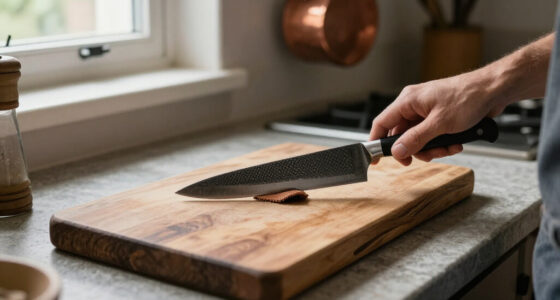
- Wash it immediately after use with warm water and a soft sponge—no harsh detergents. Using mild cleaning agents prevents stripping away protective oils and coatings that help resist rust.
- Dry thoroughly—don’t leave it wet or in the sink. Moisture is the primary catalyst for rust; ensuring the blade is completely dry minimizes this risk.
- Apply a light coat of food-safe oil (like mineral oil) to protect the surface. This creates a barrier against moisture and oxygen, especially if the knife will be stored for a while or not used frequently.
- Store in a dry, ventilated place—preferably in a knife roll or with a protective sheath. Proper storage reduces exposure to humidity and physical damage that can dull the edge.
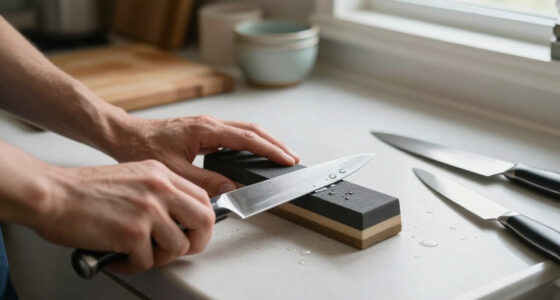
- Regularly hone and sharpen to maintain that razor edge. Keeping the edge finely tuned reduces the need for aggressive sharpening, which can weaken the blade over time.
For example, after slicing a brisket or chopping carrots, give your blade a quick rinse, wipe it dry with a clean towel, and rub a bit of oil on the surface. Incorporating these steps into your routine ensures your knife remains rust-free, sharp, and ready for the next task. Recognizing that maintenance isn’t just about appearance but about preserving performance helps you approach caring for your carbon steel blade as a vital part of your cooking process.
professional sharpening stone for knives
As an affiliate, we earn on qualifying purchases.
As an affiliate, we earn on qualifying purchases.
What Is Patina and Why Do Enthusiasts Love It
A patina is a natural, thin layer of oxidation that develops over time on carbon steel surfaces. It appears as a subtle, often mottled or streaky darkening that can range from light gray to deep blue-black. Many enthusiasts appreciate it because it tells a story—each mark and hue reflects the knife’s history, use, and character. It’s akin to a badge of craftsmanship, showcasing a blade’s journey through countless cuts and moments in the kitchen.
Beyond its aesthetic appeal, a patina offers protective benefits. It acts as a barrier that slows down further oxidation, reducing the likelihood of rust formation on the exposed metal. This natural layer can help extend the life of your blade, especially if you prefer not to oil or treat the steel constantly. However, it’s important to note that a patina isn’t foolproof; it’s more of an aesthetic and supplementary protective feature. Proper care—such as avoiding harsh cleaning chemicals and keeping the blade dry—still remains essential.
Enthusiasts often cultivate a patina intentionally by using their knives on acidic foods like tomatoes or citrus, which accelerates oxidation and creates unique, personalized patterns. Embracing the patina’s evolution adds a layer of connection and pride in your tool’s history.
As an affiliate, we earn on qualifying purchases.
Recent Innovations: Coatings and Hybrid Steels That Make Life Easier
Recent advancements have introduced coatings and hybrid steel constructions that significantly improve the practicality of carbon steel knives. Ceramic or polymer coatings act as a barrier, preventing moisture from directly contacting the steel surface. This drastically reduces rust formation and makes cleaning easier, as residues and stains are less likely to adhere or penetrate the coating. These coatings often also provide some level of added hardness or wear resistance, extending the lifespan of the blade’s sharp edge.
Hybrid steels combine a core of high-quality carbon steel with an outer layer of stainless steel. This design aims to capture the benefits of both materials: the fine, sharp edge and ease of sharpening from the carbon core, along with the corrosion resistance from the stainless exterior. The tradeoff involves complexity in manufacturing and sometimes increased cost, but the result is a more user-friendly knife that requires less maintenance without sacrificing performance. These innovations are particularly valuable for those who want the performance of traditional carbon steel but with added durability, making them more suitable for everyday use and less demanding environments.
Understanding these developments helps users make informed choices, balancing performance with convenience, and expanding the versatility of carbon steel knives in various cooking contexts.
Frequently Asked Questions
Why do carbon steel knives rust so easily?
Because they lack chromium, which forms a protective oxide layer in stainless steels. Without that shield, moisture and oxygen cause rust and stains if the blade isn’t dried and oiled promptly.How do I prevent my carbon steel knife from rusting?
Always wash it immediately after use, dry thoroughly, and apply a light coat of food-safe oil. Store it in a dry, well-ventilated place, and avoid leaving it in damp environments.Can I use a carbon steel knife every day?
Yes, but with extra care. Regular cleaning, drying, and oiling are essential. Many home cooks prefer stainless steel for daily chores, reserving carbon steel for special tasks or when they want that extra edge.What is a patina, and how do I get one?
A patina forms naturally through oxidation over time. You can encourage it by using your knife regularly and avoiding harsh cleaning agents—many enthusiasts see it as a badge of character and a sign of a well-loved blade.Are coatings or hybrid steels worth it?
They offer a good balance—coatings add rust resistance, and hybrid steels combine sharpness with durability. These innovations make carbon steel more practical without sacrificing its performance benefits.Conclusion
A carbon steel knife is a tool that demands respect and attention. Its razor-sharp edge and unique character make it a favorite for those who enjoy hands-on craftsmanship. Treat it well, and it will reward you with years of precise, satisfying cuts—becoming more beautiful as it ages.Columbus Day / Indigenous Peoples' Day Picks
long weekend sales
As an affiliate, we earn on qualifying purchases.