TL;DR

Get kitchen gear delivered free with Prime
- Fast, free delivery on millions of items
- Prime Video, Amazon Music and more included
- Member-only deals all year
To brew strong coffee outdoors, pick dark-roast beans, use a high coffee-to-water ratio, and select the right manual method like a French press or percolator. Modern portable gear makes it easier than ever to get rich, bold brews in the wild.
Imagine the crackle of a campfire, the smell of pine and fresh mountain air, and in your mug—**a piping-hot, robust coffee**. No fancy espresso machine, no power outlet—just you, your manual gear, and the wild. Brewing strong coffee outdoors isn’t about complicated gadgets; it’s about understanding the basics and making the most of what you have. Whether you’re camping, backpacking, or just off-grid, you want a brew that stands up to the elements and energizes your day.
In this guide, I’ll show you how to get that rich, bold flavor with simple techniques, smart gear, and a few insider tips. No hype, just straightforward advice to turn your outdoor coffee routine into a satisfying ritual. Ready to turn your coffee into a true adventure companion? Let’s dive in.
Use dark roast beans for a bolder, stronger flavor that holds up outdoors.
Adjust the coffee-to-water ratio to 1:8 or stronger for maximum strength.
Percolators and French presses are your best tools for a full-bodied brew.
Pre-warm your gear and keep your coffee insulated to maintain heat and flavor.
Experiment with grind size and steeping time to dial in your perfect outdoor strength.
Choose the Right Beans for a Power-Packed Brew
The foundation of a strong outdoor coffee is the beans. Opt for **dark roast or high-caffeine blends**. These beans naturally contain more oils and caffeine, which translate into a more intense flavor and a caffeine kick that can energize you during long outdoor activities. The oils in dark roasts help the coffee retain its flavor even in less-than-ideal storage conditions, and the higher caffeine content ensures a more potent brew. Freshly ground beans are a must—grinding right before brewing preserves volatile oils and aromatics, which are essential for a rich, full-bodied flavor. This freshness not only enhances taste but also provides that extra boost of caffeine, crucial when you need energy in the wild.
Imagine crushing beans with a manual grinder, releasing a burst of aroma that immediately energizes your senses—this fresh grind significantly impacts the overall strength and flavor. When shopping, prioritize roasts with high oil content and caffeine-rich varieties, such as robust blends or specific high-caffeine beans. These choices matter because they directly influence the strength and richness of your brew, especially when outdoor conditions may degrade some flavors or cause lighter roasts to fade into the background. Selecting the right beans is a tradeoff: dark roasts often have a more pronounced flavor but can be slightly more bitter if over-extracted, so understanding your brewing method helps you balance flavor and strength effectively.
portable French press coffee maker
As an affiliate, we earn on qualifying purchases.
As an affiliate, we earn on qualifying purchases.
Pick the Best Manual Brewing Method for Maximum Strength
Not all brewing methods deliver the same punch. For strong, full-bodied coffee, a **French press or percolator** is your best choice. French press brewing allows you to use a **higher coffee-to-water ratio**—think 1:8 or even 1:6—making each cup more concentrated. This ratio is critical because it directly impacts the strength; a higher ratio means more coffee solids per volume, resulting in a richer, more robust flavor. The coarse grind used in French press brewing prevents over-extraction, which can cause bitterness, ensuring the brew remains smooth yet potent. The pressing process also allows for more control over steeping time, giving you the ability to fine-tune strength without over-extracting undesirable compounds.
Picture yourself pressing down the plunger, the dark, aromatic brew filling your senses with a sense of accomplishment. Percolators, with their bubbling, boiling action, extract intense flavors and caffeine rapidly. The boiling cycle agitates the grounds thoroughly, resulting in a bold and high-caffeine brew that’s ideal for outdoor use where quick, strong results are needed. Both methods are rugged, reliable, and permit precise control over strength—adjust the amount of coffee grounds or steeping time to suit your taste. While pour-over or AeroPress methods tend to produce milder coffee unless you make specific adjustments, French press and percolator techniques provide a straightforward way to maximize strength, making them superior choices for outdoor robustness.
Choosing between these methods depends on your environment and preference, but understanding their inherent strengths helps you decide which tool best delivers the boldness you seek in the wild.
As an affiliate, we earn on qualifying purchases.
How to Adjust Water and Coffee Ratios for a Bold Flavor
The key to a strong brew is the right *coffee-to-water ratio*. Standard drip coffee uses about 1:15, but outdoors, you want more coffee per cup to ensure maximum strength. Aim for ratios like 1:8 or even 1:6 if you need an extra punch. This is because increasing the coffee concentration directly boosts the extraction of flavor compounds and caffeine, resulting in a more intense brew. For example, for a 16-ounce mug, using about 4 tablespoons of coffee grounds instead of the usual 2-3 makes a significant difference in strength. Pouring boiling water over these grounds in your French press or steeping in a percolator ensures each sip is packed with flavor and caffeine.
Adjusting ratios isn’t just about making the coffee stronger—it’s about customizing your experience to match your energy needs. A higher concentration means less water dilutes the coffee’s richness, which is especially important outdoors where you might not have the luxury of multiple cups or the ability to dilute with milk or sugar. Remember, grind size matters—coarser for French press, finer for AeroPress—so adapt your grind accordingly to optimize extraction and prevent over- or under-extraction. Experiment with small batches to find your ideal ratio; this iterative process ensures you get a brew that’s as bold as your adventure demands without risking bitterness or weak flavor. Ultimately, adjusting ratios is a tradeoff between strength and extraction time, but with practice, it becomes a simple way to tailor your coffee’s potency to your outdoor needs.
As an affiliate, we earn on qualifying purchases.
Use Smart Gear and Techniques to Keep Coffee Hot and Strong
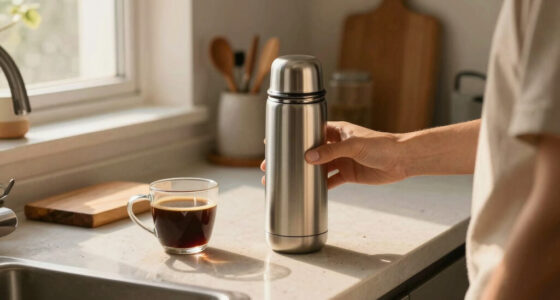
Keeping your coffee hot outdoors is essential for maintaining its strength and flavor. A **double-walled insulated mug** or a **vacuum flask** acts as a thermal barrier, preventing heat loss and preserving the coffee’s robust qualities for hours. Pre-warming your mug with hot water creates a thermal mass that helps retain heat longer, ensuring each sip remains hot and flavorful. Another effective technique is brewing your coffee directly into a **pre-heated thermos** or insulated container, which minimizes heat transfer and keeps the brew at optimal strength over extended periods. If you’re using a campfire or backpack stove, aim to keep the water just below boiling—around 200°F—to avoid over-extraction or scorching the grounds, which can introduce bitterness and diminish strength.
Imagine sipping hot coffee on a chilly morning, the aroma swirling in the crisp air—this experience hinges on good gear and proper technique. Reheating or brewing small, concentrated batches in insulated containers allows you to re-brew or enjoy the coffee at peak strength without dilution or flavor loss. Also, consider the timing of your brew—making it just before you plan to drink maximizes freshness and potency, especially in outdoor settings where temperature fluctuations are inevitable. These gear choices and techniques ensure your coffee remains as strong and flavorful as when it was first brewed, turning a simple cup into a reliable source of energy in the wild.
Balancing heat retention with proper brewing practices is key—overheating can cause bitterness, while insufficient insulation leads to rapid cooling and dilution. Experiment with different containers and timing to find what keeps your brew at peak strength, so every sip fuels your adventure.
As an affiliate, we earn on qualifying purchases.
Compare Portable Coffee Tools for Outdoor Strength
| Tool | Strength Potential | Ease of Use | Portability |
|---|---|---|---|
| French Press | High — allows high coffee-to-water ratios for a rich, bold brew | Moderate — requires coarse grind and pressing, but straightforward | Good — compact, lightweight, durable |
| Percolator | Very high — creates an intensely brewed, high-caffeine coffee through boiling and bubbling | Easy — simply add grounds and water, then boil | Excellent — rugged, designed for portability and outdoor use |
| AeroPress | Adjustable — can produce strong espresso-style coffee with proper technique | Easy — simple pressing mechanism | Excellent — small, lightweight, versatile, and highly portable |
| Boiling with Grounds | Variable — depends on steeping time and grounds used, but can be made very strong | Basic — no special gear needed, just a pot or kettle | Very portable — minimal equipment required |
Troubleshoot Common Problems: Bitter, Weak, or Over-Extracted Coffee
If your outdoor coffee tastes bitter or flat, it’s a sign that something in your process needs adjusting. Over-extraction often results from boiling water or steeping grounds for too long, releasing undesirable bitter compounds. To fix this, lower the water temperature slightly—aim for just below boiling—and use a coarser grind to slow the extraction. Conversely, if your coffee is weak, it indicates under-extraction or too little coffee used. Increase the amount of grounds or steeping time, but do so gradually, tasting as you go, to find that perfect balance where flavor and caffeine are maximized without bitterness.
For example, a hiker once told me his coffee turned bitter after boiling too long over the fire. He switched to a French press, used a coarser grind, and increased his coffee amount, which resulted in a richer, more satisfying brew. Remember, outdoor conditions vary—water temperature can fluctuate, and grind consistency may be inconsistent. Small, deliberate adjustments are your best tools for troubleshooting. Experiment with different steeping times, grind sizes, and temperatures until you find what works best for your environment, ensuring each cup delivers the strength and flavor you desire.
Understanding these tradeoffs helps you avoid common pitfalls and turn challenges into opportunities for brewing excellence in the wild.
Frequently Asked Questions
What is the best method to brew strong coffee outdoors?
The best method depends on your gear, but generally, a French press or percolator produces the strongest, most full-bodied coffee. Both allow you to use higher coffee-to-water ratios and control steeping or brewing time for maximum strength.
How can I make my coffee more robust without equipment?
If you lack specialized gear, try boiling grounds directly in water, then strain through a cloth or fine mesh. Use more grounds, a higher ratio of coffee to water, and let it steep longer to boost strength naturally.
What equipment is essential for brewing strong coffee in the wilderness?
A durable French press, percolator, or AeroPress are ideal. Also, a good insulated mug or thermos helps keep your brew hot and strong longer. A manual grinder for fresh grounds adds a big flavor boost.
How do I prevent my coffee from becoming bitter or weak outdoors?
Adjust the grind size to coarser for French press or percolator, and avoid boiling water for too long. Use a higher coffee ratio, and experiment with steeping times until you find what works best in your environment.
Are there specific beans or blends recommended for outdoor brewing?
Look for dark roast or high-caffeine blends, which deliver a more intense flavor and caffeine punch. Brands that focus on robust, oily beans tend to perform better in outdoor conditions, providing a rich, full-bodied cup.
Conclusion
Your outdoor coffee isn’t just a morning ritual—it’s fuel for your adventure. With the right beans, gear, and techniques, you can brew a cup that’s as bold and resilient as the wild around you. Remember, it’s all about making small tweaks that turn simple ingredients into a powerful, satisfying brew.
So next time you step into the outdoors, bring a little extra coffee grit—your best brew yet is waiting.
Halloween Picks
halloween
As an affiliate, we earn on qualifying purchases.