TL;DR

Get kitchen gear delivered free with Prime
- Fast, free delivery on millions of items
- Prime Video, Amazon Music and more included
- Member-only deals all year
Stropping a knife with leather realigns microscopic teeth on the blade, sharpening it without grinding away metal. Regular stropping at the right angle keeps your knife sharp longer and improves its cutting ability. Using honing compound enhances the process, making it faster and more effective.
Stropping realigns microscopic teeth, restoring up to 80% of a blade’s sharpness.
Maintaining a consistent 15-20 degree angle is key for effective stropping.
Using honing compound accelerates polishing and prolongs blade life.
Regular stropping after each use keeps your knife slicing smoothly longer.
Choose quality vegetable-tanned leather for best results and durability.
How to Strop a Knife with Leather
Stropping realigns and polishes the blade’s microscopic edge without grinding away metal. A clean leather surface, a steady 15–20° angle and gentle edge-trailing strokes can keep a good knife cutting cleanly for much longer.
Proper stropping can substantially refresh an edge before full sharpening is required.
Consistency matters more than force. Keep the spine at the same height throughout each stroke.
Use controlled strokes per side, then test the edge before doing more.
Always trail the cutting edge so it cannot slice into the leather.
Light contact protects the apex from rolling or rounding.
A short maintenance ritual is usually all a working edge needs.
Reapply sparingly when polishing performance begins to fade.
01 / Edge mechanics
Stropping maintains an edge. Sharpening rebuilds it.
Daily cutting bends and misaligns the knife’s extremely fine apex. Leather supports that fragile edge while drawing its microscopic teeth back into alignment and polishing away tiny irregularities.
Microscopic teeth
The flexible leather gently straightens a fatigued edge so it meets the material cleanly instead of tearing or dragging.
Surface refinement
A honing compound adds extremely fine abrasive particles, accelerating polish and producing a smoother-feeling cut.
Blade longevity
Because routine stropping removes little or no meaningful metal, it reduces how often the blade must be fully resharpened.
02 / Set up
Start with firm leather and a clean working surface.
Your stropping kit
- Vegetable-tanned leather: choose a smooth, firm piece with tight grain and no deep scratches.
- Stable base: use a bench strop, handled paddle or firmly tensioned hanging strop.
- Optional compound: chromium oxide or ceramic paste makes polishing faster and finer.
- Clean cloth: remove grit, loose debris and excess compound before the blade touches leather.
Lock in a consistent 15–20° angle.
Raise the spine until the bevel meets the leather, then keep that height steady. Too low misses the apex; too high can round it.
03 / Technique
Five moves to a cleaner, keener edge.
Move deliberately from heel to tip, keeping the entire cutting edge in contact. The blade must travel spine-first—away from the cutting edge—on every pass.
Secure
Place the strop on a stable surface or pull it taut. Remove dust and grit.
Set the angle
Rest the blade at roughly 15–20° with the heel positioned at the start.
Trail the edge
Draw the blade spine-first, sweeping from heel to tip with light pressure.
Repeat
Complete 10–20 smooth passes, maintaining one angle and speed.
Flip & finish
Match the count on the other side, then make a few clean finishing passes.
The blade should glide over the leather. Heavy pressure can compress the strop around the edge and round the apex.
A quick touch-up after food prep or precision work keeps the edge responsive and postpones abrasive sharpening.
04 / Decision guide
Know when to strop—and when to sharpen.
| Edge condition | Strop with leather | Fully sharpen | Best next action |
|---|---|---|---|
| Still cuts, but feels less crisp | ✓ Ideal | ✗ Premature | Use 10–20 gentle passes per side. |
| Tomato skin drags slightly | ✓ Try first | ~ If needed | Strop, test, then sharpen only if drag remains. |
| Tears food or slips off paper | ~ Finishing only | ✓ Required | Rebuild the bevel, then finish on leather. |
| Visible chip or rolled edge | ✗ Insufficient | ✓ Required | Repair with an appropriate stone or professional service. |
05 / Performance
A small ritual with an outsized payoff.
Edge maintenance potential
Illustrative comparison based on the supplied guidance: correct stropping can restore up to 80% of perceived sharpness.
Practical maintenance rhythm
Stop when the edge feels clean and responsive. More passes are not automatically better.
06 / Avoid these
Three mistakes that can make an edge worse.
Leading with the edge
Pushing the cutting edge into the stroke can slice the leather and abruptly damage the apex.
Using heavy pressure
Compressed leather wraps around the bevel, rounding the keenest part of the edge instead of refining it.
Changing the angle
Rocking the spine creates uneven contact and can polish behind the edge while leaving the apex untouched.
07 / Quick answers
Frequently asked questions.
Can any leather be used?
Smooth, firm, vegetable-tanned leather is preferred. Avoid rough, synthetic or heavily treated material that may create uneven contact.
Is honing compound mandatory?
No. Bare leather can realign and burnish an edge, while chromium oxide or ceramic compound speeds up polishing and refinement.
How often should a knife be stropped?
After every few uses or whenever a still-functional edge begins to feel less crisp. Frequent light maintenance is better than excessive sessions.
How do I know when to stop?
Test the knife after an even set of passes. If performance no longer improves—or becomes worse—the edge likely needs sharpening.
Pressure.
Rhythm.
The razor-edge rule
Keep the leather clean, hold 15–20°, trail the edge and let gentle repetition do the work. Stropping is the finishing touch that produces cleaner cuts, reduces effort and preserves a quality blade between full sharpenings.
What exactly is stropping and why does it matter?
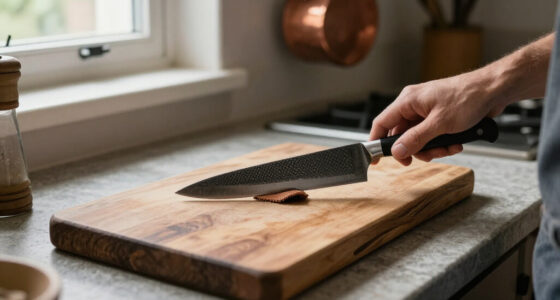
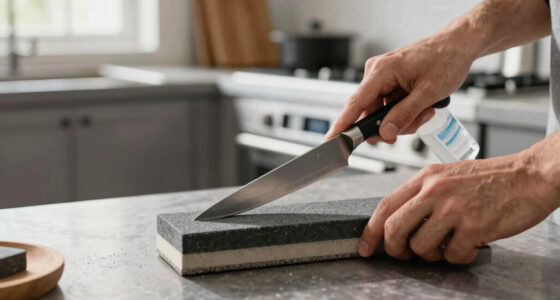
Stropping is a finishing step that aligns the tiny, microscopic teeth on your knife’s edge, making it feel sharper and cut more smoothly. Unlike sharpening, which removes metal to reshape the edge, stropping polishes and smooths it, extending the time between full sharpenings. Imagine a fine honing stone but on a flexible, leather surface that gently refines the edge.
For example, after chopping a batch of vegetables, a quick stropping session can restore that razor-sharp feeling, saving you from dull cuts and frustrations. This process is crucial because it maintains the integrity of the edge without excessive metal removal, which is especially important for high-quality knives that you want to preserve for as long as possible. Proper stropping technique ensures the microscopic teeth are realigned evenly, preventing uneven dulling or micro-chipping that can occur with improper handling.
As an affiliate, we earn on qualifying purchases.
Choose the right leather strop and prepping tips for best results
Use a high-quality, vegetable-tanned leather for stropping. Smooth, firm leather with a tight grain works best because it provides a consistent, gentle surface that effectively polishes the microscopic teeth on your blade. When the leather is too soft or rough, it can cause uneven wear or even damage the edge. Many kitchen or woodworking stores sell dedicated strops, but a sturdy strip of leather from a belt or scrap can work too—just ensure it’s free of deep scratches or imperfections that could transfer to your blade.
Applying a thin layer of honing compound—chromium oxide or ceramic paste—acts as an abrasive agent that accelerates the polishing process. Spreading it evenly with a cloth or your finger ensures a uniform coating, which helps avoid uneven sharpening or micro-chipping. The quality of the leather and the presence of honing compound directly influence how well your knife’s edge is maintained, impacting the overall cutting performance and lifespan of your blade.
honing compound for knife sharpening
As an affiliate, we earn on qualifying purchases.
As an affiliate, we earn on qualifying purchases.
Step-by-step: How to strop your knife like a pro
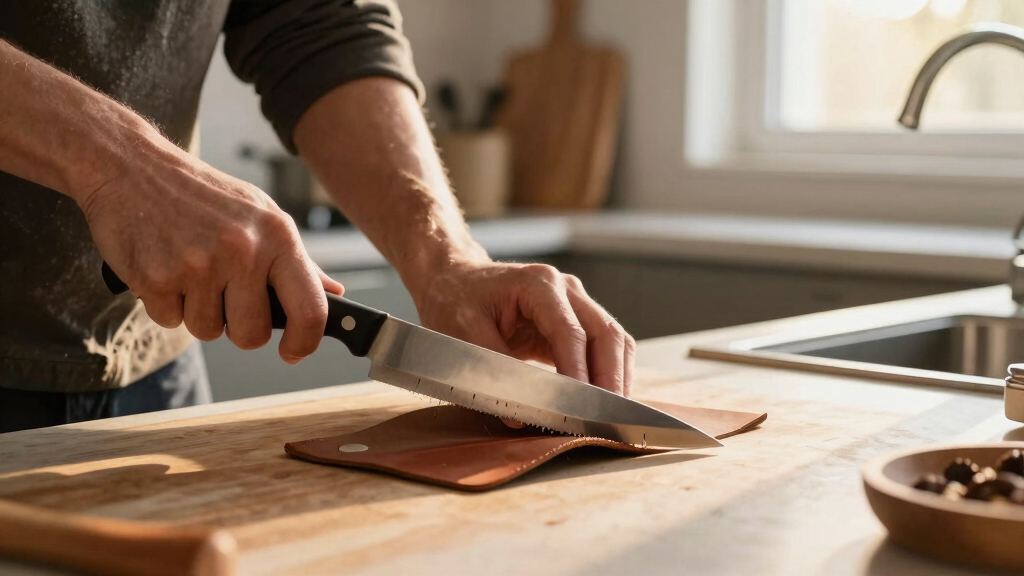
- Secure your leather strop on a stable surface or hold it firmly in your hand. This stability ensures controlled, consistent strokes that prevent accidental slips or uneven wear.
- Hold your knife at a consistent angle, usually around 15-20 degrees—think of tipping the blade just enough so the edge touches the leather without the spine dipping too much. Maintaining this angle is crucial because it ensures the microscopic teeth are realigned evenly, preventing micro-chipping or uneven dulling.
- Draw the blade away from the edge, maintaining the angle, with a gentle, controlled stroke from heel to tip. Applying too much pressure can bend or dull the edge, while too little may be ineffective—finding the right balance is key to effective stropping.
- Repeat this 10-20 times on one side, then flip and do the same on the other side. Consistent, deliberate strokes ensure the edge is evenly polished and aligned, which is essential for optimal cutting performance.
- Optional: flip the knife and do a few strokes without compound to further polish the edge and remove any residual abrasive particles that might cause micro-damage over time.
For example, a chef in a small off-grid kitchen might dedicate 30 seconds to each side after prep, ensuring the blade remains razor-sharp for the next task. Proper technique here directly impacts how long your edge stays sharp and how well it performs during use.
As an affiliate, we earn on qualifying purchases.
How often should you strop your knife? Keep it sharp without overdoing it
Stropping is most effective when done regularly—after every few uses or when you notice the knife isn’t slicing as smoothly. Regular stropping helps maintain the microscopic teeth in proper alignment, which in turn keeps the edge sharp and responsive. However, over-stropping can cause unnecessary wear on the leather or even dull the edge if too much force is applied or if the same side is overused. The goal is to find a balance where the edge is maintained without compromising the integrity of the blade or the strop itself.
For example, before preparing a meal, a quick 10-20 strokes on each side can refresh the edge, ensuring clean cuts and reducing fatigue. Knowing when to stop is equally important—if you notice the edge isn’t improving or feels duller, it’s time to sharpen or replace the strop surface.
As an affiliate, we earn on qualifying purchases.
Frequently Asked Questions
How do I know if my knife needs stropping or sharpening?
If your knife struggles to cut or tears through food, it’s time to sharpen. If it still slices clean but feels less sharp, a quick stropping will restore that edge without removing metal.Can I use any leather for stropping?
Vegetable-tanned, smooth, and firm leather works best. Avoid rough, heavily treated, or synthetic leathers, as they can damage the blade or produce uneven results.What angle should I hold my knife at when stropping?
Aim for about 15-20 degrees — a gentle tilt that keeps the edge in contact with the leather without excessive pressure.Do I need honing compound every time I strop?
While not mandatory, honing compounds speed up polishing and give a finer edge. Reapply every 20-30 uses or when you notice the stropping isn’t as effective.How long does a typical stropping session take?
Usually 30 seconds to a minute per side is enough to keep your blade sharp and smooth—quick, simple, and highly effective.Conclusion
A quick, mindful stropping session transforms a dull knife into a razor-sharp tool, almost effortlessly. It’s a skill that rewards you with cleaner cuts, less effort, and a longer-lasting edge. Keep your leather clean, your angle steady, and your strokes gentle — your blades will thank you each time you pick them up.Halloween Picks
halloween
As an affiliate, we earn on qualifying purchases.