
TL;DR

Get kitchen gear delivered free with Prime
- Fast, free delivery on millions of items
- Prime Video, Amazon Music and more included
- Member-only deals all year
Stropping a knife with leather is a straightforward way to refine its edge without removing metal. Use a smooth leather strop, maintain the correct angle, and draw the blade away from the edge for best results. Regular stropping keeps your knives sharp and ready for action.
Ever notice how a freshly sharpened knife quickly dulls? The secret to keeping it razor-sharp isn’t just sharpening—it’s stropping. Think of stropping as the finishing touch that polishes and realigns the tiny, microscopic edge of your blade.
Today, I’ll walk you through how to strop a knife with leather—a skill that turns a good knife into a nearly surgical tool. It’s simple, inexpensive, and can be done right in your off-grid kitchen, using materials you probably already have. Ready to upgrade your knife game? Let’s get into it.
Use a smooth, flat leather surface and apply a thin layer of stropping compound for best polishing results.
Maintain a consistent 15-20 degree angle and draw the blade away from the edge—never push into the leather.
Regular stropping extends your knife’s sharpness, reducing the frequency of full sharpening sessions.
Avoid applying too much pressure or stropping at the wrong angle, which can dull or damage the edge.
A leather belt or scrap leather can work as a strop, but ensure it’s smooth, clean, and free from rough patches.
What is leather stropping and why does it matter?
Leather stropping isn’t about sharpening—it’s about polishing and realigning the edge. When you sharpen a knife, you remove metal to create a fine, sharp bevel. Stropping gently bends and straightens that edge, removing tiny burrs and microscopic imperfections. This process results in a smoother, sharper cut, and it can even extend the time between full sharpening sessions.
Understanding why stropping matters helps you appreciate its role in maintaining a razor-sharp edge. A well-stropped knife cuts more effortlessly, reducing the force needed and minimizing the risk of accidents caused by slipping. Additionally, it preserves the integrity of high-quality blades, which can be damaged by over-sharpening or improper use of abrasive stones. The tradeoff is that stropping won’t fix a dull or damaged blade—it’s a finishing step, not a substitute for proper sharpening. Mastering this step means you’ll get more out of your blades and keep them performing at their best longer.
As an affiliate, we earn on qualifying purchases.
How to prepare your leather strop for perfect results
- Choose smooth, flat leather—vegetable-tanned leather is best, but a clean, polished leather belt works in a pinch.
- Ensure the leather is free of dirt, dust, or rough patches. You want a slick surface that won’t scratch your blade.
- If using stropping compound, lightly apply a thin layer on the leather with a cloth or your finger. Less is more—overloading makes the process messy and less effective.
- Secure the leather to a stable surface or attach it to a paddle or strop holder to keep it flat and taut while you work.
For example, a piece of vegetable-tanned leather cut from a scrap belt, stretched tight over a sturdy board, can serve as your DIY strop. It’s simple but effective, especially when paired with a good stropping compound.
Proper preparation of your leather strop ensures consistent contact and prevents uneven wear or accidental damage to the blade. A smooth, clean surface allows for gentle polishing rather than abrasive grinding, which preserves the blade’s edge and shape over time. Using a stable setup avoids slips that could nick or chip the edge, especially when applying compounds or working with delicate blades.
As an affiliate, we earn on qualifying purchases.
Step-by-step: the best way to strop your knife
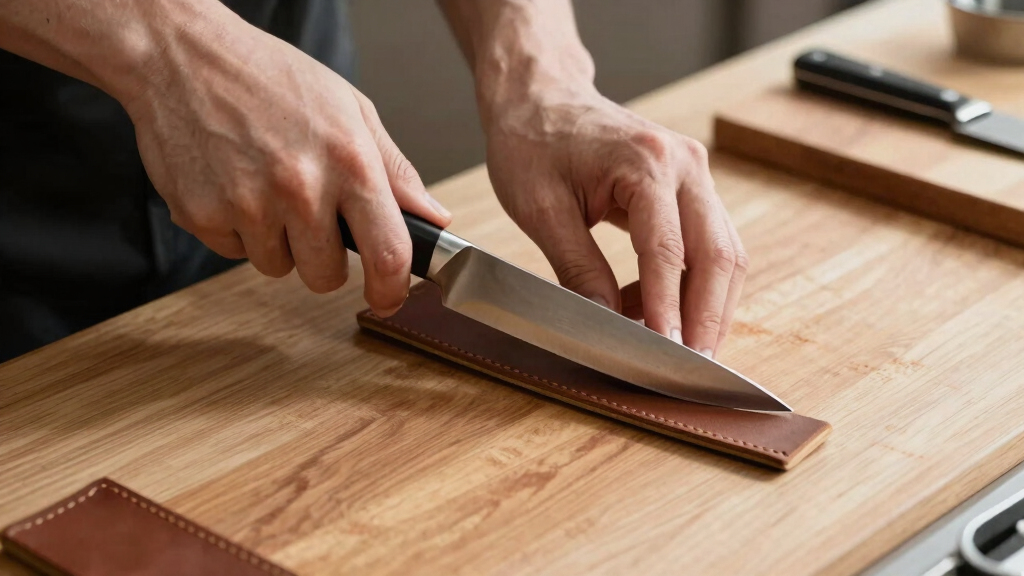
- Hold your knife at a consistent angle—about 15-20 degrees. Think of it as a gentle tilt, not a steep incline.
- Place the blade on the leather near the handle, with the edge facing away from you.
- Gently draw the blade back along the leather, moving away from the tip. Use light pressure—you’re polishing, not cutting.
- Maintain that angle throughout the stroke. Imagine slicing through a thin layer of butter.
- Flip the knife over and repeat on the other side if needed. Usually, a few passes per side are enough.
- Finish with a few light passes on each side to polish the edge.
Picture a chef carefully pulling a fillet knife across a leather paddle, the rhythmic scrape echoing in the quiet kitchen. That’s the simple sound of a finely maintained blade.
Why is maintaining the correct angle so crucial? Because a consistent angle ensures uniform contact along the edge, which results in a more even, polished finish. If the angle varies, you risk uneven burrs or micro-chips that can compromise the blade’s performance. Practicing a steady, controlled motion makes your stropping more effective and helps develop muscle memory for precision work.
As an affiliate, we earn on qualifying purchases.
How often should you strop for best results?
Daily stropping can keep your blades in top shape—especially if you use your knives regularly. A quick 10-15 strokes on each side can maintain that razor-sharp feeling. After every sharpening, a few light passes will polish the new edge and remove any burrs.
Why is frequency important? Regular stropping prevents microscopic burrs from forming and becoming embedded in the edge, which can dull the blade faster over time. It’s a form of preventative maintenance that extends the interval between more intensive sharpening sessions. For instance, a woodworker might strop their chisels daily to keep them performing optimally, while a home cook might do it after each use. The key is consistency—strop often enough to keep the edge refined but avoid overdoing it, which could wear down the leather or cause micro-polishing that diminishes the edge’s sharpness.
As an affiliate, we earn on qualifying purchases.
Leather types and stropping compounds: what works best?
| Leather Type | Advantages | Best For |
|---|---|---|
| Vegetable-tanned leather | Durable, smooth, develops a fine polish | High-precision blades, straight razors |
| Synthetic leather | Consistent surface, easy to clean | General maintenance, rougher blades |
| Leather belt | Accessible, cost-effective | Casual sharpening, DIY projects |
Stropping compounds like chromium oxide or diamond paste boost polishing—according to experts, they can improve the finish by 30-50%. Applying these compounds enhances the polishing process, but it’s important to understand the tradeoffs: overuse can lead to a buildup that dulls the blade or causes uneven wear. Testing on a scrap first helps prevent damage or waste, and applying sparingly ensures you get the benefits without risking over-polishing or contamination of your leather.
Common pitfalls and how to avoid damaging your blade
- Too much pressure: Pressing hard can bend or dull your edge. Use gentle, steady strokes. Excessive force can cause micro-chipping or flatten the edge, reducing its ability to cut smoothly. Learning to apply just enough pressure—like polishing a piece of glass—is key to maintaining the integrity of the edge without damaging it.
- Wrong angle: Slipping out of the 15-20 degree range dulls or chips the edge. Keep a consistent angle—use a guide if needed. Variations in angle create uneven burrs or micro-chips, which compromise cutting performance and can lead to premature dulling. Practicing with a guide or visualizing your angle helps develop a muscle memory that results in more effective stropping.
- Stropping in the wrong direction: Always draw the blade away from the edge—never push it into the leather. Pushing into the leather can cause micro-damage or fold the edge over, which diminishes sharpness. Drawing away ensures the burrs are straightened and the edge is refined without introducing new imperfections.
- Dirty or rough leather: Dirt or rough patches can scratch or dull the blade. Keep your leather clean and smooth. Dirty leather can embed debris into the edge or cause micro-scratches, reducing the blade’s smoothness. Regular cleaning and conditioning of your strop keep it in optimal condition, ensuring each pass polishes rather than damages.
Think of stropping as a dance—gentle, precise, and in sync with your blade’s natural bevel. Rushing or rough handling wrecks the process, so patience and finesse are essential for a perfectly honed edge.
Can I use a leather belt or other everyday leather items as a strop?
Yes, a clean, smooth leather belt can serve as a makeshift strop—just check for rough patches or embellishments that could scratch your blade. Ensure it’s free of dirt and oil. Attach it taut to a flat surface, and you’re good to go.
Using a belt from your off-grid gear or workshop is a practical way to keep your blades sharp, especially when traveling or working in remote settings. Just be mindful of the belt’s condition—rough or textured belts can cause micro-scratches or uneven wear, diminishing your edge quality over time. Properly preparing and maintaining your leather belt as a strop ensures you get the best results without risking damage.
In essence, everyday leather items can be effective, but understanding their condition and suitability is crucial to avoid unintended harm to your blades.
When should you stop stropping and switch to sharpening?
If your knife starts to feel dull even after stropping, or you notice chips or nicks, it’s time for sharpening. Stropping polishes the edge but doesn’t remove enough material to fix major damage or restore a very dull blade. Continuing to strop excessively can actually wear down the edge or cause micro-damage, reducing its overall performance.
For example, if your paring knife struggles to cut a tomato after regular stropping, it’s probably time to sharpen. Think of stropping as routine maintenance—keeping the edge refined, while sharpening is a more intensive process that re-establishes the original geometry of the blade. Recognizing when to switch ensures your blades stay in optimal condition and prevents unnecessary wear from over-stropping.
Frequently Asked Questions
How do I know if my knife needs stropping?
If your knife starts to drag or tear through food, or feels dull even after sharpening, it’s time to strop. A quick test: slice through a piece of paper—if it doesn’t glide smoothly, stropping can help.Can I over-strop my knife?
Yes, excessive stropping can wear down the edge or cause micro-damage. Usually, a few passes per day are enough. Pay attention to how the knife feels and adjust accordingly.What’s the best way to clean my leather strop?
Wipe it down with a damp cloth after use. If it gets greasy or sticky, a light sanding with fine grit or a leather conditioner can refresh the surface. Keep it smooth and clean for optimal performance.Is stropping effective on all types of knives?
Stropping works best on high-quality, fine-edged blades like straight razors, chef’s knives, or woodworking tools. It’s less effective for heavily damaged or very dull blades that need sharpening first.Conclusion
Stropping with leather isn’t just a maintenance step—it’s a skill that keeps your blades performing at their best. With a few simple tools and consistent practice, you turn a dull knife into one that slices like new.
Next time you finish sharpening, give your blade a quick pass on a leather strop. It’s a small step that makes a big difference—your knives will thank you with every precise cut. Keep it simple, keep it sharp.
Columbus Day / Indigenous Peoples' Day Picks
long weekend sales
As an affiliate, we earn on qualifying purchases.