
TL;DR

Get kitchen gear delivered free with Prime
- Fast, free delivery on millions of items
- Prime Video, Amazon Music and more included
- Member-only deals all year
Hand sharpening offers precision and control but requires skill, while pull-through sharpeners are quick and easy but may lack finesse. Your choice depends on your experience, patience, and how often you sharpen.
Bright, razor-sharp knives can make all the difference in your kitchen. But how you get them that way matters—whether you take the time to hone your skills with a whetstone or rely on a quick pull-through device. Each method has its own strengths, drawbacks, and ideal scenarios. Picking the right approach means understanding what they do best and what they can’t handle.
This guide clears up the confusion. You’ll learn exactly how each sharpening style works, what results you can expect, and how to decide based on your skill level and knife care goals. No fluff, just practical insight to keep your blades slicing like new.
Hand sharpening offers unmatched control and can restore damaged edges, but requires practice and patience.
Pull-through sharpeners are quick, user-friendly, and great for routine maintenance, especially for beginners.
Using a combination—deep hand sharpening periodically and pull-throughs for daily touch-ups—maximizes knife longevity.
Proper technique and quality tools are key to avoiding damage, no matter which method you choose.
Deciding depends on your skill level, frequency of sharpening, and how perfect you want your edge to be.
What Exactly Is Hand Sharpening and Why It’s Worth the Effort
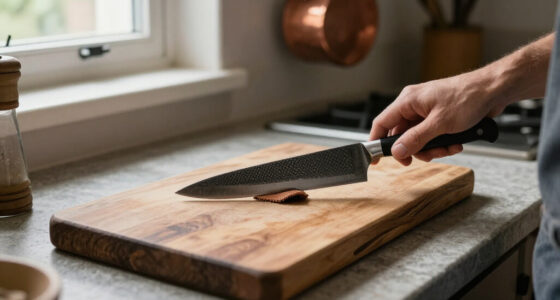
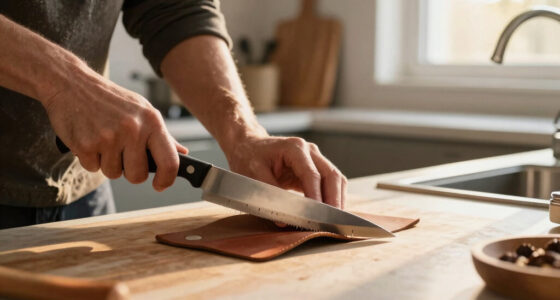
Hand sharpening is a manual process where you control the angle and pressure to restore a knife’s edge, usually with whetstones, guided systems, or ceramic rods. It’s like giving your blade a personalized grooming session, removing dullness and damage with deliberate strokes. This method offers unmatched control, allowing you to fix chips or uneven edges that pull-through sharpeners might miss.
Imagine slicing a ripe tomato—your knife glides effortlessly, thanks to a finely honed edge. That’s the result of skilled hand sharpening. It’s more than just maintenance; it’s an art that, once mastered, keeps your knives performing at their peak for decades. The key is patience and practice, but the payoff is a sharper, more durable edge that’s tailored to your cutting style.
One of the most significant advantages of hand sharpening is the ability to customize the sharpening angle and technique to match the specific needs of each knife. High-quality knives, especially those made of harder steels, benefit immensely from this tailored approach, which can preserve the integrity of the blade’s geometry. However, this customization requires understanding the tradeoffs—too steep an angle can make the edge fragile, while too shallow may reduce cutting performance. Mastering these nuances means balancing finesse with durability, ultimately giving you a finely tuned edge that maximizes your knife’s lifespan and performance.
As an affiliate, we earn on qualifying purchases.
Pull-Through Sharpeners: Fast, Simple, and Perfect for Beginners
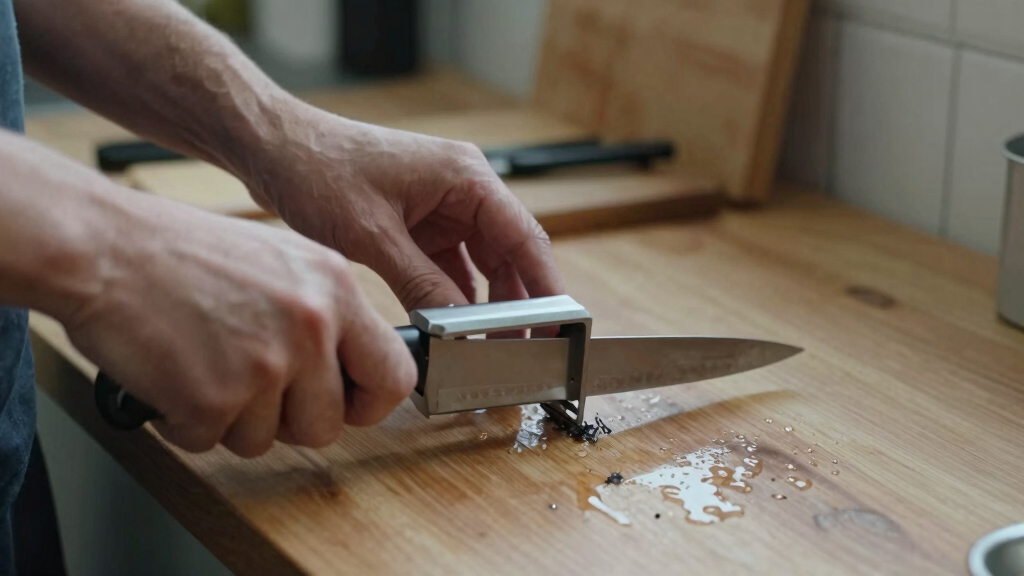
Pull-through sharpeners are the kitchen workhorses of convenience. They’re small, easy to use, and require no skill—simply place your knife in the slot and pull. They usually have preset angles and multiple stages—coarse for dull blades, fine for finishing—making quick work of sharpening chores.
Picture yourself in a rush, preparing dinner. You grab the pull-through, give the blade a few pulls, and suddenly it slices through a tomato like a hot knife through butter. That’s the appeal—speed and ease. They’re perfect for maintaining a sharp edge between professional sharpenings or for those new to knife care. But beware—poor technique or low-quality models can cause uneven edges or blade damage.
While pull-through sharpeners are undeniably convenient, they come with tradeoffs. The fixed angles often don’t match the optimal bevel for every knife, which can lead to uneven wear or a less refined edge over time. Furthermore, aggressive or improper use can cause micro-chipping or weaken the blade’s structure. Therefore, understanding their limitations helps you use them wisely—treating them as a maintenance tool rather than a replacement for more precise sharpening methods.
As an affiliate, we earn on qualifying purchases.
Table: Hand Sharpening vs Pull-Through Sharpeners — The Clear Differences
| Feature | Hand Sharpening | Pull-Through Sharpeners |
|---|---|---|
| Method | Manual control, skill-based | Mechanical, preset slots |
| Precision | High — customizable angles | Moderate — fixed angles |
| Ease of Use | Steep learning curve | Very simple, beginner-friendly |
| Speed | Slower, requires practice | Fast, one or two pulls |
| Cost | Higher initial investment (stones, guides) | Affordable, low-maintenance |
| Best For | Deep sharpening, fixing damage | Routine touch-ups, maintenance |
As an affiliate, we earn on qualifying purchases.
How to Decide: Which Sharpening Method Fits Your Skills and Needs
Choosing between hand sharpening and pull-through tools boils down to your comfort level, knife condition, and how often you sharpen. If you’re willing to learn, hand sharpening offers a sharper, more durable edge. It’s like fine-tuning a musical instrument—deliberate, precise, rewarding.
For busy kitchens or beginners, pull-through sharpeners deliver quick results with less fuss. They’re like a quick tune-up—good enough for daily use but not quite the same as a professional finish. Think about your goals: do you want perfection or convenience?
Deciding which method to adopt involves understanding the long-term implications. Hand sharpening, though more time-consuming initially, can significantly extend the lifespan of your knives because it allows you to maintain the correct bevel and remove damage carefully. Conversely, improper use of pull-throughs can accelerate wear or cause micro-chipping, which might require professional intervention later. Weigh these tradeoffs against your patience, skill level, and maintenance priorities to choose the method that aligns best with your kitchen habits.
- Assess your skill level and patience.
- Identify how dull your knives get and what damage they sustain.
- Decide how often you want to sharpen or maintain your blades.
- Match your needs with the tool’s strengths.
As an affiliate, we earn on qualifying purchases.
Practical Tips for Getting the Most Out of Each Method
For hand sharpening: Practice makes perfect. Start with a medium grit stone, maintain a consistent angle—usually around 15-20 degrees—and use smooth, deliberate strokes. Keep the stone wet to reduce heat and debris buildup. Take your time; it’s about control, not speed.
For pull-through sharpeners: Always follow the manufacturer’s instructions. Use light, steady pressure and avoid forcing the blade through. Regularly clean the slots to prevent grit buildup. And don’t overdo it—once or twice a month is enough for maintenance.
Remember, the key is understanding the implications of each method—over-sharpening or applying uneven pressure can damage your blades or reduce their lifespan. Proper technique ensures you’re preserving your knives’ integrity, whether you’re refining an edge with a stone or giving it a quick refresh with a pull-through.
Final Takeaway: It’s Not About Which Is Better, But Which Is Right for You
Mastering your knife’s edge is a skill that pays off in safety and performance. Hand sharpening delivers the sharpest, most precise results, extending your blades’ lifespan. But for quick fixes and daily upkeep, pull-through sharpeners are a reliable, no-fuss solution.
Think of it as choosing between a fine-tuned instrument and a trusty toolbox—both are valuable, but your choice depends on your patience and goals. Combining both methods can give you the best of both worlds, allowing you to perform deep, precise sharpening when needed and quick touch-ups for everyday use.
Frequently Asked Questions
Can I learn to sharpen knives effectively with a pull-through sharpener?
Absolutely. Pull-throughs are designed for ease and consistency, making them accessible for beginners. While they may not achieve the same precision as hand sharpening, they still keep your knives sharp and safe for everyday use.
How often should I sharpen my knives?
This varies with use, but generally every 2-4 months for regular kitchen knives. Use a honing steel more frequently—every few weeks—to keep edges aligned between sharpening sessions.
Are pull-through sharpeners safe for all types of knives?
Most are safe if used correctly, but low-quality or poorly maintained models can cause uneven edges or chipping. Always follow the manufacturer’s instructions and avoid forcing the blade through.
What tools do I need for hand sharpening?
Popular options include whetstones, guided sharpening systems, ceramic rods, and honing steels. Each offers different control levels and suits various skill levels.
Is one method better for preserving expensive, high-quality knives?
Yes—hand sharpening is generally better for high-end knives because it allows precise control and minimizes damage, helping your investment last for years.
Conclusion
Sharpening your knives is about more than just making cuts easier—it’s about preserving your tools and your skills. Whether you invest time in hand sharpening or stick to pull-throughs for convenience, the goal is a blade that slices cleanly and safely. Keep your knives sharp, your skills sharpener-ready, and your kitchen sharp—and every slice will tell the story of a tool well cared for.
Columbus Day / Indigenous Peoples' Day Picks
long weekend sales
As an affiliate, we earn on qualifying purchases.