
TL;DR

Get kitchen gear delivered free with Prime
- Fast, free delivery on millions of items
- Prime Video, Amazon Music and more included
- Member-only deals all year
Stropping a knife with leather is a finishing step that polishes and realigns the edge, extending sharpness without removing metal. Regular, proper technique keeps your blades performing their best for years.
Use a consistent 15-20° angle for best stropping results.
Apply a thin, even layer of honing compound to avoid dulling or damaging the leather.
Light pressure is key—let the leather and compound do the work.
Regular stropping maintains edge sharpness and prolongs blade life.
Avoid back-and-forth motion; always draw the blade away from the edge.
Why Leather Stropping Boosts Your Knife’s Sharpness Fast
Leather stropping is a finishing move for your knife’s edge. It’s like giving your blade a gentle polish that removes microscopic burrs and straightens the edge. Unlike sharpening, which slices away material, stropping realigns what’s already there. Think of it as smoothing out tiny misalignments that build up over time from regular use. When you sharpen, you remove metal, which can weaken the blade if done excessively. Stropping, on the other hand, maintains and enhances the existing edge without material loss. This means your knife stays strong and sharp longer, with less frequent sharpening needed.
Using leather with honing compound amplifies this effect, because the compound acts as a fine abrasive that gently polishes the edge and encourages micro-burrs to straighten in the correct direction. Regularly stropping can prevent the edge from developing micro-chips or rollovers, which compromise cutting performance. It’s especially useful in off-grid scenarios where access to sharpening tools is limited—strop your knife every day or after heavy use to keep it performing at its peak. Understanding the subtle balance between polishing and maintaining the edge helps you avoid overdoing it, which can cause micro-damage or micro-chipping. When done correctly, leather stropping becomes a vital part of your knife maintenance routine, extending the interval between more invasive sharpening sessions and preserving the integrity of your blade over time.
leather knife strop with honing compound
As an affiliate, we earn on qualifying purchases.
As an affiliate, we earn on qualifying purchases.
Step-by-Step: How to Properly Strop Your Knife with Leather
- Start with a clean, dry leather strop—either a mounted strip or a portable paddle. Cleansing the leather of dust, oils, and debris prevents microscopic scratches during stropping that can dull or damage the edge over time. A well-prepared surface ensures consistent contact and effective polishing, which directly influences the longevity and sharpness of your knife’s edge.
- Apply a thin, even layer of honing compound—such as chromium oxide—across the entire leather surface. Use a soft cloth or your finger to spread it evenly. This compound acts as a micro-abrasive, encouraging tiny metal fibers to realign and polish the edge. The amount of compound matters: too much can clog the leather and hinder the polishing process, while too little may not provide enough abrasive action. The uniformity of application ensures the entire edge receives consistent treatment, preventing uneven wear or micro-chipping, which can severely affect cutting performance over time.
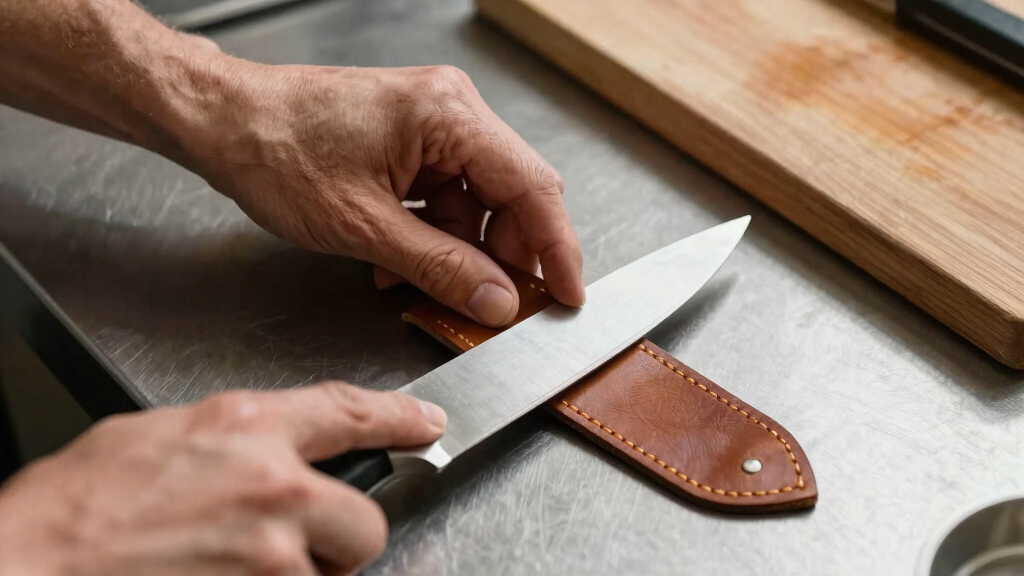
- Hold your knife at a steady 15-20° angle—think of slicing a tomato with a gentle, controlled motion. Maintaining this consistent angle is crucial because it ensures the entire length of the edge contacts the leather evenly. An inconsistent angle can cause uneven sharpening, micro-burr formation, or micro-chipping, which diminishes the overall quality of the edge.
- Draw the blade away from the edge across the leather in a smooth, controlled motion, maintaining the angle and applying minimal pressure—just enough for the compound and leather to do their work. Avoid pressing down or using a back-and-forth motion, which can create micro-chips or uneven wear. This movement polishes the edge, removes micro-burrs, and encourages micro-structures to straighten, leading to a cleaner, sharper cut.
- Flip the knife and repeat on the other side. Perform 10-20 passes per side, ensuring you distribute the work evenly. Balancing the number of passes prevents asymmetric wear and maintains the blade’s symmetry, which is essential for optimal cutting precision. Overdoing it can cause micro-damage, so listen for the feel of a polished, smooth edge and visually inspect for uniformity.
- Clean the blade and test its sharpness—using a piece of paper or a tomato. Repeat the stropping process as needed, stopping once the edge feels polished and smooth. Excessive stropping can lead to micro-damage or micro-chipping, so paying attention to the tactile and visual cues ensures you don’t overdo it. This careful, deliberate process keeps your knife performing at its best without unnecessary wear.
As an affiliate, we earn on qualifying purchases.
Choosing the Right Leather and Compound for Best Results
| Leather Type | Best For |
|---|---|
| Smooth vegetable-tanned leather | General kitchen knives, woodworking tools |
| Suede or rough leather | Heavy-duty blades needing more aggressive polishing |
Most hobbyists prefer a smooth, vegetable-tanned leather because it provides a gentle, consistent polishing surface that minimizes micro-scratches while effectively realigning the edge. Pairing it with a fine honing compound like chromium oxide creates a mirror-like finish that feels razor-sharp after just a few passes. The choice of leather directly impacts the final finish: softer, smoother leather with fine compounds yields a refined, polished edge ideal for delicate tasks, while rougher leather with more abrasive compounds is suited for heavily used or damaged blades needing more aggressive correction. The right combination ensures you balance efficiency with the quality of the finish, prolonging the life of your knife and keeping it performing at its best.
knife sharpening and stropping kit
As an affiliate, we earn on qualifying purchases.
As an affiliate, we earn on qualifying purchases.
Common Mistakes That Ruin Your Leather Strop and How to Avoid Them
- Applying too much pressure—think of a gentle petting motion rather than squeezing a sponge. Excessive force can cause micro-burrs, micro-chipping, or even roll the edge, which defeats the purpose of stropping. Light, controlled passes allow the abrasive compound and leather to work harmoniously, polishing and straightening the edge without damage. Developing this delicate touch is essential because overpressure can undo the benefits of your careful sharpening efforts and lead to a duller, less effective edge over time.
- Using a dull or uneven leather surface—always keep your leather clean and conditioned. A rough, dirty, or cracked strop introduces micro-scratches and uneven polishing, which can cause micro-damage and reduce the overall sharpness. Proper maintenance of your leather strop ensures its surface remains smooth and consistent, which is vital for achieving a fine, polished edge. Regular conditioning and cleaning extend the life of your strop and maintain its effectiveness, preventing small imperfections from translating into larger issues on your blade.
- Stropping in the wrong direction—always pull the blade away from the edge, not back toward it. Stropping against the edge or with inconsistent motion can cause micro-chips or uneven wear. Consistent, deliberate strokes in the correct direction help realign the micro-teeth of the edge and remove micro-burrs, resulting in a cleaner, sharper cut. This discipline ensures the edge remains uniform and prevents the formation of micro-damage that can compromise cutting performance over time.
- Neglecting the angle—staying consistent around 15-20° makes all the difference. Fluctuating the angle or pressing too hard causes micro-burrs, uneven edge realignment, and micro-chipping, which diminishes sharpness and can lead to a less durable edge. Practicing a steady, controlled angle ensures each pass effectively polishes and aligns the edge, preserving its integrity. Consistency in technique is key to avoiding micro-damage and maintaining a razor-sharp edge that lasts longer.
For example, pressing too hard during stropping can distort or roll the edge rather than polish it. The key is to use gentle, deliberate passes—your knife will thank you. Developing a steady hand and maintaining a consistent angle prevents micro-damage and micro-chipping, ensuring your blade remains in optimal condition for longer periods. Proper technique turns a simple leather strop into a precise tool for maintaining your knife’s performance, saving you time and effort in the long run.
professional leather strop for kitchen knives
As an affiliate, we earn on qualifying purchases.
As an affiliate, we earn on qualifying purchases.
Frequently Asked Questions
How often should I strop my knife?
If you’re using your knife daily, a quick stropping after each session helps maintain sharpness. For less frequent use, stropping once a week or after heavy chopping is usually enough.Can I use a regular leather belt for stropping?
Yes, but it’s less ideal. Belts aren’t usually prepared with honing compound and may have rougher surfaces. For best results, use a dedicated leather strop or paddle treated with honing paste.What’s the main difference between stropping and sharpening?
Sharpening removes metal to create a new edge, while stropping polishes and straightens the existing edge, extending sharpness without material removal.What angle should I hold my knife at during stropping?
Most knives work well at around 15-20°, similar to slicing a tomato without pressing down hard. Keep this angle steady for even results.Is stropping effective for very dull knives?
Stropping alone won’t fix a dull or nicked blade. It’s best used after sharpening or as a regular maintenance step to keep a fine edge polished.Conclusion
A few gentle passes on a well-prepared leather strop can turn a dull knife into a razor-sharp tool. It’s a simple skill that rewards you with cleaner cuts and less frustration. Remember: consistency and technique matter more than brute force. Keep your leather clean, your angle steady, and your blade will thank you every time you use it.Columbus Day / Indigenous Peoples' Day Picks
long weekend sales
As an affiliate, we earn on qualifying purchases.