TL;DR

Get kitchen gear delivered free with Prime
- Fast, free delivery on millions of items
- Prime Video, Amazon Music and more included
- Member-only deals all year
To keep knives sharp longer, hone regularly with a steel, sharpen with quality tools when needed, store properly, and avoid hard cutting surfaces. These simple steps can dramatically improve blade longevity.
Nothing’s more frustrating than reaching for your favorite chef’s knife, only to find it dull and unresponsive. A dull blade doesn’t just slow you down; it can be dangerous, requiring more force that increases the risk of slips and cuts.
But sharp knives don’t have to be a constant struggle. With a few simple habits and tools, you can keep your blades slicing cleanly for months longer. Think of your knife as a finely tuned instrument—regular maintenance keeps it performing at its best.
Regular honing with a quality steel keeps your edge aligned and extends the time between sharpenings.
Use a guided sharpening system or proper stones at consistent angles for best results, especially with high-tech steels.
Proper storage—like magnetic strips or knife blocks—prevents accidental dulling and chipping.
Choose blades made from durable materials suited to your use, and understand their maintenance needs.
Pay attention to signs like food sticking or uneven cuts—these indicate it’s time to sharpen or hone.
The Simple Habit That Keeps Your Knife Cutting Like New
Honing is your secret weapon for maintaining a sharp edge every day. It’s not sharpening; it’s realigning the microscopic teeth on the blade’s edge so they can work together efficiently again. This process corrects minor misalignments caused by everyday use, which can otherwise lead to a duller, less effective blade over time.
For example, before chopping vegetables, run your knife down the steel 5-8 times, maintaining a consistent angle. This ensures each use realigns the edge, reducing the frequency of more invasive sharpening. Regular honing prevents the edge from bending or developing burrs, which are tiny, rough fragments that compromise cutting performance.
Tip: Choose a high-quality honing steel with a comfortable handle and a sturdy rod, preferably with a ceramic or steel surface. Proper technique and consistency are key—improper honing can damage the edge or make it less effective.
As an affiliate, we earn on qualifying purchases.
When and How to Sharpen Your Knives Without Destroying Them
Sharpening is a more aggressive process that actually removes tiny metal slivers from the blade to restore a dull or damaged edge. It matters because a dull or chipped blade not only makes cutting harder but also increases the risk of accidents, as more force is needed and control diminishes.
Proper sharpening technique is critical; too much or uneven removal of metal can weaken or warp the blade, shortening its lifespan. Using the right tools and maintaining a consistent angle ensures the edge is restored evenly, preserving the integrity of the blade.
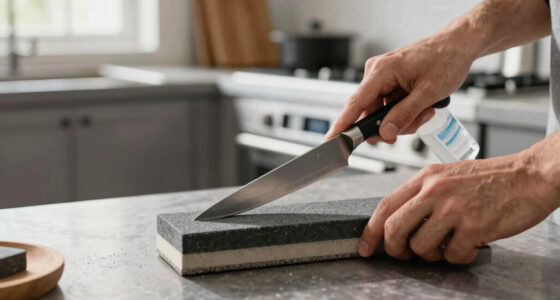
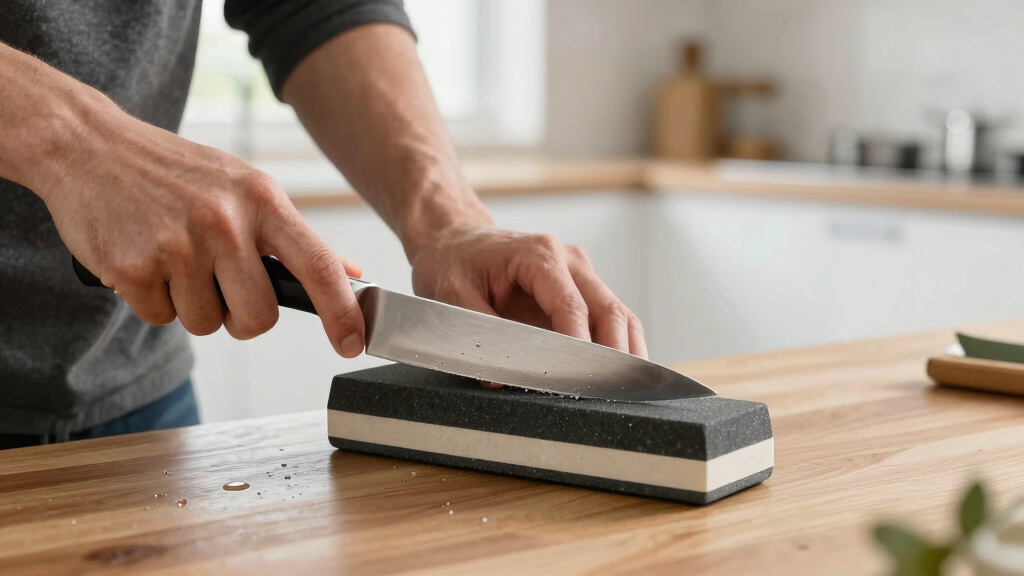
Here’s a step-by-step for sharpening with a whetstone:
- Soak the stone in water for 10-15 minutes to lubricate the abrasive surface and prevent metal clogging, which can reduce effectiveness.
- Set the angle—usually 15-20° for kitchen knives—using guides or by practicing consistent hand positioning. A stable, repeatable angle is essential for a durable edge.
- Apply gentle, even pressure and slide the blade across the stone from heel to tip, making about 10 passes per side. This removes metal evenly and avoids creating uneven bevels.
- Finish with a finer grit to polish the edge, reducing micro-burrs that can catch food or dull quickly.
Tip: Use a guided sharpening system if you’re new—this keeps the angle consistent and prevents uneven edges. Regular maintenance with proper technique prolongs the lifespan of your blades and keeps them performing at peak efficiency.
As an affiliate, we earn on qualifying purchases.
Compare Different Storage Options to Prevent Dulling
| Storage Method | Pros | Cons |
|---|---|---|
| Knife block | Easy access, protects blades from accidental damage | Can dull blades if poorly made, packed tight, or if blades rub against each other repeatedly, causing micro-chipping or dulling over time |
| Magnetic strip | Prevents dulling by avoiding contact with hard surfaces, easy to see all knives at once | Potential for blades to chip if knocked or dropped, especially with harder steels or brittle blades |
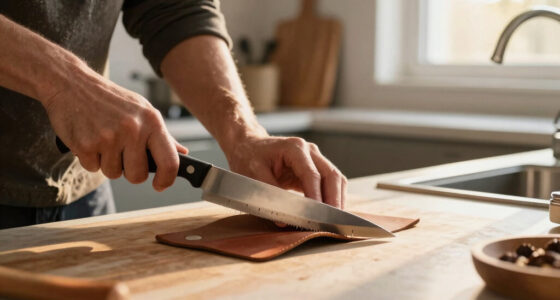
| Protective sheaths | Good for storage in drawers or off-grid setups, reducing exposure to moisture and air | Requires careful handling; improper insertion or removal can dull edges or cause minor chips, especially with thin or delicate blades |
Tip: Avoid leaving knives loose in drawers or on hard surfaces, as this can cause micro-abrasions or chips that degrade the edge over time. Proper storage minimizes accidental impacts and maintains blade integrity, which is essential for preserving sharpness and safety.
As an affiliate, we earn on qualifying purchases.
The Best Materials and Tools for Long-Lasting Sharpness
Material choice impacts how often your knife needs sharpening and how well it maintains its edge. High-carbon steel blades—like Japanese VG-10—are easier to sharpen and tend to hold an edge longer because of their fine grain structure and ability to be sharpened to a very acute angle. However, they are more prone to rust and corrosion if not properly cared for, which can compromise their integrity over time.
Stainless steels resist rust and corrosion better, making them more suitable for everyday use, but they often dull faster because they are harder and may have a less refined grain structure. Recent advances in alloy technology include powders and composites that maintain an ultra-sharp edge longer, reducing the frequency of sharpening needed. Ceramic knives, for example, stay sharp for up to 10 times longer than steel but are brittle and prone to chipping or breaking if mishandled or dropped—highlighting a tradeoff between longevity and durability.
Guided sharpening systems with angle guides help maintain a consistent edge, thereby extending the tool’s lifespan. For example, a guided system set at 20° ensures uniformity and precision, resulting in a sharper, more durable edge than freehand sharpening, which can introduce inconsistencies and micro-defects that shorten the blade’s effective life.
As an affiliate, we earn on qualifying purchases.
Quick Fixes: Signs Your Knife Needs Immediate Attention
Spotting when your knife needs sharpening can save you from further dulling or damaging the edge. If your food starts sticking to the blade, requiring extra pressure to cut, or if your slices are uneven or torn, it’s a clear sign that the edge has dulled and needs attention. Ignoring these signs can lead to more severe dullness or chipping, which requires more extensive repair or replacement.
Another indicator is a burr—a tiny, rough edge that forms along the blade when it’s dull or improperly sharpened. You can test for this by slicing through a piece of paper; if the blade tears or drags instead of slicing cleanly, the edge is compromised. Also, feeling the edge with your fingertip (carefully) can reveal micro-burrs or rounding.
Addressing dullness early prevents the need for aggressive sharpening, which can remove too much material and weaken the blade. Regularly inspecting your knives and responding promptly to these signs ensures they stay in optimal condition, reducing the risk of accidents and maintaining cutting precision, especially when handling tough ingredients like carrots or winter squash.
Frequently Asked Questions
How often should I sharpen my knives?
Most home cooks should hone daily and sharpen every 6-12 months, depending on how often they use their knives. If your cuts become uneven or food sticks, it’s time to sharpen.
What’s the best way to sharpen a knife at home?
Use a sharpening stone, guided system, or electric sharpener suited to your blade’s material. Maintain a consistent angle—usually 15-20°—and follow the step-by-step process for best results.
Can I use a regular steel for sharpening?
A honing steel is for realigning the edge, not sharpening. To sharpen, you need a whetstone or a professional sharpener that removes metal to restore the edge.
Are ceramic knives harder to sharpen?
Yes, ceramic blades are more brittle and require special tools or professional sharpening. They stay sharp longer but need care to avoid chipping or breaking.
How do I prevent my knives from dulling quickly?
Use proper cutting surfaces like wood or plastic, avoid chopping on glass or stone, clean and dry after use, and store carefully in a magnetic strip or protective sheath. Regular maintenance and mindful use extend the life of your blades.
Conclusion
Your knives aren’t just tools—they’re investments in your kitchen. With a little care, they’ll slice through ingredients smoothly for years to come. Think of honing daily, sharpening as needed, and storing carefully as simple rituals that pay off big time.
Keep your blades sharp, and your cooking will feel more precise, more joyful. After all, a sharp knife isn’t just about cutting—it’s about elevating your entire kitchen game.
Halloween Picks
halloween
As an affiliate, we earn on qualifying purchases.