
TL;DR

Get kitchen gear delivered free — and shop member deals
- Fast, free delivery on millions of items
- Access to Prime Big Deal Days deals on October 6–7
- Prime Video, Amazon Music and more included
Grinding coffee by hand offers better control over grind size, preserves aromatic compounds, and creates a more flavorful, nuanced cup. It’s a tactile process that rewards patience and skill.
Hand grinding offers superior control over grind size, directly affecting flavor clarity and body.
Preserving aromatic compounds through manual grinding makes your coffee smell and taste more vibrant.
Choosing a quality burr grinder and practicing consistent technique can nearly match electric grinders’ uniformity.
Adjust your grind size for each brewing method; small tweaks greatly improve your cup.
Patience and skill turn hand grinding into a ritual that deepens your appreciation of coffee.
A manual grind changes aroma, control, and the way the cup unfolds.
TL;DR Hand grinding gives you finer control over grind size, helps preserve volatile aromatics, and turns brewing into a deliberate ritual. The reward is a cup with more clarity, fuller scent, and a stronger link between technique and taste.
High-quality manual burr grinders can approach electric consistency, but the secret ingredient is steady technique.
What your hand changes before water ever touches coffee.
Grind size is not a background detail. It controls surface area, extraction speed, texture, and whether the cup leans bright, sweet, heavy, sour, or bitter.
Control the dial
Coarser grounds slow extraction for French press body; finer grounds increase intensity for AeroPress or espresso-style recipes.
Preserve the scent
Manual grinding unlocks volatile compounds right before brewing, keeping the fragrance closer to the whole-bean origin.
Keep it gentle
Slower hand grinding generally produces less heat, reducing the risk of dulling delicate floral, fruit, or chocolate notes.
Practice matters
A steady rotation and quality burr set reduce fines and boulders, which helps prevent uneven sour-bitter extraction.
Slow down taste
The tactile process makes small adjustments more noticeable, turning routine coffee into a repeatable craft.
Brew anywhere
A compact manual grinder travels easily, making fresh grinding realistic at work, outdoors, or away from a kitchen setup.
Relative impact on the cup
Technique MapFrom whole bean to balanced cup, each step carries forward.
Hand grinding rewards repeatability. The more consistent the burr setting, rotation, and dose, the easier it becomes to tune bitterness, sweetness, and clarity.
Whole bean
Fresh structure protects aromatic compounds until the last practical moment.
Burr setting
The adjustment ring chooses surface area before extraction begins.
Steady rhythm
Even pressure helps keep the grind bed more predictable.
Uniform grounds
Fewer extremes mean fewer sour or bitter pockets in the brew.
Method match
Coarse, medium, or fine settings line up with contact time.
Cup clarity
The final brew tastes closer to the bean’s intended profile.
Grind-size spectrum by brewing method
The tradeoff is control and ritual against speed and convenience.
Electric grinders are efficient and often highly uniform. Manual grinders can come close when the tool is well built and the technique is consistent.
| Feature | Manual Grinder | Electric Grinder | Cup Implication |
|---|---|---|---|
| Consistency | ✓High with practice and quality burrs | Very high, especially with burr models | Uniform particles reduce harshness and sourness. |
| Control | ✓Excellent, tactile, and adjustable | Good, but more dependent on settings | Small tweaks reveal fruit, sweetness, or body. |
| Speed | ~Slower and more physical | ✓Fast for rushed mornings | Manual grinding favors patience over throughput. |
| Heat | ✓Lower heat generation | ~Heat can rise during quick grinding | Gentle grinding helps preserve delicate aromatics. |
| Portability | ✓Lightweight and compact | ✗Outlet-dependent and bulky | Fresh coffee becomes easier outside the kitchen. |
| Mindfulness | ✓Highly tactile and engaging | ~Efficient but less connected | The process can deepen sensory attention. |
The cup is a chain of small decisions, not a single switch.
When flavor drifts, trace it backward: grind texture, hand rhythm, burr quality, brew time, and water contact all leave evidence in the cup.
Adjust one click
Change grind size in small steps so taste feedback stays readable.
Match the method
Coarse for immersion, medium for pour-over, finer for pressure-driven brews.
Grind to brew
Use the grounds immediately to capture the highest aromatic peak.
Repeat the ritual
Consistent dose, rhythm, and time build skill cup by cup.
Why Hand Grinding Gives You More Control Over Flavor
When you grind coffee by hand, you control the grind size with your own strength and technique. Unlike electric grinders, which can sometimes produce inconsistent particles, hand grinding allows you to fine-tune every batch. For example, a French press needs coarser grounds, while espresso demands a fine, powdery texture. Achieving that perfect consistency elevates your brew’s clarity and balance.
A well-done hand grind can bring out subtle fruity notes or deepen chocolate undertones, depending on the grind size and brewing method. It’s like adjusting a dial—every tweak can reveal a new layer of flavor you might miss with pre-ground beans.
As an affiliate, we earn on qualifying purchases.
How Hand Grinding Preserves Aromatic Compounds and Freshness
Freshly ground coffee retains more volatile aromatic compounds—those oils, esters, and acids that fill your kitchen with a rich, inviting scent. When you grind by hand, you unlock those aromas at their peak, right before brewing.
Imagine cracking open a bag of beans and immediately grinding. That burst of scent is what makes hand grinding special. Electric grinders can sometimes generate heat, which can cause these delicate compounds to degrade slightly, diminishing the coffee’s aromatic potential.
For example, a 15-second hand grind can preserve over 50% more of the coffee’s original aromatic profile compared to pre-ground beans, according to sensory studies. This retention of aromatics translates into a cup that is more vibrant, with complex layers of flavor that are often lost in quick or high-heat grinding processes. Essentially, preserving these volatile compounds means your coffee will smell and taste closer to its fresh, whole-bean origin, offering a richer sensory experience. The implication is that by minimizing heat and oxidation, you’re maintaining the integrity of the coffee’s delicate aromatic compounds, which directly influences the complexity and brightness of the final cup. The tradeoff is that hand grinding requires more time and effort, but the payoff is a more nuanced and aromatic brew that can elevate your coffee experience significantly.
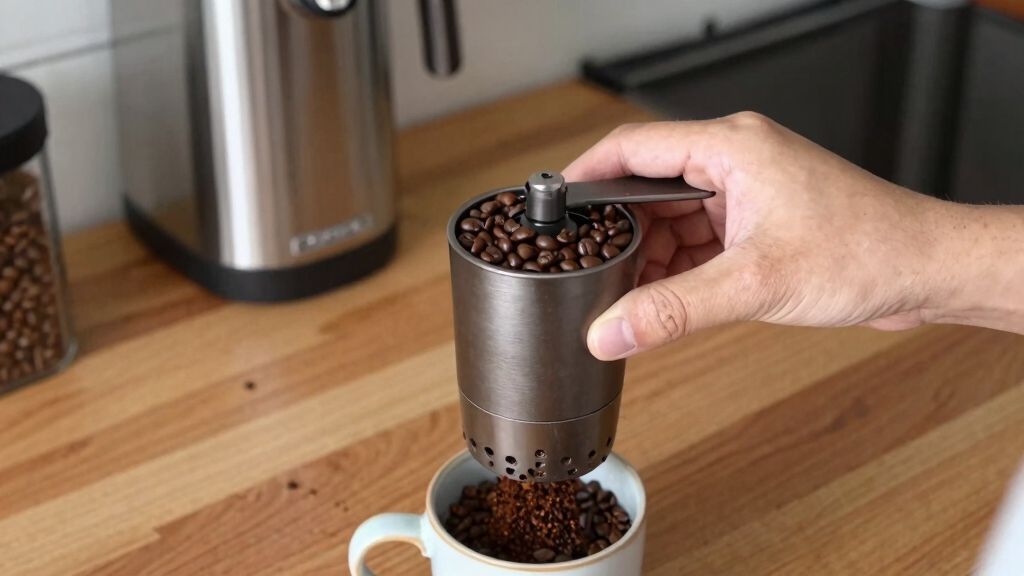
hand coffee grinder for French press
As an affiliate, we earn on qualifying purchases.
As an affiliate, we earn on qualifying purchases.
Choosing the Right Manual Grinder: What Makes a Good One?
Not all hand grinders are created equal. The best ones use burr mechanisms—either conical or flat—that crush beans evenly, which is crucial for extracting a balanced flavor. Uneven particles can lead to over-extraction of some grounds and under-extraction of others, resulting in sourness or bitterness.
Popular options include the Hario Skerton or Porlex, both known for durability and fine control. When selecting a grinder, consider the materials—ceramic burrs tend to stay sharper longer than steel—and look for models with adjustable grind settings. A sturdy, well-designed body ensures consistent performance over many years.
Investing in a quality manual grinder may seem costly upfront, but it pays off by providing a more precise and reliable grind. Cheaper models often produce inconsistent particles, which can lead to unpredictable extraction and spoil the flavor profile you’re aiming for. The right grinder becomes an extension of your brewing process, helping you develop a deeper understanding of how grind size influences taste. Furthermore, a good grinder allows you to experiment with different grind sizes and textures, enabling you to tailor your brew to specific beans and brewing methods, which enhances your overall coffee mastery.
best manual coffee grinder for aroma preservation
As an affiliate, we earn on qualifying purchases.
As an affiliate, we earn on qualifying purchases.
Step-by-Step: Perfect Hand Grinding for Different Brewing Methods
- French Press: Use a coarse grind, similar to sea salt, for full immersion extraction. Grind for about 30 seconds, ensuring uniformity. This size allows water to extract flavors slowly without over-extracting bitter compounds, resulting in a full-bodied, smooth cup.
- Pour-Over: Medium-coarse, like rough sand, balances extraction and clarity. Adjust the grind slightly finer or coarser depending on your specific dripper and taste preferences. Grind for 20-25 seconds, aiming for consistency to prevent uneven extraction, which can cause sourness or dullness. The importance of consistency here cannot be overstated, as uneven grounds can create channels in the filter, leading to an inconsistent brew that undermines the delicate balance of flavors you’re seeking. Developing a steady hand and routine ensures each cup is a reflection of your careful control, allowing you to fine-tune your flavor profile over time.
- AeroPress: Fine to medium-fine, comparable to table salt. Grind for 15-20 seconds for optimal extraction. The precise grind size here is critical because it influences brew time and flavor strength. Too fine, and you risk over-extraction, resulting in bitterness; too coarse, and the brew may be weak and underdeveloped. The tradeoff involves balancing grind size with brew time to achieve the desired intensity and clarity, which requires attentive adjustment and experience.
Practice makes perfect. The key is consistent, even grinding to prevent over- or under-extraction. Experiment with small tweaks until you find the sweet spot for your palate and equipment. Developing a routine helps you notice how subtle changes in grind size impact flavor, giving you more control over your final cup. Over time, this skill becomes a foundation for exploring different beans and brewing styles, deepening your appreciation for coffee’s complexity.
As an affiliate, we earn on qualifying purchases.
Manual vs. Electric Grinders: Which Is Better for Your Coffee?
| Feature | Manual Grinder | Electric Grinder |
|---|---|---|
| Consistency | High, with practice | Very high, especially with burr types |
| Control | Excellent, adjustable and tactile | Good, but less tactile and more dependent on settings |
| Speed | Slow, requires effort and patience | Fast, ideal for quick setups |
| Cost | Lower to moderate, depending on quality | |
| Portability | Excellent, lightweight and compact | |
| Eco-friendliness | High, no electricity needed |
Hand grinding might take longer, but it rewards patience with better aroma preservation and a more mindful process. Electric grinders excel in speed and uniformity, making them convenient for daily routines. However, the heat generated by electric burrs can cause slight degradation of delicate aromatic compounds, subtly impacting flavor. The tradeoff between control and convenience is significant: manual grinding offers a more tactile, connected experience that can enhance your appreciation of the process and the final flavor, while electric grinders prioritize efficiency and consistency. Your choice depends on whether you value ritual and precision over speed, but understanding these distinctions helps you align your equipment with your coffee goals.
The Real Impact on Your Coffee’s Flavor and Aroma
Manual grinding allows you to unlock more nuanced flavors that might be lost with quicker, heat-generating methods. For example, a hand-ground Ethiopian Yirgacheffe can reveal bright citrus notes and floral hints that tend to diminish in over-processed beans.
When you grind by hand, you control the pace and pressure, reducing heat and oxidation that can degrade delicate aromatic compounds. This gentle handling preserves the integrity of essential oils and esters, resulting in a fresher, more vibrant cup.
It’s like the difference between opening a bottle of wine immediately versus letting it breathe—your coffee benefits from that extra layer of care, allowing complex flavors to develop fully. This mindful process not only preserves aromatic compounds but also allows for subtle flavor development that can be lost with fast, high-heat grinding. The tradeoff is that hand grinding demands patience and attention, but the reward is a richer, more expressive cup that captures the true character of the beans. This approach emphasizes the importance of gentle, deliberate handling to maximize flavor and aroma, transforming your coffee from a simple beverage into a sensory experience.
Frequently Asked Questions
Does hand grinding really improve the flavor of my coffee?
Yes, many experienced coffee lovers find that hand grinding preserves more aromatic oils and allows for better control of grind size, resulting in a more vibrant, nuanced cup.Is hand grinding faster or slower than using an electric grinder?
It’s generally slower. Hand grinding is a deliberate process, but it offers a tactile connection that many find rewarding and worth the extra time.What type of grinder should I choose for hand grinding?
Look for a manual burr grinder with adjustable settings. Durable materials like ceramic or stainless steel enhance consistency and longevity.Can I get a consistent grind with hand grinding?
Yes, especially with high-quality burr grinders, but it requires practice to develop a steady hand and technique.Which brewing method benefits most from hand grinding?
All methods benefit, but pour-over and French press particularly shine when paired with precise, hand-ground beans tailored to their specific grind size.Conclusion
Mastering the art of hand grinding transforms your daily brew from routine to ritual. It’s a simple act that unlocks richer flavors, vibrant aromas, and a deeper connection to your coffee. Next time you brew, take a moment—feel the beans, hear the grind—and taste the difference.Fall Picks
fall essentials
As an affiliate, we earn on qualifying purchases.