
TL;DR

Get kitchen gear delivered free with Prime
- Fast, free delivery on millions of items
- Prime Video, Amazon Music and more included
- Member-only deals all year
Milling your own grains keeps nutrients fresh and flavor vibrant. Store grains properly in airtight, cool spaces, and start with simple manual mills for small batches. It’s a straightforward way to boost your kitchen’s independence.
Imagine the rich aroma of freshly ground wheat in your kitchen, the satisfying sound of a hand-crank mill turning as you prepare dough. Whole grains aren’t just for storage—they’re for your table. When you learn to store and mill grains at home, you unlock fresher flavors, better nutrition, and a deeper connection to your food.
This guide walks you through how to store grains for maximum shelf life and how to mill them efficiently with hand-powered tools. Whether you’re off-grid or just tired of processed flours, mastering these skills puts you in control of your pantry and your health.
Proper storage—airtight, cool, and dark—extends grain shelf life and preserves flavor.
Start with small batches when milling by hand to avoid overheating and ensure consistent results.
Manual mills are simple, durable, and suited for small batches, while cast iron models offer more control and capacity.
Regular cleaning and careful storage prevent spoilage and insect infestations.
Home milling retains over 80% more nutrients than store-bought flour, making it a smart health choice.
How to Keep Your Whole Grains Fresh for Months (and Even a Year)
Whole grains are surprisingly resilient, but they need the right environment to stay lively. Keep them in airtight containers, away from light and heat. For grains rich in germ oils like wheat berries or oats, a cold space in your fridge or freezer extends their life significantly—up to a year in some cases.
Imagine pulling a jar of golden oat groats from your pantry, still plump and fresh after months—no rancid smell, no bugs. That’s the power of proper storage. Use glass jars with tight lids or heavy-duty plastic bins with seals. Label them clearly with purchase date to keep track.
Pro tip: adding a bay leaf or some food-grade oxygen absorber can help deter insects without chemicals. Regularly check your grains for any off smells or insects—better safe than sorry.
Deep understanding of storage methods reveals that different grains have varying susceptibilities to spoilage. Grains with higher oil content, like oats or wheat germ, are more prone to rancidity because their germ oils oxidize over time, especially when exposed to heat and light. Refrigeration slows this oxidation process, preserving nutrients and preventing spoilage. Conversely, drier, less oily grains like rice or millet have a lower risk of rancidity and can be stored longer at room temperature without significant degradation. Recognizing these nuances helps you optimize storage conditions for each grain type, ensuring maximum freshness, reducing waste, and maintaining nutritional quality—especially important when working with bulk quantities or preparing for long-term off-grid storage where resupply might be limited.
As an affiliate, we earn on qualifying purchases.
Choosing the Right Hand-Powered Grain Mill for Your Kitchen
Hand mills range from simple stone grinders to more sophisticated cast iron models. The key is balancing capacity, ease of use, and grind adjustability. For small batches or hobby use, a manual stone grinder provides a rustic texture and keeps noise low. If you bake frequently, a sturdy cast iron mill with adjustable coarseness might be worth the investment.
Picture yourself turning the crank on a vintage-style mill, feeling the rough texture of the stone as it crushes the grains into flour. You control the coarseness—fine for bread, coarser for pasta—tailoring your flour to the recipe. Ease of cleaning is also crucial; look for models with removable parts that won’t trap flour or dust.
Deeply consider your specific needs: a small, portable mill is perfect for occasional use or limited space, but a larger, more durable model suits frequent baking or larger batches. Also, think about the tradeoffs—more capacity might mean a heavier, more expensive mill, but it can save time in the long run. Choosing the right mill involves weighing these factors against your baking habits and available space, ensuring you get a tool that will serve you well over time.
As an affiliate, we earn on qualifying purchases.
Step-by-Step: How to Mill Whole Grains at Home (with Hands & Heart)
- Choose your grains—wheat berries, oats, or barley. Start with small amounts, about 1/2 cup, to avoid overheating the mill.
- Set your mill to the desired coarseness—finer for baking, coarser for cooking grains.
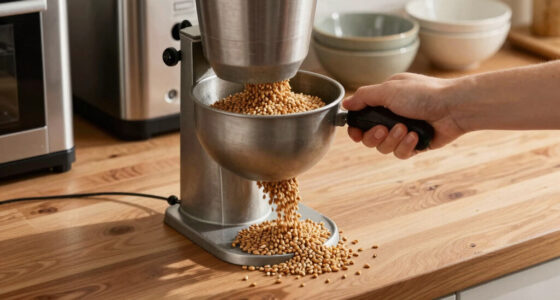
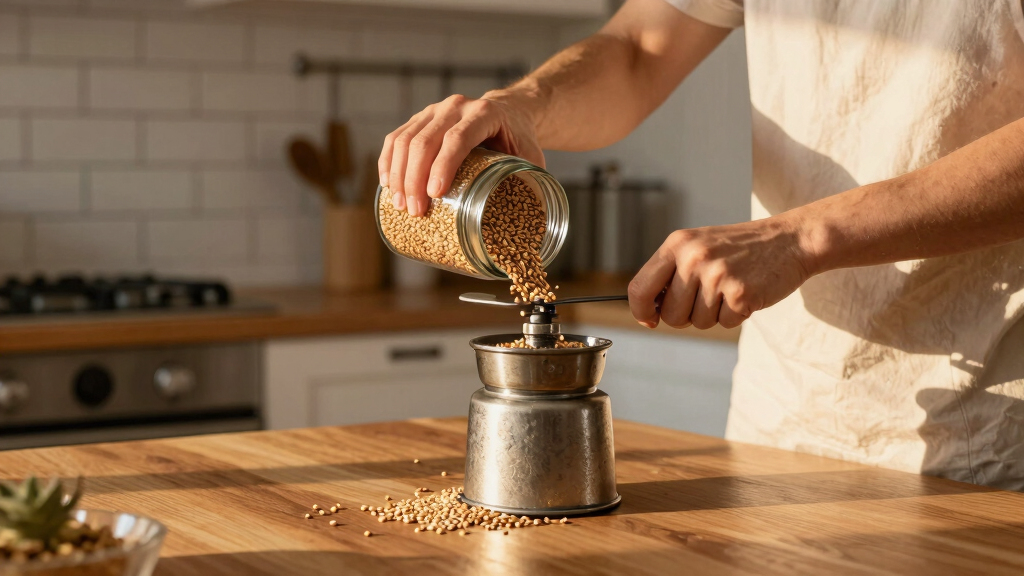
- Crank steadily, feeling the grain crush and turn into powder or meal. Listen for the grains to break apart and see the flour collect in the chute.
- Pour your freshly milled flour into a container. Use immediately or store in an airtight jar in a cool, dark place.
- Clean your mill thoroughly after each use to prevent residue buildup and maintain performance.
Deepening your understanding of the milling process highlights the importance of consistency and attention to detail. For instance, adjusting the coarseness setting affects not only texture but also baking outcomes—finer flour yields lighter bread, while coarser flour adds texture and bite. Milling small batches prevents overheating, which can degrade nutrients and flavor. Regular cleaning preserves the mill’s functionality, preventing old flour or dust from contaminating fresh batches. Embracing these practices ensures that each batch of flour is as nutritious and flavorful as possible, reinforcing the value of mindful, manual milling in your off-grid kitchen.
As an affiliate, we earn on qualifying purchases.
Comparing Manual Grain Mills: Which One Fits Your Off-Grid Kitchen?
| Feature | Stone Grinder | Cast Iron Mill | Hybrid (Manual + Electric) |
|---|---|---|---|
| Capacity | Small (up to 1 cup) | Medium (up to 2 cups) | Large (up to 4+ cups) |
| Ease of Use | Moderate, requires effort | Easy with adjustable settings | Varies, often more complex |
| Adjustable Coarseness | Yes | Yes | Yes, with options |
| Noise Level | Low to moderate | Moderate | Higher for electric models |
| Ease of Cleaning | Removable parts, some cleaning needed | Simple, durable | Depends on model |
Understanding the strengths and limitations of each mill type helps you make an informed choice tailored to your off-grid needs. A stone grinder offers a rustic, quiet experience, ideal for small batches and preserving traditional textures. Cast iron mills provide greater capacity, ease of use, and consistency, making them suitable for regular baking or larger families. Hybrid models give flexibility—manual operation when you want to connect with traditional methods, or electric power for convenience during busy times. Weighing these tradeoffs ensures your milling setup enhances your self-sufficient lifestyle without compromise.
As an affiliate, we earn on qualifying purchases.
Simple Tips to Keep Your Grains & Mill Working Smoothly
- Mill small batches—grinding too much at once can overheat and dull your mill.
- Clean your equipment thoroughly after each use—dust, flour, and oil can clog or damage parts.
- Store milled flour in airtight containers, away from light and heat.
- Experiment with different grains and blends—try spelt, rye, or millet for variety.
- Label your storage containers with date and grain type—freshness matters.
Deepening your maintenance routine reveals that consistent cleaning prevents the buildup of old flour and dust, which can impair the mill’s function and introduce off-flavors. Proper storage of milled flour in airtight, cool conditions minimizes spoilage and insect attraction. Regularly inspecting your grains for signs of spoilage or pests helps you catch issues early, preserving both your investment and your health. Incorporating these habits into your routine ensures your milling process remains efficient, safe, and enjoyable, supporting your off-grid lifestyle with reliable, fresh flour whenever you need it.
What’s New in Home Grain Milling and Storage?
Recent improvements include quieter electric mills with finer adjustments, making milling more accessible and less disruptive. Organic, non-GMO grains are now more available, offering cleaner options for those milling at home. Online communities share recipes, techniques, and troubleshooting, making home milling more approachable than ever.
For example, a new electric mill model now operates at a whisper-quiet level, allowing early morning baking without waking the household. Meanwhile, organic grain suppliers deliver fresh, sustainably grown grains directly to your door, making storage and milling easier and more eco-friendly.
Deepening awareness of these trends reveals that technological advancements are making home milling more efficient and user-friendly. Quieter electric models reduce noise pollution, encouraging more frequent use without disturbing others. The rise of organic and sustainably sourced grains aligns with a holistic approach to food—prioritizing health, environmental impact, and flavor. Online communities foster shared learning, troubleshooting, and recipe development, creating a supportive ecosystem for off-grid and home millers. Staying informed about these innovations helps you optimize your setup, expand your options, and deepen your connection to the craft of home milling and storage.
Frequently Asked Questions
How long can I store whole grains at home?
Properly stored in airtight containers in a cool, dark place, most whole grains can last from 6 months up to a year. Grains rich in germ oils, like wheat berries and oats, benefit from refrigeration or freezing to extend freshness even further.
Do I really need a special mill, or can I use a blender?
Blenders aren’t designed for grain milling and can overheat or wear out quickly. A dedicated manual mill provides consistent texture, durability, and better control over coarseness—plus, it’s safer and easier to clean.
Which grains are easiest for beginners to mill at home?
Start with soft grains like oats or wheat berries—they require less effort and produce a fine, versatile flour. Millet and barley are also good options for experimenting without overwhelming your equipment.
Can I mill pre-packaged store grains?
Yes, you can. Just ensure the grains are fresh and stored properly—avoid pre-milled grains that are old or have been exposed to moisture, which can lead to rancidity or mold.
What’s the best way to prevent bugs in stored grains?
Use airtight containers, add a bay leaf or food-grade oxygen absorber, and keep grains in a cool, dry place. Regularly inspect your storage and avoid leaving grains exposed for long periods.
Conclusion
Storing and milling your own grains isn’t just about freshness—it’s about reclaiming your kitchen’s independence. With a few simple tools and habits, you turn ordinary grains into vibrant, nourishing flour that elevates every loaf, pancake, or pasta.
Think of your grains as a living connection to the land and your own skill. Keep them fresh, mill with purpose, and enjoy the satisfying craft of everyday self-reliance.
Fall Picks
fall essentials
As an affiliate, we earn on qualifying purchases.