TL;DR

Get kitchen gear delivered free — and shop member deals
- Fast, free delivery on millions of items
- Access to Prime Big Deal Days deals on October 6–7
- Prime Video, Amazon Music and more included
A mortar and pestle is a simple but powerful tool for extracting flavors and creating textures. Proper technique, choice of material, and maintenance make it a reliable, long-lasting kitchen companion.
Choose your mortar and pestle based on material, size, and your typical ingredients. Granite offers durability, while ceramic is gentle on herbs.
Always rinse and dry thoroughly; seasoning new stones with rice can improve their performance and longevity.
Use small batches and steady, twisting motions for even grinding; overload causes uneven results and mess.
Clean with warm water and avoid soap on porous stones; occasional grinding with rice or salt keeps residues at bay.
Avoid sudden temperature changes and heavy force to prevent cracks and damage. Proper care ensures a tool that lasts a lifetime.
Pick the Perfect Mortar and Pestle for Your Kitchen
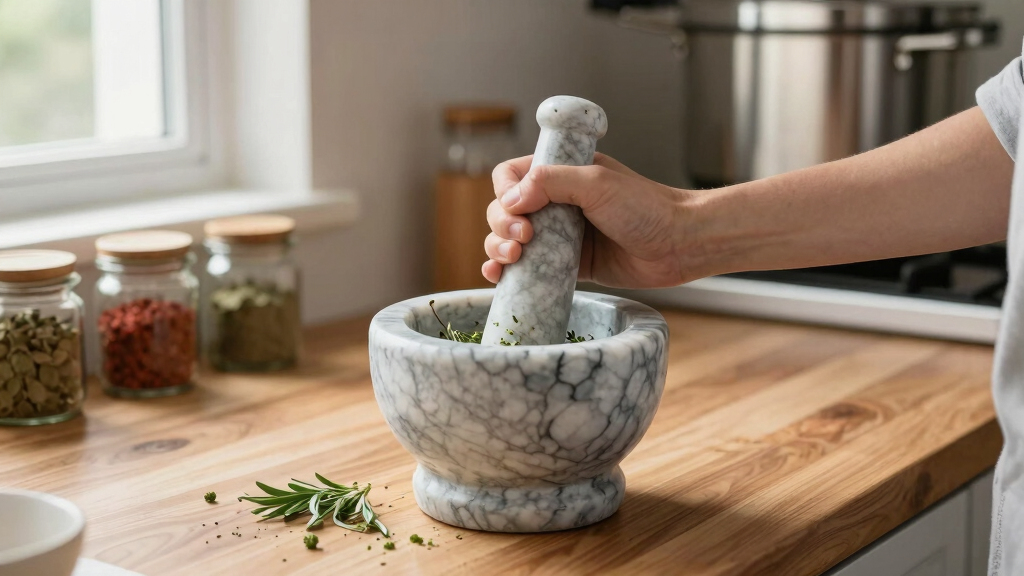
Choosing the right mortar and pestle starts with understanding your needs. Material matters: stone (like granite) offers durability and weight for tough ingredients, while ceramic is gentler on delicate herbs. Size is key: a small mortar suits quick spice grinding; a larger one handles bigger batches or tougher ingredients. Shape influences ease: rounded interiors help with grinding, flat bases offer stability. For example, a 4-inch granite mortar is excellent for crushing garlic and making spice blends in small batches.
Remember to consider your storage space and how comfortable you feel handling the weight. A heavy stone mortar might be a workout but pays off in stability—especially when grinding hard spices like black pepper or cumin.
granite mortar and pestle for spices
As an affiliate, we earn on qualifying purchases.
As an affiliate, we earn on qualifying purchases.
How to Prepare Your Mortar and Pestle Before Using It
- Rinse thoroughly with warm water to remove dust or residues from manufacturing.
- For new stone mortars, grind a handful of dry rice until it turns to powder. This process is more than just cleaning; it actively helps smooth out the surface, removing loose particles that could affect flavor or cause cracks over time. It also helps to eliminate any residual grit from manufacturing, ensuring your future grinding is clean and consistent, which is crucial for delicate herbs or spices where texture matters.
- Dry completely with a towel or air-dry. Moisture can cause cracking or mold over time, especially in porous materials. Proper drying ensures the surface remains intact and ready for precise grinding, which is essential for achieving the desired texture and flavor extraction in your recipes.
For example, seasoning your new granite mortar with rice reduces dust and creates a smooth surface for grinding. Think of it as breaking in a new pair of shoes—preparing it for years of reliable use, and ensuring consistent results in your culinary adventures.
ceramic mortar and pestle for herbs
As an affiliate, we earn on qualifying purchases.
As an affiliate, we earn on qualifying purchases.
Master the Art of Using Your Mortar and Pestle
Effective grinding depends on technique. Start with small amounts—nothing more than a handful of spices or herbs. Use a gentle twist or pounding, applying steady pressure. For tougher ingredients like coriander seeds or ginger, apply more force with a twisting motion, not just pounding. The reason is that different ingredients require different approaches: softer herbs benefit from gentle crushing to preserve their aroma, while hard seeds demand more force to break down their structure for better flavor release.
For instance, when making a spice blend, grind each ingredient separately for better control. Use the pestle’s flat side for crushing, then edge for finer grinding. Keep your movements consistent—think of it like kneading bread—until you reach the desired texture. The consistency of your technique impacts the extraction of flavors; uneven grinding can lead to inconsistent spice profiles or paste textures, affecting the overall dish quality.
Remember, don’t overload the mortar. Small batches grind more evenly and prevent spills. It’s about building muscle memory for the perfect grind every time, and understanding how each ingredient responds to pressure and motion enhances your skill and confidence in the kitchen.
large mortar and pestle for grinding
As an affiliate, we earn on qualifying purchases.
As an affiliate, we earn on qualifying purchases.
Compare Common Materials to Find Your Best Fit
| Material | Pros | Cons |
|---|---|---|
| Granite | Very durable, heavy, excellent for tough ingredients | Heavier, more expensive |
| Ceramic | Non-porous, gentle on herbs, easy to clean | Less durable, prone to chipping |
| Wood | Lightweight, good for soft herbs and spices | Less effective for hard ingredients, porous |
For example, if you frequently grind hard spices like cumin or coriander, granite is your best bet because its density allows it to withstand repeated pounding without chipping or cracking, ensuring longevity and consistent performance. Conversely, if your focus is on delicate pastes or fresh herbs, ceramic offers a gentle surface that preserves the integrity of these ingredients, preventing bruising or over-processing. Understanding these tradeoffs helps you select a tool that aligns with your typical culinary tasks, ultimately streamlining your prep process and improving results.
mortars and pestles for kitchen prep
As an affiliate, we earn on qualifying purchases.
As an affiliate, we earn on qualifying purchases.
How to Clean and Care for Your Mortar and Pestle
Proper cleaning extends the life of your tool and maintains its performance. Rinse with warm water immediately after use to prevent residue buildup. Avoid soap on porous stones like granite or marble, because soap can seep into tiny pores and alter flavors over time, especially when grinding spices or herbs with strong aromas. Use a brush or a plastic scraper to remove stubborn bits, which helps prevent flavor transfer or residue accumulation that could compromise future grinding sessions.
Dry thoroughly—air drying or wiping with a towel prevents cracking caused by moisture expansion. For stubborn residues or oily pastes, grind a small amount of dry rice or coarse salt to scrub away oils and debris. This method not only cleans but also revitalizes the surface, ensuring consistent grinding performance. Occasionally, lightly oil wooden pestles with a food-safe oil to prevent cracking and keep the wood from drying out. Proper maintenance, including gentle cleaning and periodic oiling, ensures your mortar and pestle remain effective and beautiful for years, reducing the need for replacement and preserving the integrity of your ingredients.
Common Mistakes to Avoid When Using a Mortar and Pestle
Don’t overload the mortar—small batches grind more evenly and prevent spills. Overloading can cause ingredients to spill over the sides or result in uneven textures, which means you’ll need to spend extra time re-grinding or adjusting. Avoid using a wet or greasy pestle, which can make grinding slippery and less effective, leading to inconsistent results. Never use a metal pestle on ceramic or stone mortar to prevent scratching, as this can weaken the material over time and create sharp edges that damage ingredients or pose safety hazards.
Be cautious with heat—don’t expose your mortar to sudden temperature changes, as cracking can occur. For example, pouring boiling water directly into a cold stone mortar can cause thermal shock, leading to cracks that compromise the structure. Always allow hot liquids or ingredients to cool slightly before grinding, and handle your tools with care. By steering clear of these pitfalls, you’ll enjoy consistent results, maintain the integrity of your tools, and ensure they last for decades, making your manual food preparation more enjoyable and reliable.
Frequently Asked Questions
How do I choose the right mortar and pestle for my needs?
Think about what you’ll grind most often. For tough spices, go for a heavy granite mortar. For delicate herbs or pastes, ceramic offers a gentler touch. Size matters too—small for quick jobs, larger for bigger batches or tougher ingredients. Consider the tradeoff: heavier mortars provide stability but require more effort to handle, while lighter ones are easier to maneuver but may sacrifice some stability when grinding hard ingredients. Your choice impacts how comfortably and efficiently you can work, so weigh these factors based on your typical use and physical comfort.Can I use a mortar and pestle for all spices and herbs?
Yes, but be mindful of material. Porous stones can absorb strong flavors, which might lead to cross-contamination or flavor muddiness over time. Dedicate specific tools for potent spices like turmeric or cumin to prevent flavor transfer. Proper cleaning between uses—such as grinding dry rice or salt—helps maintain flavor integrity. Recognizing the limitations of each material ensures you preserve the purity of your ingredients and achieve the best possible flavor extraction for each type of spice or herb.How do I prevent my mortar from cracking?
Avoid pouring boiling water directly into a cold mortar and don’t overload it with very hard ingredients at once. Sudden temperature changes cause thermal shock, which can crack or weaken the material. Gradually introduce hot ingredients or water, allowing the mortar to adapt. Also, grinding hard ingredients in small, manageable batches reduces stress on the material. Regularly inspecting for small cracks and handling your mortar with care extends its lifespan, ensuring it remains a reliable tool for years of use.Is it better to grind or crush ingredients?
Both techniques are valuable and serve different purposes. Grinding (twisting with a pestle) typically produces finer, more uniform textures ideal for pastes or powders, enhancing flavor release and consistency. Crushing (pounding with a pestle) applies more force, creating coarser textures suitable for extracting oils or preparing ingredients for further processing. Your choice depends on the desired outcome: for delicate herbs or fine spice blends, grinding is preferable; for unlocking essential oils or coarse spice preparations, crushing may be more effective. Mastering both techniques allows you to tailor your approach for optimal results.How should I clean and maintain my mortar and pestle?
Rinse with warm water immediately after use to prevent residue buildup. Avoid soap on porous stones like granite or marble, as it can seep into tiny pores and alter flavors over time. Instead, grind dry rice or coarse salt to scrub away oils and debris, which also helps restore surface smoothness. Dry thoroughly—air drying or wiping with a towel prevents cracking caused by moisture expansion. Occasionally, lightly oil wooden pestles with a food-safe oil to prevent cracking and keep the wood supple. Regular maintenance, including gentle cleaning and periodic oiling, ensures your mortar and pestle remain effective, beautiful, and long-lasting, preserving the quality of your ingredients and the integrity of your tools.Conclusion
Mastering a mortar and pestle boosts your flavor game and gives you control over textures. It’s simple, reliable, and lasts for years—so don’t hesitate to get your hands dirty. Over time, it becomes an extension of your kitchen skills, turning everyday ingredients into bold, vibrant dishes.
Pick the right one, learn the technique, and care for it properly. Your manual kitchen is about to get a whole lot more flavorful—and satisfying.
Fall Picks
fall essentials
As an affiliate, we earn on qualifying purchases.