TL;DR
Open a free Amazon Business account
Business pricing, bulk buying and tax-exempt orders.
Create a free accountAs an affiliate, we earn on qualifying purchases.
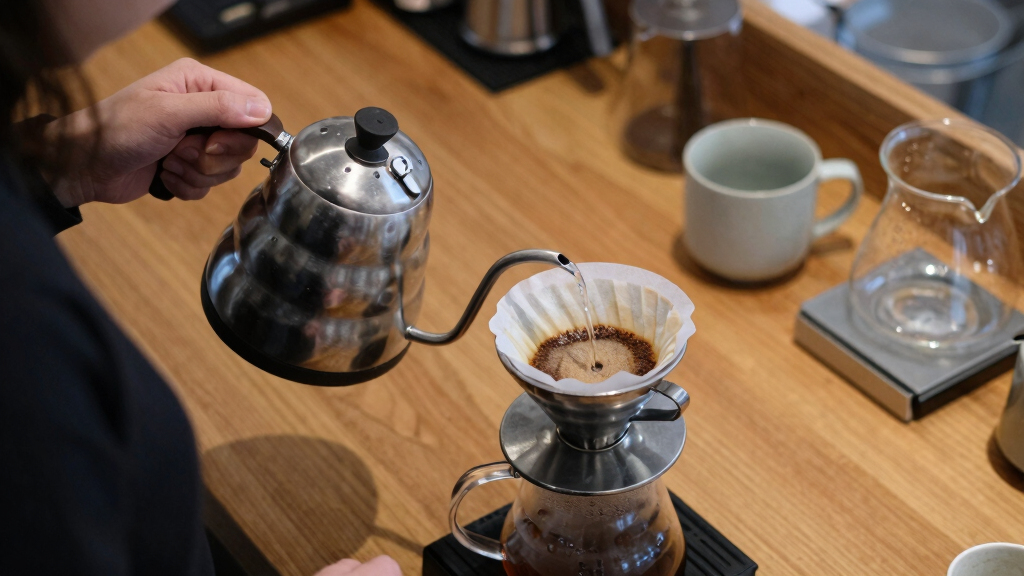
Water temperature directly affects how coffee flavors develop. Using precise control ensures optimal extraction, richer aroma, and a more consistent cup every time.
Keeping water between 195°F and 205°F maximizes flavor extraction without bitterness.
Using a thermometer or temperature-controlled kettle improves consistency and flavor clarity.
Different roast levels and bean types may require slight temperature adjustments for best results.
Recent tech makes precise temperature control accessible, even off-grid or with manual tools.
Experimenting with water temperature is the quickest way to elevate your manual brew’s flavor and complexity.
Why Water Temperature Matters in Manual Coffee Brewing
TL;DR: Water temperature controls how coffee flavors develop. Holding your brew water in the right range helps extract sweetness, aroma, and body without tipping into sourness or bitterness.
The practical sweet spot for most manual coffee methods, equal to roughly 90-96°C.
A small drift can change extraction speed enough to flatten, sharpen, or over-darken the cup.
Temperature is the dial that tunes brightness, body, aroma, and balance.
The core brewing band between too cool and too aggressive.
Often under-extracts, producing sourness and thin body.
Can push bitter and astringent compounds forward.
A strong starting point for delicate, fruity coffees.
A gentler start to reduce bitterness and roast harshness.
The same beans can taste bright, flat, or bitter.
Different coffee compounds dissolve at different rates. Heat speeds extraction, so the same pour-over can move from lively and aromatic to harsh simply by overshooting the water temperature.
Under-extracted
Water below the target zone can miss sweetness and depth, leaving a sour, weak, or hollow cup.
Balanced extraction
Between 195°F and 205°F, water pulls soluble flavor efficiently while preserving clarity and aroma.
Over-extracted
Water above the target zone can emphasize bitterness, dryness, and astringent finish.
The temperature curve is a flavor curve.
Higher temperatures extract faster, but “more” is not always “better.” The winning zone is controlled extraction, not maximum extraction.
Control the variable before you chase the recipe.
A thermometer or temperature-controlled kettle turns brewing from guesswork into repeatable craft. Track the temperature that works for each bean, then return to it with confidence.
Fill
Start with fresh water in your kettle.
Set
Choose a target between 195°F and 205°F.
Verify
Use a thermometer if your kettle lacks a precise display.
Wait
If boiling manually, pause 30-60 seconds before pouring.
Tune
Adjust by 2°F at a time based on taste.
Manual methods work; precision tools make them repeatable.
Boiling and waiting can work well, especially off-grid. Digital kettles and smart controls reduce drift, simplify testing, and make your best cup easier to repeat.
| Method | Control Precision | Ease of Use | Best For | Consistency Signal |
|---|---|---|---|---|
| Boiling + Wait | ✗ Low | ✓ High | Casual brewing, travel, off-grid setups | ~ Depends on timing and room conditions |
| Thermometer | ~ Medium | ~ Medium | Budget precision and recipe testing | ✓ Strong feedback loop |
| Electric Temp Kettle | ✓ High | ✓ High | Daily manual brewing at home | ✓ Repeatable targets |
| Smart Kettle + App | ✓ Very High | ~ Moderate | Experimenters and profile tracking | ✓ Remote monitoring and presets |
Pair temperature with the coffee in front of you.
Roast level changes solubility. Light roasts often benefit from more heat to unlock delicate compounds; dark roasts usually need gentler water to avoid bitter extraction.
200-205°F
Useful for floral, citrus, and fruit-forward coffees that need more extraction energy.
195-198°F
Helps reduce harshness while preserving body, sweetness, and chocolate-like depth.
The practical answers brewers actually need.
The ideal number is a starting point, not a law. Taste, record, and repeat until each bean has its own reliable temperature profile.
Why does temperature matter so much?
Because it directly influences extraction, which shapes flavor, aroma, body, and overall cup balance.
What is the ideal brewing temperature?
Most manual coffee recipes work best between 195°F and 205°F, or about 90°C to 96°C.
Can cooler or hotter water work?
Yes, but cooler water can taste sour and thin, while hotter water can taste bitter and dry.
Do beans change the target?
Yes. Lighter roasts often like higher temperatures, while darker roasts often taste better slightly cooler.
From kettle setting to cup quality.
Temperature is not isolated. It connects to extraction speed, flavor balance, method sensitivity, and the repeatable ritual of a better manual brew.
How Water Temperature Controls Your Coffee’s Flavor
Water temperature is the dial that tunes your coffee’s flavor profile. When you brew at the right temp—between 195°F and 205°F (90°C to 96°C)—you extract the best of what your beans have to offer. Too hot, and you risk pulling out bitter compounds that turn your brew harsh. Too cold, and you leave behind delicate flavors, resulting in a sour or weak cup.
For example, a French press brewed with water at 185°F might taste flat and sour because it under-extracts, missing the richness and depth. Conversely, a pour-over with water at 210°F can produce a bitter, astringent brew, overpowering the nuanced notes.
Practical takeaway: Use a thermometer to verify your water temperature before brewing. Adjust your method based on your results—if your coffee tastes flat or sour, try increasing the temperature slightly; if it’s bitter or over-extracted, dial back a few degrees.

Electric Kettle 1.0L, 1200W Fast Boiling, 7 Temp Settings & 4H Keep Warm
- Precise Temperature Settings: 7 adjustable temperature options
- Keep Warm Function: Maintains water temperature for 4 hours
- Fast Boiling Power: 1200W for quick heating
As an affiliate, we earn on qualifying purchases.
As an affiliate, we earn on qualifying purchases.
Why Precise Water Temp Makes Every Brew Consistent
Imagine making a perfect cup every morning. That’s only possible if your water hits the same temperature each time. Variations in temperature can cause your brew to swing from bright and lively to dull and flat. Using a thermometer or a smart kettle with temperature presets makes this easy.
Practical takeaway: Keep a small notebook or digital log of your water temperature for different beans and roasts. Record the temperature that produces the flavor you prefer, then replicate it consistently. Investing in a kettle with temperature control simplifies this process and ensures your results are repeatable.
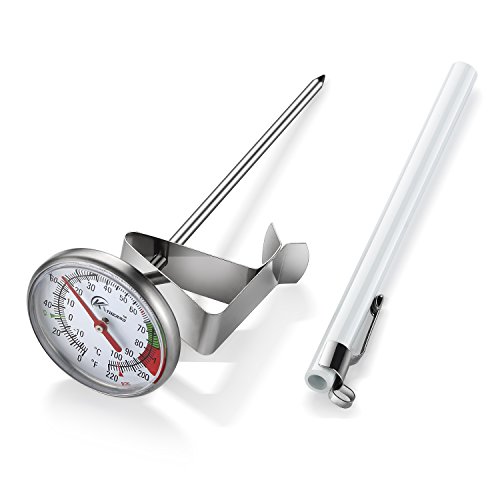
KT THERMO Instand Read 2-Inch Dial Thermometer,Best for The Coffee Drinks,Chocolate Milk Foam
- Design: Multi-stage fixed clip for easy reading
- Measurement Safety: Accurate and safe for beverages
- Temperature Range: 0°F to 220°F for various liquids
As an affiliate, we earn on qualifying purchases.
As an affiliate, we earn on qualifying purchases.
The Latest Tech That Gives You Perfect Water Control
Recent tech has made controlling water temperature a breeze. Electric kettles with digital displays let you set exact temps—say, 198°F or 203°F—and hold that temperature for a full brew. Some even connect to apps, allowing remote adjustments and monitoring. This means no more guesswork or overheating your water.
Practical takeaway: If you’re serious about precision, consider investing in a smart kettle or a sous-vide device for water. These tools can help you experiment with slight temperature variations to find your ideal profile. Remember, small adjustments—like 2°F up or down—can significantly change the flavor outcome.

Cosori Gooseneck Electric Kettle with Temperature Control, 0.8L, Black
- Five Temperature Presets: Precise brewing with 5 presets
- Warm Keep Function: Keeps water warm for 1 hour
- Ergonomic Pour Design: Precise water flow control
As an affiliate, we earn on qualifying purchases.
As an affiliate, we earn on qualifying purchases.
Matching Water Temp to Your Coffee Type and Roast
Different beans and roasts perform better at specific temperatures. Light roasts, with their delicate, fruity notes, often benefit from slightly higher temps—around 200°F to 205°F— to unlock their subtle flavors. Dark roasts, on the other hand, can be over-extracted at higher temps, so dialing back to 195°F can prevent bitterness.
Practical takeaway: Adjust your water temperature based on the roast level and bean origin. For light roasts, start at 203°F and taste the difference. For dark roasts, try 195°F and see if the bitterness diminishes. Keep notes of what works best for each type to build your personalized brewing profile.
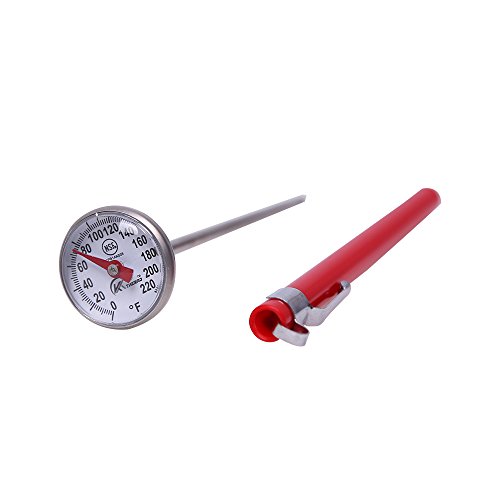
KT THERMO Instant Read 1-Inch Dial Thermometer,Best for The Coffee Drinks,Chocolate Milk Foam
- Clear Color Partitioning: Easier to observe temperature zones
- Wide Temperature Range: 0 to 220°F for various foods
- Instant Read Function: Quick temperature readings for meat and drinks
As an affiliate, we earn on qualifying purchases.
As an affiliate, we earn on qualifying purchases.
Step-by-Step: How to Control Water Temperature at Home
- Fill your kettle with fresh water and turn it on.
- Set your electric kettle to your desired brewing temperature—between 195°F and 205°F.
- Use a thermometer to verify the water hits your target temp before pouring.
- If your kettle doesn’t have precise control, let the water boil, then wait 30 seconds to 1 minute before pouring to reach the right temperature.
- Adjust based on your taste and bean type over time, fine-tuning for flavor.
Comparison: Manual Methods vs. Tech-Driven Temperature Control
| Method | Control Precision | Ease of Use | Ideal For |
|---|---|---|---|
| Boiling + Wait | Low | High | Casual brewing, off-grid setups |
| Electric Kettle with Temp Setting | High | High | Consistent, precise brewing at home |
| Smart Kettle + App | Very High | Moderate | Tech-savvy brewers seeking perfect control |
Frequently Asked Questions
Why does water temperature matter so much in manual coffee brewing?
Because it directly influences how coffee solubles are extracted, affecting flavor, aroma, and overall cup quality. Precise temperature helps you achieve balanced, nuanced brews.What is the ideal water temperature for brewing coffee?
Most experts recommend between 195°F and 205°F (90°C to 96°C), but slight adjustments depend on your brewing method and coffee roast.How can I control water temperature accurately at home?
Use a variable temperature kettle, a thermometer, or a smart kettle with preset controls. These tools help you hit your target temperature every time.Can I brew coffee with cooler or hotter water?
Yes, but cooler water may cause under-extraction, leading to sourness. Hotter water risks over-extraction and bitterness. Adjust carefully based on your taste preferences.Does the type of coffee bean affect the ideal brewing temperature?
Yes, especially with different roast levels. Light roasts often need slightly higher temperatures to reveal their delicate flavors, while dark roasts can be brewed at lower temps to avoid bitterness.Conclusion
Mastering water temperature transforms your coffee from good to exceptional. It’s the simple tweak that unlocks deeper flavors and consistent quality. Next time you brew, pay attention to that steaming water — it might just be your secret to a perfect cup.Grilling season Picks
grills
As an affiliate, we earn on qualifying purchases.