
TL;DR

Get kitchen gear delivered free — and shop member deals
- Fast, free delivery on millions of items
- Access to Prime Big Deal Days deals on October 6–7
- Prime Video, Amazon Music and more included
Water temperature in manual coffee brewing influences how flavors develop. Maintaining between 195°F and 205°F ensures balanced extraction, clarity, and consistency for your best cup.
Maintaining water between 195°F and 205°F is essential for balanced extraction and flavor clarity.
Precise temperature control tools lead to more consistent, repeatable brews—especially off-grid.
Different brewing methods respond uniquely to temperature changes; adjust accordingly.
Bean roast level and type influence your ideal brewing temperature—pay attention to nuance.
Small temperature fluctuations can cause big changes in flavor; stability is key.
Water Temperature Is the Flavor Dial in Manual Coffee
In manual brewing, the difference between a bright, balanced cup and one that tastes bitter, sour, or flat often comes down to a narrow temperature window. Holding water between 195°F and 205°F helps extraction stay clear, even, and repeatable.
The sweet spot is small. The flavor shift is big.
Even slight deviations from the optimal range can change how acids, oils, sugars, and bitter compounds dissolve from the grounds.
How Temperature Shapes the Cup
Water temperature controls extraction efficiency. Hotter water dissolves more compounds; cooler water extracts less. The goal is not maximum extraction, but balanced extraction that preserves clarity without pulling harshness.
Under-Extraction
Water that is too cool can leave desirable flavors trapped in the grounds, producing a cup that tastes sour, thin, weak, or flat.
Balanced Clarity
Between 195°F and 205°F, most manual methods extract sweetness, acidity, aroma, and body in a controlled way.
Over-Extraction
Water that is too hot can pull excessive bitter compounds and astringent tannins, especially from delicate light roasts.
The Manual Brewing Temperature Spectrum
The ideal zone is narrow, which is why a thermometer or variable-temperature kettle can make a noticeable difference.
Brewing Methods React Differently
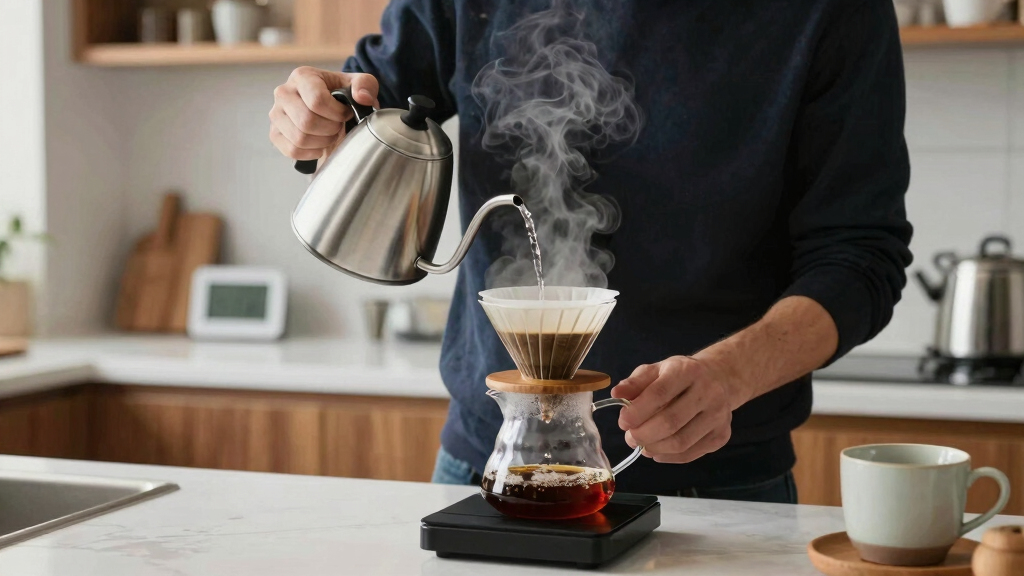
Pour-over and Chemex are especially sensitive because temperature affects bloom, flow rate, clarity, and sweetness. French press is more forgiving, while AeroPress gives more room to experiment with style.
| Method | Temperature Sensitivity | Best Range | Control Priority |
|---|---|---|---|
| Pour-over | ✓ Highly sensitive to bloom and extraction | 195°F-205°F | ✓ Keep pours steady and consistent |
| French Press | ~ Moderate sensitivity, more forgiving | 195°F-205°F | ~ Preheat vessel to reduce cooling |
| AeroPress | ~ Flexible across recipes | 185°F-205°F | ~ Match temperature to brew style |
| Chemex | ✓ Very sensitive to clarity and sweetness | 195°F-205°F | ✓ Avoid falling below 195°F |
Precision Makes Repeatable Coffee
Temperature-controlled kettles, thermometers, and smart brewing tools reduce variation. Once water is stable, you can focus on grind size, brew time, dose, and pouring technique.
Higher sensitivity means smaller temperature changes can create larger flavor differences. For Chemex and pour-over, staying inside the ideal range helps preserve clarity and sweetness.
Roast Level Changes the Target
Different roasts have different solubility profiles. Light roasts often benefit from slightly higher, more precise temperatures, while darker roasts need care to avoid harsh bitterness.
200-205°F
Higher heat can unlock citrus, floral aromatics, and layered acidity without leaving the cup thin.
198-203°F
A middle range supports sweetness, body, and balance across most manual brewing recipes.
195-200°F
Slightly lower temperatures can preserve richness while reducing the risk of scorched, bitter notes.
Trace the Temperature Chain
Manual coffee brewing is a connected system. Temperature influences extraction, extraction shapes flavor, and stable tools make the result easier to repeat.
Heat Water
Bring water into the ideal brewing window.
Stabilize
Use a thermometer, dial kettle, or short rest after boiling.
Extract
Dissolve acids, oils, sugars, and aromatics evenly.
Clarify
Highlight sweetness, acidity, aroma, and structure.
Repeat
Keep the same profile across future brews.
Simple Off-Grid Temperature Routine
You do not need a complicated setup. A reliable thermometer, a preheated brewer, and a consistent pour can keep manual coffee surprisingly precise.
Choose Control
Use an adjustable kettle or a reliable thermometer.
Rest Briefly
After boiling, let water sit for 10-15 seconds.
Pour Evenly
Slow, steady pouring prevents sudden temperature swings.
Adjust Beans
Use hotter water for light roasts and slightly cooler water for dark roasts.
Common mistake: guessing.
Pouring straight from a rolling boil or relying on feel alone makes it harder to repeat a great cup. A few degrees can shift the flavor from clean to harsh, or from lively to dull.
Preheat the brewer. Warm ceramic, glass, or metal gear helps prevent sharp temperature drops.
Track the range. Aim for 195°F-205°F for most manual methods.
Match the roast. Light roasts often need more heat; dark roasts usually need restraint.
Keep notes. Record temperature with grind, brew time, and flavor so your best cup is repeatable.
How Water Temperature Shapes Your Coffee’s Flavor
Water temperature is the dial you turn to control how coffee’s flavors are released. Brew too hot, and you risk extracting bitter tannins and astringent notes. Too cold, and you’ll get sour, weak flavors that lack depth. The sweet spot—around 195°F to 205°F—serves as the Goldilocks zone for most manual methods.
For example, when you brew with a pour-over and water hits 200°F, the bloom happens quickly—releasing gases and preparing grounds for even extraction. If the water’s too cool, the bloom is sluggish, and flavors remain trapped. The difference? A cup with bright clarity versus one that’s dull or overly bitter.
Why does this matter? Because the temperature influences the solubility of different coffee compounds. Hotter water dissolves more oils, acids, and bitter compounds, which can lead to over-extraction if not controlled. Cooler water extracts fewer desirable flavors, resulting in a dull cup. Balancing this extraction process ensures your coffee’s nuanced flavors are highlighted without bitterness or sourness, making the difference between a flat brew and one bursting with complexity.
digital coffee kettle with temperature control
As an affiliate, we earn on qualifying purchases.
As an affiliate, we earn on qualifying purchases.
Why Precise Temperature Control Makes Better Coffee
Manual brewing relies on your ability to hit that perfect temperature. A simple kettle with a dial can give you control, but the real game-changer is a kettle with an accurate thermometer or a temperature-controlled electric kettle. These tools keep your water steady, so each brew is consistent.
Think about the difference between a kettle that heats water to roughly 200°F and one that allows you to set exactly 203°F. The latter means your coffee’s flavor profile stays stable, preventing over-extraction or under-extraction caused by temperature swings.
Why does this matter? Because even small fluctuations—say, a few degrees—can significantly alter your brew’s taste. Over time, inconsistent temperature control can lead to widely varying results, making it difficult to dial in your preferred profile. Precise control minimizes these variances, allowing you to focus on other variables like grind size and brew time, ultimately leading to a more predictable and refined cup. Recent tech makes this even easier. Smart kettles and apps let you monitor and adjust water temperature remotely, turning a manual process into a precise craft. This consistency is key, especially when experimenting with different beans or roast levels.
As an affiliate, we earn on qualifying purchases.
The Impact of Water Temperature on Different Brewing Methods
| Method | Temperature Sensitivity | Best Temperature Range |
|---|---|---|
| Pour-over | Highly sensitive — affects bloom and extraction | 195°F – 205°F |
| French Press | Moderate — more forgiving but still benefits from precise temp | 195°F – 205°F |
| AeroPress | Flexible — varies with brewing style | 185°F – 205°F |
| Chemex | Very sensitive — impacts clarity and sweetness | 195°F – 205°F |
For example, with a Chemex, a slight drop below 195°F can cause under-extraction, leaving the brew flat. Conversely, over 205°F risks bitterness, especially with delicate light roasts.
Understanding these sensitivities helps you tailor your approach. For instance, with pour-over, maintaining a consistent temperature ensures even extraction and clarity. With French press, slightly more forgiving, but still benefiting from temperature control to avoid over-extraction or under-extraction. Recognizing how each method responds to temperature variations allows you to optimize your process for the best possible flavor, balancing strengths and weaknesses inherent to each brewing style.
adjustable temperature coffee kettle
As an affiliate, we earn on qualifying purchases.
As an affiliate, we earn on qualifying purchases.
How Roast Level and Bean Type Change Your Temperature Needs
Roast level influences how sensitive your coffee is to temperature. Light roasts, with their complex acidity and nuanced flavors, often need closer attention—around 200°F to 205°F—to unlock their potential. Dark roasts are more forgiving; slightly hotter water can help mellow any bitterness but too hot can scorch the rich oils.
Why does this matter? Because different roasts have different solubility profiles. Light roasts are more delicate, with acids and aromatic compounds that can easily be over-extracted if water is too hot, leading to harshness. Dark roasts, with their oily surface and robust flavor, can handle higher temperatures, which help extract their fuller body and mellow bitterness. Adjusting your temperature based on roast level allows you to maximize flavor and avoid undesirable traits like harshness or dullness. For example, brewing a light roast at 205°F emphasizes bright citrus and floral notes, while a dark roast at 195°F can produce a smooth, rich cup that highlights depth without bitterness.
As an affiliate, we earn on qualifying purchases.
Common Mistakes with Water Temperature (And How to Avoid Them)
Many home brewers overlook temperature control, pouring boiling water directly or guessing when to stop heating. This leads to inconsistent results. The key is to avoid rapid temperature drops or rises during brewing.
Tips to prevent this:
- Use a kettle with a temperature dial or thermometer.
- Preheat your brewing vessel to stabilize temperature.
- Pour slowly and evenly to prevent sudden temperature drops.
- Allow water to settle for about 10 seconds after boiling before pouring.
Why does this matter? Because sudden temperature changes can cause uneven extraction. Pouring boiling water directly from the stove into your pour-over, for instance, can shock the coffee grounds, resulting in over-extraction of bitter compounds or under-extraction of delicate flavors. Maintaining a stable temperature ensures that the solubility of coffee compounds remains consistent throughout the brew, leading to a more balanced and flavorful cup. Small adjustments, like letting water sit briefly after boiling, can make a significant difference in the final taste, especially when aiming for precision in manual brewing.
Simple Steps to Master Water Temperature in Your Off-Grid Kitchen
- Choose a kettle with adjustable temperature or a reliable thermometer.
- Boil water, then let it sit for 10-15 seconds to reach 200°F.
- Pour slowly and evenly, watching your thermometer or kettle setting.
- Adjust if needed, especially if using different beans or roasts.
For example, if your beans are a delicate light roast, aim for 200-205°F. For darker roasts, 195°F can be enough to extract rich flavors without bitterness.
Frequently Asked Questions
Why does water temperature matter so much in manual coffee brewing?
Because it controls how flavors are dissolved from the coffee grounds. The right temperature ensures a balanced extraction, bringing out desirable notes and reducing bitterness or sourness.What is the best water temperature for pour-over or French press?
Most experts recommend between 195°F and 205°F. Within this range, you’ll unlock the best flavors without over- or under-extracting your coffee.How can I keep my water at the right temperature without fancy equipment?
Use a kettle with adjustable temperature control or a thermometer. Boil the water, then let it sit for about 10 seconds to reach the ideal temp before pouring.Does the type of coffee bean or roast change the ideal brewing temperature?
Yes, lighter roasts usually need slightly higher temps (around 200°F–205°F) to bring out their nuances, while darker roasts are more forgiving but still benefit from controlled temperature to avoid bitterness.Can temperature swings during brewing ruin the final flavor?
Absolutely. Fluctuations cause uneven extraction, leading to inconsistent flavor and poor clarity. Steady, controlled temperature results in a cleaner, more balanced cup.Conclusion
Getting your water temperature right transforms a good coffee into a memorable one. It’s a simple tweak that demands attention but rewards you with richer, clearer flavors. When you brew with precision, every cup feels like an artisan creation — even off-grid, even by hand.Fall Picks
fall essentials
As an affiliate, we earn on qualifying purchases.