
TL;DR
Listen free for 30 days with Audible
Thousands of audiobooks and originals — cancel anytime.
Start your free trialAs an affiliate, we earn on qualifying purchases.
Your coffee is 98-99% water, so its quality directly affects flavor. Using properly mineralized, filtered water tailored for coffee can elevate taste and extend your equipment’s lifespan.
Imagine pouring water into your favorite manual brew, only to end up with a flat, dull cup. Water isn’t just the medium; it’s the flavor foundation. In fact, about 98-99% of your brewed coffee is water, making its quality a silent but powerful influence on every sip. If you care about flavor, aroma, and consistency, understanding and controlling your water matters more than you think.
Whether you’re off-grid, using manual tools, or just want your home setup to match the quality of a specialty café, this guide shows you how water quality shapes your coffee. You’ll learn what makes water ideal, how to test and adjust it, and simple practices to turn your everyday brew into a true flavor experience.
Your water’s mineral content and pH directly influence your coffee’s flavor and clarity.
Regularly testing your water helps maintain a consistent profile and prevents equipment issues.
Filtering tap water and adding minerals as needed is a simple way to improve taste without fancy gear.
Avoid common mistakes like using untreated tap water or neglecting equipment cleaning.
Small adjustments in water quality can unlock richer aromas and brighter flavors in every cup.
Better water makes better coffee.
Your cup is 98-99% water, so water is not just the brewing medium. It is the flavor foundation. The right mineral balance, neutral pH, and clean filtration can lift aroma, sharpen clarity, and protect brewers from scale.
Aim for about 150 mg/L TDS with balanced calcium and magnesium.
That profile gives coffee enough minerals to extract clearly without pushing the cup toward harshness or equipment toward scale.
What makes water good for coffee?
Coffee water needs more than cleanliness. It needs enough minerals to dissolve desirable compounds, a pH that supports balanced extraction, and filtration that removes chlorine, sediment, and off-flavor contaminants.
Calcium and magnesium extract flavor.
Too little mineral content can make coffee weak or hollow. Too much can over-extract, taste bitter, and leave scale inside equipment.
Neutral water keeps the cup clear.
A pH around 6.5-7.0 supports lively flavor without sourness from excess acidity or dullness from high alkalinity.
Filters protect flavor and gear.
Carbon filtration removes chlorine and chloramine notes that can flatten aroma, while sediment control keeps brewers flowing cleanly.
Mineral Targets
pH Sweet Spot
Below the zone, coffee can taste sharply sour. Above it, bright notes often fade and the cup can feel muted.
Read your water before you change your recipe.
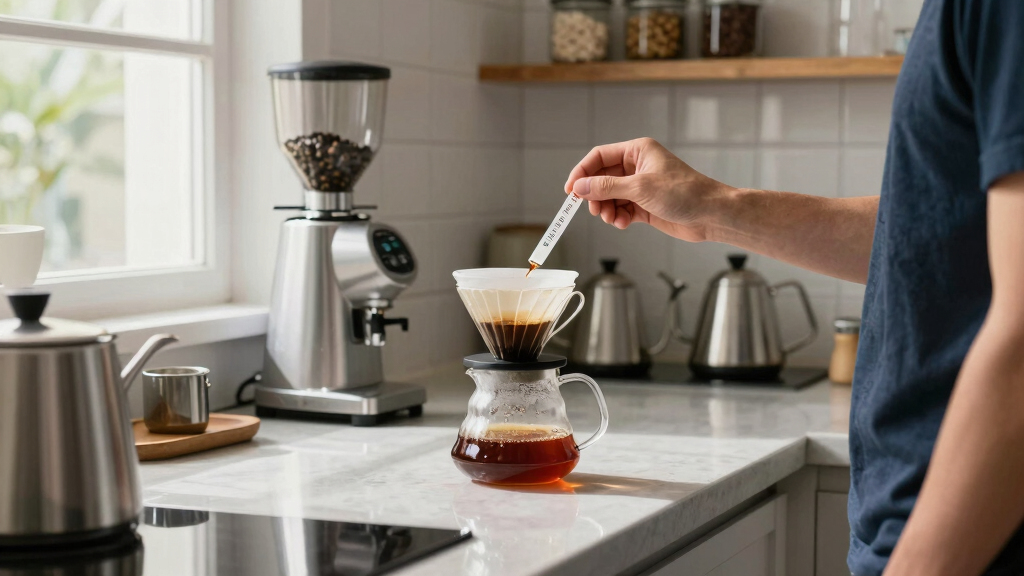
A cheap TDS meter, pH strips or a digital pH meter, and a simple brew log can turn mystery water into repeatable coffee. Test, adjust, brew, taste, and repeat.
Sample
Collect tap, filtered, or bottled water from the source you actually brew with.
Measure
Use a TDS meter to estimate mineral content and flag very soft or hard water.
Check pH
Aim for 6.5-7.0 to keep extraction clean, balanced, and expressive.
Adjust
Filter chlorine, dilute hard water, or add coffee mineral packets to soft water.
Brew
Log taste, aroma, clarity, and equipment behavior so changes become repeatable.
How common water profiles behave in the cup.
The same coffee can taste dull, bright, harsh, or beautifully transparent depending on water chemistry. Use the table as a fast diagnostic before changing grind, dose, or brew time.
| Water profile | TDS signal | Flavor impact | Equipment risk | Quick fix | Fit |
|---|---|---|---|---|---|
| Very soft | Below 50 mg/L | Flat, thin, under-extracted | Low scale, poor extraction | Add minerals | ~ |
| Balanced coffee water | Around 150 mg/L | Clear, aromatic, structured | Managed with cleaning | Keep testing | ✓ |
| Very hard | Above 200 mg/L | Bitter, chalky, heavy | High scale buildup | Filter or dilute | ✗ |
| Chlorinated tap water | Varies by source | Medicinal, flat, masked aroma | Can affect filters and taste | Carbon filter | ~ |
Improve your brew water without fancy gear.
Start with the easiest moves: remove off-flavors, then tune minerals only as needed. Small water changes often unlock bigger improvements than another expensive dripper.
The fastest win is usually filtration.
Activated carbon can remove chlorine and chloramine flavors that make coffee taste flat or medicinal. If your water is too soft, remineralize. If it is too hard, dilute or use a filter designed for hardness reduction.
Filter chemicals first.
Use carbon filtration for chlorine, chloramine taste, and odor reduction.
Add minerals when water is too soft.
Coffee mineral packets or measured calcium and magnesium salts can restore extraction strength.
Control hard water before scale builds.
Dilution, targeted filtration, and regular descaling protect machines and flavor consistency.
Use known bottled water when traveling.
For off-grid or inconsistent sources, bottled mineral water with a published profile reduces guesswork.
From source to sip.
Water quality connects every part of brewing: chemistry, extraction, sensory clarity, and equipment life. When one link drifts, the cup usually tells you.
Source
Tap, filtered, RO, or bottled water
Measure
TDS, pH, hardness, contaminants
Balance
Calcium, magnesium, alkalinity
Extract
Solubles dissolve into the brew
Sense
Aroma, clarity, sweetness, body
Maintain
Scale control and cleaner equipment
Can I use tap water?
Yes, but test it first. If it contains chlorine, sediment, or very high hardness, filtration will improve flavor and protect equipment.
Do I need mineral additives?
Not always. They help most when your water is very soft, reverse-osmosis, distilled, or inconsistent from day to day.
Why does coffee taste flat?
Water that is too soft often under-extracts, while chlorine or stale filters can mute aroma and create dullness.
When should I descale?
Hard water requires more frequent descaling. Watch for slower flow, cloudy residue, or flavor changes that point to mineral buildup.
What makes water good for coffee? Think minerals, pH, and purity
Good coffee water isn’t just about cleanliness; it’s about the right mix of minerals and pH. Minerals like calcium and magnesium are essential because they facilitate the extraction of flavor compounds from coffee grounds. Without sufficient minerals, your coffee can taste weak, flat, or underdeveloped because the water isn’t effectively dissolving the soluble compounds. Conversely, too many minerals can lead to over-extraction, resulting in bitter, harsh flavors, or cause scale buildup in equipment, reducing efficiency and lifespan.
The pH level influences extraction efficiency. Water with a pH around 6.5 to 7.0 is ideal because it promotes a balanced extraction, allowing flavors to develop fully without becoming overly sour or dull. Water that’s too alkaline (above 7.5) can dull the bright notes and reduce the perceived clarity of flavors. On the other hand, overly acidic water (below 6.0) can extract unwanted sourness or tannins, overpowering the intended profile.
Purity is equally important. Impurities like chlorine or sediments can introduce off-flavors, mask the subtle nuances of your coffee, and clog filters or equipment. Ensuring your water is free from these contaminants preserves the integrity of the extraction process and the purity of the flavor.
Think of your water as the canvas for your coffee art. Clean, mineral-balanced water creates a neutral yet rich backdrop that allows the true flavors to shine. For example, hard water with high calcium content can enhance clarity and body but may cause scaling if not managed properly. Soft water may produce cleaner taste but can lead to under-extraction, resulting in a flat or insipid brew. Striking the right balance is key to unlocking the full potential of your beans.

Waterdrop PT-07B Water Filter Pitcher, 10-Cup, NSF Certified, Blue
- Replacement Filter Model: PF-01A or ASIN B086ZPR3WM
- NSF Certified Filtration: Reduces PFOA/PFOS, odors, metals
- Reliable Performance: Genuine Waterdrop filters ensure fit and function
As an affiliate, we earn on qualifying purchases.
As an affiliate, we earn on qualifying purchases.
How to test your water and what numbers to aim for
Testing your water provides insight into its mineral content, pH, and overall suitability for brewing. Understanding these numbers helps you make informed adjustments, ensuring consistent extraction and flavor. For example, a TDS (Total Dissolved Solids) reading around 150 mg/L indicates a balanced mineral content that supports good extraction without risking scale buildup. A pH close to neutral (around 7) ensures the water isn’t overly acidic or alkaline, which can skew flavor and extraction efficiency.
Here’s a practical approach:
- Use a TDS meter to measure total mineral content. Higher than 200 mg/L suggests hard water that may cause scaling; lower than 100 mg/L indicates very soft water that may under-extract.
- Test pH with a digital pH meter or test strips. Aim for a pH between 6.5 and 7.0. Adjustments can be made with food-grade acids or bases if necessary.
- Sample your tap or filtered water regularly to monitor changes over time, especially if your water source varies or if you’re using filtration systems that may alter mineral content.
Interpreting these numbers allows you to tailor your water profile. For example, if your TDS is too high, you might need to dilute with softer water or use specific filtration. If pH is off, mineral additions or pH adjustments can help restore balance. Regular testing ensures your water remains optimized, leading to more consistent, flavorful brews and protecting your equipment from mineral-related issues.

Water Hardness Test Kit with 5-Pads(150strips)
- Fast Results: 30 seconds to get water hardness reading
- Comprehensive Testing: 5 test pads covering 0–425 PPM range
- Large Quantity: 150 strips for year-round testing
As an affiliate, we earn on qualifying purchases.
As an affiliate, we earn on qualifying purchases.
How to improve your water quality without fancy gadgets
Great water doesn’t have to come from a high-tech setup. Here are practical steps:
- Filter out chemicals: Use a carbon filter to remove chlorine and chloramine, which can impart medicinal or flat tastes and interfere with extraction. This simple step greatly enhances flavor clarity.
- Add minerals: Use mineral packets designed for coffee brewing or add a pinch of calcium or magnesium salts. This approach allows you to tailor mineral content precisely, supporting optimal extraction and flavor development.
- Adjust pH: Carefully use food-grade acids like citric acid or bases like baking soda to fine-tune pH levels. Small, incremental adjustments can make a significant difference in flavor balance and extraction efficiency.
- Use mineral-rich bottled water: For off-grid setups or situations where tap water quality is inconsistent, pre-bottled mineral water with a known profile can be a reliable alternative. It provides a controlled mineral content, reducing guesswork and variability.
For example, if your tap water is overly soft, adding a teaspoon of mineral mix can bring the TDS up to around 150 mg/L, enriching extraction and flavor complexity. Conversely, if your water is too hard, dilution or filtration can help achieve the desired profile without risking scale buildup. These practical methods allow you to optimize water quality with common tools and ingredients, ensuring your coffee consistently tastes its best.

COFFEE WATER Mineral Packs for Making Water for Coffee (Makes 25 Gallons)
- Enhances water for optimal coffee brewing: Turns pure water into ideal coffee water
- Compatible with RO and distilled water: Suitable for use with filtered or distilled water
- Meets industry standards: Complies with Specialty Coffee Association standards
As an affiliate, we earn on qualifying purchases.
As an affiliate, we earn on qualifying purchases.
Frequently Asked Questions
Can I use tap water for my coffee?
Yes, but it’s wise to test your tap water first. If it contains chlorine or sediments, filtration improves flavor and protects your equipment. For consistently good results, consider adding minerals or switching to filtered or bottled water tailored for coffee.
How do I know if my water is too hard or soft?
Use a TDS meter or test kit. Hard water usually exceeds 150 mg/L TDS and can cause scale buildup, which damages equipment and affects extraction. Soft water falls below 50 mg/L and may lead to under-extraction, resulting in flat flavors. Adjust with mineral additives or filtration based on these readings to achieve a balanced profile.
What’s the best mineral profile for coffee water?
The ideal profile hovers around 150 mg/L TDS, with roughly 50 mg/L calcium and 15 mg/L magnesium. This balance supports optimal extraction, enhances aroma, and provides clarity—standards recommended by the Specialty Coffee Association. Achieving this profile helps extract the nuanced flavors of your beans while avoiding issues like scaling or flatness.
Should I buy bottled mineral water for brewing?
If your local water is very soft, very hard, or contaminated, bottled mineral water with a known profile can be a quick and reliable solution. Ensure the label indicates mineral content suitable for coffee (around 150 mg/L TDS) and that it contains balanced calcium and magnesium levels. This consistency simplifies your process and guarantees flavor quality.
How often should I test my water?
Regular testing—every few weeks or whenever your water source changes—is key to maintaining a consistent profile. Changes in municipal supply, seasonal shifts, or filter replacements can alter mineral content. Periodic checks help you adjust accordingly, ensuring each brew remains balanced and flavorful, and prevent equipment problems caused by mineral buildup.

YKMINK YK-P01 pH Tester, Digital pH Meter for Water,pH Temp Meter with ATC
- Large Horizontal Screen: Displays pH and temperature simultaneously
- Wide Application: Suitable for pools, gardens, brewing, and more
- Accurate pH Measurement: Includes effective ATC for precise readings
As an affiliate, we earn on qualifying purchases.
As an affiliate, we earn on qualifying purchases.
Conclusion
Water isn’t just the background—it’s the foundation of your coffee’s flavor. A little attention to mineral content, filtration, and pH can turn an average brew into a memorable experience. Think of your water as the last ingredient—when it’s just right, every sip feels like a reward.
Next time you brew, remember: water quality isn’t secondary; it’s the secret to your best cup yet. Keep testing, adjusting, and tasting. Your taste buds will thank you.
Back to school Picks
back to school
As an affiliate, we earn on qualifying purchases.