
TL;DR

Get kitchen gear delivered free — and shop member deals
- Fast, free delivery on millions of items
- Access to Prime Big Deal Days deals on October 6–7
- Prime Video, Amazon Music and more included
Hand brewing a single cup gives you maximum control over flavor. By choosing quality beans, precise grind size, and proper technique, you can make a richer, more nuanced cup than instant or drip. It’s about small adjustments and personal touches.
Imagine sitting at your kitchen counter, fresh coffee steaming in front of you. The rich, dark aroma fills the room, and every sip feels like a small victory. Hand-brewing a single cup isn’t just about making coffee; it’s about reclaiming control—over flavor, aroma, and experience.
Whether you’re off-grid, want to avoid plastic gadgets, or simply crave a more deliberate morning ritual, mastering the art of hand-brewing transforms an everyday task into a mindful craft. In this guide, you’ll learn how to make a perfect single cup—no fancy tech required, just your hands, some good tools, and a little know-how.
Use freshly roasted, whole beans ground to the right size for your method.
A gooseneck kettle and a scale help you control pour and measurements for consistency.
Water temperature between 195°F and 205°F maximizes flavor extraction.
Practice steady pouring and timing to avoid under- or over-extraction.
Recent tools and techniques make hand brewing more precise and customizable.
Choose the Right Coffee — Fresh, Whole, and Ground for Your Method
The foundation of a great cup starts with your beans. Freshly roasted, whole beans are best—look for a roast within the last two weeks. When it’s time to brew, grind only what you need, right before pouring, to preserve the vibrant oils and aroma.
For hand brewing, the grind size matters. Coarse for French press, medium for pour-over, fine for AeroPress. A good rule: the grind should resemble sea salt for French press, sand for pour-over, and powdered sugar for espresso. The grind size affects extraction—the process by which flavors are dissolved into your water. Too coarse, and the water flows through too quickly, leaving your coffee under-extracted and sour. Too fine, and it may over-extract, resulting in bitterness. Choosing the right grind is like tuning a musical instrument; it’s a crucial step that influences the entire flavor profile and texture of your brew.
Understanding why grind size matters helps you troubleshoot and refine your brewing. For example, if your coffee tastes flat or weak, it might be under-extracted due to too coarse a grind. Conversely, if it’s overly bitter or harsh, over-extraction from a grind that’s too fine is likely. Balancing grind size with brewing time and water temperature allows you to optimize flavor, ensuring each cup reflects your desired profile.
gooseneck kettle for pour-over coffee
As an affiliate, we earn on qualifying purchases.
As an affiliate, we earn on qualifying purchases.
Set Up Your Equipment — From Kettle to Filter
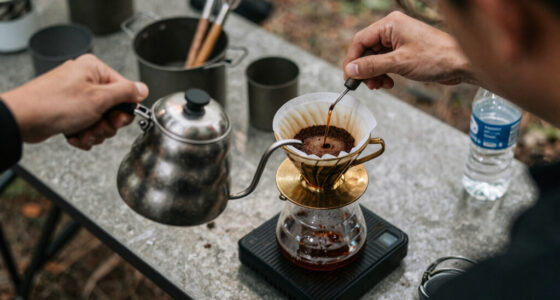
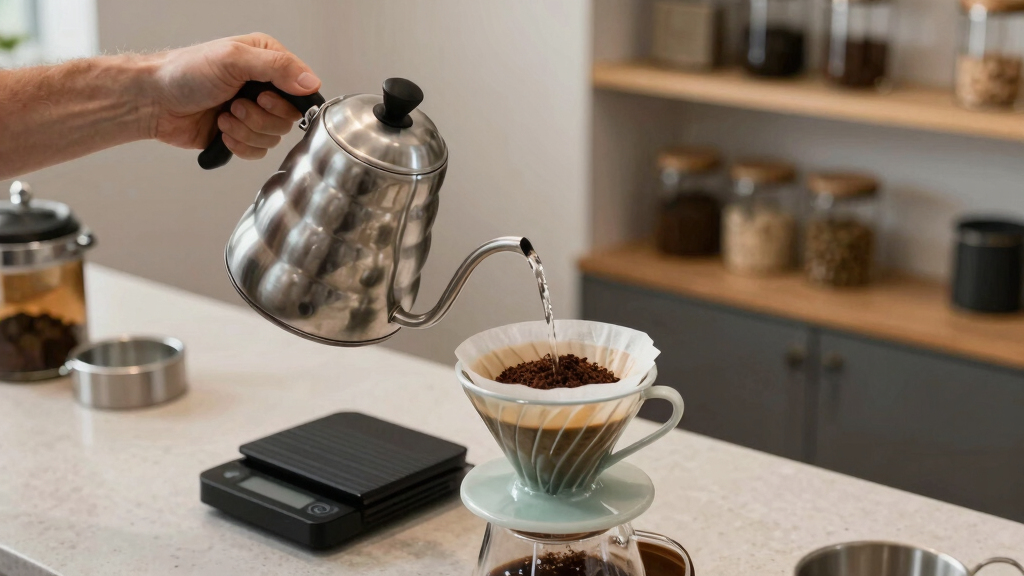
Start with a quality kettle—preferably with a long, narrow spout (a gooseneck) to control your pour. Use a clean, heatproof vessel to hold your water. For filters, choose paper or reusable options, depending on your taste and sustainability goals.
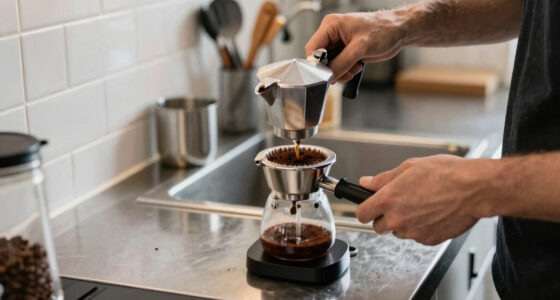
Prepare your filter, rinse it with hot water to remove paper taste, and set it over your mug or carafe. Measure your coffee and water precisely—using a digital scale helps keep your brew consistent.
Imagine pouring water over a delicate flower; the way you pour not only influences extraction but also the clarity and brightness of your coffee. A slow, controlled pour ensures even saturation, which is essential for balanced flavor. Consistency here translates to predictability—if you know that your pour takes about 30 seconds from start to finish, you can replicate that perfect cup again and again.
Why does this matter? Because uneven pouring can lead to uneven extraction, resulting in a cup that’s either weak or bitter. The tradeoff is between speed and control; a faster pour might be easier but risks inconsistency, while a slow, deliberate pour demands patience but yields superior flavor clarity.
As an affiliate, we earn on qualifying purchases.
Perfect Your Water and Coffee Ratios for Rich Flavor
Water quality influences the final flavor. Use filtered water if possible, heated to about 195–205°F (90–96°C)—just below boiling. As a starting point, aim for a ratio of 1:15 to 1:17—so, 10 grams of coffee with 150–170 ml of water.
Adjust this ratio based on taste. Less water for a stronger cup, more for a lighter one. For example, if you prefer a bold, espresso-like flavor, use a lower ratio like 1:15. For a more delicate, tea-like cup, go higher, around 1:17 or even 1:18. This ratio affects the strength and clarity of your brew. Think of it as the volume knob on your audio system—changing it alters the entire experience. The tradeoff is between strength and nuance; a higher ratio yields a lighter, more delicate flavor, while a lower ratio produces a bolder, more intense cup. Mastering this balance allows you to customize your brew to your mood and taste preferences, turning simple measurements into a pathway for flavor exploration.
As an affiliate, we earn on qualifying purchases.
Master the Pour — Control Your Technique for Better Extraction
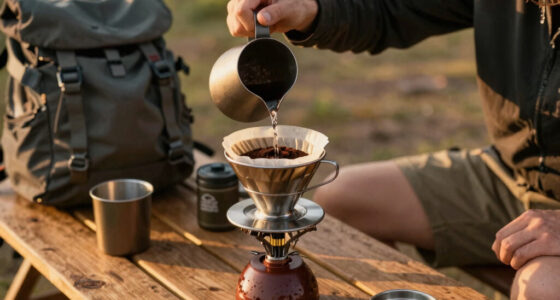
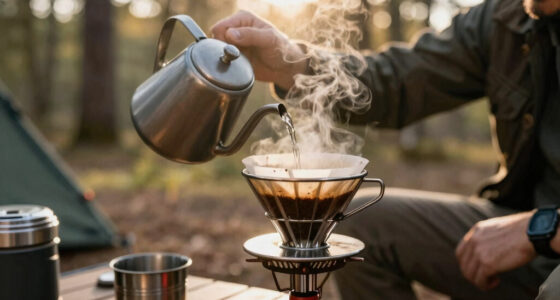
The way you pour influences how evenly your water interacts with the grounds. For pour-over, start with a gentle, circular pour from the center outward, covering all grounds without flooding. Pour in stages—initial bloom, then steady, slow pours—total time around 2–3 minutes.
For AeroPress or French press, the key is steady agitation or even immersion. Practice pouring slowly and deliberately to ensure even saturation and extraction. For example, when using a pour-over, imagine you’re watering a plant; you want to evenly distribute the water to avoid dry spots or pooling, which can lead to uneven extraction. This control over your pour ensures that each particle of coffee contributes to the final flavor, resulting in a balanced and complex cup.
Why does this matter? Because uneven pouring can cause uneven extraction—some grounds may be over-extracted, resulting in bitterness, while others remain under-extracted, leaving sourness or weak flavors. The tradeoff is between effort and quality; a more attentive pour takes longer but significantly improves flavor clarity and balance. Developing a consistent pouring technique is the key to unlocking the full potential of your beans, making each cup a true reflection of your skill and attention to detail.
As an affiliate, we earn on qualifying purchases.
Timing and Technique — How Long and How to Steep or Drain
Timing is critical. A pour-over takes about 2–3 minutes; French press around 4 minutes; AeroPress 1–2 minutes. Use a timer to keep track, especially when experimenting with flavors. For instance, a French press left to steep for 4 minutes yields a full-bodied, velvety coffee, while shortening the steep to 3 minutes might produce a brighter, more acidic profile. Rushing the process can lead to under-extraction, which tastes sour or weak, whereas over-steeping can result in bitterness. Think of it like brewing tea—timing is everything to unlock the desired flavor nuances.
For French press, press down slowly after steeping, like gently pressing a sponge to avoid disturbing the grounds. For pour-over, let it drain naturally without forcing it—patience here results in clarity and balance. Why does timing matter so much? Because over- or under-extraction directly impacts your flavor profile—too quick, and you miss out on complexity; too long, and bitterness dominates. The tradeoff is between precision and patience; mastering timing allows you to consistently produce cups that match your flavor goals and ensures each brew is a step closer to perfection.
Compare Hand-Brewing Methods — Which Fits Your Style?
| Method | Ease of Use | Flavor Profile | Time |
|---|---|---|---|
| Pour-over | Moderate | Bright, clean, nuanced | 2–3 min |
| French press | Easy | Rich, full-bodied, earthy | 4 min |
| AeroPress | Very easy | Versatile, smooth, quick | 1–2 min |
Recent Innovations Make Hand Brewing More Precise and Fun
New tools like precision kettles, adjustable drippers, and portable AeroPress models help control variables better. These innovations allow more consistency and experimentation, turning a simple ritual into a science of flavor.
Eco-friendly filters and ethically sourced beans also shape a more sustainable, mindful brewing experience. Plus, some devices now incorporate timers and temperature controls, blending traditional craft with modern tech.
For example, a precision kettle with a variable temperature setting lets you dial in the exact temperature needed for different beans, similar to how a chef adjusts seasoning to perfect a dish. This level of control minimizes guesswork and helps you understand how each variable impacts the final taste, making your brewing more intentional and refined.
Your Best Tips for a Consistent, Delicious Cup Every Time
- Weigh your coffee and water — accuracy beats guesswork. For example, using 10 grams of coffee and 150 ml of water consistently allows you to compare results and refine your process.
- Use freshly ground coffee—flavor fades quickly once ground. Grinding just before brewing preserves volatile oils that contribute to aroma and taste, much like how fresh herbs release more flavor than dried ones.
- Control your pour—steady, slow, deliberate. Imagine pouring over a delicate flower; slow, even pours ensure all grounds are evenly extracted, preventing weak spots or over-extraction.
- Maintain water temperature—don’t let it boil over or get too cold. Using a thermometer or an electric kettle with temperature control ensures your water stays within the ideal range, crucial for extracting the right flavors without bitterness.
- Keep notes on your process—small tweaks lead to big improvements. Tracking variables like grind size, pour rate, and steep time helps you identify what works best for your taste and replicate success.
Frequently Asked Questions
What’s the easiest method for a beginner?
Starting with a pour-over or AeroPress is best. They’re forgiving, quick to learn, and give you control over key variables like grind size and pour technique.
How do I pick the right grind size?
Match it to your method: coarse for French press, medium for pour-over, fine for AeroPress or espresso. A consistent, even grind is key to even extraction.
What’s the ideal water temperature?
Between 195°F and 205°F. Too hot and you risk bitterness; too cold and the extraction will be weak. Use a thermometer or a kettle with temperature control for best results.
How much coffee should I use for one cup?
Usually 10–15 grams of coffee for 150–200 ml of water. Adjust based on your taste preference—stronger or lighter.
Can I make a good cup without fancy tools?
Absolutely. A French press, a simple cone filter, or even a makeshift pour-over with a cloth or paper filter can produce excellent results with care and attention.
Conclusion
Making a single cup of coffee by hand isn’t just about brewing—it’s about engaging with each step, understanding the variables, and tailoring your process. With a few simple tools and intentional techniques, every cup becomes an expression of your taste and skill.
Next time you grind, pour, and wait, remember: you’re crafting more than coffee—you’re creating a moment of mindful pleasure. That’s a skill worth savoring, day after day.
Halloween Picks
halloween
As an affiliate, we earn on qualifying purchases.