TL;DR

Get kitchen gear delivered free with Prime
- Fast, free delivery on millions of items
- Prime Video, Amazon Music and more included
- Member-only deals all year
Many electric kitchen appliances can be replaced with manual tools, solar cookers, and traditional methods. Doing so boosts energy independence, cuts costs, and enhances resilience during outages.
Most electric appliances like kettles, blenders, and ovens can be replaced with durable manual or solar-powered tools.
Food preservation techniques like water bath canning, dehydration, and fermentation work just as well without electricity—and often taste better.
Investing in high-quality manual tools pays off in durability and long-term savings, especially when energy costs rise.
Transitioning gradually, starting with the most-used appliances, makes building a non-electric kitchen manageable and effective.
A resilient kitchen is built on simple, long-lasting tools that serve you during outages and reduce your environmental impact.
The Non-Electric Kitchen
What you can replace—and how. Build a kitchen that keeps cooking, grinding, preserving, and brewing when the grid goes quiet, while cutting ongoing costs and restoring hands-on control.
A broad shift toward manual and alternative-energy tools can dramatically reduce kitchen electricity demand.
Prioritize durable tools, safe preservation, adaptable heat, and skills that work in any outage.
Easy appliance swaps
Start with frequently used appliances whose manual equivalents are proven, compact, and easy to maintain. Match the tool to the task—not merely to the appliance it replaces.
Electric kettle → Stovetop kettle
Copper, stainless steel, or cast iron works over gas, wood, or another safe flame source.
Blender → Hand crank
Ideal for sauces, soups, baby food, and modest smoothie batches—with more effort and control.
Processor → Mortar
A mortar, pestle, knife, and manual chopper deliver texture while keeping cleanup simple.
Electric oven → Dutch oven
Cast iron retains heat for bread, roasts, stews, and outdoor or wood-stove cooking.
Grain mill → Manual mill
Fresh flour, adjustable texture, and independence from both power and pre-milled supply.
Microwave → Flame or sun
Use a covered pan for reliable reheating or solar box, panel, and parabolic cookers outdoors.
Five tools that earn their space
High-quality manual equipment costs more upfront than bargain gadgets, but rewards you with repairability, long service life, better feedback, and outage-ready performance.
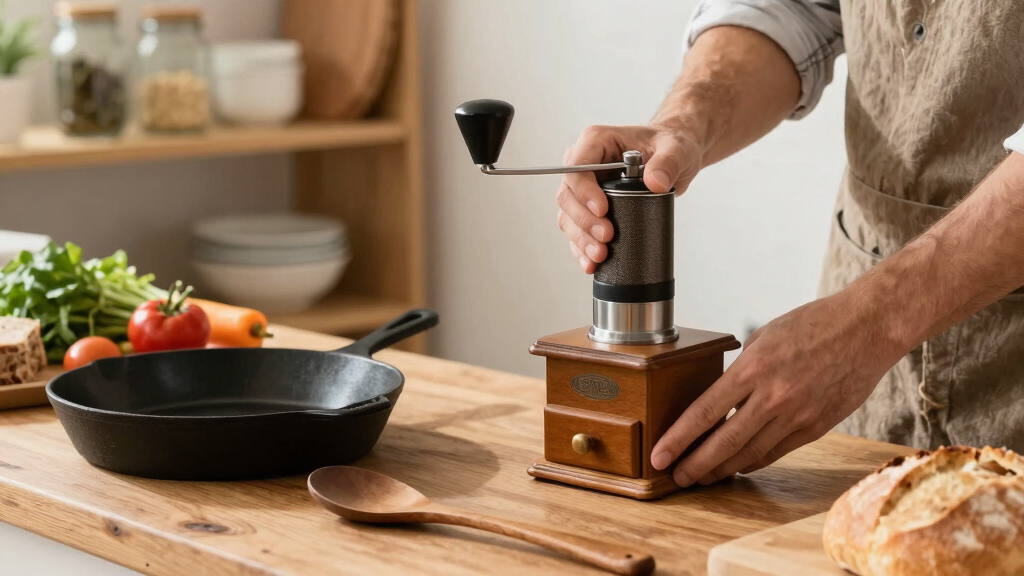
Manual coffee grinder
Fresh coffee with precise grind control, anywhere.
Tradeoff: time + arm effortHand-crank blender
Handles small batches without motors or fragile electronics.
Tradeoff: slower throughputCast iron Dutch oven
Bakes, roasts, fries, and simmers over multiple heat sources.
Tradeoff: weight + seasoningManual grain mill
Transforms stored grain into fresh, customizable flour.
Tradeoff: noise + patienceMortar and pestle
Crushes spices and herbs with exceptional aroma and texture.
Tradeoff: technique requiredElectric vs. non-electric
Manual tools win on resilience, lifespan, and energy independence. Electric tools still lead when speed, high volume, or limited physical effort is the overriding need.
| Feature | Electric tools | Manual / non-electric tools |
|---|---|---|
| Ease of use | ✓ Quick, effortless, often one-touch | ~ Physical input and technique required |
| Task speed | ✓ Fast, especially for large batches | ~ Slower but offers tactile control |
| Ongoing cost | ✗ Energy and replacement costs continue | ✓ Little or no operating energy cost |
| Durability | ~ Motors and electronics can shorten life | ✓ Simple mechanisms may last decades |
| Outage resilience | ✗ Stops when grid or battery fails | ✓ Ready whenever the operator is |
| Flavor + texture | ~ Consistent, sometimes less nuanced | ✓ Greater control and traditional character |
| Environmental load | ✗ Grid demand plus complex manufacturing | ✓ Low use-phase footprint and repairable parts |
Best fit depends on batch size, mobility, physical ability, climate, available fuel, and safe ventilation.
Five pathways to a longer harvest
Preservation trades push-button convenience for closer attention to temperature, acidity, pressure, humidity, and timing. Follow tested food-safety guidance for every canning process.
Build the kitchen step by step
Keep useful electric equipment while you test alternatives. A resilient kitchen is a layered system, not an all-or-nothing purge.
Audit
List the appliances you use most and the tasks they perform.
Replace
Begin with a kettle, grinder, or another low-friction swap.
Practice
Use the manual option weekly before relying on it in an outage.
Preserve
Add one climate-appropriate storage method and learn it safely.
Layer
Combine manual tools, safe fuel, solar heat, and stored staples.
Durable tools turn outages into inconveniences—not emergencies.
Replace the easiest, most-used appliance first.
Buy fewer tools, but choose repairable quality that can last decades.
Pair manual preparation with safe flame, solar, and preservation methods.
Expect more time and effort in exchange for control, flavor, and independence.
Practice now so every tool is familiar before the power fails.
What Electric Appliances Are Actually Easy to Replace?
Many common electric kitchen tools are surprisingly easy to swap out. Think of your electric kettle, blender, or microwave—each has manual or alternative options. You can replace your electric kettle with a simple stovetop kettle made of copper or cast iron. For smoothies or sauces, a hand-crank blender or mortar and pestle work just as well.
Electric appliances like food processors, bread machines, and coffee makers can be swapped with manual or mechanical versions. The key is understanding which tools can handle your daily tasks without electricity. For example, a manual grain grinder can replace an electric mill, and a good cast iron skillet replaces electric stovetop cooking for most recipes.
When you choose these replacements, consider durability and ease of use. Investing in high-quality, well-made tools means they’ll last decades and require less effort over time.
As an affiliate, we earn on qualifying purchases.
How to Convert Your Food Preservation from Electric to Manual and Solar
Preserving food without electricity involves understanding the tradeoffs between convenience, safety, and flavor. Water bath canning, for example, requires a large pot and proper sterilization, but it’s a reliable method that preserves the integrity of jams, pickles, and sauces without electricity. Manual pressure canners operate without power, though they might take longer to reach the necessary pressure, requiring patience and careful monitoring. Dehydration with solar dehydrators offers a low-cost, energy-free way to preserve fruits and herbs, but it depends heavily on sunlight and weather conditions, which can extend the process duration and limit batch size.
Fermentation, such as making sauerkraut or yogurt, is a zero-energy process that relies on natural microbial activity, offering a flavor profile and probiotic benefits that often surpass electrically preserved foods. Cold storage, like root cellars or cool basements, extends the shelf life of root vegetables and dairy products, but requires space and proper insulation to maintain stable temperatures. These methods emphasize simplicity and sustainability, but they demand a deeper understanding of food safety, timing, and environment control, which can be a learning curve for newcomers.
Recent innovations, such as solar dehydrator kits, enhance efficiency by maximizing sunlight exposure, reducing moisture content more reliably, and speeding up dehydration. Understanding these tradeoffs helps you tailor your preservation methods to your climate, space, and skill level, ultimately leading to a more resilient, self-sufficient kitchen.
As an affiliate, we earn on qualifying purchases.
The Top 5 Manual Tools That Replace Electric Kitchen Gadgets
Here are the five most useful manual tools to cut electric dependence, along with insights into why they matter and the tradeoffs involved:
- Manual coffee grinder: While electric grinders are quick, manual grinders allow you to brew fresh coffee even during outages or off-grid living. They require more effort but give you control over grind size and freshness, which can impact flavor significantly.
- Hand-crank blender: A manual blender is ideal for smoothies, soups, or baby food. It’s slower than electric models, but it eliminates reliance on power and can be more durable. The tradeoff is increased physical effort, especially for larger batches.
- Cast iron Dutch oven: Versatile and durable, it replaces electric ovens or stoves for baking, roasting, and simmering. It heats evenly and retains heat well, but it’s heavier and requires seasoning and maintenance to prevent rust.
- Manual grain mill: Produces fresh flour at home, offering control over texture and quality. It’s a bit noisy and slow compared to electric mills, but it provides independence from industrial food supply chains and energy costs.
- Mortar and pestle: Perfect for crushing spices, herbs, or grains, enhancing flavor and aroma. Unlike electric spice grinders, it requires physical effort and technique, but it allows for immediate flavor extraction and minimal cleanup, making it invaluable for flavor development.
Each tool demands a different level of effort and skill, but all contribute to a more resilient, self-reliant kitchen. They also deepen your understanding of food preparation and flavor, which can enhance your culinary experience and reduce reliance on electricity.
As an affiliate, we earn on qualifying purchases.
Comparison Table: Electric vs. Non-Electric Kitchen Tools
| Feature | Electric Tools | Manual/Non-Electric Tools |
|---|---|---|
| Ease of Use | Quick, effortless, often one-touch | |
| Speed | Fast for most tasks, saving time but sometimes sacrificing flavor or control | |
| Cost | Lower initial investment but higher ongoing energy costs | |
| Durability | Varies; some are shorter-lived, especially cheaper models | |
| Energy Dependence | Requires electricity, making it vulnerable during outages | |
| Resilience | Vulnerable to power failures, which can disrupt daily routines | |
| Environmental Impact | Higher carbon footprint due to electricity use and manufacturing | |
| Traditional/Flavor | Often less flavor development, some argue electric appliances can dull food nuances | |
| Manual Options Available | Limited or none, depending on the appliance |
As an affiliate, we earn on qualifying purchases.
Building a Non-Electric Kitchen Step-by-Step
Transitioning to a non-electric kitchen is a gradual process that involves understanding the tradeoffs and planning for a balanced approach. Starting small, such as replacing your electric kettle with a stovetop version, allows you to test the waters and evaluate how much effort each task requires without power. This step helps you appreciate the tradeoffs: manual tools often demand more physical effort and time, but they also provide a sense of independence and often better flavor or quality.
As you progress, replacing appliances like blenders or food processors with hand-crank versions can be a game-changer, but it’s important to consider how these changes impact your daily routine. For instance, a manual grain mill might take longer to produce flour, but it grants you control over ingredients and reduces dependency on industrial food supply chains. Incorporating tools like water bath canners or solar dehydrators involves some initial investment and learning, but they significantly increase your kitchen’s resilience during power outages or limited resources.
Each step involves weighing convenience against effort, safety, and environmental impact. The key is to plan your upgrades according to your cooking habits and space, gradually building a kitchen that’s not only off-grid capable but also more aligned with sustainable living principles.
Frequently Asked Questions
What are the most essential non-electric appliances I should start with?
Begin with a manual coffee grinder, a hand-crank blender, and a sturdy cast iron skillet or Dutch oven. These cover daily coffee, food prep, and cooking needs without relying on electricity.How can I preserve food without electricity?
Use water bath or pressure canning for fruits and vegetables, dehydration with solar or stovetop dehydrators, and fermentation for dairy and vegetables. Cold storage options like root cellars also help extend freshness.Are non-electric tools as effective as electric ones?
Many manual tools perform just as well for specific tasks, especially for small batches or occasional use. They often require more effort but reward you with greater resilience and flavor, and often better nutrient retention due to gentler processing.What are good solar cooking options?
Solar box cookers, panel cookers, and parabolic reflectors have improved greatly and are effective for baking, roasting, and boiling in sunny climates. They’re especially handy in emergencies or off-grid living, but may require some practice to master their use and optimize sunlight exposure.How do I start transitioning my electric kitchen?
Identify your most used appliances, replace them with manual or alternative energy options first, and gradually add other tools. Focus on durability, ease of use, and how well they fit your cooking style to ensure a smooth transition and build resilience over time.Conclusion
Moving to a non-electric kitchen isn’t about giving up convenience; it’s about gaining independence, durability, and flavor. Each manual tool you adopt adds a layer of resilience—making sure you can cook, preserve, and thrive no matter what’s happening with the power grid. Think of it as reclaiming control over your food and your environment.Halloween Picks
halloween
As an affiliate, we earn on qualifying purchases.