TL;DR

Get kitchen gear delivered free — and shop member deals
- Fast, free delivery on millions of items
- Access to Prime Big Deal Days deals on October 6–7
- Prime Video, Amazon Music and more included
Teaching kids manual kitchen skills involves starting with simple, low-risk tasks, demonstrating safety and technique, and gradually increasing responsibility. Clear steps and supervision are key to building independence and confidence in the kitchen.
Imagine a child confidently stirring a pot on the stove, or peeling a carrot with a steady hand. These moments don’t happen by chance—they’re the result of thoughtful, step-by-step teaching. Teaching kids manual kitchen skills isn’t about rushing them into complex tasks; it’s about building their independence and food literacy gradually.
In this guide, you’ll learn how to introduce skills suited to your child’s age and ability, create a safe learning environment, and foster confidence through practical, real-world tasks. This isn’t about perfect results—it’s about developing control, responsibility, and a sense of achievement in the kitchen.
Start with simple, low-risk tasks like washing produce or stirring, building control and confidence.
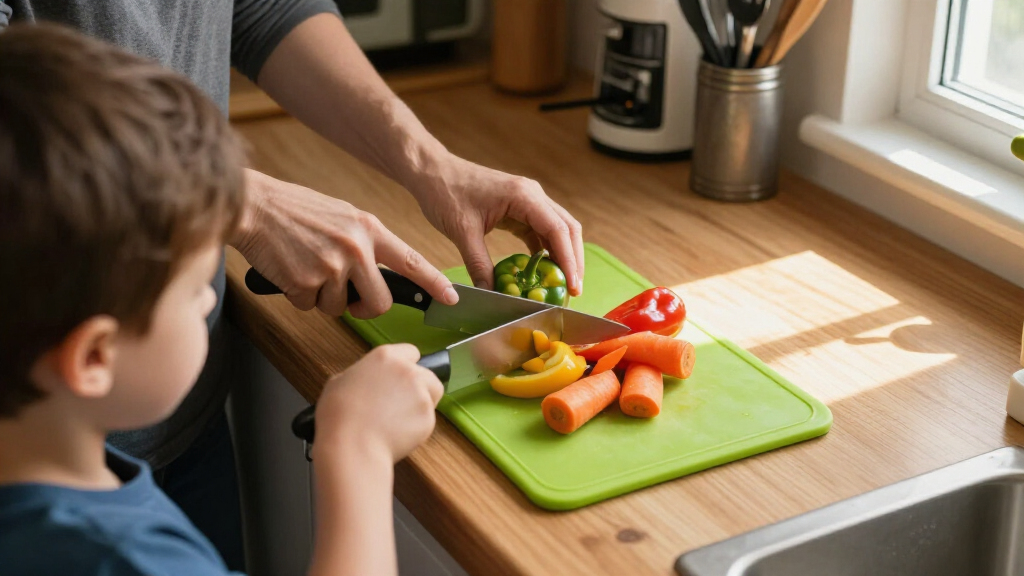
Teach knife skills gradually, focusing on safety, proper grip, and starting with soft foods.
Prioritize food safety routines—handwashing, separation of raw and cooked foods, and proper cleaning.
Introduce heat carefully, emphasizing awareness of hot surfaces and safe handling habits.
Use child-friendly tools and equipment designed for smaller hands to support skill development and safety.
How to Teach Kids Manual Kitchen Skills
Build control before complexity. Begin with low-risk tasks, demonstrate one movement at a time, supervise according to the hazard, and increase responsibility only after safe behavior becomes consistent.
Use a five-signal readiness gate
Age ranges are useful orientation—not permission slips. Observe the child during simple tasks and advance only when every safety-critical signal is reliable.
The advancement rule
Move forward when the child can repeat the current task with steady control, respond immediately to instructions, and ask for help before a situation becomes unsafe.
All five signals matter. A weakness in one area means simplifying the task, tool, or environment.
Grow skills in three practical stages
Choose tasks that feel challenging but manageable. The stages below are approximate; the child’s demonstrated control always overrides the suggested age band.
Touch, mix, pour
Build coordination and routine with stable equipment and low-risk ingredients.
- Wash fruits and vegetables
- Tear herbs or lettuce
- Mash soft foods
- Knead and shape dough
- Stir thick mixtures
- Measure and pour small amounts
Spread, crack, grate
Refine hand control while following short sequences and cleaning the workspace.
- Spread with a table knife
- Crack eggs into a separate bowl
- Use a rolling pin
- Cut soft food with a training tool
- Grate with a guarded grater
- Follow an illustrated recipe
Slice, cook, complete
Combine tool control, sequencing, heat awareness, and accurate measurement.
- Use a small sharp knife with instruction
- Practice the claw grip
- Use peelers, shears, and openers
- Measure and level accurately
- Use heat under direct supervision
- Prepare a simple dish end to end
Teach the motion before the speed
Begin with soft, stable foods such as bananas, strawberries, mushrooms, or cooked potatoes. Use a board secured by a damp cloth or nonslip mat.
Stabilize
Dry the counter and secure the cutting board.
Demonstrate
Show one slow movement and explain the blade path.
Protect
Curl fingertips inward and guide with the knuckles.
Practice
Cut soft food with deliberate, controlled motions.
Reset
Put the knife down safely before changing position.
Sharp versus dull: a properly sized sharp knife can require less force and behave more predictably than a very dull knife. It can also cause a more serious injury, so progression requires consistent tool control and active adult supervision.
Know when to observe, coach, or take over
Supervision is not simply being in the room. Knives, heat, raw meat, electrical equipment, and hot liquids require an adult to watch the action and be ready to intervene.
| Task type | Typical examples | Adult role | Advance when |
|---|---|---|---|
| ✓Low risk | Washing, tearing, scooping, kneading | Set up, demonstrate, then observe | Movements are controlled and spills are handled calmly |
| ~Moderate risk | Peeling, guarded grating, beginner cutting | Stay beside the child and coach each step | Grip, tool path, and stopping response remain consistent |
| !High risk | Sharp knives, stovetop, oven, hot liquids | Use active, direct supervision throughout | Only after repeated safe behavior on easier tasks |
| !Contamination risk | Raw meat, poultry, eggs, used surfaces | Direct the sequence and verify cleaning | Handwashing and separation happen without reminders |
Make protection automatic
Explain why each routine matters, model it every time, and use the same sequence until the child performs it without prompting.
Food safety
Reduce cross-contamination by creating a repeatable start-to-finish routine.
- Before: wash hands with soap and water
- During: separate raw and ready-to-eat foods
- After: clean tools, surfaces, and spills
- Verify: use a thermometer when doneness matters
Burn prevention
Define hot zones and teach children to pause before approaching them.
- Handles: turn them inward
- Steam: open lids away from the face
- Protection: use dry mitts or pot holders
- Help: ask before boiling, frying, or draining
Stable setup
A well-prepared station improves control before the first ingredient is touched.
- Surface: dry and uncluttered
- Reach: use a sturdy platform when needed
- Clothing: closed-toe shoes and tied-back hair
- Tools: nonslip, lightweight, and properly sized
Fit the tool to the child
Oversized or unstable equipment forces awkward movements. Appropriately sized tools support correct technique, reduce frustration, and make success easier to repeat.
Nonslip cutting board
Prevents rotation and sliding. Add a damp cloth underneath if the board still moves.
Child-sized knife
Choose a handle that fits the hand and a blade suited to the child’s current training stage.
Ergonomic peeler
A comfortable grip reduces strain and makes it easier to direct the tool away from the body.
Guarded grater
A protective holder keeps fingertips away from the grating surface while building control.
Lightweight utensils
Smaller spatulas, bowls, and pouring containers help children move ingredients accurately.
Stable step platform
Allows comfortable counter access without leaning, stretching, or balancing on an unsafe chair.
Turn each task into independence
The goal is not a perfect meal. It is a visible chain of learning in which safe repetition creates control, judgment, confidence, and food literacy.
Praise the behavior you want repeated: steady grip, safe positioning, clean hands, careful listening, and asking before acting.
Start with simple, safe tasks that build control and confidence
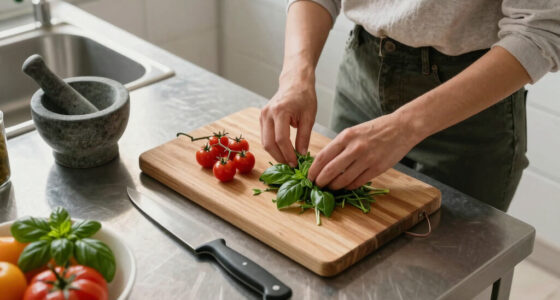
The first step in teaching kids manual kitchen skills is choosing low-risk, manageable tasks. Think: washing produce, tearing greens, stirring thick mixtures, or pouring liquids. These activities teach control and coordination without exposing children to dangerous tools or heat.
For example, a preschooler can help rinse berries and tear lettuce, feeling the textures and learning gentle handling. An early elementary child might knead dough or scoop ingredients. These foundational skills set the stage for more complex tasks later.
By focusing on safe, controlled actions, children learn to handle food and utensils confidently, setting a positive tone for future kitchen adventures.
As an affiliate, we earn on qualifying purchases.
How to teach knife skills safely and effectively
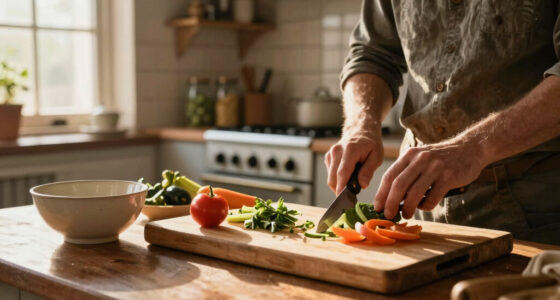
Teaching knife skills is about safety and control, not speed. Starting with soft, stable foods like bananas or cooked potatoes allows children to practice cutting without the risk of slipping or injury, which is crucial because developing proper technique early reduces the chance of accidents later. Using a small, child-sized knife designed for beginners helps them grasp the correct holding method and build confidence.
Demonstrating the ‘claw grip’—fingertips curled inward, knuckles guiding the blade—instills good habits that promote safety. Emphasizing slow, deliberate cutting motions teaches control and precision, which are more important than speed at this stage. This focus on technique helps children develop muscle memory for safe handling and reduces the likelihood of injuries caused by rushed or careless movements.
For instance, a child practicing slicing bananas into rounds not only gains fine motor control but also learns how to handle a knife responsibly. As they master basic skills, gradually introducing more challenging tasks like peeling and grating under supervision reinforces safety and control. Remember: a properly sized, sharp knife may be safer than a dull one because it requires less force and slips less often—yet it demands careful handling, making supervision essential.
As an affiliate, we earn on qualifying purchases.
Teach essential food-safety skills that stick
Food safety isn’t just about following rules—it’s about cultivating habits that protect health and prevent accidents. Children need to understand the why behind handwashing, separation of raw and cooked foods, and proper cleaning routines. These habits, when ingrained early, become second nature, reducing the risk of foodborne illness and cross-contamination.
For example, teaching a child to wash their hands thoroughly with soap and water before handling food emphasizes personal responsibility. Reinforcing this with visual cues like picture charts or checklists helps solidify the routine. Explaining that raw meat can carry bacteria that cause illness underscores the importance of separation, such as keeping raw chicken away from vegetables.
Using a food thermometer is a practical way to teach children that appearance isn’t enough to judge doneness—especially with meats. Understanding that bacteria can survive in undercooked food helps them appreciate why precise temperature control matters. Over time, these habits become ingrained, laying a foundation for safe, confident cooking that minimizes risks and fosters independence.
As an affiliate, we earn on qualifying purchases.
How to introduce heat and avoid burns
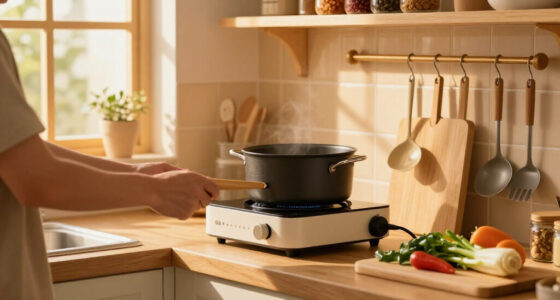
Heat safety is a critical aspect of kitchen education. Children must learn to recognize that hot surfaces, steam, and hot liquids can cause serious burns, often more quickly than they realize. Explaining the concept of ‘hot zones’—like stove burners, oven racks, and hot pans—helps set clear boundaries for safe behavior.
Teaching them to turn pot handles inward prevents accidental knocks, and opening lids away from their face minimizes steam burns. Showing how to carefully lift hot pans using dry oven mitts or pot holders emphasizes protective habits. Reinforcing that they should always ask for help with boiling water or frying teaches respect for hazards and encourages communication.
For example, a child helping stir a simmering sauce learns to be aware of steam and hot oil, understanding that these are invisible dangers. Building this awareness and routine safety behaviors reduces accidents, promotes cautious handling, and boosts their confidence in managing hot cookware responsibly. Safety isn’t just about avoiding injury—it’s about empowering children to navigate heat confidently and understand its risks.
As an affiliate, we earn on qualifying purchases.
Choosing the right tools for tiny hands
Using appropriately designed tools is essential for developing manual skills safely and effectively. Child-friendly utensils—like lightweight, nonslip cutting boards, ergonomic peelers, and smaller spatulas—are easier for small hands to control, reducing frustration and the risk of accidents. These tools help children develop proper techniques early on, fostering confidence and independence.
For example, a small, ergonomic peeler fits comfortably in a child’s hand, making peeling potatoes safer and more efficient. Guarded graters protect against scraped knuckles, and sturdy step stools ensure children can reach countertops safely without risking falls. Investing in adaptive tools, such as easy-grip utensils or visual recipe cards, supports children with different abilities, promoting inclusivity and participation.
Proper equipment not only makes tasks easier but also teaches children the importance of using the right tool for the job. This awareness encourages responsible handling, reduces accidents, and nurtures a sense of mastery over kitchen tasks.
Progression: How skills grow with age and ability
Children develop skills at different rates, influenced by individual temperament, coordination, and confidence. Recognizing this, a flexible, age-appropriate framework helps guide skill development without rushing. Tailoring tasks to their current abilities ensures they’re challenged but not overwhelmed, fostering positive experiences and a sense of achievement.
For example, preschoolers may focus on washing, tearing greens, and pouring—building control and safety habits. Early elementary children can handle spreading, cracking eggs, and grating, which refine fine motor skills and following instructions. Older children and preteens can begin using sharper knives, operating stovetops, and preparing complete dishes, promoting independence and planning skills.
Assessing your child’s specific skills and confidence levels is crucial—what’s appropriate for one may be too advanced or too simple for another. Patience and positive reinforcement encourage progress and help develop a lifelong love for cooking. Remember, the goal isn’t perfection but steady growth, confidence, and safety in the kitchen.
Foster independence with routine and responsibility
Creating routines and assigning responsibilities are powerful ways to nurture independence and ownership in the kitchen. When children participate in cleaning up, setting the table, or organizing ingredients, they learn that cooking is a shared activity rooted in responsibility. These routines reinforce safety behaviors—like wiping down surfaces or putting away utensils—and cultivate a sense of pride and autonomy.
For example, a child can wipe the table after chopping vegetables, or organize spices and utensils, developing both fine motor skills and a sense of order. Over time, these small actions become ingrained habits, transforming cooking from a task into a collaborative, enjoyable process. Recognizing and praising their contributions—such as “Thanks for helping tidy up”—reinforces positive behaviors and encourages ongoing participation.
This approach fosters a mindset that values responsibility, safety, and teamwork, setting the stage for children to become confident, independent cooks who understand the importance of routines and shared effort.
Frequently Asked Questions
What kitchen skills should children learn first?
Start with washing, tearing greens, stirring, pouring, and measuring. These tasks teach control and sequencing without major hazards and set a safe, positive foundation for more complex skills.
At what age can a child use a knife?
There’s no fixed age. A child is ready when they follow instructions consistently, stay focused, and can control the tool safely. Begin with soft foods and low-risk knives, always supervising closely.
Are child-safe knives actually safe?
They are safer for beginner tasks but still require supervision. Never rely solely on safety features—teach proper handling and always supervise children when using knives.
Should children use a sharp or dull knife?
A properly sized, sharp knife is more predictable and requires less force, but it can cause more serious injuries if misused. Introduce sharp knives only after mastering control with safer tools.
When can children cook at the stove independently?
Only after demonstrating sustained attention, safe pan handling, and response to hazards. Maturity and individual skills are more important than age—always supervise until you trust their judgment.
Conclusion
Teaching kids manual kitchen skills isn’t about rushing to master recipes. It’s about laying a foundation of control, safety, and independence. As they grow more confident, they’ll carry these skills into their own cooking adventures—and into a lifetime of self-reliance.
Keep it slow, keep it safe, and celebrate every tiny victory. The kitchen becomes a place not just for food, but for learning, trust, and shared moments that last a lifetime.
Fall Picks
fall essentials
As an affiliate, we earn on qualifying purchases.