
TL;DR

Get kitchen gear delivered free — and shop member deals
- Fast, free delivery on millions of items
- Access to Prime Big Deal Days deals on October 6–7
- Prime Video, Amazon Music and more included
A French Press brews coffee by steeping coarse grounds in hot water, then pressing the grounds away with a mesh plunger. Using quality grounds, correct timing, and proper cleaning results in a richer, more satisfying cup.
If you’ve ever wondered why French Press coffee feels so bold and smooth, it’s all about the process. This simple tool uses steeping rather than drip, extracting more oils and flavor compounds than many other brewing methods. Understanding how a French Press works isn’t just about science; it’s about taking control of your coffee’s richness and texture.
In this guide, you’ll learn the core mechanics of the French Press, practical tips to improve your brew, and how to avoid common pitfalls. Whether you’re off-grid, camping, or just want a more hands-on approach at home, mastering your French Press can turn coffee into a ritual of precision and flavor.
Use coarsely ground coffee and hot water just off boiling for best extraction.
Steep for around 4 minutes—adjust based on your taste preference.
Press slowly and evenly to avoid disturbing grounds and over-extraction.
Regular cleaning prevents flavor contamination and keeps your press working smoothly.
Material choice impacts heat retention and durability—steel for ruggedness, glass for aesthetics.
How a French Press Actually Works — The Simple Science
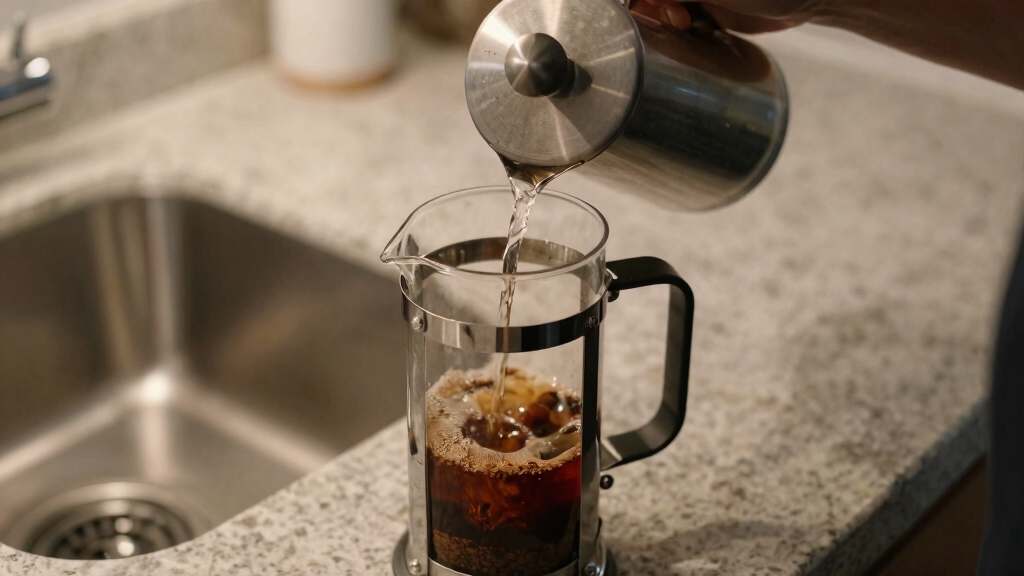
A French Press operates on a straightforward principle: steeping coarse coffee grounds in hot water, then separating them with a mesh plunger. When you pour hot water over the grounds, tiny particles release oils, flavors, and aromas, creating a rich, textured brew. The plunger’s mesh filter then presses down, trapping grounds at the bottom while the liquid rises clear and full-bodied.
Imagine the process like making tea—except here, the coffee grounds are the tea leaves, and the mesh filter acts like a tea infuser. The key is the coarse grind that allows water to extract flavors without slipping through the filter. This coarse grind is essential because it balances extraction; too fine, and the tiny particles can slip through the mesh, resulting in a gritty or bitter brew. Too coarse, and the water may pass through too quickly, leading to under-extraction and weak flavor. The mesh filter’s design is a compromise—allowing some oils and fine particles to pass, which enhances flavor but requires careful cleaning to avoid clogging or bitterness from residual oils. Understanding this balance helps you optimize your brew, tailoring grind size and steeping time to your taste preferences.
As an affiliate, we earn on qualifying purchases.
Why Your French Press Coffee Tastes Better When You Do This
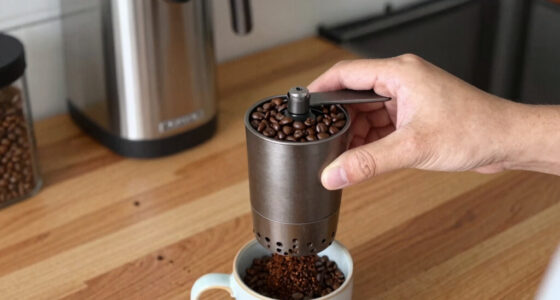
To maximize flavor, starting with freshly ground, coarsely ground coffee is crucial because it ensures uniform extraction. A burr grinder produces consistent particle size, which allows water to extract flavors evenly—avoiding over-extraction that results in bitterness or under-extraction that yields dullness. The water temperature, around 200°F (just off boiling), influences extraction; hotter water dissolves more oils and flavor compounds, but too hot can extract bitter tannins. Conversely, cooler water may not extract enough, resulting in weak coffee. Steeping for about 4 minutes strikes a balance—long enough to extract rich flavors but short enough to prevent over-extraction. Adjusting this time slightly can emphasize different flavor notes, highlighting the importance of understanding your taste preferences. When pressing, do so slowly and steadily to avoid disturbing the grounds, which can cause over-extraction or a cloudy brew. The pressing force and speed influence clarity and mouthfeel—slow, even pressure minimizes agitation and preserves the desired richness without introducing bitterness from over-agitation.
As an affiliate, we earn on qualifying purchases. As an affiliate, we earn on qualifying purchases.burr coffee grinder for French Press
The Best French Press Materials and How They Impact Your Coffee
| Material | Pros | Cons |
|---|---|---|
| Glass | Clear, easy to see how much coffee is brewed, traditional aesthetic | Fragile, poor heat retention, risk of thermal shock which can crack the glass if exposed to sudden temperature changes |
| Stainless Steel | Durable, retains heat longer, great for travel and outdoor use, less prone to breakage | Heavier, may stain or retain flavors over time if not cleaned properly, and some models may not be as visually appealing |
Choosing your French Press depends on your priorities—if you want durability and portability, stainless steel is ideal, offering robustness and heat retention. Glass models provide visual feedback, allowing you to monitor extraction progress and appreciate the brewing process visually, but they require careful handling. Double-walled stainless steel presses combine durability with excellent heat retention, making them versatile for various environments. The material impacts not just aesthetics but also how consistently you can maintain optimal brewing temperatures and how the device withstands daily use. Considering these factors ensures you select a French Press that aligns with your lifestyle and brewing goals.
As an affiliate, we earn on qualifying purchases.
Common Mistakes That Ruin Your French Press Coffee (And How to Fix Them)
Over-extraction occurs when coffee grounds steep too long or are ground too finely, leading to bitter flavors because the water dissolves undesirable compounds along with the desired oils. Under-extraction happens when the steeping time is too short or the grind is too coarse, resulting in a weak, insipid brew because the water hasn’t had enough contact time or surface area to extract flavors effectively. Rushing the pressing process can also cause issues—pressing too quickly agitates the grounds excessively, releasing bitter compounds and clouding the brew. Regular cleaning is vital because residual oils and fine particles can build up, creating rancid flavors and clogging the filter, which hampers extraction and results in uneven brewing. To avoid these pitfalls, always use a coarse grind, stick to a 4-minute steeping time adjusted to taste, and press gently and steadily. After each use, disassemble the parts and clean thoroughly with warm, soapy water, paying special attention to the mesh filter, as residual oils can impact future flavor quality. Proper maintenance preserves the integrity of your French Press and ensures consistently delicious coffee.
As an affiliate, we earn on qualifying purchases.
How to Make Your Perfect French Press Coffee — Step-by-Step
- Preheat your French Press with hot water to keep the brew warm longer and prevent temperature shock that can affect extraction.
- Grind your coffee to a coarse consistency—think sea salt texture—to optimize extraction and prevent grounds from slipping through the mesh.
- Add about 30 grams for a 4-cup press, or adjust based on your taste and desired strength. Using a scale ensures precision.
- Pour hot water (about 200°F), saturating all grounds evenly. Wait 30 seconds for pre-infusion to allow the coffee to degas and bloom, which enhances flavor extraction.
- Pour the rest of the water, filling the press, and stir gently with a wooden or plastic spoon to promote even saturation without breaking the coffee grounds.
- Put on the lid, and let it steep for 4 minutes. This duration balances extraction of oils and flavors without over-extracting bitter compounds.
- Slowly press the plunger down, applying even pressure to avoid disturbing the grounds and causing over-extraction or cloudy brew.
- Pour immediately to prevent over-extraction and enjoy your freshly brewed coffee while it’s at its peak flavor and temperature.
Compare French Press to Other Brewing Methods — Which Wins?
| Feature | French Press | Pour-Over | Espresso |
|---|---|---|---|
| Flavor | Full-bodied, rich oils that emphasize mouthfeel and depth | Clean, bright, highlighting subtle nuances and brightness | Intense, concentrated flavor with a creamy body |
| Ease | Simple, minimal parts, forgiving for beginners | Requires more skill, precise pouring technique, and equipment | Requires specialized machine or hand-pump, more technique involved |
| Time | About 4-5 minutes including steeping and pressing | 3-4 minutes of pouring and blooming | 25-30 seconds of extraction |
Choosing the right method depends on your taste preferences—if you love a bold, full-bodied experience, the French Press excels. For clarity, brightness, and nuanced profiles, pour-over is preferable. Espresso offers a concentrated shot for those who appreciate intensity, but it demands more equipment and skill. Each method’s strengths align with different flavor profiles and lifestyles, so understanding these tradeoffs helps you select the best brewing style for your coffee journey.
Frequently Asked Questions
How do I prevent coffee grounds from ending up in my cup?
Use a proper coarse grind and ensure your mesh filter is clean and intact. Press slowly, and pour gently to keep grounds in the press.
What is the ideal coffee-to-water ratio?
A common ratio is about 1:15 to 1:17—roughly 30 grams of coffee for 500 ml of water. Adjust for strength and taste.
Can I make tea or other beverages in a French Press?
Absolutely. It’s great for loose leaf teas, cold brew, or even frothing milk. Just clean thoroughly between uses to avoid flavor transfer.
Why is my French Press coffee bitter or weak?
Bitter coffee often results from over-extraction—too long steeping or too fine a grind. Weak coffee can be from under-extraction—short steep or coarse grind. Adjust timing and grind size accordingly.
How do I clean my French Press properly?
Disassemble all parts and wash with warm, soapy water regularly. Use a soft brush for the mesh filter. Avoid abrasive cleaners that can damage the mesh.
Conclusion
Your French Press isn’t just a vessel; it’s a tool for control. When you understand how it brews, you can tweak every variable for a perfect cup. A steady hand, fresh grounds, and patience turn simple ingredients into a rich, satisfying experience.
Next time you press down, remember: you’re mastering a centuries-old craft, grounded in simplicity and skill. That’s what makes each cup uniquely yours.
Fall Picks
fall essentials
As an affiliate, we earn on qualifying purchases.