
TL;DR

Get kitchen gear delivered free — and shop member deals
- Fast, free delivery on millions of items
- Access to Prime Big Deal Days deals on October 6–7
- Prime Video, Amazon Music and more included
Burr grinders produce uniform coffee grounds, leading to better extraction and flavor. Blade grinders are cheaper and simpler but cause uneven grounds, impacting taste. Your choice affects your brew quality.
Burr grinders produce uniform grounds, leading to more flavorful and balanced coffee.
Blade grinders are affordable and quick but cause uneven particle sizes, risking flavor inconsistencies.
Choosing the right grinder depends on your brewing method and how much you care about flavor precision.
Investing in a good burr grinder can greatly improve your coffee experience, especially for espresso and pour-over.
Regular cleaning and adjustments extend your grinder’s lifespan and flavor quality.
The Difference Between Burr and Blade Grinders
Burr grinders produce uniform coffee grounds, leading to better extraction and flavor. Blade grinders are cheaper and simpler, but their uneven chop can create bitter, flat, or inconsistent cups. Your grinder choice shapes brew quality before water ever touches the coffee.
Uniform grind sizes from burr grinders can improve extraction efficiency compared with blade grinders, enhancing flavor clarity.
Adjustable burr spacing lets you match espresso, pour-over, drip, or French press with far more control.
How Each Grinder Breaks Down Beans
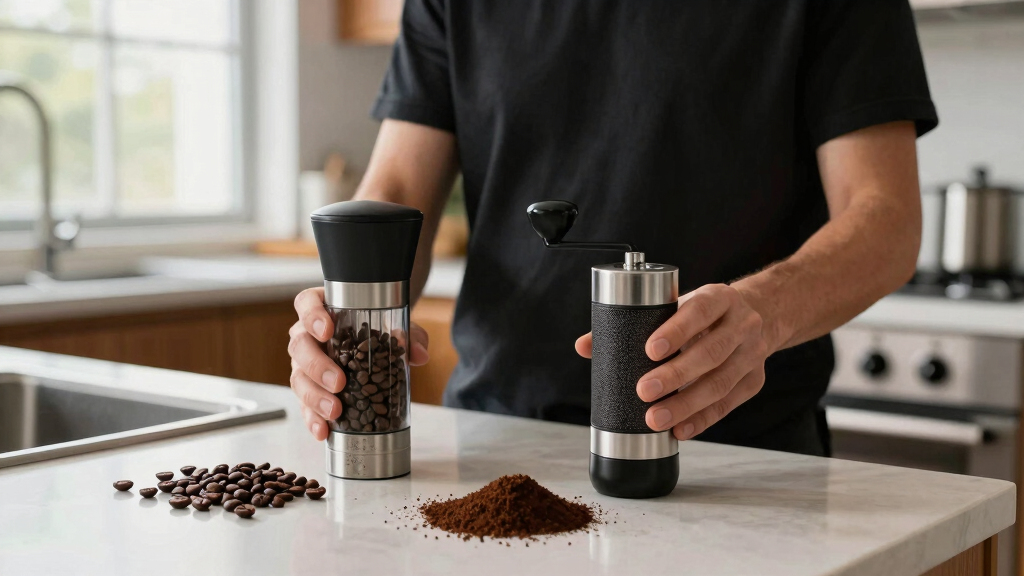
Burr grinders crush beans between two abrasive surfaces. Blade grinders spin a sharp blade through the beans, chopping them into mixed particle sizes.
Crushes, Then Controls
Adjustable burr spacing creates repeatable grind sizes, giving water a predictable surface area for extraction.
Chops, Then Guesses
Grinding time becomes the main control, so fine dust and larger chunks often appear in the same batch.
Even Beats Fast
Uniform grounds reduce over-extracted bitterness and under-extracted sourness in the finished cup.
Why Consistency Changes the Cup
A consistent grind lets water extract flavor evenly. Uneven grounds create competing extraction speeds inside the same brew bed.
Beans Break
Burrs crush evenly; blades scatter particle sizes.
Water Meets Grounds
Fine particles extract fast, coarse particles extract slowly.
Flavor Separates
Mixed sizes can produce bitter notes and weak spots together.
Cup Lands
Better uniformity means clearer aroma, body, and sweetness.
Burr vs Blade at a Glance
Blade grinders win on speed and price. Burr grinders win where brewing precision matters most: espresso, pour-over, and dialing in repeatable flavor.
Precision Spectrum
For French press, you can tolerate more variation. For espresso and pour-over, small grind differences become major flavor differences.
Speed, Cost, Convenience, and Flavor
Choose based on how much repeatable flavor matters for your daily brewing method.
| Feature | Burr Grinder | Blade Grinder | Best Choice |
|---|---|---|---|
| Price Range | $50–$300+ | Under $50 | ~ DependsBudget vs quality |
| Grinding Time | Slower, but precise | Faster, chaotic | ~ Blade for speed |
| Consistency | ✓ High | ✗ Low | ✓ Burr |
| Espresso Suitability | ✓ Strong fit | ✗ Risky | ✓ Burr |
| Maintenance | Slightly more involved | Simple, but needs frequent wiping | ~ Both need cleaning |
Which Grinder Should You Buy?
If you brew espresso or pour-over, choose a burr grinder. If you make casual drip coffee, travel often, or need the lowest cost, a blade grinder can work with extra trial and error.
Choose Burr If Flavor Precision Matters
Uniform grounds, adjustable settings, and repeatable extraction make burr grinders the better long-term choice for balanced coffee.
Choose Blade If Budget Matters Most
Blade grinders are quick and simple, but expect more inconsistent cups because fine dust and coarse fragments brew differently.
Common Grinder Questions
Small habits make a big difference: clean often, test small batches, and adjust grind size to your brew method.
Can I use a blade grinder for espresso?
You can, but uneven grounds often cause bitterness or weak extraction. Burr grinders are better for fine, uniform espresso grinds.
Is a burr grinder worth the money?
Yes, especially for daily brewing, espresso, and pour-over. Better consistency usually means better flavor and durability.
How often should I clean it?
Clean burr grinders every few weeks to remove oils and old grounds. Clean blade grinders more often if used daily.
What is the biggest mistake?
Neglecting cleaning and adjustment. Stale oils, leftover grounds, and wrong settings can flatten even excellent beans.
How Burr and Blade Grinders Actually Work
Burr grinders crush beans between two abrasive surfaces, like two wheels, giving you a consistent grind. The space between the burrs can be adjusted, letting you dial in your preferred size. This mechanical process ensures each particle is similar, which is crucial for predictable extraction. Blade grinders spin a sharp blade, chopping beans into uneven pieces. Think of a blender versus a mortar and pestle. The rapid spinning and chopping create a variety of particle sizes, which can lead to unpredictable brewing results. For example, when grinding for espresso, burrs produce tiny, uniform particles that extract evenly and produce a rich, balanced flavor. Blade grinders often produce a mix of fine and coarse bits, which can lead to over- or under-extraction, resulting in bitter or flat-tasting coffee. The mechanical difference impacts not just the size but the consistency, which is fundamental for control over flavor and strength.
As an affiliate, we earn on qualifying purchases.
Why Consistency Matters More Than You Think
Consistent grind size is the secret sauce for a great cup. Burr grinders deliver evenly sized grounds, ensuring water extracts flavor uniformly across all particles. This uniformity means you get a balanced, flavorful brew with fewer bitter or weak notes. When the grind varies, some particles over-extract—pulling out undesirable bitter compounds—while others under-extract, leaving behind flat, dull flavors. For instance, in pour-over brewing, precise extraction is critical; uneven grounds can cause the coffee to taste muddled or sour. To make the most of your grinder, start by identifying your brewing method and then adjust your grind setting accordingly. For example, use a coarser grind for French press and a finer one for espresso. Regularly check your grind size with small test batches before brewing your main coffee, and take note of what works best for your taste. This proactive approach ensures you consistently produce flavorful coffee and helps avoid waste from over- or under-extracted grounds.
As an affiliate, we earn on qualifying purchases.
Speed, Cost, and Convenience: The Real Difference
| Feature | Burr Grinder | Blade Grinder |
|---|---|---|
| Price Range | $50–$300+ | Under $50 |
| Grinding Time | Slower, but precise | Faster, chaotic |
| Consistency | High | Low |
| Maintenance | Slightly more involved | Simple |
To make an informed decision, assess your priorities: if you want consistent flavor and control, investing in a burr grinder is worthwhile. Set aside time for regular cleaning—clean your burrs every few weeks and check for oil buildup to maintain performance. If speed and budget are more critical, a blade grinder can suffice, but remember it may require more skill to compensate for uneven grounds. Practical steps include testing different grind sizes with small batches and adjusting until you find the sweet spot. Also, consider your typical brewing method; for espresso or pour-over, precision matters more, making a burr grinder a better long-term investment. For casual drip coffee or travel use, a blade grinder might be enough, but expect some trial and error to get the best flavor.
As an affiliate, we earn on qualifying purchases.
Frequently Asked Questions
Can I use a blade grinder for espresso?
You can, but the uneven grounds may lead to over-extraction or bitterness. Burr grinders are better suited for espresso’s fine, uniform grind.Is it worth spending more on a burr grinder?
Absolutely. Higher-quality burr grinders offer better consistency, durability, and flavor extraction—especially important if you brew daily or want nuanced taste.How often should I clean my grinder?
Clean your burr grinder every few weeks to remove oil buildup and residual grounds. Blade grinders should be cleaned more often if used daily to prevent stale flavors and maintain performance.Are blade grinders faster than burr grinders?
Yes, blade grinders typically grind faster, but at the expense of consistency. If time is your only concern, a blade grinder might work, but flavor suffers because of uneven particle sizes.What’s the biggest mistake people make with grinders?
Many neglect cleaning and adjusting their grinders. This neglect leads to inconsistent grounds and stale flavors. Regular maintenance, including cleaning and calibration, is essential for optimal performance and flavor quality.As an affiliate, we earn on qualifying purchases.
Conclusion
Your coffee’s character hinges on how evenly it’s ground. A burr grinder might cost more upfront, but it rewards you with richer, more nuanced flavors. Think of it like sharpening a blade—precision makes all the difference in the final cut. Take the time to choose what suits your brewing style—and savor every sip.Fall Picks
fall essentials
As an affiliate, we earn on qualifying purchases.