
TL;DR
Listen free for 30 days with Audible
Thousands of audiobooks and originals — cancel anytime.
Start your free trialAs an affiliate, we earn on qualifying purchases.
A food mill is a manual tool that purees and strains in one step, removing skins and seeds without overworking foods like tomatoes or potatoes. It produces smooth, flavorful purees ideal for sauces and baby food. Proper technique and cleaning make it a reliable workhorse in your off-grid kitchen.
If you’ve ever cooked a batch of tomatoes or apples and ended up with a chunky mess, a food mill could be your secret weapon. It’s a simple, durable tool that transforms cooked produce into smooth, seedless purees in seconds. No fuss, no fussing with peeling or seeding—just pure, flavorful results.
Whether you’re making a silky tomato sauce, baby food, or rustic applesauce, mastering the food mill means better texture and more flavor. In this guide, you’ll learn how to use one confidently, troubleshoot common issues, and keep it working for years in your off-grid kitchen.
A food mill combines pureeing and straining, making it ideal for seedless sauces and smooth purees.
Cook produce until very soft before milling—raw or undercooked foods clog the perforations and slow the process.
Choose the right disc size: fine for silky sauces, medium for applesauce, coarse for chunky soups.
Reversing the crank and cleaning between batches prevents clogging and ensures smooth operation.
Keep your mill dry and disassembled after use—proper maintenance extends its lifespan.
How to Use a Food Mill for Sauces and Purees
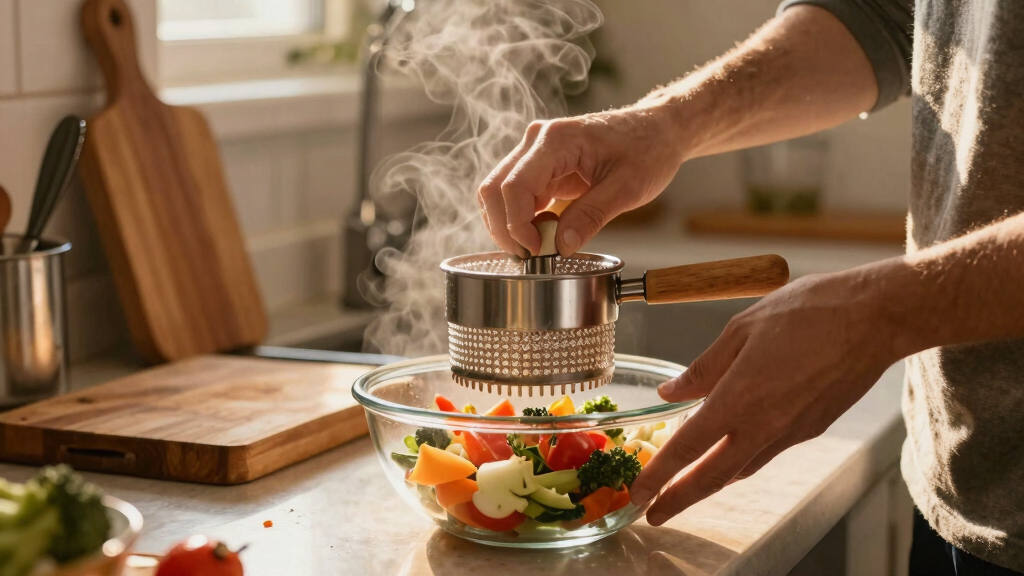
A food mill purees and strains cooked produce in one hand-powered pass. Skins, seeds and tough fibers stay above the disc while smooth, flavorful pulp falls into the bowl—without electricity, tedious peeling or overworked texture.
Three simple parts, one useful transformation
The rotating paddle presses soft food against a perforated disc. Smooth pulp passes through; unwanted solids stay behind.
Bowl
Holds the cooked produce and usually includes hooks or feet that stabilize the mill over a pot.
Disc
Controls texture through hole size while separating skins, seeds, stems and coarse fibers from the puree.
Paddle
Rotates by hand, sweeping food across the disc and applying steady pressure without high-speed blades.
From cooked produce to smooth puree
Steady pressure beats speed. Keep batches modest, reverse periodically and scrape the underside before moving on.
Food should mash easily with a spoon.
Rest it securely over a bowl or pot.
Leave room for the paddle to work.
Use even pressure in one direction.
Clear debris and collect puree below.
Every few turns, reverse the crank once or twice. This lifts skins and seeds away from the perforations, reduces clogging and keeps the paddle moving smoothly.
Choose the disc before you start
Smaller holes create silkier results but require softer food and more patience. Larger holes move food faster and preserve rustic texture.
Silky to hearty
The disc is your texture dial. Match it to the final mouthfeel rather than simply choosing the fastest option.
Why a mill behaves differently
A mill separates solids mechanically. High-speed tools chop everything together, which can introduce seeds, excess air or overworked starch.
| Capability | Food mill | Blender | Food processor | Potato ricer |
|---|---|---|---|---|
| Purees and strains together | ✓ Yes | ✗ No | ✗ No | ✗ No |
| Removes tomato skins and seeds | ✓ Yes | ✗ Chops them in | ✗ Chops them in | ✗ Not designed for it |
| Protects potato texture | ✓ Fluffy | ✗ Can turn gluey | ✗ Can turn gluey | ✓ Excellent |
| Handles larger mixed batches | ✓ Yes | ✓ Yes | ✓ Yes | ~ Limited |
| Works without electricity | ✓ Yes | ✗ Usually no | ✗ No | ✓ Yes |
| Best use | Sauces, purees, applesauce | Drinks and emulsions | Chopping and mixing | Small batches of soft food |
✓ Strong fit ✗ Poor fit ~ Conditional fit
When the crank slows, diagnose the food first
Most problems come from temperature, softness, overfilling or debris packed against the disc.
Cook it softer
Raw or undercooked produce resists the paddle. Return it to heat until it mashes easily, then try again.
Warm it gently
Cold, thick puree has greater resistance. Rewarm it slightly, but avoid handling boiling-hot food.
Reverse the crank
One or two backward turns lift skins and seeds from the disc. Brush away stubborn buildup between batches.
Scrape underneath
A surprising amount of puree clings below the disc. Scrape it into the bowl before discarding the solids.
Food mill FAQ
Small technique choices have a large effect on flow, texture and cleanup.
Can I mill raw produce?
No. Food mills are designed for cooked, softened ingredients. Firm raw produce clogs the holes and strains the mechanism.
Do I need to peel or seed first?
Usually not. Cook tomatoes or apples with their skins, then let the disc separate skins and seeds from the pulp.
Which disc is best for potatoes?
Use the medium disc and mill the potatoes while hot. This creates a fluffy texture without overworking their starch.
Is stainless steel worth it?
For frequent use, yes. It is durable, non-reactive with acidic tomatoes and commonly dishwasher-safe when the manufacturer permits it.
Soft + warm + steady
Cook produce until tender, select the disc for your desired texture, fill the mill no more than two-thirds full and crank with even pressure. Reverse periodically, scrape the underside and clean immediately. Follow that rhythm and this simple manual tool becomes a dependable workhorse for sauces, purees, baby food and harvest-season preserving.
What is a food mill and how does it work?
A food mill is a hand-powered kitchen tool with a bowl, perforated disc, and a rotating paddle. When you turn the handle, the food gets pressed through the holes, separating skins, seeds, and fibers from the smooth pulp. It’s like a mini, manual sifter that also purees.
This dual action makes it perfect for sauces and purees. For example, when making tomato passata, the mill extracts the flesh while leaving behind seeds and skins—saving you time and effort. Most models have interchangeable discs for different textures, from silky to chunky.
Durability varies—stainless steel models are sturdy and dishwasher safe, while cheaper plastic versions can stain or react with acids. Picking the right one depends on your volume and how often you’ll use it.
As an affiliate, we earn on qualifying purchases.
Step-by-step: how to turn cooked produce into smooth purees
- Cook your produce until soft. Tomatoes, apples, potatoes—soft enough to mash easily. Raw isn’t ideal for a food mill; heat softens and releases flavors.
- Set the mill over a large bowl or pot. Many models have hooks or legs to rest on the rim, freeing your hands.
- Fill the mill no more than halfway—overcrowding slows down the process. Crank steadily in one direction, applying even pressure.
- Every few turns, reverse the crank slightly. This clears the blade and prevents clogging. Use a spoon or brush to clean the disc if needed.
- Work in batches if necessary. For thicker foods, warm the mixture slightly to improve flow—cold foods tend to clog or strain slowly.
- Use the disc size suited to your goal: fine for silky sauces, medium for applesauce, coarse for rustic soups.
For example, when making a tomato sauce, cook the tomatoes first, then press them through the mill with a fine disc for a smooth finish. It’s quick and results in a vibrant, seed-free puree.
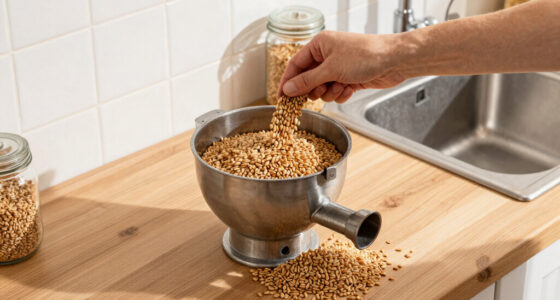
manual food mill for tomatoes and apples
As an affiliate, we earn on qualifying purchases.
As an affiliate, we earn on qualifying purchases.
Choosing the right disc for your perfect texture
A food mill’s discs come in different sizes, each suited for specific tasks. Picking the right one makes all the difference.
| Disc Size | Ideal For | Texture |
|---|---|---|
| Fine (~1–1.5 mm) | Tomato sauce, baby food, coulis | Silky, ultra-smooth |
| Medium (~2–3 mm) | Applesauce, mashed potatoes | Lightly chunkier, still smooth |
| Coarse (~5+ mm) | Rustic soups, chunky purees | Chunky, hearty |
Matching the disc size to your recipe is crucial because it directly impacts the final texture. Using a fine disc for a silky sauce ensures a smooth, velvety consistency that coats pasta beautifully, whereas a coarse disc leaves more texture, perfect for hearty, rustic dishes. Switching discs allows you to control the final mouthfeel, but remember that each size has tradeoffs: finer discs can slow down the process and clog more easily if the produce isn’t soft enough, while coarser discs work faster but may require more cooking or prep to achieve the desired chunkiness. Understanding these tradeoffs helps you tailor your approach for optimal results every time.
stainless steel food mill with different discs
As an affiliate, we earn on qualifying purchases.
As an affiliate, we earn on qualifying purchases.
Troubleshooting common issues: why your mill slows down or clogs
Food not passing through easily? It’s usually because the mixture isn’t soft enough, or the mill is overloaded. Cold or thick foods clog the perforations, making it slow or impossible to push through.
Here’s how to fix it:
- Warm up thick mixtures slightly—think of how applesauce flows better when warm. This reduces viscosity and helps the food pass through the holes more smoothly.
- Work in smaller batches—overfilling the mill creates pressure that can cause clogging and strain the motor or handle. Smaller batches allow for more consistent pressure and easier cleaning.
- Reverse the crank to clear debris if it jams. Regularly cleaning the disc with a brush or spoon helps prevent buildup that causes slowdowns or blockages.
- Ensure your produce is cooked until very soft. Raw or undercooked foods are firmer and tend to clog the perforations, increasing strain and reducing efficiency.
For instance, if your tomato sauce isn’t passing through, check the heat—sometimes a quick microwave blast can loosen stubborn bits and speed up milling. Recognizing these issues early and adjusting your prep can save time and frustration, making the process smoother and more enjoyable.
hand-powered food mill for off-grid kitchens
As an affiliate, we earn on qualifying purchases.
As an affiliate, we earn on qualifying purchases.
Cleaning and caring for your food mill—keep it in top shape
Cleaning a food mill is straightforward but essential for longevity. Disassemble the parts immediately after use—pulp dries fast and can clog the perforations, making cleaning more difficult later.
Rinse all parts under warm water. Use a brush or the end of a wooden spoon to scrub out any stuck bits from the holes. Stainless steel discs are usually dishwasher safe, but check your model’s instructions.
Dry thoroughly to prevent rust—especially if you have non-stainless parts. Store in a dry place, and oil any moving parts occasionally if they feel stiff.
For example, after milling applesauce, disassemble the mill, rinse all parts, scrub the disc, and air-dry overnight. Regular cleaning prevents residue buildup, which can affect flavor and performance over time. Proper maintenance not only prolongs the life of your tool but also ensures that every batch remains fresh and vibrant—since leftover residues or rust can taint future purees and compromise safety.
Frequently Asked Questions
Can I use a food mill for raw produce?
No, a food mill works best with cooked, softened produce. Raw ingredients are too firm and clog the perforations, slowing or stopping the process. Always cook your produce until soft first.Do I need to peel or seed before milling?
Nope. The food mill removes skins and seeds as you press cooked produce through the disc. This saves time and effort, especially with tomatoes and apples.Which disc should I use for mashed potatoes?
Use the medium disc for fluffy mashed potatoes. Make sure the potatoes are hot and cooked until soft to get the best texture without overworking the starch.Is it worth getting a food mill if I already have a blender?
Yes. A food mill produces seedless, smooth purees without overworking the food, unlike a blender which can chop seeds and skins into bitterness or make potatoes gluey.How do I clean the perforated disc?
Rinse immediately after use, disassemble the parts, and scrub the holes with a brush or the end of a spoon. Most stainless steel discs are dishwasher safe, but check your model’s instructions.Conclusion
Mastering a food mill turns rough, cooked produce into silky, seedless purees that elevate your off-grid meals. With patience and a few simple tips, it becomes an indispensable tool for sauces, baby food, and rustic purees alike.
Remember: a well-maintained food mill is a lifetime companion in your kitchen—ready when you need it most. So next time you cook a batch of tomatoes or apples, reach for your mill and turn simple ingredients into something extraordinary.
Flea & tick season Picks
flea and tick prevention
As an affiliate, we earn on qualifying purchases.