
TL;DR

Get kitchen gear delivered free — and shop member deals
- Fast, free delivery on millions of items
- Access to Prime Big Deal Days deals on October 6–7
- Prime Video, Amazon Music and more included
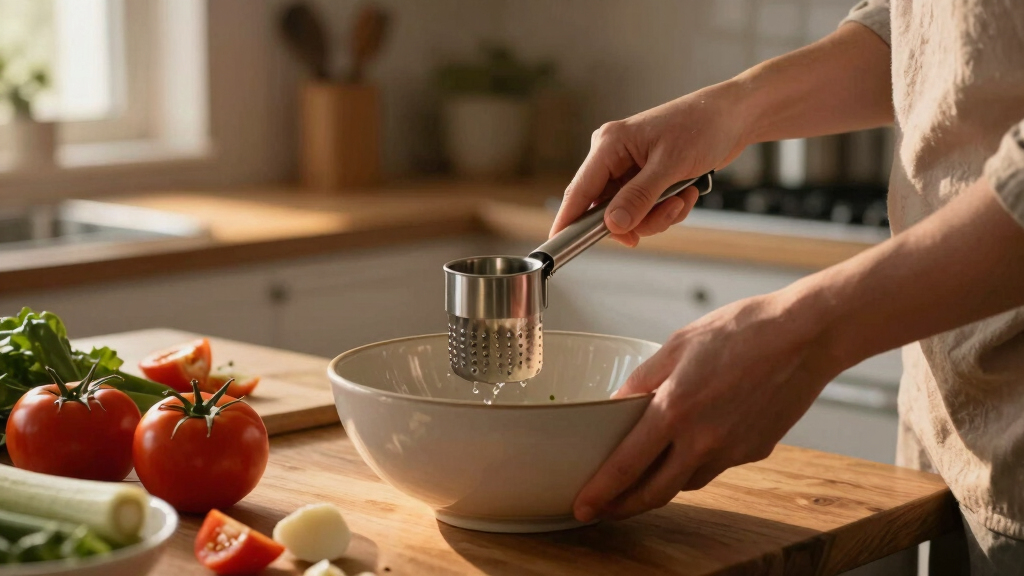
A food mill is a manual tool that strains and purees cooked foods by forcing them through perforated discs. It’s ideal for making seedless tomato sauces, baby food, and smooth jams, especially when you want control over texture and seed removal without electricity.
A food mill is ideal for creating seedless, smooth purees from cooked fruits and vegetables.
Use it for sauces, jams, baby food, and mashed potatoes—especially when controlling texture matters.
Choose the right disc size to match your desired finish—coarser for chunky, fine for silky.
Always cook or soften foods before processing to prevent clogging.
Regular cleaning and proper storage keep your food mill working like new.
What Is a Food Mill and Why Do You Need One?
A food mill is a hand-powered kitchen tool that purees and strains foods by forcing them through a perforated disc. It’s perfect for soft, cooked foods like tomatoes, apples, and potatoes. Unlike blenders, it separates skins, seeds, and fibrous parts, leaving behind only smooth pulp.
Imagine making a batch of homemade applesauce. You cook the apples until tender, then run them through the food mill. The machine presses the cooked apples through tiny holes, leaving skins and seeds behind. The result? A silky, seedless puree ready for jam or just a spoonful of comfort.
You’ll want one if you value control over texture, want to avoid seeds in your sauces, or need a simple, off-grid way to process large batches of cooked produce.
As an affiliate, we earn on qualifying purchases.
How Does a Food Mill Actually Work? It’s Simpler Than You Think
At its core, a food mill is a bowl with a crank handle and a disc with holes. When you turn the handle, a blade or pressing plate inside pushes the food through the holes. The larger the holes, the chunkier the mash; smaller holes make it smoother.
Picture this: You’ve cooked a bushel of tomatoes. You fill the mill’s bowl with the hot, soft tomatoes, turn the crank, and the mash streams out into a bowl below. The skins and seeds stay behind in the mill. It’s like a tiny, manual strainer that does all the hard work.
This process is particularly effective because it applies steady pressure, breaking down cooked produce without turning it into a mess. The key is to use soft, cooked foods—raw foods are often too tough and clog the holes.
Understanding its operation helps you appreciate why the food mill is so effective for certain tasks. It’s not just about mashing; it’s about applying controlled, uniform pressure that preserves the integrity of delicate textures while removing unwanted parts. This makes it superior to some other tools when you need seedless, smooth results without risking over-processing or losing control over the final texture.
As an affiliate, we earn on qualifying purchases.
The Essential Parts and How They Shape Your Results
A typical food mill consists of three main parts: the bowl, the disc, and the handle. The bowl holds the food, the disc determines the texture, and the handle turns the blade to push food through.
Discs come in different sizes—ranging from coarse to very fine. For tomato sauce, a medium disc works well, while for baby food, a fine disc is better. Some models have adjustable discs, so you can switch textures without buying multiple tools.
Durability depends on material: stainless steel lasts longer and resists corrosion, while plastic models are lighter and easier to clean. Choose based on your storage space and how often you’ll use it.
Knowing the different parts and their functions allows you to select the right disc for each task, ensuring you get the desired consistency. For example, a coarse disc might be suitable for chunky applesauce, while a fine disc produces silky purees. The ability to swap discs gives you versatility, but it also means considering ease of cleaning and compatibility when choosing a model.
As an affiliate, we earn on qualifying purchases.
What Can You Do with a Food Mill? 6 Practical Uses
- Make seedless tomato sauce: Cook tomatoes, then run them through the mill for a smooth, skinless sauce. This process helps extract a richer flavor while removing seeds and skins that can add bitterness or texture issues.
- Prepare baby food: Puree cooked fruits and vegetables, removing skins and seeds for a gentle texture. The controlled process ensures the puree is smooth and free of fibrous bits, which is especially important for delicate digestion.
- Strain jams and jellies: Remove seeds and pulp from cooked berries for a clear, smooth preserve. This step enhances the clarity and texture, making the final product more appealing and less gritty.
- Process cooked apples or pears: Turn them into applesauce or pear puree for baking or snacking. The food mill preserves the natural flavor and prevents over-processing, which can happen with blenders.
- Remove seeds from berries: Strain out seeds from cooked or mashed berries to make syrups or toppings. This results in a refined texture that’s more versatile for various recipes.
- Make mashed potatoes or root vegetable purees: Achieve a velvety finish without lumps or fibrous bits. The steady pressure of a food mill prevents overworking the potatoes, maintaining a light, fluffy consistency that’s hard to achieve with other tools.
As an affiliate, we earn on qualifying purchases.
How to Use Your Food Mill in 4 Easy Steps
- Cook the food: Soft, cooked produce yields the best results. Boil or steam until tender.
- Set up the mill: Assemble the parts, select your disc, and place the mill over a bowl or pot.
- Fill and turn: Add the cooked food to the bowl. Grip the handle and turn steadily—pressure pushes the food through.
- Collect and clean: Scrape out the smooth puree or strained food. Disassemble and wash all parts thoroughly.
Comparison Table: Food Mill vs. Blender vs. Food Processor
| Feature | Food Mill | Blender | Food Processor |
|---|---|---|---|
| Seed/skin removal | Yes, effective | No, blends everything | No, blends everything |
| Texture control | High, different discs | Low, uniform | Moderate, variable blades |
| Ease of cleaning | Easy, disassemble | Moderate | Moderate to difficult |
| Power source | Manual | Electric | Electric |
| Best for | Seedless purees, sauces, jams | Smooth blends, smoothies | Chopping, slicing, mixing |
Common Mistakes and How to Avoid Them
Using raw, hard produce can clog the mill or damage discs. Always cook or soften foods first. Overfilling the bowl can make turning difficult; add food gradually for best results. Not cleaning the parts thoroughly can lead to residue buildup and bacteria—disassemble and wash after every use.
Remember, a food mill isn’t a substitute for a blender—think of it as a specialized tool for seedless, smooth results. Understanding its limits saves frustration and keeps your process smooth.
Cleaning and Maintaining Your Food Mill for Lasting Use
Disassemble all parts and wash with warm, soapy water immediately after use. Use a brush to clean the discs and hard-to-reach spots. Many parts are dishwasher safe, but check your model’s instructions. Dry thoroughly to prevent rust, especially if it’s metal.
Occasionally, oil or lightly grease the moving parts to keep the handle turning smoothly. Store in a dry place to prevent corrosion. Regular maintenance ensures your food mill stays reliable for years of off-grid cooking.
Frequently Asked Questions
Can I use a food mill on raw foods?
It’s best to use a food mill on cooked or softened foods. Raw, hard produce can clog the holes and strain the mechanism. Cooking breaks down the fibers, making it easier for the food to pass through smoothly.
How do I remove seeds from berries with a food mill?
Cook the berries until soft, then run them through the mill. The seeds stay in the disc or the bowl, leaving behind a smooth, seed-free puree perfect for syrups or toppings.
Is a food mill better than a blender for sauces?
Yes, especially when you want to remove skins and seeds. A blender blends everything together, which can leave you with a seed-heavy, fibrous sauce. A food mill offers a cleaner, seedless finish.
How do I clean my food mill properly?
Disassemble all parts and wash them with warm, soapy water. Use a brush on the discs and hard-to-reach areas. Dry thoroughly to prevent rust, especially if your mill has metal components.
Can I process large quantities with a food mill?
Food mills are best suited for home use and small batches. For larger quantities, a commercial-grade strainer or food mill attachment for a stand mixer might be more efficient.
Conclusion
A food mill might seem simple, but its power lies in the quiet efficiency of manual work. It’s a tool that turns cooked produce into silky, seedless goodness—perfect for off-grid or low-tech kitchens. Keep yours well-maintained, and it’ll serve you for decades of homemade preserves and comfort foods.Halloween Picks
halloween
As an affiliate, we earn on qualifying purchases.