
TL;DR

Get kitchen gear delivered free with Prime
- Fast, free delivery on millions of items
- Prime Video, Amazon Music and more included
- Member-only deals all year
The bloom is the initial pour that releases built-up CO₂ from roasted beans, crucial for flavor clarity. Proper blooming improves extraction, making your coffee taste balanced and vibrant. Using precise timing and technique can transform your brew.
Ever wonder why some cups of pour-over coffee taste flat or sour? It often comes down to the bloom — that bubbling start that signals your coffee is awakening. Understanding the bloom’s role isn’t just about following a step; it’s about unlocking a richer, more vibrant flavor profile. Whether you’re brewing for yourself or sharing with friends, mastering this simple yet vital phase can make a real difference.
In this guide, you’ll learn what the bloom is, why it matters, and how to perfect it. Get ready to brew smarter, not harder — and taste the difference in every cup.
Use about twice the weight of water relative to coffee during bloom to ensure full degassing.
Allow 30-45 seconds for the bloom, watching for foam to subside as a cue.
Fresh, lighter roasts produce a more vigorous bloom, requiring adjustments in timing and technique.
Proper blooming can significantly improve flavor clarity, sweetness, and balance in your pour-over.
Experiment with longer or multiple blooms to unlock more nuanced flavors, especially with specialty beans.
The Role of Bloom in Pour-Over Coffee
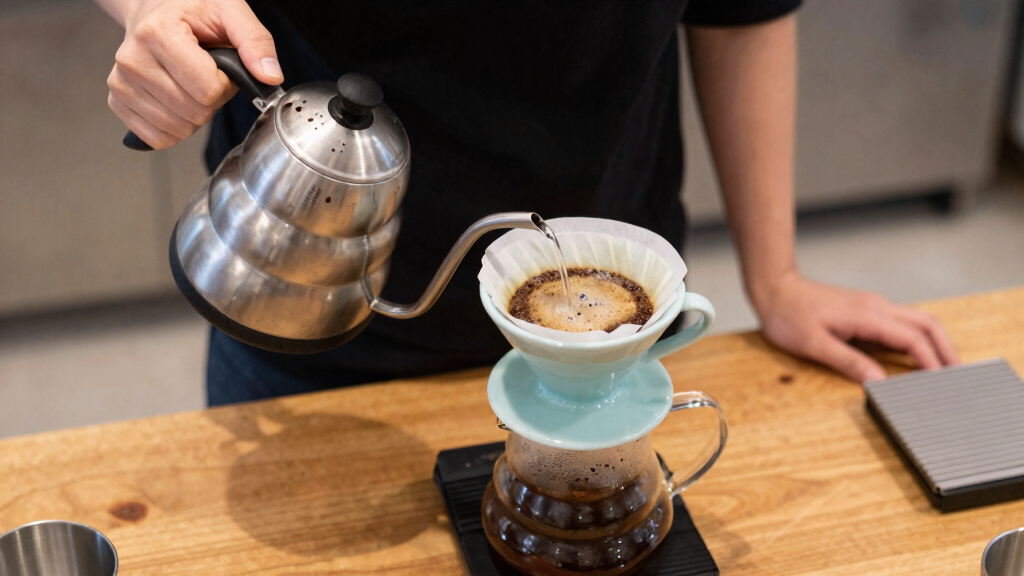
That bubbling first pour is coffee waking up. It releases trapped carbon dioxide, opens the grounds to water, and sets the stage for a cleaner, sweeter, more vibrant extraction.
Bloom like a pro in three moves
Measure precisely, wet every ground, then let the foam settle. The goal is complete and even saturation—not a dramatic pour.
Start with a 2:1 ratio
Use roughly twice the coffee weight in bloom water. For 20 grams of coffee, begin with 40 grams of hot water.
Pour slowly and evenly
Use a gentle circular pour across the whole bed. Dry pockets trap gas and encourage channeling later in the brew.
Wait for foam to subside
Pause for 30–45 seconds. Swelling grounds and fading bubbles signal that active degassing is nearly complete.
Gas out. Flavor in.
Trapped CO₂ repels incoming water and disrupts contact with the grounds. Blooming clears that barrier so extraction can proceed more uniformly.
The grounds swell as CO₂ escapes.
Once the gas is released, water can penetrate the coffee more consistently. The result is better access to sweetness, acidity, aroma, and delicate origin character.
Small step, large sensory difference
Bloom quality influences how evenly the brew extracts. Use the cup—not bubbles alone—as your final diagnostic.
| Bloom approach | Saturation | Likely extraction | Flavor outcome | Verdict |
|---|---|---|---|---|
| Skipped entirely | ✗ Uneven | Gas interrupts water contact | Sour, flat, underdeveloped | ✗ Avoid |
| Rushed bloom | ~ Partial | Residual CO₂ remains | Muted clarity, inconsistent balance | ~ Adjust |
| 30–45 second bloom | ✓ Complete | Even access to the coffee bed | Sweet, clear, balanced | ✓ Baseline |
| Excessively long bloom | ~ Over-saturated | Flow and temperature may drift | Potential dilution or bitterness | ~ Experiment |
✓ desirable · ✗ undesirable · ~ conditional
Let the coffee choose the bloom
Roast level, freshness, and visible activity change the ideal pause. Treat 30–45 seconds as a reliable starting range, then tune by observation and taste.
Go longer
Dense, lightly roasted beans may release gas more slowly. Try the upper end of the range or a carefully staged second bloom.
Watch closely
More porous grounds can degas quickly. A shorter, gentler bloom may be enough before continuing the main pour.
Expect energy
A vigorous foamy response signals abundant CO₂. Ensure full saturation and wait until the most active bubbling subsides.
From first pour to final cup
Bloom technique affects the entire extraction chain. Each link creates the conditions for the next.
Common bloom questions
Diagnose with freshness, water temperature, pouring coverage, and taste before changing several variables at once.
Why is there barely any bloom?
The coffee may be older and already degassed. Water that is too cool or a pour that misses parts of the bed can also reduce visible activity.
Can I skip it?
You can, but trapped gas may prevent even saturation and produce a less expressive, more sour or under-extracted cup.
Does bloom-water quantity matter?
Yes. Use enough to wet every ground without flooding the brewer. Twice the coffee weight is a dependable starting point.
Should I try multiple blooms?
For fresh specialty coffee, staged pours can extend degassing and reveal nuance. Keep total water and timing controlled so results remain comparable.
What exactly is the bloom, and why does it matter?
The bloom is the initial burst when hot water hits your coffee grounds, causing a foamy release of CO₂. Picture a handful of freshly roasted beans; they’re full of tiny pockets of gas. When you pour hot water over them, these pockets instantly burst, creating bubbles and a foamy layer on top.
This process isn’t just visual — it’s essential. CO₂ trapped during roasting can create a barrier that prevents water from fully penetrating the grounds, which hinders the extraction of delicate flavors. If you skip or rush the bloom, your coffee might taste sour, flat, or underdeveloped because the water isn’t reaching all the flavor compounds. Proper blooming allows CO₂ to escape gradually, ensuring that the water can access the full spectrum of flavors. This balance is crucial: too little bloom might mean residual gas remains, leading to a flat taste, while overdoing it can cause over-extraction or dilution, especially if the grounds become overly saturated. Understanding why bloom matters helps you optimize this step for cleaner, more vibrant coffee with balanced acidity and sweetness.
As an affiliate, we earn on qualifying purchases.
How to bloom your coffee like a pro in 3 simple steps
- Measure your coffee and water accurately. Use about twice the weight of coffee in water (for example, 20g coffee, 40g water). This ensures enough water to fully saturate grounds without over-diluting.
- Pour slowly and evenly over all grounds. Aim for a gentle, circular pour to saturate evenly, which promotes uniform degassing and prevents channeling.
- Wait 30-45 seconds. Watch for the bubbles and foam to subside; this signals the CO₂ is escaping. During this time, the grounds should swell slightly, indicating active degassing. Proper timing ensures the grounds are sufficiently degassed without over-saturating, which can lead to over-extraction or dilution. If you rush this step, residual CO₂ can interfere with water flow and flavor clarity; if you wait too long, the grounds may become overly saturated, risking uneven extraction and bitter notes. Mastering this timing balances the release of gases with optimal saturation, setting the stage for a clean, flavorful cup.
Once the foam diminishes, you’re ready to proceed with the rest of your pour. This timing ensures you’re not rushing the process and maximizes flavor extraction, leading to a more balanced and vibrant brew.
As an affiliate, we earn on qualifying purchases.
Why your bloom technique impacts flavor and clarity
Think of bloom as the opening act in a concert. If it’s rushed or skipped, the main performance — your coffee — can fall flat. Proper blooming releases CO₂, which if left trapped, can create a barrier that prevents water from extracting the full spectrum of flavors. This barrier can cause the coffee to taste flat, sour, or underdeveloped because the water isn’t fully accessing the delicate compounds within the grounds.
When you bloom well, you allow the coffee to release excess gases gradually, resulting in a cleaner extraction. This process enhances sweetness, clarity, and complexity, revealing subtle flavor notes that might otherwise be masked. Conversely, inadequate blooming traps CO₂, which can cause uneven extraction, leading to off-flavors and a dull profile. Proper bloom technique ensures your water interacts with the grounds effectively, unlocking the full potential of your beans and ensuring a balanced, vibrant cup. The tradeoff is that rushing or neglecting this step compromises flavor clarity and can produce a brew that’s muddled or sour, underscoring the importance of mastering bloom timing and technique.
As an affiliate, we earn on qualifying purchases.
Latest trends and tech in blooming for pour-over fans
Brewers today are experimenting with new tools and techniques to refine the bloom. Precision scales and timers help standardize timing, ensuring consistency across brews. Some baristas use specially designed pour-over devices that control water flow, extending or intensifying the bloom for more nuanced flavors. These innovations allow for more precise control over degassing, which can lead to a cleaner, more vibrant cup.
Others are trying longer or multiple blooming phases, especially with lighter roasts where CO₂ release can last longer. Recent research emphasizes that controlling degassing during bloom can significantly boost flavor clarity and balance. For example, doing a quick initial pour, then pausing for 45 seconds before adding more water, can optimize degassing without over-saturating the grounds. These tweaks help baristas and enthusiasts extract more nuanced flavors and achieve greater consistency, demonstrating how technology and technique are advancing the art of bloom in pour-over brewing.
Adopting these trends can elevate your brewing game, enabling you to craft more complex and refined cups that highlight the unique characteristics of your beans.
As an affiliate, we earn on qualifying purchases.
Key facts about the bloom process you should know
- CO₂ release: Coffee beans release up to 90% of residual CO₂ within days of roasting, affecting the vigor of the bloom. This rapid degassing influences how aggressively or gently you should approach blooming based on freshness.
- Timing variation: Typical bloom lasts 30-45 seconds but varies with roast level, bean origin, and age. Recognizing these factors helps you adjust your technique for optimal flavor extraction.
- Roast level impact: Dark roasts tend to degas faster, often requiring shorter or less vigorous blooms, while lighter roasts benefit from longer, more active blooming to release lingering gases.
- Freshness factor: Fresher coffee produces a more vigorous, longer-lasting bloom due to higher CO₂ content. Using very fresh beans can mean adjusting timing to prevent over-extraction or dilution, ensuring you harness the full potential of your roast.
Knowing these facts helps you tailor your bloom technique to your coffee’s characteristics, ensuring better flavor extraction every time and avoiding common pitfalls that diminish flavor clarity or cause sourness.
Your most common questions about blooming answered
Why isn’t my coffee blooming properly?
Stale coffee, incorrect water temperature, or uneven pouring can hinder blooming. When coffee is stale, much of the CO₂ has already escaped, reducing the effectiveness of the bloom. Using water that’s too cool or uneven pouring can also limit gas release and lead to uneven saturation. Always use fresh beans, hot (just off-boil) water, and pour evenly to promote proper degassing.
How long should I let the bloom sit?
Usually, 30-45 seconds works well, but this can vary depending on roast level and freshness. Observe the foam: a vigorous bloom that subsides within this window indicates active degassing. Adjust timing based on the specific beans; longer for lighter roasts or very fresh beans, shorter for darker or older beans. Proper timing ensures the grounds are adequately degassed without risking over-saturation or dilution.
Can I skip the bloom?
Skipping can lead to under-extraction and sourness because residual CO₂ can create a barrier that prevents water from fully penetrating the grounds. Blooming ensures that the gases are released early, allowing water to extract full flavor and sweetness. Neglecting this step often results in a dull, flat cup with muted flavors.
Does the amount of water during bloom matter?
Yes, using enough water to fully saturate the grounds—about twice the weight of coffee—is critical. Insufficient water can lead to incomplete degassing, leaving residual gases that hinder extraction. Overdoing it, however, can cause over-saturation and dilute flavors. Finding the right balance is key for a clean, vibrant brew.
How does roast level influence bloom?
Lighter roasts tend to hold more CO₂ and require longer or more vigorous blooming to release gases fully, while darker roasts degas faster and may need shorter or gentler blooms to prevent over-extraction. Adjust your technique based on the roast to optimize flavor clarity and avoid sourness or bitterness.
Conclusion
Mastering the bloom is a simple step that pays off in every sip. It’s the secret behind brighter, clearer, more vibrant coffee. Next time you brew, give your beans the attention they deserve during bloom — your taste buds will thank you.
Remember, a well-executed bloom isn’t just about technique; it’s about respecting the journey from bean to cup. So go ahead — make your bloom count and enjoy the rich flavors waiting inside every pour-over.
Halloween Picks
halloween
As an affiliate, we earn on qualifying purchases.