TL;DR

Get kitchen gear delivered free with Prime
- Fast, free delivery on millions of items
- Prime Video, Amazon Music and more included
- Member-only deals all year
Troubleshooting manual espresso starts with perfecting grind size, tamping, temperature, and cleaning. Recent tools and tips make fixing common problems easier and more precise.
Ever pulled a shot that’s sour, bitter, or just plain weak? It’s frustrating, especially when you’re aiming for that perfect espresso shot. The good news? Most problems boil down to a handful of common issues you can fix with a little know-how.
This guide walks you through the typical hiccups in manual espresso brewing — from grind size to machine upkeep — with real-world tips and examples. Whether you’re off-grid or just want more control over your espresso, understanding these problems helps you get better results, every time.
Consistent grind size and tamping pressure—around 30 pounds—are critical for reliable extraction.
Adjust grind size and temperature based on shot timing and flavor — small tweaks matter.
Regular cleaning of your equipment prevents buildup that causes uneven extraction and pressure drops.
Calibrate your grinder and machine frequently to maintain consistent results, especially if you switch beans or settings.
Troubleshooting common problems quickly saves you time and improves your espresso quality.
Why Your Espresso Comes Out Too Fast or Too Slow — And How to Fix It
Speed is everything in espresso. If your shot flows out in less than 20 seconds, it’s likely under-extracted. Too slow? Over-extracted, with a bitter aftertaste. The culprit? Grind size and tamping pressure.
When the grind is too coarse, water rushes through quick — think of a sieve with big holes. Fine grind creates resistance, slowing the flow. Tamping firmly (around 30 pounds of pressure) helps control the water’s pace. Adjust these two factors to hit that sweet spot of 25-30 seconds.
For example, if your shot takes 15 seconds, try grinding finer or tamping a bit harder. If it drips out over a minute, coarsen the grind or ease up on tamping. Consistent timing is key for a balanced, flavorful shot.
Understanding why these adjustments matter is crucial: a shot that’s too fast often indicates under-extraction, which results in sour, weak flavors because the water hasn’t spent enough time dissolving the coffee’s solubles. Conversely, a slow shot can lead to over-extraction, pulling out bitter, astringent compounds that ruin the flavor profile. Balancing grind and tamping helps you control this extraction process, ensuring your espresso has the right flavor and body.
As an affiliate, we earn on qualifying purchases.
Troubleshooting Sour or Bitter Tastes in Your Espresso
Sour espresso? Usually under-extraction — your water isn’t pulling enough flavor from the coffee. Bitter? Over-extraction — too much solubles dissolved, pulling out harsh flavors.
Start with your grind: coarser for sour, finer for bitter. Check your water temperature; ideally, it should hover between 90-96°C (194-205°F). Too low or high can skew extraction. Also, consider freshness: stale beans can cause sourness even if everything else is right.
Understanding the implications of these flavor issues is key: sourness indicates the water isn’t spending enough time with the coffee, leaving behind bright but underdeveloped flavors. Overly bitter shots suggest over-extraction, where the water has dissolved too many compounds, including undesirable bitter tannins and chlorogenic acids. Adjusting grind size and temperature carefully can help you strike a balance—yielding a shot that’s rich, balanced, and full-bodied. Remember, the flavor profile also depends on your personal preference and the specific coffee beans used, so small tweaks and tasting are essential for mastering your ideal shot.
As an affiliate, we earn on qualifying purchases.
What Causes Channeling and How to Stop It
Channeling happens when water finds an easier path through parts of the coffee puck, leaving other areas under-extracted. It’s like water rushing through a crack in a dam.
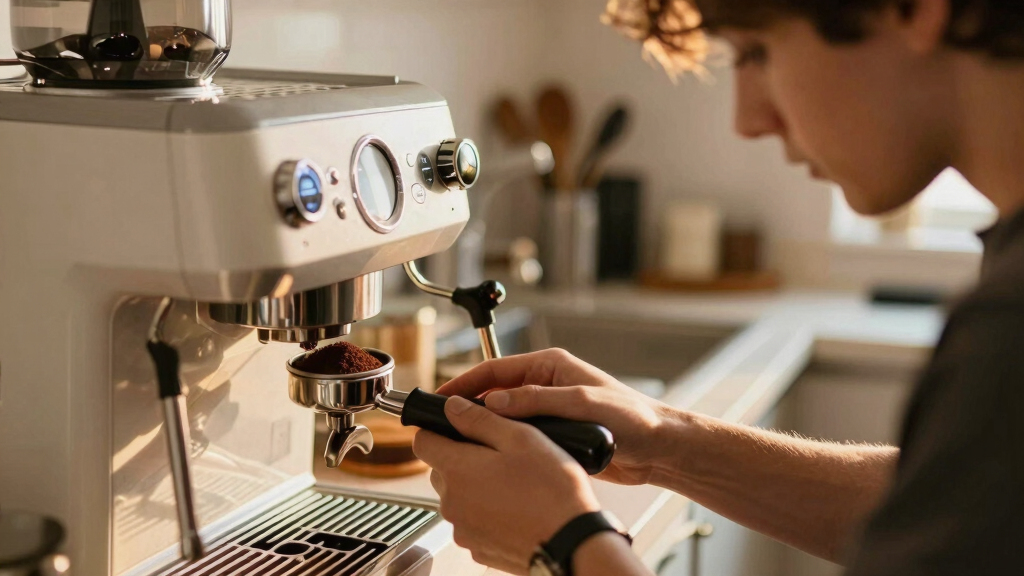
Uneven tamping is a common cause — if the coffee isn’t packed evenly, water will flow where it’s least resistant. Inconsistent grind size can also create uneven extraction. To fix this, tamp with steady, even pressure, and grind uniformly.
Pro tip: tap the portafilter gently to settle the grounds before tamping, and use a level tamping technique. Regularly cleaning the basket also prevents build-up that can cause unevenness. Recognizing and preventing channeling is vital because it causes uneven extraction—some parts of the coffee are over-extracted, leading to bitter, harsh flavors, while others are under-extracted, resulting in sourness or weak taste. Proper technique and maintenance ensure a uniform puck, which promotes balanced extraction and better overall flavor.
As an affiliate, we earn on qualifying purchases.
How to Deal With Clogging or Low Pressure in Your Manual Setup
If your espresso machine isn’t building enough pressure, or water isn’t flowing properly, clogs are often the culprit. Common causes include stale coffee, coffee oils, or mineral buildup.
First, check for blockages in the portafilter or group head. Clean them thoroughly with a brush and use descaling solutions if needed. Regular maintenance prevents these issues from recurring.
Understanding the implications of pressure issues is vital: low pressure results in inadequate extraction, producing weak, underdeveloped flavors, and can cause the shot to be thin or watery. Clogs not only hinder flow but can also cause uneven pressure, leading to inconsistent results. Proper cleaning and descaling are essential maintenance steps that restore optimal pressure, ensuring your espresso is rich, full-bodied, and well-extracted. Neglecting this can cause long-term damage to your equipment and consistency issues in your shots.
As an affiliate, we earn on qualifying purchases.
Cleaning and Maintenance That Prevents Troubles
Dirty equipment throws off your shot. Coffee oils and residue clog the system, causing uneven extraction and poor flavor. Regular cleaning keeps everything running smoothly.
Establish a routine: rinse the portafilter after each shot, scrub the basket weekly, and descale your machine monthly. Use brush tools and descaling tablets designed for espresso gear. A clean setup makes troubleshooting easier and improves taste. Recognize that neglecting maintenance leads to buildup that impairs water flow, causes channeling, and skews extraction times. Over time, this can result in a bitter, flat, or sour shot regardless of your technique. Consistent cleaning ensures your equipment functions as intended, preserving the delicate balance needed for a perfect espresso and extending the lifespan of your gear.
Calibrating Your Grinder and Machine for Repeatable Results
Manual espresso success depends on consistency. Calibration means setting your grinder and machine so every shot is as close as possible to the last.
Start with your grinder: adjust the grind size in small increments, testing each time. Aim for a shot time of 25-30 seconds. For your machine, check that the water temperature stays within 90-96°C, and that pressure reaches about 9 bars.
Pro tip: mark your grind setting with a piece of tape or a marker, so you can return to it easily after adjustments. Regular calibration prevents surprises and keeps your shots smooth. The importance of calibration lies in achieving uniformity: small differences in grind or temperature can significantly alter extraction quality. Regularly calibrating helps you understand how your specific setup responds to adjustments, reducing guesswork and ensuring each shot meets your desired profile. This consistency is especially crucial when switching beans or trying new recipes, as it minimizes variables and helps you focus on refining flavor.
Frequently Asked Questions
Why is my espresso shot coming out too quickly or too slowly?
It usually boils down to grind size and tamping pressure. Coarse grind or weak tamping speeds up flow; fine grind and firm tamp slow it down. Adjust these until your shot takes about 25-30 seconds for a balanced extraction.
How can I fix a sour or bitter taste in my espresso?
Sourness often means under-extraction—try a finer grind or higher temperature. Bitterness points to over-extraction—coarsen your grind and lower the temperature slightly. Use fresh beans and avoid stale coffee for best flavor.
What causes channeling, and how do I prevent it?
Channeling happens when water finds the easiest path through uneven, poorly tamped coffee. Tamping evenly, using a level tool, and ensuring uniform grind size help prevent it. Gently tap the basket before tamping to settle grounds.
How often should I clean my espresso machine and grinder?
Clean the portafilter and basket daily with hot water. Descale the machine and clean the grinder weekly or monthly, depending on usage. Regular maintenance keeps your shots consistent and your equipment lasting longer.
How do I know if my coffee beans are stale?
Stale beans lose flavor and can cause sour or flat shots. Check the roast date—use beans within 2-4 weeks of roasting. If they smell dull or have a flat aroma, it’s time for fresh beans.
Conclusion
Mastering manual espresso troubleshooting is about understanding how each piece — grind, tamp, temperature, and cleanliness — influences your shot. The more you tune these factors, the fewer surprises you get.
Think of your setup as a finely tuned craft. With patience and attention, every shot becomes a small victory, filling your kitchen with the rich aroma of a well-made espresso. Keep tweaking, keep tasting — that’s how real skill grows.
Halloween Picks
halloween
As an affiliate, we earn on qualifying purchases.