
TL;DR

Get kitchen gear delivered free with Prime
- Fast, free delivery on millions of items
- Prime Video, Amazon Music and more included
- Member-only deals all year
Van life cooking works when you optimize space, pick versatile tools, and plan meals ahead. Innovative appliances and off-grid solutions make your tiny kitchen both functional and enjoyable.
Maximize every inch with vertical storage, fold-down surfaces, and multi-purpose tools.
Choose lightweight, durable appliances like portable stoves, small fridges, and collapsible sinks.
Plan meals ahead to save time, reduce waste, and ensure nutrition without clutter.
Prioritize safety: ensure proper ventilation, secure fuel storage, and use smoke or CO detectors.
Incorporate eco-friendly habits—reuse containers, reduce packaging, and use solar power whenever possible.
How to Turn Tiny Space into a Cooking Powerhouse
Van life cooking thrives on space optimization. You need to think vertically, fold away clutter, and keep essentials within arm’s reach. For example, a fold-out countertop or a slide-out shelf can double your workspace. Vertical storage containers and magnetic strips for knives clear counter space and keep tools accessible. Remember, every inch counts—use under-sink compartments and wall-mounted racks to stash spices, utensils, and dry goods.
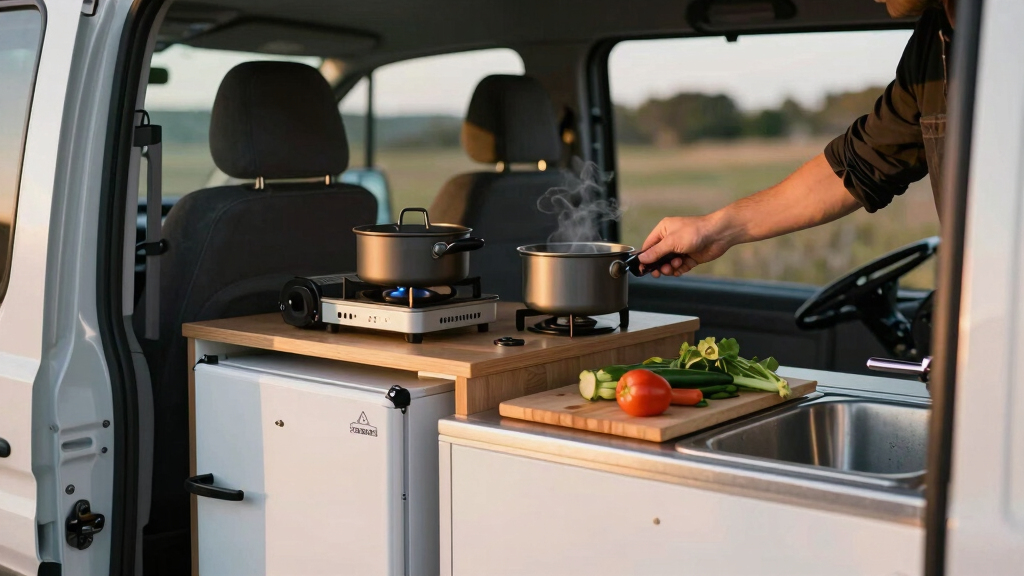
Picture a van where the stove flips down from a wall panel, and a fold-up table extends for prep. It’s simple, efficient, and keeps your tiny kitchen clutter-free. When planning, measure your space carefully. A typical van kitchen might be 3 square feet—maximize it with multi-purpose cookware that stacks and nests, like a cast iron skillet that doubles as a serving platter.
Why does this matter? Because in such limited space, inefficient design can lead to clutter, frustration, and even safety hazards. Thoughtful organization not only enhances functionality but also reduces stress, allowing you to enjoy cooking rather than struggle with it. The tradeoff is often between investing time in clever setup versus accepting a cluttered, less functional space. Prioritizing smart, multi-use solutions can make all the difference in turning a small area into a culinary sanctuary.
As an affiliate, we earn on qualifying purchases.
Choosing the Right Gear for Your Small Kitchen
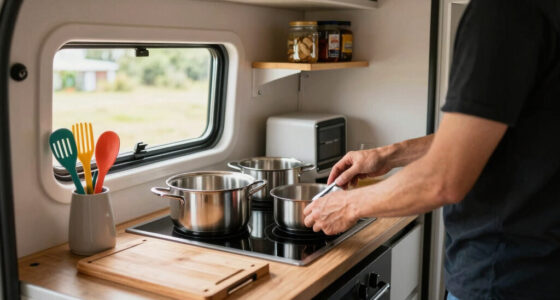
In van life, compact appliances are your best friends. Think lightweight, multi-use tools. A portable butane stove or a compact induction cooktop can do the heavy lifting without hogging space. A small cooler or a 12V fridge keeps your perishables fresh without the bulk of a traditional fridge. Multi-purpose utensils—like a spatula that doubles as a spoon—save space and increase efficiency.
Why choose these? Because space and weight are premium commodities. The tradeoff involves balancing power, size, and versatility. For example, a larger appliance might offer more features but at the expense of portability and energy consumption. Prioritize gear that offers multiple functions—such as a combination grill and pan or a collapsible sink—that reduce clutter while expanding your cooking options. Durable, stainless steel cookware is preferable because it withstands movement and temperature swings, ensuring longevity. The implications are clear: investing in the right gear can significantly elevate your off-grid cooking experience, but it requires thoughtful selection to avoid clutter and inefficiency.
As an affiliate, we earn on qualifying purchases.
Meal Planning & Prep: Less Waste, More Flavor
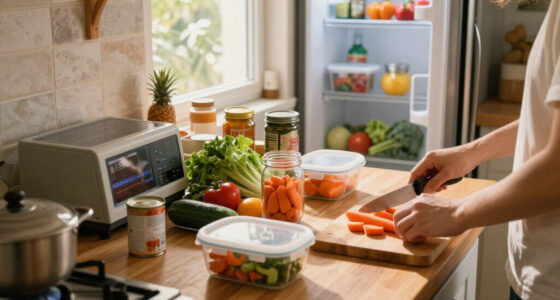
Van life cooking calls for strategic meal planning. Focus on simple, nutritious recipes that use minimal ingredients and prep time. Batch cooking saves energy and reduces trips to the grocery store. For instance, prepping a batch of rice, roasted vegetables, and protein on a Sunday makes quick meals all week long.
Why is this important? Because in a tiny kitchen, time and space are limited resources. Well-planned meals reduce the need for multiple cooking sessions, which can clutter your small space and drain your energy. Batch cooking also minimizes waste—fewer ingredients left unused, less packaging waste, and reduced fuel use for cooking. Think of it as a way to streamline your off-grid lifestyle, making each meal a strategic step toward efficiency and enjoyment. The tradeoff involves upfront prep time but pays off with faster, cleaner, and more nutritious meals during busy days or travel. Proper planning ensures you maximize flavor while minimizing clutter and resource use—key to thriving in a tiny kitchen.
As an affiliate, we earn on qualifying purchases.
Safety First: Ventilation, Fuel, and Fire Safety
Cooking inside a small space demands attention to safety. Proper ventilation is essential to avoid buildup of fumes or carbon monoxide. Use a roof vent, a portable fan, or open windows whenever cooking. For fuel safety, always secure propane tanks and check fittings regularly—leaks can turn dangerous fast.
Why does this matter? Because poor ventilation or faulty fuel connections can lead to dangerous buildup of toxic gases or fire hazards, especially in confined spaces. Installing a dedicated vent fan that runs off solar power ensures continuous airflow, reducing the risk of dangerous fumes accumulating. Regularly inspecting fittings and tanks prevents leaks, which are often overlooked but pose serious safety threats. Never leaving flames unattended is critical—small fires can escalate quickly in tight quarters. The tradeoff is between convenience and safety: sacrificing a little space or effort for proper ventilation and secure fuel storage significantly reduces the risk of accidents, making your tiny kitchen a safe environment for all your culinary adventures.
As an affiliate, we earn on qualifying purchases.
Eco-Friendly Hacks for Van Cooking
Van life cooking is a perfect chance to reduce waste and use eco-friendly tools. Reusable containers, beeswax wraps, and compostable trash bags cut down on single-use plastics. Solar-powered appliances minimize your reliance on fossil fuels. When possible, choose locally sourced, bulk ingredients to reduce packaging and transport emissions.
Why adopt these habits? Because they directly impact your environmental footprint. Using reusable and biodegradable products reduces waste, while solar power decreases your reliance on fossil fuels, which aligns with the off-grid ethos of sustainability. The tradeoff may involve initial costs or effort in sourcing eco-friendly items, but the long-term benefits include less waste, lower energy use, and a smaller carbon footprint. Small habits—like storing leftovers in glass jars or cooking with solar ovens—can significantly reduce your environmental impact. Think of your tiny kitchen as a laboratory for sustainable living; each eco-friendly choice amplifies your off-grid independence and helps preserve the natural beauty around you.
Making Use of Modern Tech and DIY Hacks
Modern tech makes tiny kitchens more capable than ever. Portable induction burners, solar chargers, and collapsible sinks turn your van into a fully functional kitchen. DIY hacks—like building custom shelves or converting a plastic storage bin into a mini fridge—save money and tailor your space.
Why does this matter? Because technological innovations and DIY solutions can dramatically expand what’s possible within your limited space. They allow customization, improve efficiency, and often cost less than commercial options. For example, installing a DIY composting toilet or a solar water heater transforms your van into a self-sustaining home, reducing dependence on external resources. The tradeoff involves time and effort upfront but yields long-term benefits—greater independence, tailored functionality, and cost savings. By integrating smart tech and DIY projects, you turn your tiny kitchen into a versatile, personalized space that can handle everything from quick breakfasts to elaborate dinners, all while maintaining your off-grid lifestyle.
Frequently Asked Questions
How can I cook healthy meals in such a small space?
Focus on simple, nutrient-dense ingredients like canned beans, dried grains, and fresh produce that lasts. Batch cook meals at home and reheat in your tiny kitchen, minimizing prep and cleanup.What are the best compact appliances for van life?
Look for lightweight, energy-efficient options like portable induction burners, small coolers or 12V fridges, and collapsible sinks. Prioritize multi-use tools that serve more than one function.How do I keep my van kitchen organized?
Use vertical space with racks and magnetic strips. Store frequently used items within easy reach, and keep lesser-used gear in labeled containers or overhead compartments. Regularly declutter to maintain efficiency.What safety precautions should I take while cooking inside a van?
Ensure proper ventilation, secure fuel tanks, and keep fire extinguishers handy. Never leave flames unattended, and check your appliances and connections regularly for leaks or faults.How do I power my tiny kitchen appliances off-grid?
Use solar panels combined with deep-cycle batteries to supply clean, quiet power. Keep appliances energy-efficient, and consider portable options that draw minimal electricity, like a gas stove or solar oven.Conclusion
Your tiny van kitchen isn’t just a space—it’s a canvas for creativity, efficiency, and self-reliance. With smart design and intentional choices, you can cook delicious meals anywhere, anytime. Think of your off-grid kitchen as a micro-restaurant where every tool and technique counts. Get creative, stay safe, and enjoy the freedom of cooking on the move.Fall Picks
fall essentials
As an affiliate, we earn on qualifying purchases.