
TL;DR

Get kitchen gear delivered free — and shop member deals
- Fast, free delivery on millions of items
- Access to Prime Big Deal Days deals on October 6–7
- Prime Video, Amazon Music and more included
Smoke-cooking over an open fire combines radiant heat and wood smoke for deep flavor. Focus on steady coals, dry hardwood, and indirect heat to cook safely and evenly. Control your fire and use proper tools for best results.
Cooking over an open fire feels primal—like returning to a basic, honest way of preparing food. But it’s more than just lighting a flame; it’s about coaxing flavor out of wood smoke and controlling heat with precision.
If you want tender ribs, smoky vegetables, or a perfectly roasted chicken in the wild, mastering smoke-cooking is your secret weapon. This guide shows you how to set up your fire, manage smoke, and keep everything safe while getting that rich, layered flavor only real wood smoke provides.
Build a small, glowing bed of hardwood coals—avoid tall flames for better control and flavor.
Use dry, seasoned hardwoods like oak or hickory—resinous woods create bitter smoke and spoil your food.
Control temperature by adjusting the distance of food from coals and adding small amounts of wood gradually.
Always rely on internal temperature, not just appearance, to judge doneness and food safety.
Keep tools like a thermometer, long tongs, and a fire-safe cover handy for safe, effective smoke-cooking outdoors.
How to Smoke-Cook Over an Open Fire
Build flavor with a modest bed of glowing hardwood coals—not a roaring blaze. Separate fire from food, keep the smoke clean, and use distance, airflow, and a thermometer to cook with precision outdoors.
Build a Fire You Can Control
The goal is a steady heat source with a clean path for smoke. Tall flames create unstable temperatures, flare-ups, soot, and bitter deposits. Let hardwood burn down first, then organize the coals around the cooking task.
Start with seasoned hardwood
Dry oak, hickory, maple, beech, apple, or cherry burns hotter and cleaner than green wood. Small additions keep combustion stable.
Make a glowing coal bed
Allow roughly 30–60 minutes for a substantial bed to form. Concentrate the coals rather than spreading uncontrolled flames beneath the food.
Keep food indirect
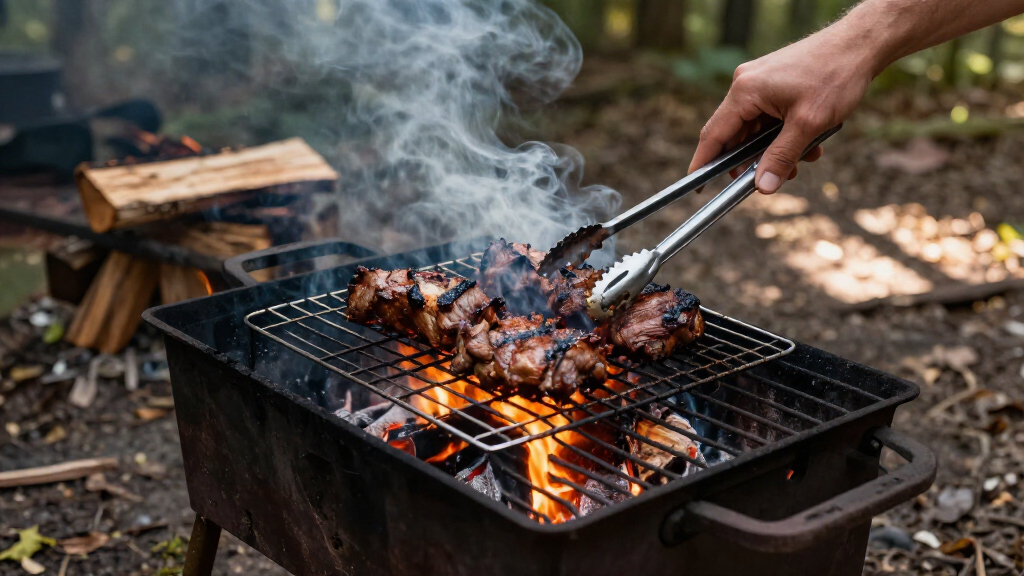
Place food higher or farther from the coals. When possible, position it upwind of active flames so clean smoke reaches it without excess soot.
Create new coals separately, with enough airflow for complete combustion.
Use for browning, crisping, and brief finishing heat.
Slow, controlled heat and restrained smoke produce even results.
Read the Smoke. Shape the Heat.
Thin smoke signals efficient combustion. Dense white, gray, or black smoke means the fire needs drier fuel, greater airflow, more heat, or less wood. More smoke is not automatically more flavor.
The clean-smoke spectrum
Flavor quality rises as combustion becomes hotter, drier, and more complete.
Your outdoor thermostat
Use several small adjustments instead of one dramatic change.
Choose Wood for Flavor, Not Just Flame
Fruitwoods tend to be mild and burn faster; oak and hickory are stronger and longer-burning. Every cooking wood must be dry, untreated, clean, and correctly identified.
| Wood or material | Use? | Smoke character | Best match |
|---|---|---|---|
| Oak / beech / maple | ✓ Yes | Balanced, steady, clean | Beef, pork, poultry, vegetables |
| Hickory / pecan | ✓ Yes | Robust, savory, pronounced | Ribs, shoulder, brisket |
| Apple / cherry / alder | ✓ Yes | Mild, sweet, delicate | Fish, poultry, vegetables |
| Damp bark or green wood | ~ Avoid | Heavy, inconsistent, sooty | Season and dry before use |
| Pine / fir / spruce | ✗ No | Resinous, acrid, bitter | Never use for smoking food |
| Treated or unknown scraps | ✗ No | Chemically contaminated | Never use for cooking |
Do not burn painted, stained, pressure-treated, glued, moldy, or chemically contaminated wood. Avoid plywood, particleboard, unknown pallets, construction scraps, oleander, and yew.
Ten Moves from Cold Pit to Finished Plate
A dependable workflow keeps fuel, smoke, food, and safety decisions in the right order.
Choose a legal, sheltered site
Clear dry vegetation and overhanging branches.
Stage fire control
Keep water, sand, or an extinguisher within reach.
Burn hardwood to coals
Wait for a substantial, glowing bed to develop.
Create hot and cool zones
Concentrate coals on one side of the pit.
Place food indirectly
Use the cooler side, preferably under a cover.
Add wood sparingly
Use one small split or a few dry chunks at a time.
Protect the airflow
Do not smother the fire or crowd the fuel.
Rotate and reposition
Compensate for hot spots and shifting wind.
Probe for doneness
Trust internal temperature, not color alone.
Rest, serve, extinguish
Rest meat, then put the fire out completely.
Finish by Temperature, Not Appearance
A browned crust cannot confirm a safe center. Use a reliable instant-read probe, keep raw and cooked foods separate, and refrigerate perishables until they are needed.
Internal-temperature checkpoints
Probe the thickest part and avoid touching bone.
The essential fire kit
Choose sturdy, heat-safe equipment with reach and control.
Steady coals, clean smoke, indirect heat, and verified internal temperature are the four controls that turn a campfire into a dependable outdoor kitchen.
Why Your Fire Needs to Stay Steady and Smoky, Not Flare-Ups
The key to successful smoke-cooking? Keep the fire controlled. Tall flames and excessive flare-ups burn soot and create bitter flavors. Instead, build a small, glowing bed of coals. This steady heat is your canvas for slow, flavorful cooking.
Imagine a campfire with a clear boundary—hot coals on one side, food on the other, away from the flames. This two-zone setup gives you control over heat and smoke. Keep the fire upwind of your food so clean smoke drifts toward it, not soot.
As an affiliate, we earn on qualifying purchases.
Choosing the Right Wood for Clean Smoke and Great Flavor
Wood is the backbone of smoke-cooking. Use only dry, untreated hardwoods like oak, hickory, apple, or cherry. These woods burn clean, produce light smoke, and add rich flavor.
Avoid softwoods like pine or resinous woods—they produce heavy, acrid smoke that ruins your food. Seasoned wood, seasoned for at least a year, burns more efficiently and with less soot. For example, a chunk of well-dried oak will glow and give off a gentle aroma, unlike damp, green pine that billows black smoke.
Why does this matter? The type and condition of your wood directly influence the flavor and safety of your smoke. Heavy, resinous smoke can impart bitterness and even introduce toxins, while clean-burning hardwoods give a smooth, nuanced smoky flavor. The tradeoff is that some woods, like fruitwoods, are softer and burn faster, so they require more frequent replenishing. Choosing the right wood is about balancing flavor, burn time, and cleanliness—your foundation for a successful smoke.
As an affiliate, we earn on qualifying purchases.
How to Achieve Light, Clear Smoke That Enhances Flavor
Light, blue-gray smoke is what you’re aiming for. Thick white or black smoke is a sign of incomplete combustion and can make your food bitter. To get clean smoke, keep the fire hot and airflow ample. Add small pieces of wood periodically instead of dumping in a lot at once.
Imagine a gentle, whispering smoke rising from a fire—almost invisible, with a faint bluish tinge. That’s your cue that the fire is burning clean and ready to flavor your food without bitterness.
Why does the quality of smoke matter? Thick, sooty smoke deposits creosote and other compounds onto your food, which can lead to bitter flavors and potential health concerns. Clean smoke, on the other hand, allows the wood’s natural flavors to infuse your food without unwanted bitterness. The tradeoff is that producing this ideal smoke requires attentiveness—adjusting airflow and wood addition—making it a skill that improves with practice. Recognizing and maintaining this smoke quality is crucial for achieving tender, flavorful results.
As an affiliate, we earn on qualifying purchases.
Controlling Temperature Without a Thermostat: Simple Tricks
Managing heat outdoors means adjusting the distance between food and coals, and how much air gets in. Raise or lower your grate, move food farther from the coals, or add/removecoals to fine-tune the temperature.
Imagine a simple scale—closer for searing, farther for slow cooking. Use a grill thermometer or an instant-read meat probe. For example, a brisket takes hours at 107–135°C (225–275°F), but you control that by how far the meat sits from the glowing coals.
fire-safe cooking tools for open fire
As an affiliate, we earn on qualifying purchases.
As an affiliate, we earn on qualifying purchases.
Match Your Food to the Perfect Smoking Technique
Different foods need different setups. Large, tough cuts like brisket and pork shoulder thrive with slow, indirect heat and a steady smoke. Fish and delicate vegetables prefer shorter, more restrained exposure. Quick-cooking items like sausages or steaks need less smoke time to prevent bitterness.
Think of it like fine-tuning your fire: big cuts go on the cool side, while quick items can handle a touch of smoke and high heat. For instance, a whole chicken benefits from slow smoking, while skewers of sausage need just a quick pass through smoky heat.
Step-by-Step: How to Smoke-Cook Over an Open Fire in 10 Easy Moves
- Pick a sheltered, legal spot with no overhanging branches or dry brush nearby.
- Build a hardwood fire and let it burn until a good bed of glowing coals forms—about 30–60 minutes.
- Create hot and cool zones by concentrating coals on one side of your fire pit.
- Place your food on the cooler side, ideally under a lid, Dutch oven, or makeshift cover.
- Add small wood chunks as needed to produce smoke—avoid overloading the fire.
- Adjust the distance of the food from the coals for temperature control.
- Keep airflow steady—use a bellows or gently fan if needed.
- Rotate or reposition the food periodically for even cooking.
- Use a thermometer to check internal temperature, not just visual cues.
- When done, let the meat rest, then extinguish the fire completely.
Keeping Food Safe and Perfectly Cooked Outdoors
Food safety depends on internal temperature, not just cooking time. Use a good meat thermometer to check that poultry hits 74°C (165°F) or beef reaches 63°C (145°F) and rests. Large cuts like brisket need higher internal temps—around 96°C (205°F)—to soften connective tissue.
Always keep raw and cooked foods separate, and refrigerate perishables until needed. Remember: a perfectly smoked brisket at 90°C (195°F) can be tender and safe, but only if you check that internal temp.
Tools and Equipment That Make Smoke-Cooking Safer and Easier
A basic outdoor smoke setup needs a sturdy grate, long tongs, and a reliable thermometer. Cast iron pans or Dutch ovens help with covered dishes. Keep water or a fire extinguisher nearby for safety. Avoid galvanized metal and plastic parts—they aren’t made for high heat.
Think about your toolkit: a long-handled probe, a shovel for coals, and heat-resistant gloves. For example, a simple tripod and grate can turn a campfire into a versatile outdoor kitchen.
Prepping Your Meat and Vegetables for Maximum Flavor
Dry brining with salt hours or a day ahead improves moisture and flavor. Trim excess fat from your meat to prevent flare-ups. Vegetables like peppers, squash, and mushrooms love a light oil coating—just enough to help browning without causing flare-ups.
If using a water pan, fill it with hot water to moderate temperature and catch drippings. For example, brushing vegetables with a little oil and salt makes them crispy and flavorful after a smoky session.
Common Mistakes to Avoid When Smoke-Cooking Outdoors
Don’t cook over tall flames—use steady coals instead. Avoid green or resinous wood, which makes bitter smoke. Don’t overload the fire—small, frequent additions work best. Keep grease from dripping into flames—use a drip pan or indirect setup.
Always rely on internal temperature, not just appearance. Never leave the fire unattended, and remember to extinguish it fully when finished. For example, a sudden flare-up can ruin hours of slow cooking—stay vigilant.
Latest Trends in Outdoor Smoke-Cooking
Wireless thermometers, adjustable grates, and hybrid setups are changing how we cook outdoors. Many now combine traditional smoking with finishing over high heat or using Dutch ovens for added versatility. Focus on smaller, cleaner fires, and regional woods—local oak, grapevines, or orchard trimmings—are gaining popularity.
Environmental rules push cooks to be more responsible, using less fuel and avoiding heavy smoke. Vegetables are taking center stage as the main dish, highlighting the diversity of outdoor smoke-cooking today.
Frequently Asked Questions
How long should I let the fire burn before cooking?
Wait until flames die down and you see a steady bed of glowing coals—usually 30 to 60 minutes. Larger fires may need longer. This ensures clean, hot coals for even, safe cooking.
Can I use charcoal with wood for smoke-cooking?
Yes. Lump charcoal provides steady heat, and adding small hardwood chunks introduces smoke flavor. Avoid lighter fluid—use a chimney starter for clean, chemical-free ignition.
Should I soak wood chips before adding them?
Usually not. Soaked chips tend to steam and produce heavy smoke, which can make your food bitter. Dry wood burns cleaner and longer, giving a better smoky aroma.
What’s the best way to measure temperature outdoors?
Use a heat-safe probe placed near the food—not directly over the hottest coals. Because heat varies across the fire, treat the reading as local. An instant-read thermometer is invaluable for consistent results.
How do I prevent my food from tasting bitter?
Use dry, seasoned hardwood, maintain good airflow to avoid heavy smoke, and keep the fire at a steady glow. Remove excess soot or surface char, and wait for the clean smoke to develop before adding your food.
Conclusion
Mastering smoke-cooking over an open fire is about patience, control, and understanding your fire. Focus on steady coals, dry hardwood, and proper tools, and you’ll unlock deep, smoky flavors that turn outdoor meals into memorable feasts.
Next time you light up, remember: the best flavor comes from respecting the fire, not battling it. Your taste buds—and your outdoor cooking skills—will thank you.
Fall Picks
fall essentials
As an affiliate, we earn on qualifying purchases.