
TL;DR

Get kitchen gear delivered free — and shop member deals
- Fast, free delivery on millions of items
- Access to Prime Big Deal Days deals on October 6–7
- Prime Video, Amazon Music and more included
Safe off-grid cooking hinges on choosing the right fuel, storing it properly outside the home, and controlling leaks and ignition sources. Proper ventilation, regular maintenance, and smart storage keep risks minimal and your kitchen operational.
Imagine cooking on a crisp morning, the smell of wood or propane filling your outdoor space. Now picture the unseen dangers lurking if fuel isn’t stored correctly. Fuel mishandling can turn your off-grid kitchen into a safety hazard in seconds.
In this guide, you’ll discover how to match the right fuel to your setup, store it safely, and prevent leaks or fires. Master these basics, and you’ll keep your cooking spot safe, reliable, and ready for anything—rain, wind, or power outages.
Always store bulk fuel outside, in a secure, ventilated, shaded space, away from heat and ignition sources.
Regularly check hoses, valves, and containers for leaks, damage, and proper sealing—never ignore small signs of wear.
Install and test carbon-monoxide alarms near sleeping areas; never use indoor appliances without proper ventilation.
Refuel outdoors, turn off appliances first, and never top off a hot stove or tank to prevent spills or explosions.
Design your off-grid kitchen with dedicated zones for fuel storage, cooking, and electrical systems to minimize risks.
Off-grid kitchen field guide
Fuel Storage and Safety for Off-Grid Kitchens
Safe cooking beyond the grid starts before the flame is lit. Match fuel to the appliance and climate, keep bulk supplies outside, maintain permanent ventilation, and treat every leak or damaged container as an immediate hazard.
Safety foundation
4
Fuel choice, storage, ventilation and emergency readiness
Bulk fuel indoors
Zero
Keep practical reserves outside the dwelling
Leak test flame
Never
Use approved solution or soapy water instead
CO visibility
None
Carbon monoxide has no color or odor
01 / Choose deliberately
Match the fuel to the setting
Climate, availability, appliance approval and ventilation determine the right fuel. Never substitute a fuel the manufacturer has not explicitly approved.
Gas / long-term storage
Propane & LPG
Convenient and comparatively clean-burning. Leaks can settle near floors, so outdoor storage, secure cylinders and low-level ventilation matter.
Portable / mild weather
Butane
Compact but cold-sensitive. Use only as the appliance directs and provide the ventilation required for limited indoor operation.
Liquid / energy dense
Kerosene
Stable but demanding. Spills, fumes, soot and poor burner adjustment can create serious air-quality and fire hazards.
Liquid / visible-flame risk
Alcohol
Simple and relatively clean-burning. Flames may be difficult to see; use an appropriate extinguisher and refuel only when fully cool.
Solid / renewable option
Wood & Pellets
Local and resilient. Smoke, fine particles, sparks, creosote and carbon monoxide require a sound chimney and routine cleaning.
Electric / no indoor flame
Solar Electric
Avoids indoor combustion. Battery protection, correct cable sizing, ventilation and safe inverter installation become the priorities.
Fuel profile / comparison
Every option moves the risk
There is no universally safest fuel. The better choice is the one your equipment supports and your site can store, ventilate and maintain correctly.
| Fuel | Best fit | Primary hazard | Cold-weather fit | Storage priority |
|---|---|---|---|---|
| Propane / LPG | ✓Fixed or portable approved appliances | Low-level vapor accumulation | ✓Generally practical | Upright, secured and outdoors |
| Butane | ~Portable cooking | Canister overheating or misuse | ×Poor performance | Cool, shaded and manufacturer-approved |
| Kerosene | ~Approved wick or pressure appliances | Spills, fumes and soot | ✓Useful when correctly specified | Labeled, sealed liquid-fuel container |
| Alcohol | ~Small specialist stoves | Hard-to-see flame | ~Fuel-dependent | Tightly sealed, away from food |
| Wood / pellets | ✓Vented solid-fuel systems | Smoke, sparks and creosote | ✓Strong with dry fuel | Dry, covered and clear of ignition |
| Gasoline | ×Not a substitute stove fuel | Extreme volatility | ×Not relevant | Never inside living or cooking spaces |
✓ favorable fit ~ conditional or equipment-dependent × avoid or unsuitable
02 / Design for separation
Give every hazard its own zone
A deliberate layout prevents heat, fuel vapor and electrical faults from sharing the same failure path.
Zone A / storage
Fuel reserve
Outside, shaded, ventilated, secured and protected from impact, flooding, children and unauthorized access.
Zone B / combustion
Cooking area
Approved appliance, clear work surface, permanent airflow and clean exhaust routes with no stored fuel nearby.
Zone C / power
Electrical system
Batteries, inverter and wiring protected from flames, liquid spills, fuel vapor, excessive heat and physical damage.
Select
Approved fuel + compatible appliance
Separate
Outdoor reserve + dedicated zones
Monitor
Leak checks + CO alarms + airflow
Respond
Shut down + evacuate + get help
03 / Store it right
Build an outdoor storage envelope
The ideal location balances safe separation with reliable access. Exact clearances and allowable quantities depend on fuel type, container size and local code.
Storage checklist
- Use open-air ventilation. Never place LPG in basements, pits, enclosed cabinets or low unventilated spaces.
- Secure cylinders upright. Use a stable base, restraint and valve protection where provided.
- Control heat and ignition. Keep fuel away from flames, sparks, smoking, generators and electrical equipment.
- Block vapor pathways. Avoid doors, windows, air inlets, drains, crawl spaces and other low openings.
- Protect the reserve. Prevent impact, flooding, corrosion, tampering and access by children or animals.
- Use approved containers. Label them clearly, close them tightly and never repurpose beverage bottles.
Relative control priority
Empty does not mean safe. “Empty” cylinders and cans may retain flammable vapor and need the same precautions as full containers.
04 / Detect and respond
Control leaks, fire and carbon monoxide
Routine inspection catches deterioration early. A practiced response keeps a small fault from becoming an emergency.
Routine 01
Inspect the fuel path
Check hoses, regulators, valves, seals and containers for wear, looseness, rust, bulging, heat exposure or physical damage.
Routine 02
Test without flame
Apply approved leak solution or soapy water to a connection. Growing bubbles indicate escaping gas. Never use a match.
Routine 03
Maintain clean airflow
Keep burners, air inlets, flues and chimneys clean and unobstructed. An open window alone is not a substitute for proper ventilation.
Routine 04
Install CO alarms
Place certified alarms near sleeping areas as directed, test them regularly and replace batteries and alarm units on schedule.
Emergency 05
If gas is suspected
Avoid flames and electrical switches. Shut off fuel only if it is safe, move people away, ventilate from a safe position and call qualified help.
Emergency 06
If a CO alarm sounds
Move everyone into fresh air immediately, contact emergency services and do not re-enter until the source has been professionally cleared.
Outdoor-only means outdoor-only.
Never operate grills, camp stoves, charcoal burners or generators inside a house, tent, vehicle, garage or other enclosed area—even during rain or a power outage.
Field protocol / five non-negotiables
Keep the kitchen ready without keeping danger close
Use this sequence before every season, after equipment changes and whenever a system has been transported or refilled.
Store
Bulk fuel outside, shaded and ventilated
Inspect
Hoses, valves, seals and containers
Monitor
Certified CO alarms and clear vents
Refuel
Outdoors, shut down and fully cool
Match the fuel to your setting for safer, more reliable cooking
Choosing the right fuel is the first step in safe off-grid cooking. Propane and LPG are popular for their convenience and clean burn. Butane suits portable stoves, though it struggles in cold weather. Kerosene offers dense energy but needs careful handling. Alcohol fuels burn cleanly but require visible flames and proper extinguishers. Gasoline is too volatile, and wood or biomass is renewable but produces smoke and creosote.
For example, a family using a propane stove in a well-ventilated shed benefits from long storage life and easy handling. Conversely, a small cabin relying on kerosene heaters must be vigilant about soot and fumes. Pick your fuel based on local climate, availability, and appliance compatibility.
Understanding why matching fuel to your environment matters is crucial. Different fuels have distinct safety profiles, handling requirements, and performance characteristics. For instance, using kerosene indoors without proper ventilation can lead to harmful fumes and soot buildup, which over time can damage appliances and pose health risks. Conversely, selecting a fuel incompatible with your climate—like butane in cold weather—can result in unreliable operation or dangerous pressure buildup. Balancing safety, efficiency, and practicality ensures your off-grid kitchen functions smoothly without unnecessary hazards or inefficiencies.
outdoor propane tank storage container
As an affiliate, we earn on qualifying purchases.
As an affiliate, we earn on qualifying purchases.
Store fuel outside—here’s exactly where and how to do it right
Keeping fuel outside your home isn’t just a good idea—it’s usually required. Choose a shaded, ventilated spot away from heat, sparks, or flames. For instance, a sturdy metal shed or a dedicated tank enclosure works well. Protect it from flooding, impact, and unauthorized access.
Use secure, upright cylinders or containers, and avoid storing in basements or enclosed spaces. For example, propane cylinders should be stored on concrete pads, secured with straps, and kept at least 10 feet from buildings or ignition sources. Remember—fuel stored improperly is a ticking time bomb.
Proper outdoor storage isn’t just about placement—it’s about understanding the environmental and safety implications. Storing fuel in a poorly ventilated or exposed location can lead to dangerous accumulation of vapors, which increases the risk of explosion or fire. Ensuring adequate clearance, protection from weather, and security measures reduces the chance of accidental leaks or tampering. The right storage location also minimizes the environmental impact—preventing spills from contaminating soil or water sources. Ultimately, the goal is to balance accessibility with safety, so your fuel is ready when needed but poses minimal risk to your family and environment.
As an affiliate, we earn on qualifying purchases.
Correctly store and handle cylinders and containers to prevent accidents
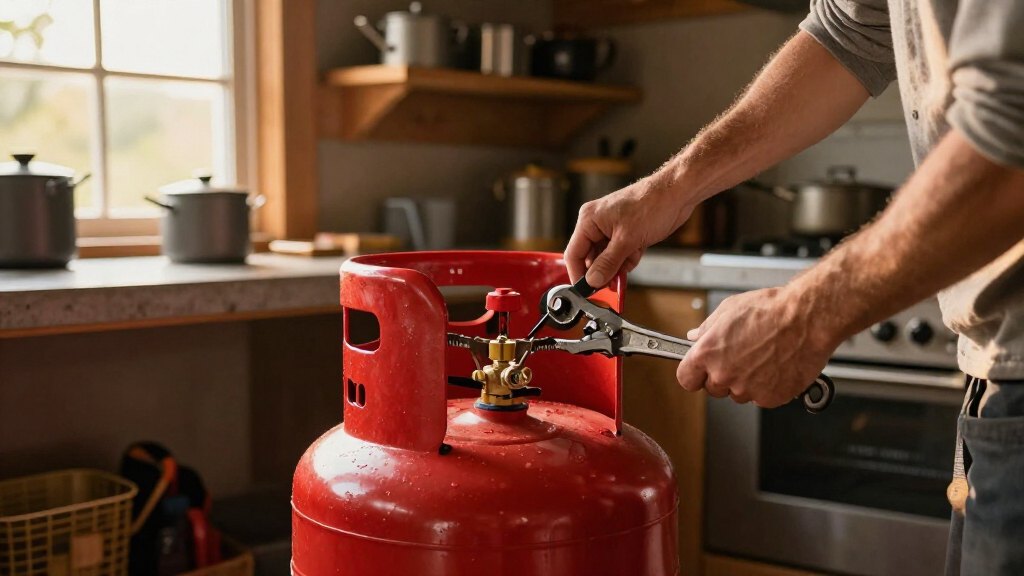
Handling fuel containers properly is key to avoiding leaks and dangerous situations. Keep LPG cylinders upright and secured. Always close valves when not in use or during transport. Never store cylinders in basements or poorly ventilated rooms, and avoid damage, rust, or leaks.
For example, after refilling your propane tank, tighten the valve securely and check for leaks with a soap-and-water solution. Never use makeshift containers like soda bottles for fuel. Proper storage and handling can prevent accidents before they happen.
Understanding the importance of proper handling extends beyond just the physical steps. It’s about recognizing the risks of mishandling—such as leaks, which can lead to fire or explosion, or corrosion, which weakens container integrity. Regularly inspecting for signs of damage, rust, or leaks and maintaining a clean, organized storage area minimizes these risks. Securing cylinders prevents accidental tipping or damage, which could cause leaks or ruptures. Remember, even small leaks from damaged valves or fittings can have serious consequences, so prompt repairs and strict handling routines are essential for safety.
carbon monoxide alarm for off-grid cabin
As an affiliate, we earn on qualifying purchases.
As an affiliate, we earn on qualifying purchases.
Prevent carbon monoxide poisoning with smart ventilation and alarms
Carbon monoxide (CO) is silent, deadly, and produced by all fuel-burning appliances—even the ‘clean’ ones. Installing certified CO alarms near sleeping areas saves lives. Keep vents and chimneys clean and unobstructed. Never run generators, camp stoves, or charcoal burners indoors or in enclosed spaces.
For example, a homestead with a propane heater installed a CO alarm that alerted them during a leak. They evacuated immediately, avoiding a dangerous situation. Regular testing and proper ventilation are your best defenses against invisible threats.
Understanding the implications of CO buildup is vital. Inadequate ventilation or blocked vents can cause dangerous concentrations indoors, especially during power outages or in poorly designed spaces. CO can cause symptoms ranging from headaches to death in minutes. Installing alarms is a critical safety step, but so is ensuring proper ventilation—regularly inspecting vents, chimneys, and exhaust systems prevents blockages. Recognizing symptoms of CO poisoning and having an emergency response plan can be lifesaving, especially in off-grid situations where medical help may be delayed.
As an affiliate, we earn on qualifying purchases.
Control leaks and ignition sources—your first line of defense
Regularly check hoses, regulators, valves, and seals for wear or damage. Use approved leak-detection solutions or soapy water to test connections—bubbles reveal escaping gas. Never use open flames or matches to find leaks.
For example, a simple soap bubble test saved a family from a potential explosion when they detected a slow leak. Turn off the fuel supply, ventilate the area, and call a professional. Preventing leaks is easier than cleaning up a disaster.
Understanding the importance of leak control involves recognizing that even small, unnoticed leaks can lead to catastrophic failures. Gas leaks not only pose explosion risks but also health hazards from inhalation. Regular inspections, proper installation, and immediate repair of any issues are crucial. Using approved leak detection solutions ensures accurate identification of leaks, while maintaining a routine check schedule minimizes risks. Controlling ignition sources—such as open flames, electrical sparks, or static—further reduces the chance of ignition during a leak. Creating a safety culture around leak prevention and prompt response can prevent disasters before they start, protecting both lives and property.
Refuel with care—don’t turn a routine task into a hazard
Refueling is when accidents happen—so do it carefully. Turn off appliances, let them cool, and refuel outdoors. For example, after a long day of cooking, a homeowner refilled their propane tank outside, away from open flames, and tightened the valve securely. Never top off a hot stove or add fuel in an enclosed space.
Inspect seals afterward and keep a fire extinguisher nearby. Slow and steady wins the safety race during refueling.
Understanding the implications of improper refueling practices is vital. Rushing or neglecting safety steps can lead to spills, fires, or explosions. Overfilling or refueling in enclosed spaces increases the risk of vapors igniting. Allowing appliances to cool prevents pressure buildup that can cause leaks or ruptures. Properly inspecting seals and fittings after refueling ensures no leaks are present—preventing small issues from escalating. Having a fire extinguisher accessible during refueling is a simple yet critical safety measure. Recognizing that routine tasks carry inherent risks encourages a cautious approach, significantly reducing the chance of preventable accidents.
Prepare for fires—have your safety plan ready
An off-grid kitchen should have a fire extinguisher rated for gas and oil fires, a fire blanket, and working smoke alarms. Keep exits clear. Know how to shut off fuel supplies quickly.
For instance, a homesteader keeps a fire extinguisher by the stove and trains family members on its use. When a grease fire flared, they turned off the heat, covered it with a fire blanket, and evacuated. Quick action can save your home and lives.
Understanding the importance of preparedness is essential. Fires in off-grid settings can spread rapidly, especially with fuel sources nearby. Having the right fire safety equipment, such as extinguishers rated for flammable liquids and gases, is critical. Regularly inspecting and maintaining these devices ensures they work when needed. Clear escape routes and practicing evacuation plans help everyone respond swiftly during emergencies. Knowing how to shut off fuel supplies instantly minimizes fuel feeding the fire, preventing it from escalating. Recognizing that emergencies are unpredictable underscores the need for proactive safety planning—saving lives and property.
Maintain fuel quality and keep an inventory—stay in control
Old or contaminated fuel can cause performance issues or hazards. Label each container with fuel type and purchase date. Use older stock first and inspect regularly for leaks, corrosion, or contamination.
A small homestead keeps a written inventory and checks fuel expiry dates. When they notice rust or cloudiness, they dispose of it safely. Proper storage prolongs fuel life and keeps safety top priority.
Understanding the significance of fuel maintenance ensures your off-grid setup remains reliable and safe. Contaminated or degraded fuel can lead to inefficient combustion, engine damage, or dangerous leaks. Maintaining an organized inventory helps prevent accidental mixing of incompatible fuels, which can cause dangerous reactions or damage. Regular inspection for signs of contamination—such as cloudiness, sediment, or rust—allows for early disposal, preventing potential hazards. Properly labeling and tracking purchase dates also helps in planning timely replacements. This proactive approach ensures your fuel remains safe and effective, minimizing risks while maximizing performance.
Design your off-grid kitchen for safety—zones for each function
Divide your setup into clear zones: cooking, fuel transfer, bulk storage, and electrical power. Keep fuels outdoors or in separate, secured areas. Ensure proper ventilation and noncombustible surfaces around appliances.
For example, a cabin’s fuel storage is outside on a concrete pad, with a dedicated vented shed. Inside, the kitchen is free of clutter and combustible materials. Smart layout reduces risks and makes emergencies easier to manage.
Understanding the importance of thoughtful design enhances safety by minimizing cross-contamination of hazards. Proper zoning ensures that fuel storage is isolated from ignition sources and living spaces, reducing the risk of accidental fires or leaks affecting inhabitants. Ventilated storage prevents vapor buildup, which could lead to explosions or health issues. Using noncombustible surfaces around heating and cooking appliances limits fire spread. A well-planned layout also facilitates quick access to shutoff valves and emergency equipment, enabling rapid response during incidents. Recognizing that good design is an ongoing safety measure helps maintain a secure, functional off-grid kitchen environment.
Stay ahead with new tech and trends in fuel safety
Recent advances include solar-electric cooking, hybrid systems, smart leak detectors, and better cylinder designs. These innovations aim to reduce risks, improve efficiency, and boost resilience during storms or outages. For example, new composite cylinders are lighter and less prone to corrosion but require proper certification.
Emerging trends also focus on indoor air quality and climate resilience—better filters, monitored systems, and diversified fuels help keep your off-grid kitchen safe and reliable.
Understanding and adopting these innovations can significantly enhance safety. Solar-electric systems eliminate fuel storage altogether, removing associated risks. Smart leak detectors provide early warnings, allowing prompt action before hazards develop. Advanced cylinder designs with improved materials and safety features reduce the chance of leaks or ruptures. Trends toward better air filtration and climate-adaptive systems help maintain safe indoor environments, especially during extreme weather events. Staying informed about these developments allows you to implement safer, more efficient solutions tailored to your needs, ensuring your off-grid kitchen remains resilient and secure.
Frequently Asked Questions
Can I keep a propane cylinder inside the kitchen?
Indoor storage of propane cylinders is restricted in many places and generally discouraged. Bulk cylinders should be kept outdoors, in a well-ventilated, secure area. Always follow local codes and manufacturer instructions to avoid hazards.
Is propane safe for indoor cooking?
When approved for indoor use, with proper installation, ventilation, and functioning CO alarms, propane can be safe indoors. Never use outdoor-only stoves inside—these are not designed for confined spaces and pose serious risks.
How much fuel should I store for off-grid cooking?
Store enough to handle typical needs plus a buffer for disruptions—usually 1-2 weeks’ worth. Base this on your appliance ratings and usage patterns, and always stay within local safety limits and regulations.
How long can propane stay in storage without degrading?
Propane can last indefinitely when stored in sound cylinders. But over time, valves and seals may degrade, so regular inspection and recertification are key. Follow your supplier’s guidelines for safe storage periods.
Where should I store fuel during winter?
Keep fuel outside in a well-ventilated, shaded, and secure location. Avoid bringing cylinders indoors to prevent moisture accumulation or accidental leaks. Propane performs better in cold climates than butane, which may stop vaporizing at low temperatures.
Conclusion
Getting your fuel storage right isn’t just about compliance—it’s about peace of mind. When you control leaks, ventilation, and handling, you turn a potential hazard into a reliable part of your off-grid life.
Think of your fuel setup as the backbone of your kitchen’s safety. Keep it strong, keep it simple, and your off-grid cooking will serve you well—rain, fire, or shine.
Fall Picks
fall essentials
As an affiliate, we earn on qualifying purchases.