TL;DR
Open a free Amazon Business account
Business pricing, bulk buying and tax-exempt orders.
Create a free accountAs an affiliate, we earn on qualifying purchases.
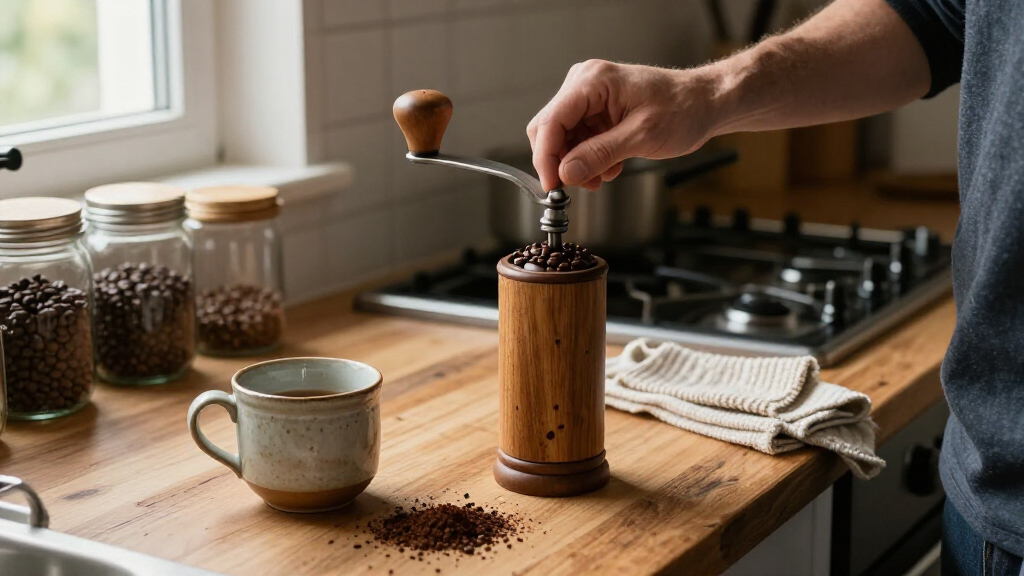
Manual coffee grinders offer unmatched control and durability without electricity, perfect for fresh brewing on the go. Recent innovations improve grind consistency and ergonomics, making them more reliable than ever for coffee lovers.
Choose a burr type—conical burrs generally produce more consistent grounds than flat burrs, especially at finer settings.
Precise, stepped adjustments are worth paying extra for—they help dial in your perfect grind faster.
Regular cleaning and careful handling extend your grinder’s life and keep your coffee tasting fresh.
Match your grinder to your brewing style and lifestyle—consider size, capacity, and ease of use.
Recent innovations in burr geometry and ergonomic design make modern manual grinders more reliable and comfortable than ever.
What Makes a Manual Coffee Grinder Actually Good?
The core of a quality manual coffee grinder is its grinding mechanism. Burrs—either conical or flat—are the gold standard for uniform grounds. Burr grinders crush beans evenly, unlike blade grinders which chop inconsistently and produce uneven particles.
Why does this matter? Uniform grounds ensure even extraction during brewing, which directly influences flavor clarity, balance, and aroma. Inconsistent grind size can cause over-extraction (bitter, harsh flavors) or under-extraction (weak, sour notes). Therefore, investing in a grinder with high-quality burrs isn’t just about grind size—it’s about unlocking the full potential of your beans.
For example, a Porlex Mini uses ceramic conical burrs to deliver consistent grind sizes, crucial for espresso or pour-over. The feel of a well-made burr, with sharp edges and sturdy construction, speaks volumes about longevity and performance. Choosing the right burr type and quality is a tradeoff—conical burrs tend to be better at retaining flavor and producing consistent fines and boulders, while flat burrs can provide even more uniformity at the expense of potentially higher cost and complexity. Understanding these nuances helps you select a grinder that matches your brewing style and flavor preferences.
manual coffee grinder conical burr
As an affiliate, we earn on qualifying purchases.
As an affiliate, we earn on qualifying purchases.
How to Adjust Your Grind for Different Brewing Styles
- Identify your brewing method—Espresso, French press, AeroPress, pour-over. Each requires a different grind size because of how they extract flavor. Finer grinds increase surface area, leading to faster extraction, while coarser grinds slow down the process. Choosing the right size is critical for balancing extraction time and flavor clarity.
- Use the grinder’s adjustment knob or stepped settings. For example, a JavaPresse offers 18 click-stops, allowing precise control over grind size. But beware—stepped adjustments can sometimes be coarse, so understanding the tradeoff between ease of adjustment and granularity is key.
- Start with a medium grind as a baseline. Then, tweak based on extraction results. Too fine? Your espresso will be bitter and over-extracted; too coarse? The brew will be weak and sour. Adjust in small increments, tasting and observing extraction times.
- Test and record your settings. Some grinders have numbered adjustments, which helps replicate your perfect grind in future sessions. Consistency is vital—small changes can have a big impact on flavor.
- Consider the implications of your adjustments: a finer grind increases resistance, requiring more effort and potentially causing hand fatigue. Conversely, a coarse grind reduces effort but demands longer brewing times. Finding the right balance depends on your comfort and desired brew profile.
Imagine brewing a pour-over with your favorite beans. You start with a medium grind, then adjust slightly finer until the water drips slowly, releasing rich aroma and flavor. This process of fine-tuning exemplifies control—your ability to influence extraction and flavor through precise adjustments.
best hand coffee mill for espresso
As an affiliate, we earn on qualifying purchases.
As an affiliate, we earn on qualifying purchases.
Recent Innovations That Make Manual Grinders Better Than Ever
| Feature | Old Models | Recent Improvements |
|---|---|---|
| Burr Design | Basic conical or flat burrs | Sharpened, high-precision burrs with improved geometry that reduce grind size variability and increase uniformity, which is essential for consistent extraction across different brewing methods. |
| Adjustability | Few steps, less precise | Stepped, numbered, or infinitely adjustable mechanisms now allow more precise and repeatable grind settings, minimizing guesswork and enhancing consistency over time. |
| Materials | Steel or plastic | Ceramic, eco-friendly plastics, recycled metals—these materials not only improve durability and reduce environmental impact but also prevent metal flavors from contaminating your coffee. |
| Ergonomics | Basic handles | Ergonomic grips, improved leverage, and anti-slip bases make grinding less tiring and more comfortable, especially during larger batches or extended use. |
| Design & Aesthetics | Functional, often utilitarian | Sleek, minimalist, customizable colors—these modern designs blend form and function, making the grinder a stylish addition to any kitchen or travel kit. |
Take the Comandante C40: it uses high-quality conical burrs with a finely stepped dial, making grind adjustments incredibly precise. Its sleek stainless-steel body looks as good on a countertop as it feels in your hand. But beyond aesthetics, these recent designs deliver tangible improvements: more consistent grind sizes, easier adjustments, and better ergonomics—resulting in a more reliable and enjoyable grinding experience. The tradeoff? Slightly higher price points, but the investment pays off in flavor consistency and user satisfaction.
portable manual coffee grinder for travel
As an affiliate, we earn on qualifying purchases.
As an affiliate, we earn on qualifying purchases.
What Are the Real Benefits of Using a Manual Grinder?
- Power independence: No electricity needed, making them perfect for camping, traveling, or off-grid brewing. This independence means you can enjoy fresh coffee anywhere without reliance on power sources, offering freedom and spontaneity.
- Cost: Typically $50–$200, manual grinders often cost less than electric models with comparable performance. This affordability allows more enthusiasts to access quality grinding without a hefty investment, democratizing good coffee.
- Control: You choose the grind size, which is essential for finesse in brewing. This tactile control enables experimentation and mastery over extraction, often leading to better-tasting coffee than pre-ground options.
- Durability: Well-made manual grinders can last decades—think of a Zassenhaus grinding beans when your great-grandchild visits. Their simple design and robust materials mean they can withstand frequent use and travel, making them lifetime tools.
- Flavor: Consistent, fresh grinds unlock more nuanced tastes—gone are the stale, uneven particles of pre-ground coffee. The ability to grind just before brewing preserves volatile aromatics and oils, resulting in a richer, more vibrant cup.
Imagine a trip to a remote cabin. You bring your grinder, some beans, and your pour-over setup. The rich aroma fills the air as you grind fresh beans, then brew—no power, no fuss. That’s the beauty of a manual grinder, combining simplicity with flavor preservation and portability.

CEVING Mini Manual Coffee Grinder With 40 Adjustable Settings, Black
- Adjustable Grind Settings: 40 external precise settings
- Portable & Lightweight: Only 325g, compact design
- Versatile Use: Suitable for espresso, French press, pour-over
As an affiliate, we earn on qualifying purchases.
As an affiliate, we earn on qualifying purchases.
Common Pitfalls and How to Avoid Them
Not all manual grinders are created equal. Cheaper models might produce inconsistent grinds, leading to bitter or weak brews, because they often lack high-quality burrs or have poorly calibrated adjustments. Excessive effort can tire your hand, especially with larger batches or fine grinds—this can discourage regular use or lead to inconsistent results. The key is choosing a model with good burrs, solid construction, and easy, precise adjustments.
For example, a poorly made grinder with plastic burrs can wear out quickly, causing uneven particles and flavor loss. Always check reviews, and if possible, test the grinder’s resistance and adjustability before buying. Consider the tradeoff between ease of use and the effort required; some models require significant hand strength for fine grinds, which may not suit everyone.
Maintenance matters, too. Regular cleaning with a brush, and occasionally disassembling to remove coffee oils, keeps your grinder performing at its best. Avoid using water on ceramic burrs—dry brushing works best. Neglecting maintenance can lead to oil buildup, clogging, or uneven grinding, which degrades flavor and consistency. Investing in a quality grinder and maintaining it properly ensures enduring performance and optimal flavor extraction.
Which Manual Coffee Grinder Fits Your Lifestyle?
Choosing the right grinder depends on how you brew, where you go, and how much effort you want to put in. For travel, look for compact, lightweight models like the Porlex Mini or Hario Skerton. They slip easily into a bag and don’t weigh you down, enabling spontaneous brewing wherever you are. If you’re serious about precision, a high-end grinder like the Comandante offers small adjustments and consistent results—ideal for espresso or pour-over enthusiasts who value control and uniformity. For casual use, a sturdy, simple model with a good grip suffices, providing reliable performance without fuss. Think about your typical setup: do you brew at home, on the trail, or in a small office? Match your grinder’s size, capacity, and ease of use to your routine. Remember, a good manual grinder isn’t just about quality—it’s about fitting into your life seamlessly, enhancing your brewing experience wherever you are.
How to Keep Your Manual Grinder in Top Shape
Maintaining your manual grinder is simple but essential for longevity and consistent performance. After each use, brush out residual coffee grounds with a soft brush or cloth to prevent buildup. For ceramic burrs, avoid water—dry brushing or wiping with a damp cloth is best to prevent moisture from causing corrosion or damage. Every few months, disassemble the grinder and clean all parts with warm, soapy water, then dry thoroughly before reassembling. This prevents oil buildup and keeps your grounds consistent. If your grinder has adjustable burrs, check for wear or misalignment periodically—loose parts or worn burrs can compromise grind size and consistency. Tighten any loose components and replace worn parts as needed. With proper care, your grinder can serve you for decades—becoming a trusted tool that gets better with age and continued use, ensuring every cup remains fresh and flavorful.
Frequently Asked Questions
How do I know if a manual grinder will grind fine enough for espresso?
Look for models with high-quality conical or flat burrs and precise, stepped adjustments. Many top-tier brands can produce espresso-fine grounds consistently—check reviews or manufacturer specs.Can I grind spices or herbs with my coffee grinder?
Yes, but it’s best to dedicate a grinder for spices if possible. Coffee oils can linger and affect flavor, and some spices may cause wear or clogging. Clean thoroughly after use.Is a manual grinder faster than an electric one?
No, manual grinders are slower—designed for quality and control, not speed. If you need a quick grind for large batches, electric might be better. But for small, precise amounts, manual is unbeatable.How much effort does it take to grind a cup of coffee?
It varies by grinder and grind size. Coarser grinds for French press require less effort, while fine espresso grounds demand more hand strength. A well-made grinder minimizes fatigue with ergonomic design.What is the typical price for a quality manual coffee grinder?
Expect to spend between $50 and $200 for a good model. Cheaper ones may compromise on grind consistency, while high-end options like the Comandante can approach $300 but offer superior precision.Conclusion
A good manual coffee grinder isn’t just a tool—it’s a craft. It offers control, durability, and the joy of fresh coffee wherever you go. Your next brew, whether at home or in the wild, begins with turning a handle—simple, satisfying, and endlessly rewarding.College move-in / dorm season Picks
dorm essentials
As an affiliate, we earn on qualifying purchases.