
TL;DR

Get kitchen gear delivered free — and shop member deals
- Fast, free delivery on millions of items
- Access to Prime Big Deal Days deals on October 6–7
- Prime Video, Amazon Music and more included
Turkish coffee is made with a super fine grind, slow heating, and careful foam creation. Using a cezve and respecting the process yields a strong, frothy brew that’s steeped in tradition and rich in flavor.
Ever tasted coffee so thick and velvety you almost need a spoon? That’s Turkish coffee — a ritual that’s been part of Middle Eastern culture for centuries. It’s more than just a drink; it’s a moment of hospitality, patience, and artistry. If you want to craft that rich, frothy cup yourself, it’s about more than just pouring water over grounds. It’s about respecting tradition, using the right tools, and mastering the delicate brewing process.
In this guide, you’ll learn how to make Turkish coffee the authentic way. We’ll cover everything from choosing the right coffee and tools, to step-by-step brewing tips, and modern twists that keep the tradition alive. Ready to turn your kitchen into a slice of Istanbul? Let’s go.
Use a super fine, flour-like grind for the best Turkish coffee texture.
Slow, gentle heating is essential for creating rich foam and flavor.
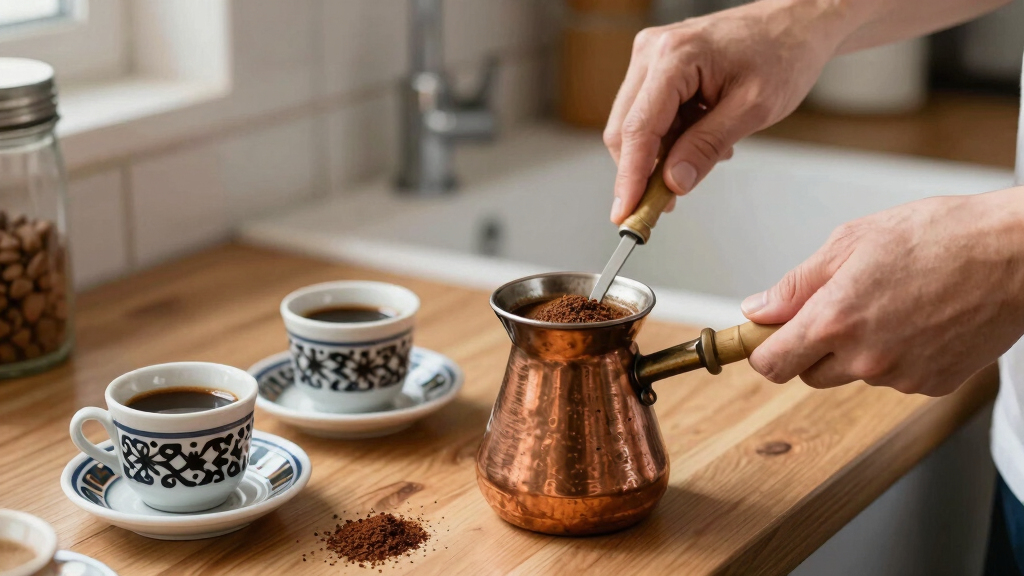
A traditional copper cezve helps control heat and enhances authenticity.
Pour carefully to distribute foam evenly and let grounds settle before drinking.
Adding spices like cardamom or cinnamon can elevate the aroma without compromising tradition.
How to Make Turkish Coffee the Traditional Way
Turkish coffee is built on a super fine grind, slow heat, and careful foam creation. With a cezve, cold water, and patience, a few spoonfuls of coffee become a strong, velvety ritual of hospitality.
“Patience is the secret ingredient.”
The texture comes before the technique.
Authentic Turkish coffee starts with grounds so fine they feel silky between your fingers. The powdery texture creates body, helps foam form, and keeps the brew thick instead of thin or gritty.
Powder, not sand
Use a dedicated Turkish grind, the finest burr grinder setting, or a mortar and pestle. If it feels gritty, the cup will taste weaker and rougher.
Copper cezve
The wide base and narrow neck help heat move gently through the coffee. Copper’s even conduction makes foam easier to control.
Add sugar early
Choose sade, az şekerli, orta şekerli, or şekerli before heating. Sugar goes in the cezve, not after serving.
Six slow moves to a proper cup.
Once the cezve is on the stove, restraint matters. Let the coffee sink, infuse, and rise into foam without stirring after heat begins.
Measure
Use one demitasse cup of cold water per serving.
Add
Add 1-2 heaping teaspoons of Turkish-ground coffee.
Sweeten
Add sugar now if desired, then place the cezve on low heat.
Watch
Let foam rise slowly and remove just before boiling.
Repeat
Optional reheating builds a thicker, more stable crown.
Pour
Share foam evenly, then let grounds settle before sipping.
What changes the final cup?
Turkish coffee rewards small adjustments. Grind, heat, foam timing, and serving patience have the biggest effect on aroma, body, and sediment.
Impact on authenticity
The closer each variable stays to the traditional method, the more likely you are to get a thick body, fragrant foam, and a clean ritual feel.
Foam stability zone
Traditional choices versus shortcuts.
Modern tools can help, but the traditional method is still the benchmark for foam, texture, and cultural fidelity.
| Choice | Traditional method | Shortcut | Foam quality | Best use |
|---|---|---|---|---|
| Pot | Copper cezve | Small saucepan | ✓ High control | Authentic brewing |
| Grind | Flour-like Turkish grind | Espresso grind | ✗ Often too coarse | Thick body |
| Heat | Low and slow | Fast boil | ✗ Foam collapses | Velvety crown |
| Flavor | Coffee, sugar, optional spice | Syrups after brewing | ~ Depends on timing | Cardamom or cinnamon |
| Serving | Tiny cups plus settling time | Large mug immediately | ✓ Foam preserved | Slow sipping |
The crown carries the aroma.
Köpük is not decoration. It traps volatile oils and signals that heat, timing, and pouring were handled with care.
Do this
- 01 Heat gently until the foam rises at the edges.
- 02 Remove the cezve before the coffee boils over.
- 03 Pour slowly so each cup receives foam.
Avoid this
- 01 Using a coarse grind that weakens the body.
- 02 Stirring after the cezve is placed on heat.
- 03 Boiling hard, which breaks the delicate foam.
From ingredient to ritual.
The traditional cup connects technical precision with hospitality: grind, heat, foam, pour, pause.
Fresh coffee chosen for aroma.
Silky texture builds body.
Even warmth protects flavor.
The crown holds aroma.
Water, sweets, conversation.
Why the Grind Matters: Achieving That Powder-Like Texture
Turkish coffee requires an almost powdery grind — finer than espresso. This super fine texture creates the thick, velvety brew with a signature foam. Imagine dusting your coffee beans with a layer of flour. It’s that fine. If your grind is too coarse, the coffee will be weak and gritty. If it’s too coarse, you won’t get the rich body or proper foam.
Many specialty coffee roasters now offer a dedicated Turkish grind. When grinding at home, use a burr grinder set to the finest setting or a mortar and pestle for ultimate control. The goal? A consistency so fine it feels like flour in your fingers.
For example, a good test is to rub a small amount between your fingers. It should feel silky, not gritty. This step makes all the difference between a watery mess and the thick, aromatic brew you’re after.
Achieving this ultra-fine grind is crucial because it affects extraction. Too coarse, and water passes through too quickly, resulting in a weak brew. Too fine, and the grounds can clog the filter or over-extract, leading to bitterness. The tradeoff lies in balancing the grind to maximize flavor without over-extracting or causing sediment. Mastering this grind ensures your coffee’s richness and foam are consistent, which are hallmarks of authentic Turkish coffee.
As an affiliate, we earn on qualifying purchases.
Choosing the Right Tool: The Classic Copper Cezve & Modern Alternatives
The cezve (also called ibrik) is a small, long-handled pot traditionally made of copper or brass. Its narrow neck and wide bottom are designed for slow, even heating, essential for that perfect foam and flavor. Copper conducts heat evenly, preventing scorching and helping you control the brew.
If you don’t have a cezve, a small saucepan or an espresso maker can work as substitutes. But beware — these may not replicate the traditional foam and thick texture exactly.
For example, a well-made copper cezve with a wooden or plastic handle makes a noticeable difference in temperature control and foam quality. Plus, it’s a piece of cultural history that adds authenticity to your brewing ritual.
Choosing the right tool isn’t just about tradition; it impacts the brewing process’s precision. Copper heats evenly, reducing the risk of hot spots that can scorch the grounds or cause uneven extraction. This control is vital for developing the signature foam and rich flavor profile. Modern alternatives may be more convenient but often lack the thermal properties that make the traditional method so effective. Investing in a good cezve is a tradeoff worth considering, especially if you aim for authentic, high-quality results that honor the cultural roots of Turkish coffee.
As an affiliate, we earn on qualifying purchases.
Step-by-Step: How to Brew Turkish Coffee Perfectly Every Time
- Measure one demitasse cup of cold water per serving. Pour it into the cezve.
- Add 1-2 heaping teaspoons of finely ground coffee per cup. Don’t stir yet.
- Optional: Add sugar at this stage — no sugar, little (az şekerli), medium (orta şekerli), or sweet (şekerli).
- Place the cezve on low heat. Slowly warm it, allowing the coffee to sink and infuse.
- Watch for foam to form. Just before it boils, remove from heat. Don’t stir.
- Optional: Repeat the heating process to build a thicker foam.
- Pour gently into small cups, distributing foam evenly. Let grounds settle before sipping.
This slow process—about 5-7 minutes—is what gives Turkish coffee its richness and foam. Patience is the secret ingredient.
Deepening your understanding of this process reveals why each step matters. The slow heating allows flavors to develop fully, extracting aromatic compounds that contribute to the coffee’s complex profile. Removing the foam just before boiling prevents the collapse of the delicate bubbles, which are essential for that velvety crown. Repeating the heating cycle intensifies the foam’s stability, creating a signature texture that distinguishes Turkish coffee from other brewing methods. Rushing this process risks underdeveloped flavor and weak foam, so patience and attentiveness are the tradeoffs for a superior cup.
super fine coffee grind for Turkish coffee
As an affiliate, we earn on qualifying purchases.
As an affiliate, we earn on qualifying purchases.
How to Get That Perfect Foam: The Secret to a Rich Crown
The foam, or ‘köpük,’ is what makes Turkish coffee distinctive. To get it right, heat the coffee slowly over low heat. As the foam rises, remove the cezve from the heat just before it boils over. This prevents the foam from collapsing and develops a thick, velvety layer on top.
Repeating the heating process — pouring the foam into cups, then returning the cezve to heat — builds a richer, more stable foam. The key? Gentle, patient heating and careful pouring.
Imagine the gentle crackling of the foam as it rises, like a small volcano preparing to erupt. That’s a sign you’re on the right track.
Creating this foam isn’t just about aesthetics; it’s about capturing the essence of Turkish coffee’s texture and aroma. The foam traps volatile oils and aromatic compounds, which contribute to the coffee’s depth and richness. Carefully controlling the heat and timing ensures the foam remains stable and doesn’t deflate, preserving the signature crown that enhances both presentation and flavor. The tradeoff here is patience—rushing the process will cause the foam to collapse, losing the characteristic velvety top that’s central to the experience.
As an affiliate, we earn on qualifying purchases.
Serving & Savoring: How to Elevate Your Turkish Coffee Experience
Pour the coffee carefully into tiny cups, ensuring the foam is evenly distributed. Let the grounds settle for a minute before sipping. Turkish coffee is served in small cups — the size of a shot glass — to match its strength.
Enjoy it slowly, savoring the aroma of roasted beans and spices. Traditionally, it’s paired with a glass of water and a sweet treat like Turkish delight or a piece of dark chocolate.
Imagine sitting with friends, sharing stories over steaming cups. That’s the true spirit of Turkish coffee — a pause in the rush of life.
Serving Turkish coffee isn’t just about presentation; it’s an act of hospitality and cultural sharing. The small cups emphasize its intensity, encouraging slow sipping and appreciation. The accompanying water cleanses the palate, enhancing the flavors, while the sweet treat balances the coffee’s bitterness. This ritual transforms a simple beverage into a social experience, fostering connection and tradition with every pour.
Modern Twists & Tips for Authentic Results
While tradition is key, modern tweaks can enhance your experience. Try adding a pinch of ground cardamom or cinnamon before brewing for extra aroma. Use fresh, high-quality coffee beans, preferably single-origin Arabica.
Some enthusiasts experiment with electric cezves or stovetop coffee makers designed to mimic traditional results. They can save time but still honor the ritual.
Remember: the quality of your water and coffee makes a big difference. Use filtered water and freshly roasted beans for the best flavor.
Adding spices like cardamom or cinnamon isn’t just about flavor; it’s a way to deepen the sensory experience and connect with regional traditions. These additions can complement the natural aroma of the coffee, creating a layered profile that elevates the ritual. Using high-quality ingredients ensures that the subtle nuances are preserved, making each cup a reflection of care and craftsmanship. Modern tools can streamline the process, but the key is balancing convenience with respect for the traditional methods that define Turkish coffee’s unique character.
Common Mistakes & How to Avoid Them
Overheating the coffee causes bitterness. Using too coarse a grind results in weak, watery coffee. Rushing the process prevents foam formation and ruins the texture. And pouring too quickly can disturb the grounds, clouding your cup.
Take your time. Watch the heat carefully and stir as little as possible once on the stove. Patience pays off with a thick foam and a rich, flavorful brew.
For example, many beginners rush to boil the coffee, but it’s the slow, gentle heating that develops the signature foam and intense aroma. Rushing or neglecting these details can lead to a disappointing cup that lacks depth, aroma, and the signature velvety foam. The tradeoff is patience—investing a few extra minutes ensures a more profound flavor profile and authentic texture, making each cup a true reflection of the traditional craft.
Frequently Asked Questions
Can I make Turkish coffee with pre-ground coffee?
Yes, but ensure it’s a super fine grind, specifically labeled for Turkish coffee. Pre-ground options from specialty stores are usually reliable, but freshly ground beans yield the best flavor and foam.
What’s the best way to prevent grounds from ending up in my sip?
Allow the grounds to settle after brewing—wait a minute before pouring. Pour slowly and carefully, aiming to keep the sediment in the cup. Drinking Turkish coffee involves a slow, careful sip to avoid grounds.
How can I make my Turkish coffee foam thicker and more stable?
Build the foam in two or three small heating cycles. Remove from heat just before boiling to preserve the foam’s structure. Repeating this process thickens and stabilizes the foam, giving that iconic crown on top.
Can I add flavors like spices or sweeteners?
Absolutely. Ground cardamom, cinnamon, or even a touch of rose water can add complexity. Adding sugar at the start allows it to dissolve evenly, but you can also sweeten after brewing.
Conclusion
Mastering Turkish coffee is about patience, respect for tradition, and a touch of finesse. The rich aroma, velvety foam, and bold flavor make every sip a small celebration.
Next time you brew, remember: it’s not just coffee — it’s a ritual. Take your time, embrace the process, and enjoy the cultural richness in each cup.
Evergreen bestsellers Picks
bestsellers
As an affiliate, we earn on qualifying purchases.