TL;DR

Get kitchen gear delivered free with Prime
- Fast, free delivery on millions of items
- Prime Video, Amazon Music and more included
- Member-only deals all year
Knives go dull when their thin steel edges wear away, bend, chip, corrode, or strike hard surfaces. A wood or plastic board, smooth cutting, prompt hand washing, protected storage, and light honing can slow that change; sharpen when honing no longer restores the cut.
The onion that slid under your blade yesterday may suddenly resist today. You press harder, the knife skates off the glossy skin, and a small job starts to feel risky. That change often begins at a strip of steel so thin you can barely see it.
A knife edge is a very thin wedge of steel. Each cut, board tap, rinse, and scrape can change its shape. Some changes bend the edge; others gradually remove steel, chip it, or let corrosion roughen it. Knowing why knives go dull helps you choose the right fix instead of reaching for a sharpener every time a tomato gets squashed.
This guide shows you how boards, cutting habits, cleaning, storage, and steel affect edge life. You’ll also learn how to tell whether your knife needs honing or sharpening, and why a careful routine matters in a busy kitchen, whether you cook with a full set of tools or keep just one dependable knife by the stove.
Use a wood or plastic board; glass, stone, and ceramic can wear an edge faster.
Move chopped food with the knife’s spine or a scraper instead of grinding the edge sideways.
Wash and dry knives promptly, especially after cutting acidic or salty foods.
Hone to realign a rolled edge; sharpen when honing no longer restores the cut.
Protect blades in a block, drawer insert, magnetic strip, or guard, and choose a knife suited to the job.
Why knives go dull and how to slow it
A knife can lose its bite through wear, bending, chips, or corrosion. The right care helps protect the edge and tells you when to hone or sharpen.
What changes at the edge?
A dull knife may have a rolled, worn, chipped, or corroded edge; each calls for a different response.
Steel wears away
Abrasive food and repeated contact with hard boards gradually remove steel.
Edges can bend
Force, twisting, or prying can push a fine edge out of line.
Chips and corrosion
Hard impacts can chip steel; moisture, salt, and acids can damage it.
Choose a gentler board
The surface under each cut affects how quickly the edge wears.
- Wood boards
- Plastic boards
- Glass boards
- Stone and ceramic surfaces
Build a simple care routine
Small habits protect the edge during prep, cleanup, and storage.
Slice or rock through food; avoid twisting and prying.
Move chopped food with the knife’s spine or a scraper.
Hand wash after acidic or salty foods and dry before storing.
Use a block, magnetic strip, drawer insert, or blade guard.
Hone or sharpen?
Judge by how the knife cuts, not by a fixed schedule.
| What you notice | What to try |
|---|---|
| Edge seems rolled; no visible chips | Light honing may realign it |
| Still dull after honing, or visibly worn or chipped | Sharpen with a method suited to the knife |
What actually happens when a knife goes dull?
Knives go dull when the thin edge wears down, bends, chips, or gets damaged by corrosion. Those changes can feel similar in your hand, but they do not all call for the same remedy. A knife that folds slightly to one side may respond to honing; an edge ground away through months of use needs sharpening.
Wear happens as the knife meets food and its board. Cutting abrasive foods, such as gritty root vegetables that still carry soil, can gradually remove steel. The board also matters: each stroke ends in contact with a surface, so a hard glass board can wear an edge faster than a wood or plastic one. Even the small scrape you make to gather chopped parsley can add friction if you use the sharp edge sideways.
Pressure can roll or bend a very fine edge. Twist a chef’s knife while it sits in a dense squash, or push it against a hard food at an awkward angle, and the edge may lean instead of cutting cleanly. A hard impact against a bone or frozen food can chip steel, leaving tiny notches that snag on a pepper skin. Moisture, salt, and acidic food can also attack steel if you leave a blade wet in the sink.
Picture cutting carrots on a soft wood board, then switching to a glass board for a lemon. The first few cuts may feel crisp; after repeated hard contact, the knife can start skating over the lemon’s slick skin. “Dull” describes the result, not the cause. Look for changes in how the edge cuts and whether damage is visible before you choose a fix.
Products Worth Considering

Weber Searwood XL 600 Wood Pellet Smoker Grill, 36 inches, Black

Ninja Mega Kitchen System Blender and Food Processor, 1500W, 72-oz Pitcher, 8-Cup Bowl, Black (BL770)

De'Longhi Rivelia Fully Automatic Espresso Machine with Milk Frother, White
As an affiliate, we earn on qualifying purchases.
Which everyday habits wear an edge fastest?
Knives go dull faster when you make the edge strike hard surfaces, use it to force or twist through food, or leave it knocking against other tools. A knife does not need dramatic abuse to lose its bite: ordinary chopping repeats thousands of small contacts between steel, food, and board.
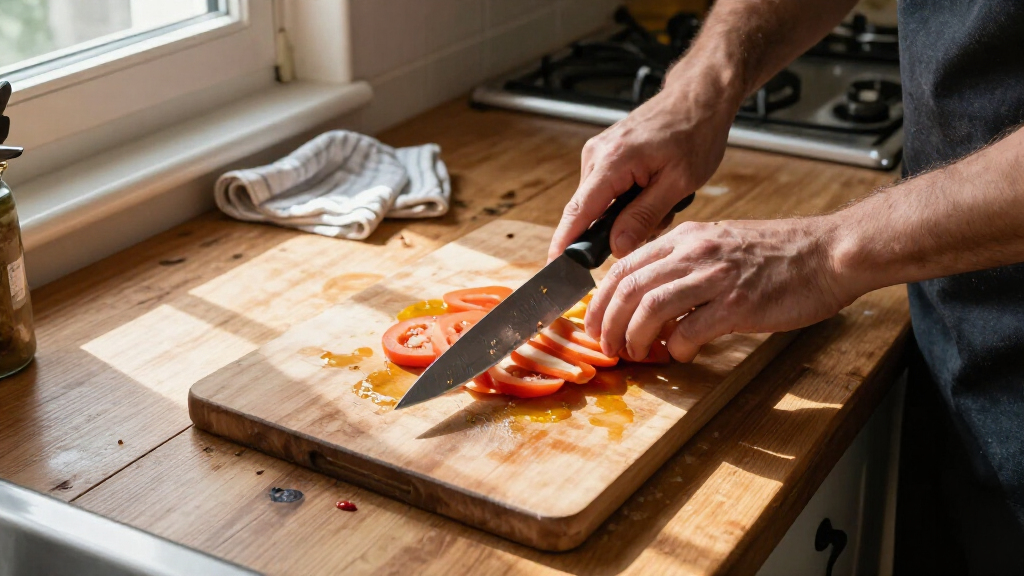
Hard boards are a common culprit. Glass and stone feel easy to wash, but their surfaces give the edge little cushioning when each cut lands. Wood and plastic are more forgiving choices. If you prep dinner on a glass board because it matches the counter, you may notice that a knife that once sliced a ripe tomato cleanly now crushes its flesh before the skin gives way.
Scraping sideways is another sneaky source of wear. It is tempting to sweep chopped onion into a pan with the edge of the blade, especially when the pan is already hot. Turn the knife around and use its spine, or use a bench scraper; that keeps the edge out of a rough sideways grind. Twisting, prying, and using a chef’s knife to split bones put stresses on the edge that the blade was not built to take.
Storage can undo careful cutting. Toss a knife loose into a crowded drawer and its edge may tap a can opener, another blade, or the drawer’s metal fittings each time you reach for a spoon. Match the tool to the job: use a sturdy cleaver for appropriate heavy work, a paring knife for small trimming, and a chef’s knife for slicing and chopping. That simple division saves both steel and effort.
How can you slow dulling with a simple kitchen routine?
Knives go dull more slowly when you give the edge a forgiving board, use a smooth stroke, and keep the blade clean and protected. You do not need a complicated care ritual; a few repeatable habits make the biggest difference. If you cook after a long day, make the routine easy enough to follow without thinking.
- Choose wood or plastic. Keep glass, stone, and ceramic out of the cutting station. A wooden board gives a little under the cut, while a plastic board can be washed thoroughly after raw meat.
- Slice instead of forcing. Let a smooth rocking or drawing motion do the work. Avoid twisting in a firm squash or prying a stuck blade free.
- Move food with the spine. After dicing an onion, turn the blade over to sweep pieces into the pot, or use a scraper.
- Wash soon and dry fully. Hand wash after cutting citrus, tomatoes, or salty food, then dry the blade before storage.
- Protect the edge. Use a block, magnetic strip, drawer insert, or blade guard so steel does not collide with other tools.
For example, after chopping tomatoes for supper, rinse and hand wash the knife instead of leaving it in a wet sink beside a steel whisk. Drying takes seconds, and it helps prevent corrosion. Dishwashers add heat, detergent, and possible impacts against racks or other items, which can harm both edge and handle. Small habits compound: the blade that never bangs around and never sits wet tends to need fewer major repairs.
How do you know whether to hone or sharpen?
Hone a knife when its edge has rolled out of line; sharpen it when honing no longer restores its cut. Honing realigns the fine edge, while sharpening removes steel to create a new cutting edge. These jobs can look similar at the counter, but they change the blade in different ways.
Try a simple check with a ripe tomato or a sheet of paper. If the knife slips on the tomato skin or tears paper unevenly, use a suitable honing tool if the blade has no visible chips. A few light, controlled passes may bring back a cleaner cut if the edge had bent to one side. Avoid pressing hard; force does not make the tool more accurate.
If the knife still crushes the tomato after honing, or catches repeatedly in a cut, its edge may have worn away. Sharpening removes a small amount of steel and forms a fresh edge. How often that becomes necessary depends on use, board material, cutting style, steel, and maintenance. A home cook who slices vegetables nightly on wood may need a different schedule from someone who prepares occasional meals on a hard counter board.
Some honing tools also abrade steel, so their effect depends on design. Whetstones, guided systems, pull-through sharpeners, and professional services suit different knives and skill levels; an aggressive tool or a poorly matched angle can remove excess metal. A ceramic knife needs different equipment from a steel one. Judge by performance, not by the calendar, and stop if you see chips or feel unsure about a damaged or valuable blade.
Why does the board matter more than you might expect?
A cutting board affects how often the edge meets a hard surface, so board choice can change how quickly a knife loses its bite. Wood and plastic are practical everyday options because they are gentler on a steel edge than glass, stone, or ceramic. The best choice also depends on what you cut and how you clean up.
Imagine preparing a weeknight salad on a glass board: the knife taps a hard, bright surface with every chop. Switch to a wood board, and the sound softens to a muted thock. That different sound reflects a different kind of contact at the edge. No board makes a knife immune to wear, but a forgiving surface can reduce unnecessary impact over repeated use.
Plastic boards are handy when you want a surface you can wash thoroughly, especially after raw poultry or meat. Wood boards suit daily vegetable and bread prep, though they need sensible cleaning and drying. A board should sit securely so it does not slide while you cut; put a damp towel beneath it if the counter is slick. Safety matters alongside edge life.
Board material is only one piece of the pattern. Cutting abrasive foods with grit still clinging to them can wear an edge even on wood, while careful technique on plastic can extend useful performance. Rinse muddy carrots before chopping and use a separate board for messy jobs if that fits your kitchen. Choose a board that supports both clean work and controlled cuts, then keep the knife from scraping sideways across it.
Why do steel, edge angle, and knife design change the answer?
Knife steel and geometry shape how an edge wears and what maintenance it needs. Harder steel can hold an edge longer, but hardness alone does not guarantee a durable knife. Depending on its composition and heat treatment, a harder blade may chip more readily under impact than a tougher one.
Think of two knives used to cut the same squash. One may keep a keen edge longer but demand a careful, straight cut; another may dull sooner yet shrug off rougher handling. The difference depends on more than the label on the blade. Steel composition, heat treatment, edge angle, and blade geometry all affect cutting feel and resistance to damage.
A narrower edge angle can cut smoothly, but it may be less tolerant of twisting or hard contact. A sturdier geometry can handle rougher tasks, though it may feel less keen in delicate slicing. This is why a sharpening angle that suits one knife may not suit another. If a blade has a factory edge you like, keep your sharpening method close to that geometry instead of removing lots of steel to chase a razor-thin angle.
For a cook who chops herbs and onions on a wooden board, a fine edge may feel pleasant and precise. Someone who regularly cuts dense winter squash may favor a more robust edge and a dedicated heavy knife for tougher work. Choose maintenance to match the blade, and remember that a sharp edge still needs safe handling. Good steel cannot compensate for prying, careless storage, or a slippery board.
What should you do when a knife slips or shows a chip?
A knife that slips or has a visible chip needs inspection before you keep cutting. A dull edge often asks for more force, and that extra pressure can make a blade less predictable. Any knife can cause an injury, but a clean edge used with control is usually easier to guide than one that skates across food.
If a blade slips off a tomato, pause and check the board, the food, and the edge. A wet tomato on a sliding board creates a messy combination; steady the board, dry your hands, and use a controlled slicing motion. Do not push harder toward your fingers. If the knife remains dull after light honing, plan to sharpen it or have it serviced.
Visible chips need a different response from a rolled edge. Honing may not remove a notch, and repeated hard passes can worsen damage or waste steel. A small chip may be repairable with suitable sharpening skill, while a damaged, valuable, or unfamiliar knife may be better handled by a professional. Ceramic blades especially need equipment made for ceramic material.
When you return to work, keep fingertips curled into a claw grip and let the blade move in a controlled path. Put the knife down if the board shifts or the handle feels slick. Sharpness is a tool condition, not a safety plan; stable footing, a secure board, dry hands, and attention still matter. If you work off-grid, dry the blade carefully and store it where it cannot fall or strike other gear.
Frequently Asked Questions
How can I tell whether my knife needs honing or sharpening?
If the knife has lost its clean cut but shows no visible chips, try light honing with a tool suited to the blade. If it still crushes tomato skin or tears paper after honing, the edge likely needs sharpening. Honing realigns; sharpening removes steel.
How often should I sharpen a kitchen knife?
There is no useful universal calendar interval. Your board, cutting frequency, technique, steel, and maintenance all affect edge life. Sharpen when light honing no longer restores cutting performance.
Does honing actually sharpen a knife?
Most honing realigns a rolled edge rather than grinding a new one. Some honing tools are abrasive and remove a small amount of steel, so check how your tool works and use light pressure.
Which cutting board is best for keeping an edge?
Wood and plastic are common, practical choices because they are gentler on an edge than glass, stone, or ceramic. Keep the board stable, and rinse grit from vegetables before cutting so abrasive dirt does not wear the blade.
Are harder knives always better?
No. Hardness can help an edge last longer, but toughness, corrosion resistance, geometry, and ease of sharpening matter too. A hard blade can chip if you twist it through dense food or strike bone.
Can I put kitchen knives in the dishwasher?
Hand washing and drying generally protect both edge and handle better. A dishwasher can expose a blade to impacts, strong detergent, heat, and moisture. Wash promptly after acidic or salty foods, then dry the blade before storing it.
Why does my knife get dull so quickly?
Common causes include a hard board, sideways scraping with the edge, twisting through food, cutting very hard or frozen items, and loose storage. A poorly matched sharpening method can also remove excess steel or damage the edge. Change one habit at a time and watch how the knife performs.
Conclusion
A knife edge changes through ordinary contact: cuts, board taps, scrapes, moisture, and storage all leave their mark. Give your blade a forgiving board, a smooth stroke, a quick wash and dry, and a protected place to rest. When the cut falters, check whether the edge needs realignment or a new grind before reaching for a sharpener.
Keep the steel out of the drawer’s clang and let it meet the board with a quiet, steady thock. That small sound is a good sign you’re treating a useful tool with care.