
TL;DR

Get kitchen gear delivered free with Prime
- Fast, free delivery on millions of items
- Prime Video, Amazon Music and more included
- Member-only deals all year
Storing knives safely is about choosing the right method—like magnetic strips or knife blocks—that prevent cuts, keep blades sharp, and reduce rust. Regular inspections ensure safety and longevity.
Choose a storage method that keeps blades protected and out of reach of children, like magnetic strips or dedicated knife drawers.
Regularly inspect your storage system for damage or wear, and clean blades thoroughly before storing to prevent rust.
Use protective sheaths or guards for loose blades, especially if stored in drawers, to prevent accidental cuts.
Consider modern options like antimicrobial coatings or electronic sensors to boost safety and hygiene.
Organize knives by size or usage frequency to make retrieval quick and reduce mishandling.
How to Store Knives Safely
Every year, thousands of injuries happen because of poor knife storage. Beyond safety, proper storage protects your blades from dulling, rust, and damage. Whether you’re off-grid or just aiming for a clutter-free kitchen, the right system keeps your tools sharp, your space organized, and your mind at ease.
Choose the Right Storage Method
Where you store your knives should prevent accidents and dull blades. A magnetic strip mounted high keeps knives accessible yet out of reach of children; a wooden block protects blades from knocking; drawer inserts with foam or silicone slots stop blades rubbing against other utensils.
Magnetic Strip
Easy access, saves counter space, and keeps blades visible. Newer versions include antimicrobial coatings — ideal for off-grid kitchens where cleaning routines are less frequent.
Knife Block
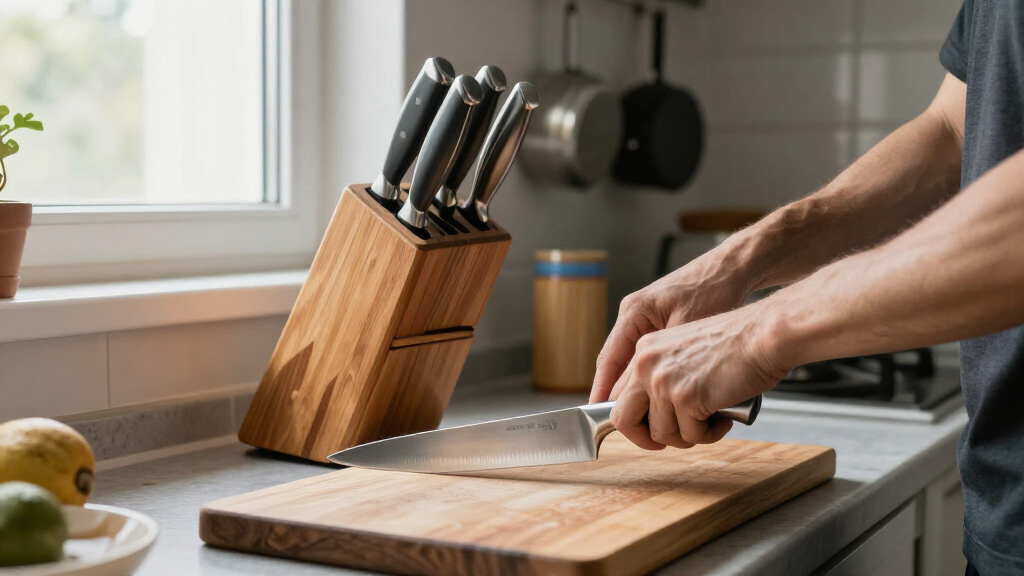
Wood or bamboo construction protects blades from knocking and dulling. Modern blocks feature improved airflow and antimicrobial materials to prevent mold and bacteria.
Drawer Insert
Customizable foam or silicone slots keep knives out of sight and fully separated — halting dullness and dramatically reducing injury risk during retrieval.
Popular Knife Storage Options Compared
Each method carries trade-offs in convenience, hygiene, and blade protection. Here’s how the four main options stack up.
| Storage Method | Advantages | Disadvantages |
|---|---|---|
| Magnetic Strip | ✓ Easy access, saves space, quick to grab, antimicrobial coatings available | ✗ Blades may scratch handles if mounted improperly; weaker hold for heavy knives |
| Knife Block | ✓ Protects blades, organized, aesthetic, reduces dulling | ✗ Can harbor dust and bacteria without regular cleaning; uses counter space |
| Drawer Insert | ✓ Out of sight, protects blades, customizable layouts | ✗ Requires dedicated drawer space; needs regular cleaning |
| Knife Roll / Case | ✓ Portable, safe transport, ideal for traveling chefs & off-grid use | ✗ Less convenient daily access; must be stored carefully |
Use & Maintain Your Storage System
Storing knives correctly isn’t just about choosing a method — it’s about how you care for that system. Follow this four-step routine to keep knives sharp, rust-free, and safe.
Clean & Dry
Wipe blades thoroughly before storing. Moisture leads to rust — especially in humid or off-grid environments.
Inspect Storage
Check regularly for wear or damage. Replace worn sheaths and repair loose magnetic strips before accidents happen.
Protect Blades
Use sheaths or guards for loose blades, especially in drawers — preventing accidental cuts and blade damage.
Organize Smartly
Group knives by size or frequency of use. Keep most-used knives within easy reach to reduce mishandling.
Which Method Protects Blades Best?
A relative comparison of how well each storage option preserves blade sharpness, based on how effectively it prevents blades from rubbing against other utensils and surfaces.
Modern Upgrades That Boost Safety & Hygiene
Recent innovations are making knife storage safer and more hygienic — a game-changer for longevity, especially in challenging off-grid environments where resources are limited.
Antimicrobial Coatings
Magnetic strips now come with finishes that inhibit bacterial growth, reducing the frequency of cleaning needed. One off-grid cabin owner reported no rust or bacterial issues after a full year with minimal cleaning.
High-Tech Knife Blocks
Blocks made with advanced plastics and improved airflow prevent mold and bacterial buildup — even in damp environments where traditional wood blocks would degrade.
Electronic Sensors
High-end models monitor blade sharpness and alert you when cleaning is needed — a proactive approach that prevents accidents and ensures hygiene before blades become dull or contaminated.
Locking Mechanisms
Some premium storage solutions now incorporate locks that keep blades out of reach of children — combining protection with peace of mind for family kitchens.
Five Rules for Safe Knife Storage
The essential habits distilled into five quick checkpoints.
Choose a method that keeps blades protected and out of children’s reach.
Inspect storage for wear, and clean blades before storing to prevent rust.
Use protective sheaths or guards for loose blades stored in drawers.
Consider antimicrobial coatings or electronic sensors for extra safety.
Organize by size or usage frequency for quick, safe retrieval.
Frequently Asked Questions
Straight answers to the most common knife-storage concerns.
Q1 What is the safest way to store kitchen knives?
Use a dedicated solution — a magnetic strip, high-quality knife block, or drawer insert designed for knives. These reduce accidental cuts and keep blades protected.
Q2 Are magnetic strips safe for all knives?
Yes, but ensure the magnet is strong enough to hold knives securely without damaging delicate handles. Avoid overly powerful magnets that can chip softer materials.
Q3 How do I prevent knives from dulling in storage?
Prevent blades from rubbing against other utensils. Individual sheaths, knife guards, or dedicated slots in a block help maintain sharpness over time.
Q4 Can I store knives in the dishwasher?
Best avoided. High heat and harsh detergents damage blades and handles. Hand washing and proper drying extend their lifespan significantly.
Q5 What materials are best for knife storage?
Wood, bamboo, and high-quality plastics are ideal — they resist bacteria, won’t damage blades, and clean easily. Steer clear of porous or corrodible materials.
Q6 How often should I inspect stored knives?
Regularly — ideally before each use — checking for damage, rust, or dullness. One cook spotted a loose handle on her magnetic strip and fixed the bracket before an accident happened.
Choose the Right Storage Method to Keep Knives Safe and Sharp
Where you store your knives should prevent accidents and dull blades. The simplest solution? A well-designed knife block, magnetic strip, or a custom drawer insert. Each method offers specific benefits.
For example, a magnetic strip mounted high on the wall keeps knives accessible yet out of reach of children. A sturdy knife block made of wood or bamboo protects blades from knocking and dulling. Drawer inserts with foam or silicone slots prevent blades from rubbing against other utensils, halting dullness and reducing injury risk.
Let’s look at the three main options:
Products Worth Considering

Cuisinart Chef's Classic 7-Piece Stainless Steel Cookware Set

Cuisinart Chef's Classic 17-Piece Stainless Steel Cookware Set

Cuisinart MultiClad Pro 12-Piece Stainless Steel Cookware Set
As an affiliate, we earn on qualifying purchases.
Comparison of Popular Knife Storage Options
| Storage Method | Advantages | Disadvantages |
|---|---|---|
| Magnetic Strip | Easy access, saves space, quick to grab, antimicrobial coatings available | Potential for blades to scratch handles if not mounted properly, weaker hold for very heavy knives |
| Knife Block | Protects blades, organized, aesthetic, reduces dulling | Can harbor dust and bacteria if not cleaned regularly, takes up counter space |
| Drawer Insert | Keeps knives out of sight, protects blades, customizable | Requires dedicated drawer space, needs regular cleaning to prevent bacteria buildup |
| Knife Roll/Case | Portable, safe during transport, ideal for traveling chefs or off-grid scenarios | Less convenient for daily access, must be stored carefully to prevent damage |
How to Properly Use and Maintain Your Knife Storage
Storing knives correctly isn’t just about choosing a method; it’s about how you use and care for that system. Regular maintenance keeps your knives sharp and safe.
- Clean and dry blades thoroughly before storing. Moisture leads to rust, especially in humid or off-grid environments.
- Inspect storage regularly for signs of wear or damage. Replace worn-out sheaths or repair loose magnetic strips.
- Use protective covers—sheaths or guards—especially for loose or stored blades in drawers. This prevents accidental cuts and blade damage.
- Organize by size or frequency of use. Keep your most-used knives within easy reach, reducing risk during retrieval.
For example, a home cook stored a favorite paring knife in a magnetic strip. When she noticed the handle was slightly loose from frequent use, she fixed the mounting bracket before an accident happened. Regular checks keep safety and blade integrity at their peak.
Innovations in Knife Storage That Boost Safety and Hygiene
Recent innovations are making knife storage safer and more hygienic. From antimicrobial coatings to smart sensors, these features help keep your tools in top shape.
Magnetic strips now come with antimicrobial finishes that inhibit bacterial growth, ideal for off-grid kitchens where cleaning routines are less frequent. Knife blocks made with high-tech plastics prevent mold and bacterial buildup, even in damp environments. Some high-end models include electronic sensors that monitor blade sharpness or alert you when cleaning is needed.
For example, a small off-grid cabin now uses a magnetic strip with an antimicrobial coating. The owner reports no rust or bacterial issues after a year, even with minimal cleaning. These small upgrades can significantly extend your knives’ lifespan while keeping safety in mind.
Understanding these innovations helps you make informed choices about your storage solutions. For instance, choosing antimicrobial coatings reduces the frequency of cleaning needed, which is especially valuable in off-grid settings where resources are limited. Electronic sensors, on the other hand, offer a proactive approach to maintenance, alerting you before blades become dull or contaminated, thus preventing accidents and ensuring hygiene. Incorporating these features into your storage system can be a game-changer, especially if you prioritize longevity and safety in challenging environments.