
TL;DR
Listen free for 30 days with Audible
Thousands of audiobooks and originals — cancel anytime.
Start your free trialAs an affiliate, we earn on qualifying purchases.
Soaking stones need time underwater, offering softer feedback and slurry-rich sharpening, while splash-and-go stones require minimal prep, providing faster setup and cleaner use. Your choice depends on your sharpening style and steel type.
When it comes to sharpening your knives, the waterstone you choose can make a big difference in how quickly and comfortably you work. Yet, the world of whetstones often feels confusing—are you supposed to soak them, or just splash and go? The truth is, neither method is inherently better; it depends on your style, your knives, and the kind of finish you want.
In this guide, you’ll learn the key differences between soaking and splash-and-go stones. We’ll explore how water absorption affects sharpening feel, speed, and maintenance, giving you practical insights to pick the right stone and get the best edge every time.
Water absorption is the key difference—soaking stones are porous, requiring immersion, while splash-and-go stones need surface wetting only.
Soaking stones provide softer feel and slurry-rich sharpening, ideal for polishing and softer steels, but they demand more prep and maintenance.
Splash-and-go stones are faster to set up, dry faster, and suit routine sharpening and hard, wear-resistant steels.
Regular flattening is necessary for both types to maintain a flat surface and consistent results.
Choose your waterstone based on your steel, sharpening style, and workflow—neither type is universally better.
Soaking vs Splash-and-Go Whetstones
Soaking stones trade preparation time for softer feedback and abundant slurry. Splash-and-go stones prioritize speed, cleanliness, and crisp bevel control. The right choice starts with your steel, desired finish, and sharpening rhythm.
01 / Core distinction
Two routes to a lubricated cutting surface
Water carries swarf, reduces loading, and supports abrasive action. The difference is where that water goes: into the pores of a soaking stone or mainly across the face of a splash-and-go stone.
Soaking stones
Immersion fills the stone’s pores before sharpening. Many become softer and release abrasive readily, creating tactile feedback and a slurry-rich surface.
- Often creamy, forgiving, and highly responsive under the blade.
- Well suited to longer sessions, multiple knives, and polished finishes.
- Generally retains more water and may dish more quickly.
- Manufacturer soaking and drying instructions are essential.
Splash-and-go stones
A small amount of surface water is usually enough. Many modern ceramic formulations feel harder, stay flat longer, and make the bevel easier to read.
- Ready quickly for touch-ups and routine sharpening.
- Often crisp, precise, clean, and easy to store after drying.
- Popular for hard, high-alloy, and wear-resistant steels.
- Still needs water on the face throughout sharpening.
| Factor | Soaking | Splash-and-go | What matters in practice |
|---|---|---|---|
| Preparation | ~Usually 5–20 minutes | ✓Surface wetting only | Follow the maker’s exact instructions. |
| Feedback | ✓Often soft and creamy | ✓Often hard and crisp | Choose the sensation that helps you hold a stable angle. |
| Slurry | ✓Usually develops readily | ~Often needs conditioning | More slurry can blend scratches but soften angle feedback. |
| Flatness | ~Often dishes sooner | ✓Often stays flat longer | Pressure, grit, hardness, and stone size also affect wear. |
| Drying | ✗Slower and more sensitive | ✓Usually faster | Clean first, then dry fully before enclosed storage. |
| Cutting speed | ~Can be extremely fast | ~Can be equally fast | Abrasive and steel compatibility—not absorption alone—decide speed. |
02 / Feel and performance
Absorption changes the experience—not the entire equation
These directional profiles summarize common tendencies rather than laboratory scores. Specific abrasives, binders, and steel combinations can reverse the pattern.
Relative behavior profile
Longer bars indicate more of the named tendency.
Speed is formulation-led
A soft coarse soaking stone may expose fresh abrasive rapidly. A modern ceramic splash-and-go stone may cut a wear-resistant steel just as fast—or faster.
Slurry is a tool
It can increase activity, smooth the stroke, and blend scratches. Too much can obscure scratch patterns and reduce precise bevel feedback.
Flatness protects geometry
A dished surface can round bevels and produce inconsistent edges. Use a diamond plate or suitable flattening stone before wear becomes severe.
03 / Working method
A reliable workflow for either stone
Good results come from correct preparation, controlled pressure, a consistently wet face, and deliberate maintenance. The opening step changes; the fundamentals do not.
Soaking-stone sequence
Confirm that immersion is allowed and note the recommended duration.
Immerse for the stated period; reduced bubbling can indicate saturation.
Maintain surface water and manage slurry to suit cutting or polishing.
Ventilate evenly, away from sun, heaters, freezing, and strong drafts.
Splash-and-go sequence
Check flatness, cleanliness, and manufacturer guidance before use.
Apply water across the surface without unnecessary submersion.
Refresh surface water and condition the face if more slurry is wanted.
Remove swarf, air-dry, and store only after residual moisture is gone.
Flatten regularly
Pencil a grid on the face, lap it on a suitable flattening plate, and stop when the marks disappear evenly.
Control slurry
Retain slurry for smoother polishing or rinse it away when clean scratch feedback and precise control matter more.
Protect during storage
Avoid sealed damp containers, direct heat, direct sun, freezing temperatures, and rapid one-sided drying.
04 / Traceability
Choose from the knife outward
The label on the stone is only one input. Trace the decision from steel and task through feel and workflow before choosing a formulation.
Steel
Simple carbon, stainless, high-alloy, or powder-metallurgy composition.
Task
Repair, routine sharpening, refinement, or high-polish finishing.
Feedback
Soft and slurry-rich or hard, crisp, and geometrically direct.
Stone system
Select the abrasive, binder, hardness, grit, and water behavior as a package.
Feedback and slurry lead
You sharpen multiple knives, prefer a softer tactile surface, work with simpler steels, enjoy slurry-based polishing, and have space for soaking and careful drying.
Speed and precision lead
You want fast touch-ups, minimal setup, easier storage, a flatter-feeling surface, or aggressive synthetic abrasives for hard and wear-resistant steels.
What Does ‘Soaking’ Actually Mean, and Why Do It?
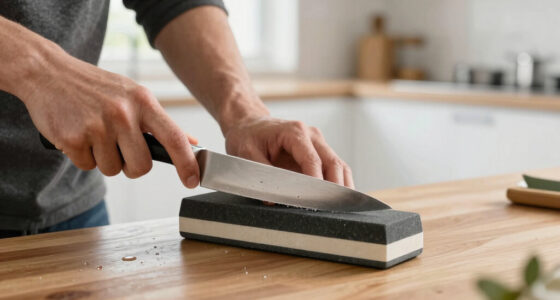
Soaking a whetstone means immersing it in water for a period—often 5 to 20 minutes—before sharpening. This allows water to fill the stone’s pores, making it softer and more lubricated. The result? A smoother feel, better slurry production, and potentially faster cutting on softer steels.
For example, a traditional Japanese natural stone often needs soaking to reach peak performance, providing a creamy slurry that enhances polishing. But be careful—if you soak it too long or leave it submerged, some stones can crack or degrade, especially those with magnesium binders.
In short, soaking helps create a softer, slurry-rich surface, ideal for fine polishing and controlled sharpening. But it takes time, and not all stones benefit equally. Always check manufacturer instructions for your specific stone.
As an affiliate, we earn on qualifying purchases.
What Are Splash-and-Go Whetstones, and How Do They Differ?
Splash-and-go stones are designed to be used without long soaking. They absorb minimal water—usually just enough to wet the surface—and are ready to sharpen after a quick splash or surface wetting. This setup reduces prep time and cleanup, making them perfect for quick touch-ups or busy kitchens.
For instance, many modern ceramic stones are splash-and-go. They stay flat longer, don’t dish as quickly, and dry faster after use. These stones often feel harder, offering crisp bevel control, especially on high-alloy steels that resist cutting.
The main difference? Splash-and-go stones are less porous, so they don’t need soaking, but they still require surface wetting during use. They simplify workflow without sacrificing performance, especially for routine sharpening.
As an affiliate, we earn on qualifying purchases.
How Do Water Absorption and Feel Influence Sharpening?
Water absorption impacts how a stone feels under your fingertips and how it cuts. Soaking stones tend to be softer, offering a creamy, almost buttery feel. This softness produces abundant slurry, which helps polish and smooth the edge. It’s ideal if you like tactile feedback and enjoy slurry-rich polishing.
On the other hand, splash-and-go stones often feel harder and crisper. They provide more direct bevel control, especially on tough steels, because they dish less and maintain their shape longer. However, they may produce less slurry unless conditioned intentionally.
Imagine sharpening a Japanese chef’s knife: a softer, slurry-rich stone can help create a fine, polished edge, but a harder, splash-and-go stone offers crisper feedback for more aggressive sharpening. The choice depends on your preference and steel compatibility.
As an affiliate, we earn on qualifying purchases.
Speed and Cutting Power: What Really Matters?
Many assume soaking stones cut faster because they’re softer, but it’s not that simple. Cutting speed hinges on abrasive type, binder, hardness, and steel alloy. For example, a soft soaking stone with a coarse grit can rapidly remove material on softer steels, but a modern ceramic splash-and-go can outperform it on high-alloy, wear-resistant steels.
Take a case where you’re sharpening a super steel like V-tough V-10: a ceramic splash-and-go with synthetic abrasives might cut just as fast—or faster—than a softer stone designed for soaking. The key is matching your stone to the steel’s hardness and your sharpening style.
Remember, the fastest cutting isn’t always the best finish. Balance speed with control and desired polish.
As an affiliate, we earn on qualifying purchases.
Dishing, Flattening, and Maintenance — What You Need to Know
Softer soaking stones tend to dish more quickly, creating a gentle curve that can help with slurry and feedback but demands frequent flattening. If neglected, dishing can lead to uneven bevels and inconsistent edges.
Harder splash-and-go stones resist dishing longer, maintaining their shape through multiple sessions. However, all stones—soaking or splash-and-go— eventually need flattening, especially coarse grits or when used with pressure.
For instance, a soft, 1k synthetic soakstone may need flattening every few sharpening sessions, while a ceramic 4k might stay flat for months. Routine flattening with a diamond plate keeps the surface true, ensuring even wear and predictable results.
Slurry: Friend or Foe?
Slurry is a mixture of water and abrasive particles that forms during sharpening. Soaking stones are often slurry-rich, which can boost cutting speed and smoothness but may also soften the edge for polishing. Too much slurry can obscure scratch patterns and reduce bevel control.
Many splash-and-go stones produce less slurry unless conditioned with a dressing stone or diamond plate. This makes them cleaner and more predictable, especially for finishing work where control matters.
For example, if you’re polishing a fine kitchen knife, a slurry-free approach with a splash-and-go stone can give you more precise control over the final edge. Conversely, slurry-rich stones excel for heavy material removal and initial flattening.
Drying and Storage — How to Keep Your Stones in Top Shape
Soaking stones can hold significant water, which must dry slowly and evenly to prevent damage. Store them in a well-ventilated area, away from direct sun or freezing temperatures. Proper drying prevents cracking, mold, or odors.
Splash-and-go stones absorb less water and typically dry faster. Still, they should be cleaned and dried before storage to avoid mold or mineral buildup. Keeping them dry extends their lifespan and maintains performance.
Imagine a workshop where soaking stones are left in a damp cabinet—over time, they develop a musty smell and surface issues. Conversely, splash-and-go stones stored in a dry, shaded box stay pristine longer.
Can You Keep a Soaking Stone Permanently Submerged?
Some soaking stones are rated for permanent water immersion, but many are not. Prolonged soaking can weaken binders, cause internal cracking, or lead to unpleasant odors. Always follow manufacturer instructions.
If you do choose to keep a stone submerged, do so in a clean container, change the water regularly, and avoid freezing. For most stones, a brief soak before use is enough—no need to leave them in water constantly.
For example, a natural stone from a reputable source might tolerate a long soak, but a synthetic ceramic or modern abrasive stone often benefits from just surface wetting.
Choosing the Right Stone for Your Steel and Style
Matching your waterstone to your knife’s steel and your sharpening style is key. Soaking stones often suit softer steels, offering a forgiving feel and slurry-rich polishing. Splash-and-go stones excel on hard, wear-resistant steels, providing crisp feedback and quick setup.
For example, if you sharpen Japanese VG-10 or super steels like V-10, a ceramic splash-and-go might be your best bet. For softer, carbon steels, a traditional soaking stone with a gentle slurry could be preferable.
Consider your workflow: do you want quick, routine touch-ups or longer, detailed sessions? That choice guides whether soaking or splash-and-go is better for you.
Myth Busting: What You Should NOT Believe About Waterstones
Many myths circulate about waterstones. For instance, “the longer you soak, the better it cuts”—not true. Excessive soaking can damage some stones. Also, “splash-and-go stones don’t need water”—they still benefit from surface wetting. And a common misconception: “softer stones cut faster”—speed depends heavily on abrasive and steel, not just hardness.
Another myth? “All stones can be stored wet”—most should be dried thoroughly to prevent damage. Recognizing these misconceptions helps you avoid damaging your tools or wasting time.
How to Pick the Perfect Waterstone for Your Needs
If you want a versatile, easy-to-maintain stone, choose a splash-and-go ceramic or synthetic stone suited for high-alloy steels. For more tactile feedback, slurry-rich soaking stones work well, especially if you enjoy polishing or working on softer steels.
Think about your sharpening frequency and environment. If you sharpen often or want quick setup, splash-and-go is ideal. If you prefer a feel and slurry for polishing, a soaking stone might suit you better.
Balance your budget, steel type, and workflow to find the best match. Sometimes, having one of each is the smartest move for a busy kitchen or workshop.
Frequently Asked Questions
How long should I soak a whetstone?
Follow the manufacturer’s instructions. Typically, porous synthetic stones need about 5–20 minutes. Some natural stones require longer, while others may not need soaking at all. Always check specific guidance for your stone to avoid damage.
Can I leave a soaking stone in water permanently?
Only if the manufacturer explicitly states it’s safe. Most stones can weaken or crack if left submerged long-term. For safety and longevity, remove the stone, dry it thoroughly, and store it in a ventilated place.
Do splash-and-go stones really never need soaking?
They generally don’t require soaking, but they still need surface wetting during use. Some benefit from a quick splash or surface wetting to improve cutting and slurry. Always follow the manufacturer’s recommendations.
What happens if I use a soaking stone dry?
It will load quickly, cut inconsistently, and feel harsh. Water is essential for proper slurry formation and lubrication. Using a dry soaking stone can damage the surface and reduce sharpening quality.
Which type lasts longer?
Hard splash-and-go stones often wear more slowly and stay flat longer, but wear depends on abrasive, use, and maintenance. Softer soaking stones may need more frequent flattening and replacement, especially if used heavily.
Conclusion
Understanding the water management difference between soaking and splash-and-go whetstones helps you sharpen smarter, not harder. Pick the type that aligns with your knives, steel, and routine, and don’t neglect proper maintenance. The right stone makes a sharper edge, with less fuss and more confidence.
Next time you reach for your whetstone, ask yourself: do I want a softer, slurry-rich feel, or a quick, precise setup? Your choice shapes your edge—and your kitchen skills.
Grilling season Picks
grills
As an affiliate, we earn on qualifying purchases.