
TL;DR
Open a free Amazon Business account
Business pricing, bulk buying and tax-exempt orders.
Create a free accountAs an affiliate, we earn on qualifying purchases.
Making ground beef at home gives you control over fat, freshness, and flavor. Choose the right cuts like chuck or sirloin, keep everything cold, and grind with care for the best results.
Nothing beats the smell of freshly ground beef sizzling in your cast iron pan. It’s simple, satisfying, and totally within your control. Instead of relying on pre-packaged options, you can pick your cuts and grind only what you need—saving money and boosting flavor.
In this guide, you’ll learn exactly which cuts work best, how to grind safely at home, and tips to make your ground beef turn out juicy and flavorful every time. Whether you’re off-grid or just love doing things yourself, mastering ground beef is a skill worth having.
Choose cuts like chuck or sirloin based on flavor and health goals.
Keep meat and equipment cold to achieve a clean, even grind.
Using a hand-powered grinder offers control and durability for small batches.
Home-ground beef is fresher and more customizable than store-bought options.
Control fat content by trimming meat and blending cuts for perfect texture.
Choose the Best Beef Cuts for Flavor and Moisture
Making ground beef at home starts with picking the right cut. Chuck is king for flavor—rich, slightly fatty, and perfect for burgers. Sirloin offers leaner options without sacrificing taste, ideal if you’re watching fat.
Think of cuts like brisket or round as alternative options—sometimes used for blending or leaner mixes. The key is balancing flavor and moisture. For example, a 70/30 mix of chuck and brisket makes a juicy burger that holds together without being greasy.
Freshness matters. Look for bright red meat, firm to the touch, with minimal liquid in the package. Avoid anything discolored or slimy, which signals age or mishandling.
Understanding how these cuts influence the final product is crucial. Chuck’s marbling provides juiciness and flavor, but too much fat can make the meat greasy if not balanced. Sirloin, being leaner, lends itself to dishes where excess fat is undesirable but may result in drier texture if overcooked or not handled carefully. Blending cuts allows you to tailor the meat’s moisture and flavor profile, giving you control over the final dish’s quality and consistency.
Choosing the right cut isn’t just about flavor—it’s about the cooking process and desired outcome. For instance, fattier cuts like chuck are forgiving if slightly overcooked, remaining moist and flavorful, whereas leaner cuts require more careful cooking to avoid dryness. Balancing these factors lets you craft ground beef suited to various recipes and preferences, making your off-grid kitchen both versatile and satisfying.
As an affiliate, we earn on qualifying purchases.
How to Grind Meat at Home Without a Fancy Machine
- Start with very cold meat—ideally semi-frozen. Cold fat and muscle resist smearing during grinding, helping you achieve a clean, coarse texture that holds together well when cooked. Warm meat tends to become greasy and loses control, leading to a less desirable grind.
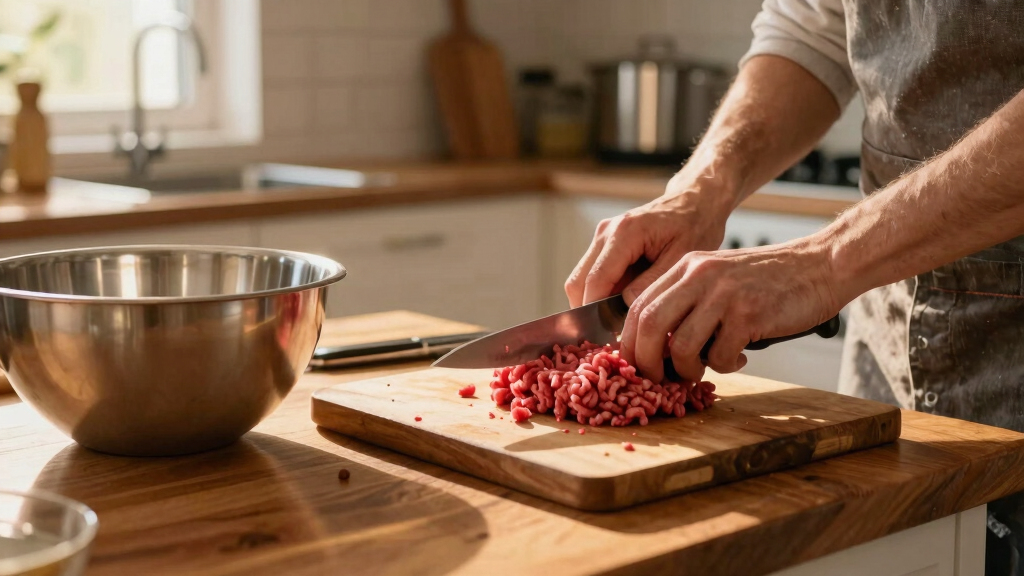
- Cut the meat into small, uniform chunks, about 1-inch cubes. Uniform pieces ensure even grinding and reduce strain on your equipment, which is especially important if you’re using manual tools. This consistency helps prevent over-processing and ensures a more predictable texture.
- Use a hand-powered meat grinder if you have one. Attach it securely to your work surface, and feed the meat slowly, turning the handle steadily. The process gives you tactile control over the grind size, allowing you to adjust as you go and avoid over-processing.
- If you don’t have a grinder, a food processor works in a pinch. Chill the meat and cut into small chunks, then pulse in short bursts until you reach a coarse grind—about the texture of coarse sand. Over-processing can turn the meat pasty and greasy, which affects how it cooks and holds together. Carefully pulsing preserves the meat’s integrity and prevents the formation of a paste.
- For finer texture, grind twice—once coarsely, then again through the same or a finer plate. This double grinding process helps break down connective tissues, resulting in a more tender final product and ensuring the meat holds together better in delicate preparations like meatballs or pâtés. It also allows you to fine-tune the texture according to your dish’s needs.
Keeping everything cold is your secret weapon. It prevents fat from smearing and ensures a clean, even grind. Think of it like working with butter—hot tools melt it, cold keeps it firm. Proper preparation and attention to temperature help you produce a professional-quality grind with minimal equipment.
For example, when I made burger patties last weekend, I froze the chuck for 30 minutes, then carefully ground it twice with my hand grinder. The result was a juicy, flavorful patty that held together perfectly, demonstrating how temperature control and technique make a difference.
As an affiliate, we earn on qualifying purchases.
Compare Grinding Methods: Hand vs. Machine
| Method | Pros | Cons |
|---|---|---|
| Hand-powered grinder | Control, durability, no electricity, great for small batches | Slower, requires physical effort, limited capacity |
| Food processor | Fast, easy, accessible, good for quick small batches | Risk of smearing fat, less control over texture, may be messy |
| Professional grind at butcher | Fast, high-quality, consistent | Less control over ingredients, can be more expensive |
Choosing your method depends on your needs. For off-grid cooks, a sturdy hand grinder is reliable and keeps you in control. If you’re in a hurry or grinding large amounts, a food processor works—but handle it carefully to prevent smearing fat.
For example, I prefer my hand grinder for small batches. It’s quiet, durable, and I can feel the texture developing with each turn—plus, no power needed.
As an affiliate, we earn on qualifying purchases.
Safety Tips for Making Ground Beef at Home
Making ground beef at home is safe when you follow a few simple rules. Keep everything cold—meat, equipment, and your hands. Warmth melts fat, leading to smearing and bacterial growth.
Wash your hands thoroughly before and after handling raw meat. Clean all tools, blades, and surfaces with hot, soapy water immediately afterward. Cross-contamination is a leading cause of foodborne illness.
Cook your ground beef to an internal temperature of 160°F (71°C). Use a reliable thermometer, especially if you’re off-grid and cooking over an open flame or stove.
For example, after grinding last weekend, I sanitized my grinder with vinegar and hot water, then stored it in a clean, dry spot. Proper hygiene keeps your meat safe and your off-grid kitchen healthy.
meat grinder attachment for stand mixer
As an affiliate, we earn on qualifying purchases.
As an affiliate, we earn on qualifying purchases.
Why Making Ground Beef at Home Beats Store-Bought
Home-ground beef is fresher, often more flavorful, and customizable. You decide the cut, the fat ratio, and even add herbs or spices right into the grind. Plus, it’s usually cheaper—buy a chunk of meat, and you get multiple meals without extra packaging.
For instance, I buy a large chuck roast, cut it into 1-pound chunks, and grind it over a few days for burgers, tacos, or pasta sauces. The result? Juicy, tender meat that beats anything pre-ground from the store.
Plus, store-bought ground beef often sits in packaging for days, losing freshness and sometimes absorbing odors. Making your own at home keeps it vibrant and full of flavor.
Recent trends show an increasing interest in blending cuts or using organic, grass-fed beef—giving you even more control over quality and ethics.
Control Fat and Texture for Perfect Ground Beef
The fat content in ground beef impacts juiciness and flavor. To control it, choose your cuts wisely. Chuck typically has about 20-25% fat, making it ideal for juicy burgers. Sirloin has less—around 10-15%—suited for leaner dishes.
However, understanding the implications of fat content helps you make better choices. Higher fat levels can enhance flavor and tenderness but may also lead to greasy results if not balanced or cooked properly. Conversely, leaner meat reduces calorie content but risks drying out or becoming crumbly if overcooked. Trimming excess fat or blending lean and fatty cuts allows you to tailor the meat to your recipe’s needs, balancing health and flavor.
Texture is another factor—grinding once gives a coarser feel, perfect for chili or rustic dishes. Grinding twice produces a finer, more uniform meat, which is ideal for patties or meatballs where a tender, cohesive texture is desired. Experimenting with grind size and fat levels enables you to customize your ground beef for different recipes, ensuring optimal flavor and texture.
For example, I often mix chuck with a small amount of pork fat, then grind twice. This hybrid blend results in a juicy, tender burger that’s not greasy, demonstrating how controlling fat and grind size can elevate your homemade ground beef.
Understanding these tradeoffs—such as the balance between flavor and health or tenderness and moisture—helps you make informed decisions. For instance, opting for leaner cuts might require additional moisture or fat in the recipe, like adding a bit of bacon fat or using a blend. Recognizing how these choices affect the final dish empowers you to craft meat that aligns with your taste and dietary goals, especially in an off-grid setting where ingredient flexibility is key.
Frequently Asked Questions
How do I choose the best cut of beef for grinding?
Look for cuts like chuck for flavor and fat, sirloin for leaner options, or blend cuts for a balance. Freshness matters—bright red, firm meat with minimal liquid in the package.
Can I grind meat at home without a special grinder?
Yes, a food processor can work in a pinch. Chill the meat, cut into small chunks, pulse carefully, and avoid over-processing to keep the texture coarse and avoid smearing fat.
What equipment do I need to grind beef at home?
A sturdy hand-powered meat grinder is ideal for control and durability. Alternatively, a food processor can do the job, but handle it carefully to prevent smearing fat and losing texture.
How do I ensure the ground beef is safe to eat?
Keep everything cold—meat, tools, workspace. Handle raw meat with clean hands, sanitize equipment immediately after use, and cook to an internal temperature of 160°F (71°C).
What are some tips for achieving the right texture and flavor?
Use cold, fresh meat; grind once or twice depending on desired coarseness; blend cuts for flavor; and don’t over-handle—gentle, steady work yields the best result.
Conclusion
Making ground beef at home isn’t just about cost—it’s about craft. You control every step, from cut to grind, creating meat that’s fresher, juicier, and tailored to your taste.
Next time you see a big chunk of beef, think of the potential—ground, seasoned, and cooked with your own hands. That’s real self-reliance in the kitchen.
Fall Picks
fall essentials
As an affiliate, we earn on qualifying purchases.