
TL;DR

Get kitchen gear delivered free — and shop member deals
- Fast, free delivery on millions of items
- Access to Prime Big Deal Days deals on October 6–7
- Prime Video, Amazon Music and more included
Seasoning a carbon steel wok creates a durable, non-stick surface that improves with use. Proper prep, choosing the right oil, and multiple seasoning layers are key. Ongoing care extends its life and cooking performance.
Use high smoke point oils like flaxseed or grapeseed for a durable seasoning layer.
Repeat the seasoning process multiple times—at least 3-4 layers—for the best non-stick surface.
Clean your wok with hot water and a soft brush—avoid soap—then dry thoroughly after each use.
Regular use and proper maintenance improve your wok’s seasoning over time.
Oven seasoning at high temperatures creates a more even, long-lasting coating.
What Does Proper Seasoning Actually Do for Your Wok?
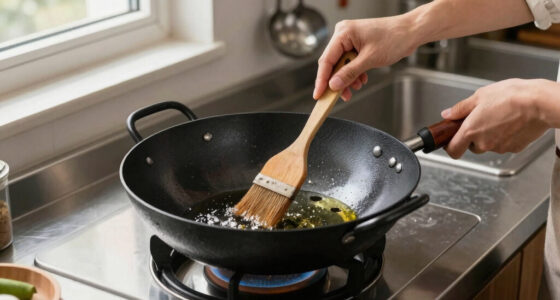
Seasoning isn’t just about making your wok slick. It builds a protective, non-stick layer that improves with every use. Think of it as a natural coating made from the polymerized oils that fill tiny pores and scratches.
This layer prevents rust, keeps flavors in check, and enhances cooking over time. A well-seasoned wok is like a cast iron skillet’s twin—robust, reliable, and full of character. For example, after a few weeks of regular stir-frying, a carbon steel wok develops a dark, smooth surface that food slides right off.
Deepening the seasoning layer is crucial because it directly affects your cooking experience. A thicker, more polymerized coating provides better non-stick properties, reducing the need for excessive oil and making cleanup easier. However, achieving this depth requires patience, consistent use, and proper maintenance—skimping on these steps can lead to uneven seasoning or a surface that sticks. The process is a balancing act: too much oil too quickly can create a sticky, uneven layer, while too little may result in a weak protective coating. Understanding this helps you develop a seasoned wok that truly enhances your cooking over time.
As an affiliate, we earn on qualifying purchases.
Step-by-Step Guide to Season Your Carbon Steel Wok Like a Pro
- Clean it thoroughly. Use hot water and a scrub brush or steel wool to remove factory coatings or oil residues. Dry completely—any moisture will cause rust.
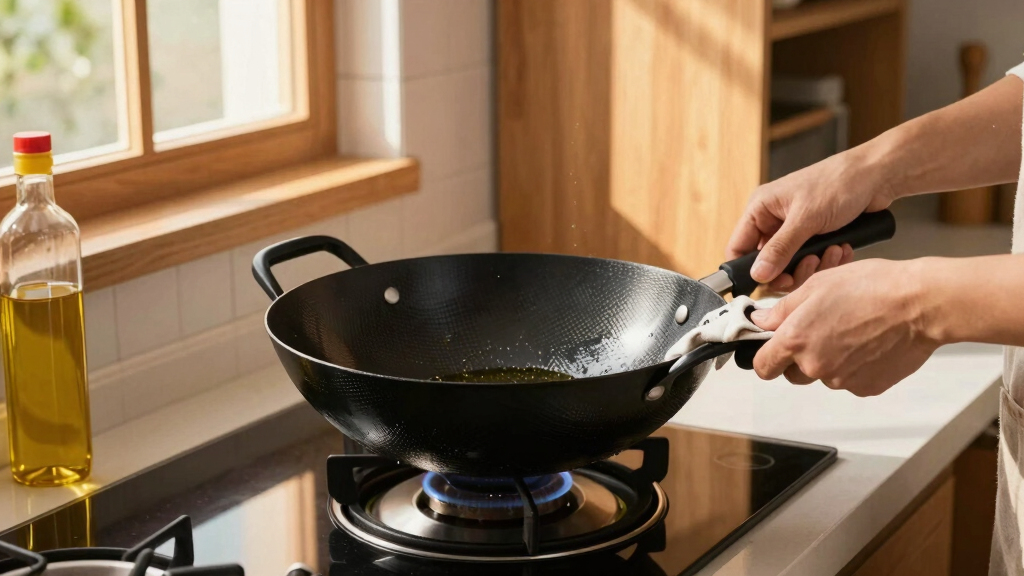
- Heat the wok until hot. Place it over your stove until it starts to smoke slightly. This opens up pores for the oil to penetrate.
- Apply a thin coat of oil. Use a high smoke point oil like grapeseed or flaxseed. Rub it in all over, inside and out, with a paper towel.
- Heat until the oil polymerizes. Keep heating until you see smoke, then turn off the heat. Repeat this process 3-4 times for a strong baseline.
- Cook with the wok regularly. Each use adds layers of seasoning. After cooking, wipe out any residual oil and store in a dry place.
Remember, patience is key here. Building a good seasoning layer isn’t instant; it’s about repeated, deliberate layers that polymerize into a durable, non-stick surface. Each step builds upon the last, and rushing can lead to uneven coating or sticky spots. Over time, these layers meld into a smooth, resilient patina that improves with each use, making your wok more responsive and easier to clean. The process may seem slow at first, but the payoff is a lifetime of better cooking results and less maintenance.
high smoke point cooking oils for wok
As an affiliate, we earn on qualifying purchases.
As an affiliate, we earn on qualifying purchases.
Best Oils for Seasoning and Why They Matter
| Oil Type | Smoke Point | Pros | Cons |
|---|---|---|---|
| Flaxseed Oil | ~225°C (437°F) | Creates a durable, hard coating after multiple layers | Expensive, can be sticky if over-applied |
| Grapeseed Oil | >220°C (428°F) | Neutral flavor, high smoke point, easy to work with | Less durable than flaxseed after multiple layers |
| Vegetable Oil | ~204°C (400°F) | Affordable, widely available | May produce a softer seasoning layer |
Choosing the right oil is essential because it directly impacts the durability and quality of your seasoning layer. Oils with higher smoke points, like flaxseed or grapeseed, polymerize more effectively at high temperatures, forming a stronger, more resilient coating. However, each oil’s unique properties influence the final surface: flaxseed is known for creating a very hard, glass-like finish after several layers, which is excellent for longevity but can be sticky if applied too thickly or too often. Grape seed offers a good balance—easy to work with and less prone to stickiness, but it may not build as thick a layer over time.
Understanding these tradeoffs helps you tailor your seasoning process. For example, if you want a quick, initial build-up, vegetable oil can be sufficient, but for long-term durability, investing in flaxseed or grapeseed is worthwhile. Ultimately, the choice depends on your cooking style, budget, and patience for multiple seasoning layers. The right oil ensures a more consistent, effective seasoning, reducing the need for rework and extending your wok’s lifespan.
As an affiliate, we earn on qualifying purchases.
How to Maintain Your Wok After Seasoning
Once seasoned, your wok needs regular care to keep that non-stick layer intact. After cooking, wipe it clean with hot water and a soft brush. Avoid soap, which can strip the seasoning.
Dry the wok immediately—moisture is the enemy. Lightly coat it with a bit of oil before storing. If the surface starts to dull or sticky, it’s time for a quick re-seasoning session.
Proper maintenance isn’t just about cleaning—it’s about understanding how daily use affects your wok’s surface. Frequent washing with soap can erode the seasoning, especially if it’s not fully developed yet. Similarly, storing a damp wok invites rust, which compromises the seasoning’s integrity. Regularly applying a thin layer of oil after cleaning helps reinforce the coating, making it more resistant to moisture and wear. When the surface begins to lose its luster or food starts sticking more than usual, it’s a sign that additional seasoning layers are needed. Re-seasoning periodically prolongs the life of your wok and keeps it performing at its best, ensuring that each stir-fry is smooth and effortless.
As an affiliate, we earn on qualifying purchases.
Recent Trends That Make Seasoning Easier and Better
Today, many cooks are turning to oven seasoning to get a more even, durable coating. Just heat your oven to 450°F (232°C), rub on a thin layer of flaxseed oil, and bake the wok for an hour. Repeat if needed.
Pre-seasoned woks are common, but re-season them yourself for the best results. Also, eco-conscious cooks prefer natural, food-safe oils for seasoning, which creates a healthier, more sustainable layer.
For example, a chef in an off-grid setting might skip the stove and bake their wok in a solar oven for a deep, even seasoning.
Modern techniques like oven seasoning help achieve a more uniform coating because they allow for controlled, consistent heat application. This method reduces the risk of uneven layers that can happen with stovetop seasoning, especially if heat distribution is uneven or if oils are applied too thickly. Using natural, food-safe oils aligns with sustainable practices and health-conscious cooking, ensuring your seasoning layer is free from synthetic additives. These innovations make the process more accessible, reliable, and environmentally friendly, ultimately leading to a more durable and effective seasoned wok that improves with each cycle.
Frequently Asked Questions
How do I know when my wok is properly seasoned?
It should develop a dark, smooth, slightly shiny surface. Food will start to slide off easily, and the surface will feel slick to the touch after a few weeks of regular use.Can I use soap to clean my seasoned wok?
It’s best to avoid soap because it can strip the seasoning. Use hot water and a soft brush instead. After cleaning, dry thoroughly and apply a light coat of oil.How often should I re-season my wok?
Re-season when the surface becomes dull, sticky, or shows signs of rust. Regular use generally keeps the seasoning fresh, but a quick re-do every few months helps.What oils are best for seasoning?
High smoke point oils like flaxseed, grapeseed, or vegetable oil work best. They polymerize into a hard, durable coating that improves with each layer.Why is my wok sticking even after seasoning?
It might need more seasoning layers or a thorough cleaning. Sometimes, rust or residual factory coating can cause sticking—scrubbing it out and re-seasoning solves this.Conclusion
A well-seasoned carbon steel wok isn’t built in a day. It’s a process of layers, patience, and regular use. Think of it as crafting a tool that gets better with every stir-fry, every scrape, every time you cook. Your effort turns simple iron into a kitchen legend.Halloween Picks
halloween
As an affiliate, we earn on qualifying purchases.