
TL;DR

Get kitchen gear delivered free — and shop member deals
- Fast, free delivery on millions of items
- Access to Prime Big Deal Days deals on October 6–7
- Prime Video, Amazon Music and more included
Seasoning a carbon steel wok involves cleaning, applying thin layers of high smoke point oil, and heating until a dark, durable patina forms. Regular use and maintenance prevent rust and improve non-stick performance over time.
Start with a thorough cleaning—scrub off factory coating or rust with steel wool, then dry completely.
Use high smoke point oils like flaxseed or grapeseed, applying thin layers for even coverage.
Repeat the heating and oiling process 3-5 times to develop a strong, dark patina.
Maintain by regularly cooking with oil, avoiding soap, and re-seasoning when sticking or rust appears.
Oven seasoning offers even coating, while stovetop is quick for touch-ups; choose based on your setup.
Why Proper Seasoning Makes or Breaks Your Wok
Seasoning isn’t just about making your wok look dark and cool. It creates a natural non-stick coating, protects against rust, and even enhances flavor as you cook. When seasoned well, your wok responds faster to heat and food slides around effortlessly.
Imagine tossing sliced vegetables into a shiny, dark surface that sizzles and releases them with a gentle shake. That’s the power of a good seasoning. Without it, you get sticking, rust, and frustration. An unseasoned wok is like a blank canvas — it needs that protective coating to become your favorite kitchen tool.
As an affiliate, we earn on qualifying purchases.
How to Clean Your Wok Before the First Season
The first step is removing any factory coating or rust. Use hot water and a stiff brush or steel wool. Don’t use soap — it can strip away your future seasoning. Scrub until the surface feels smooth and shiny, then rinse thoroughly.
Dry the wok immediately and completely. A towel or heating on the stove until no moisture remains helps prevent rust from forming during the next steps.
Example: I once bought a new carbon steel wok, and the factory coating felt greasy. A vigorous scrub with hot water and steel wool, then a quick dry, set me up for a perfect seasoning process.
high smoke point cooking oils for wok
As an affiliate, we earn on qualifying purchases.
As an affiliate, we earn on qualifying purchases.
Choosing the Best Oil for Seasoning Your Wok
The best oils for seasoning are those with high smoke points, which resist burning at high temperatures. Common favorites include vegetable oil, grapeseed oil, and flaxseed oil. Flaxseed, in particular, polymerizes into a very hard, durable surface, but it requires careful heating.
Some people prefer multiple thin coats of oil over one thick layer. This helps build a smooth, even patina without sticky spots.
Example: I seasoned my wok with grapeseed oil, which has a smoke point of about 420°F. After five coats, the surface turned dark and slick — perfect for stir-fry.
Choosing the right oil matters because it affects the durability and non-stick quality of your seasoning layer. Oils with higher smoke points can withstand the intense heat needed to polymerize and form a hard, protective coating. Conversely, oils with lower smoke points risk burning and creating uneven or sticky layers, which can compromise your wok’s performance and longevity.
As an affiliate, we earn on qualifying purchases.
The Step-by-Step Process to Season Like a Pro
- Heat the wok on high until it’s very hot — almost smoking.
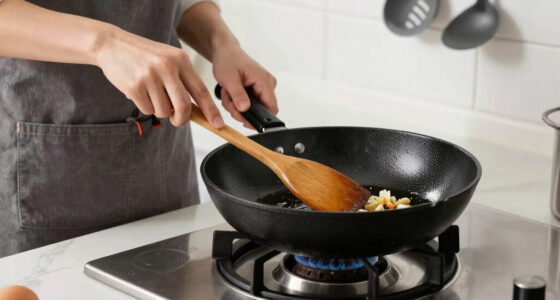
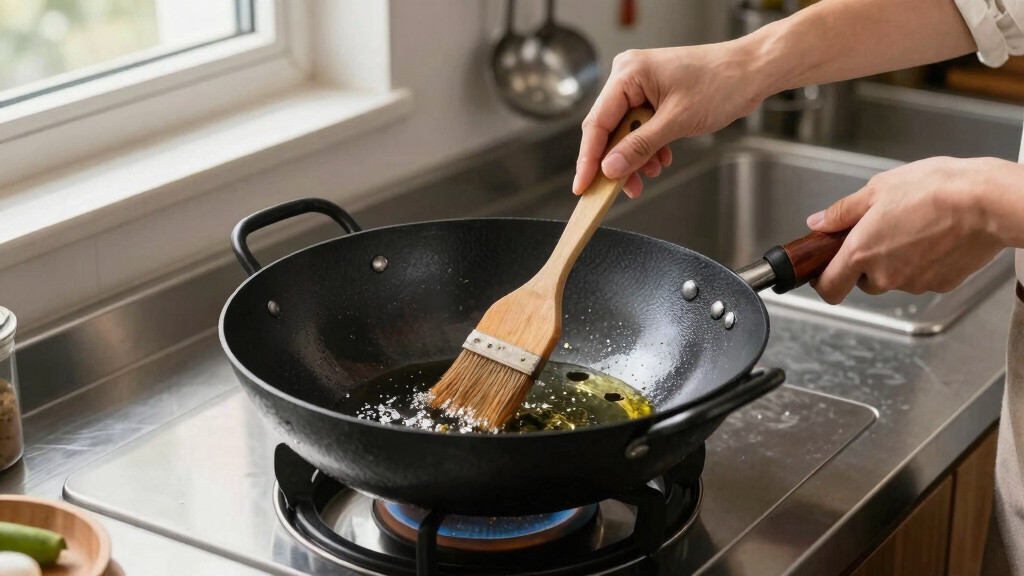
- Use a cloth or paper towel to wipe a thin layer of high smoke point oil all over the surface.
- Place the wok in a 400-500°F oven or on the stove’s burner, keep heating until the surface glows dark and the oil smokes lightly.
- Repeat the oil application and heating process 3-5 times, letting each coat cool slightly between layers.
- Finish by cooling the wok, then wipe away any excess oil. Your wok should now have a dark, smooth, slightly shiny surface.
Example: I did this in my oven, baking at 450°F for 1 hour, then letting it cool naturally. The result? A non-stick surface that improves with each use.
Properly seasoning your wok is about patience and consistency. Multiple thin layers allow the polymerization process to develop a durable, non-stick surface without sticky spots or uneven patches. Rushing this step by applying too much oil or heating unevenly can lead to a sticky, uneven coating that diminishes your wok’s performance over time. Take your time, and you’ll be rewarded with a surface that gets better with each use, resisting rust and sticking more effectively.
wok maintenance and re-seasoning tools
As an affiliate, we earn on qualifying purchases.
As an affiliate, we earn on qualifying purchases.
Maintaining Your Wok’s Seasoning Over Time
Use your wok regularly. Cooking with oil helps the seasoning layer grow stronger. After each use, rinse with hot water and a soft brush. Avoid soap, which can strip the surface.
If food starts sticking or rust appears, it’s time to re-season. Lightly scrub, dry, and apply a thin coat of oil, then heat again to refresh the patina.
Pro tip: After cooking, wipe the wok with a paper towel lightly coated in oil. This keeps the surface seasoned and rust-free, even off-grid.
Maintaining your wok’s seasoning is about understanding the balance between use and care. Regular cooking with oil continuously feeds the polymerization process, strengthening the non-stick layer. Skipping seasoning or neglecting cleaning can lead to rust or sticky spots, which compromise your wok’s performance. Re-season when needed—especially if food starts sticking or rust appears. A simple wipe with oil after cooking seals the surface, preventing moisture from causing corrosion. This proactive approach ensures your wok remains non-stick, rust-free, and ready for the next meal, even in off-grid situations where resources are limited.
Latest Trends — New Techniques and Oils for Better Seasoning
Oven seasoning has become popular because it provides even coating and less mess. Just coat, bake at 450°F, and repeat a few times. It’s simple and effective.
Flaxseed oil is now favored for its ability to polymerize into a hard, durable layer, but it demands precise heating to avoid sticky spots. Growing awareness of eco-friendly, food-safe oils has also encouraged using cold-pressed vegetable or grapeseed oils.
Pre-seasoned woks are available but often benefit from extra layers for optimal non-stick performance and flavor development. The choice of technique and oil can significantly influence how quickly and effectively your wok develops a robust, non-stick surface. For example, oven seasoning provides uniform coverage without the risk of uneven heating that can happen on a stovetop. Meanwhile, newer oils like flaxseed, which polymerize into a particularly hard layer, require careful attention to temperature to prevent sticky spots. Combining these techniques with eco-friendly oils aligns with sustainable practices and enhances the flavor profile of your cooking surface over time.
Compare Your Options — Ovens, Stovetop, and Oils
| Method | Pros | Cons |
|---|---|---|
| Oven seasoning | Even coating, hands-off, repeatable | Takes time, less control over heat |
| Stovetop seasoning | Quick, direct control, good for touch-ups | Uneven coating, risk of hot spots |
| Oils | High smoke point, durable surface | Requires careful application, possible sticky spots |
Choosing the right combo depends on your setup. Oven seasoning paired with high smoke point oils like flaxseed often yields the best patina.
Understanding the tradeoffs between these methods helps you tailor your approach for optimal results. Oven seasoning ensures a uniform, durable layer, which is ideal for those who prefer minimal fuss and consistent quality. Stovetop methods allow quick touch-ups and adjustments but require more attention to avoid uneven spots. The choice of oils influences the final durability and surface quality; high smoke point oils like flaxseed polymerize better, creating a more resilient coating. Weighing these factors allows you to develop a seasoning routine that matches your cooking style and resource availability, ensuring your wok remains in top shape for years to come.
What Happens If You Don’t Season Properly?
If you skip proper seasoning, your wok is prone to rust, sticking, and damage. Without that protective layer, moisture causes corrosion, and food sticks to raw metal. Over time, the surface can become pitted and unusable.
Imagine cooking a stir-fry and watching ingredients cling or burn because the surface isn’t non-stick. Rust spots can develop unnoticed, weakening the metal and leading to holes or structural failure. Proper seasoning creates a barrier that repels moisture, prevents rust, and ensures that food slides smoothly, reducing frustration and extending your wok’s lifespan. Neglecting this step trades short-term convenience for long-term repairs or replacement, which can be costly and time-consuming, especially in off-grid settings where resources are limited.
Bottom line: a well-seasoned wok is your best defense against rust and sticking, saving time and frustration.
FAQs: Your Burning Questions About Seasoning Woks
- How long does it take to properly season a wok? Several layers over days or weeks build a strong patina. The initial process can be done in a few hours, but patience pays off.
- Can I use soap after seasoning? It’s best to avoid soap after the first few cleans. Hot water and a brush preserve the patina and non-stick surface.
- How often should I re-season? When food sticks or rust appears, or after cleaning with soap, give your wok a quick re-seasoning.
- Is pre-seasoned wok enough? It’s a good start, but extra seasoning layers develop a better non-stick surface and flavor over time.
- What oils work best? Flaxseed, grapeseed, and vegetable oils with high smoke points are preferred for durability.
- Can I cook acidic foods? Acidic ingredients can strip the seasoning. Save tomatoes or vinegar-based dishes for later once your wok is well seasoned.
- How do I fix rust spots? Use steel wool or a scrub brush to remove rust, then re-season to restore the surface.
Understanding the importance of proper seasoning and maintenance helps you get the most out of your wok. Regular care, such as cleaning with hot water, reapplying oil, and avoiding harsh detergents, ensures your wok develops a resilient, non-stick surface that performs beautifully. Address rust promptly and re-season as needed to keep your wok in prime condition. These practices not only extend the life of your cookware but also improve your cooking results, making every stir-fry or sauté a pleasure rather than a chore.
Frequently Asked Questions
How long does it take to properly season a wok?
Multiple coats over days or weeks build a durable patina, but the initial seasoning can be done in a few hours. Patience pays off for long-term performance.Can I use soap to clean my seasoned wok?
It’s best to avoid soap after the initial cleaning. Hot water and a soft brush help preserve the seasoning, ensuring your wok stays non-stick and rust-free.How often should I re-season my wok?
Re-season whenever food starts sticking, rust appears, or after cleaning with soap. Regular use naturally refreshes the surface.Is pre-seasoned wok enough to start?
Pre-seasoned woks are ready to cook, but adding extra layers with oil and heat improves non-stick qualities and deepens flavor.What oils are best for seasoning?
High smoke point oils like flaxseed, grapeseed, or vegetable oil work best for creating a durable, smooth patina.Conclusion
A well-seasoned wok becomes more than just a pan — it’s a trusted partner in your off-grid kitchen. It responds quickly, cooks evenly, and gets better with every stir-fry. Keep up with simple maintenance, and your wok will serve you for decades, developing a rich, natural non-stick surface that’s worth every effort.Fall Picks
fall essentials
As an affiliate, we earn on qualifying purchases.