
TL;DR

Get kitchen gear delivered free — and shop member deals
- Fast, free delivery on millions of items
- Access to Prime Big Deal Days deals on October 6–7
- Prime Video, Amazon Music and more included
Brewing coffee on a camp stove is straightforward when you choose the right equipment, use proper grind sizes, and control water temperature. Whether boiling grounds directly or using a portable device, your outdoor coffee can be rich and flavorful.
Imagine waking up in a tent, the morning sun filtering through the trees. You reach for your favorite mug, and with a few simple steps, you brew a hot, aromatic cup right on your camp stove. No fuss, no fancy equipment—just real coffee made with your hands, in the wild.
If you value self-reliance and savor a good brew even off-grid, knowing how to brew coffee on a camp stove is a game-changer. This guide walks you through every step, from choosing the right gear to avoiding common pitfalls, so your outdoor coffee is as satisfying as the view around you.
Choosing durable, simple equipment like a French press or Moka pot simplifies outdoor brewing.
Coarse grind size and water just below boiling are crucial for a flavorful, smooth coffee.
Proper setup and safety precautions prevent spills, accidents, and bitterness.
Preheating equipment and using insulated mugs keep your coffee hot longer.
Practice makes perfect—test your method at home before your next outdoor adventure.
How to Brew Coffee on a Camp Stove
TL;DR: Brewing coffee outdoors is straightforward when you match your brewer to the trip, use the right grind, and keep water just below a hard boil. The reward is rich, aromatic coffee made with your own hands, even miles from the nearest café.
Aim for just below boiling to protect sweetness and avoid harsh, over-extracted flavors.
Long enough for body, short enough to prevent bitterness in French press or pot methods.
Coarser grounds plus gentle heat are the two biggest upgrades for smooth camp coffee.
Choose the brewer that fits the morning.
Durability, pack space, cleanup, and flavor all matter more outdoors. A sturdy kettle or pot is the foundation; the brewer determines body, speed, and how much attention the cup needs.
French Press
Rich flavor and easy technique. Choose metal or rugged plastic over fragile glass for trail use.
Percolator
Classic, hot, and durable. Watch the heat closely so the cycle does not over-extract.
AeroPress / Dripper
Fast, lightweight, and clean-tasting. Best when you can pour steadily and pack filters.
Moka Pot
Espresso-like intensity on the stove. Needs careful handling because metal heats quickly.
Match method to flavor, weight, and attention.
There is no single perfect camp coffee tool. The best choice is the one that keeps your routine simple while still producing the cup you actually want to drink.
| Type | Pros | Watch-Out | Grind | Best For | Beginner Ease |
|---|---|---|---|---|---|
| French Press | Rich body, low fuss, easy cleanup | ~ Glass models can break | Coarse | Relaxed mornings | ✓ |
| Percolator | Durable, strong, heats evenly | ~ Can turn bitter if boiled hard | Coarse | Rugged conditions | ~ |
| AeroPress / Dripper | Compact, fast, versatile | ~ Requires controlled pouring | Medium | Quick clean cups | ✓ |
| Moka Pot | Strong, concentrated, satisfying | ✗ Hot metal needs care | Medium-fine | Espresso-style coffee | ~ |
| Direct Pot | Minimal gear, works anywhere | ✗ Sediment and easy over-brewing | Very coarse | Backup brewing | ✓ |
A clean cup comes from a calm sequence.
Camp stoves can run hot, so the process is less about power and more about control. Stabilize the stove, heat clean water, pause after boiling, then brew with patience.
Set Up
Place the stove on level ground and keep loose gear away from the flame.
Heat Water
Bring potable water near boiling, then let it settle briefly before brewing.
Add Grounds
Use coarse grounds for press, percolator, or direct pot methods.
Brew Gently
Steep or cycle without vigorous boiling to preserve sweetness.
Serve Hot
Pre-warm an insulated mug or thermos so the cup lasts longer.
Grind, heat, and time decide the cup.
Freshly ground beans help, but the grind must match the brewer. Too fine can clog or over-extract; too coarse can taste thin. The sweet spot is controlled extraction.
Water Temperature Target
Field rule: after water reaches a boil, take it off direct heat for a short pause before pouring or steeping. That tiny wait helps prevent burnt, bitter flavors.
The common problems have simple fixes.
Most bad camp coffee comes from unstable setup, over-boiling, fine grounds, or letting the brew sit too long. Solve those and the ritual becomes dependable.
French press or direct pot.
Both need minimal gear and work well when you use coarse grounds and controlled steeping.
Lower the aggression.
Avoid vigorous boiling, shorten steep time, and keep grounds coarse for smoother extraction.
Pre-warm the mug.
Swirl hot water in an insulated mug or thermos before filling it with brewed coffee.
From wild morning to reliable ritual.
The best outdoor coffee is not complicated. It is a chain of small choices that protect flavor, reduce mess, and keep the morning moving.
Conclusion: brewing coffee on a camp stove is not just survival caffeine. With reliable gear, coarse grounds, clean water, and a little heat control, a basic brew becomes a satisfying outdoor ritual.
Pick the Right Equipment for Your Outdoor Coffee Fix
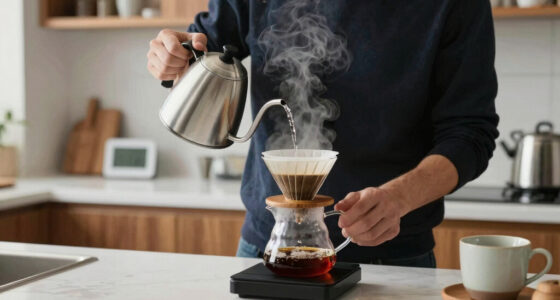
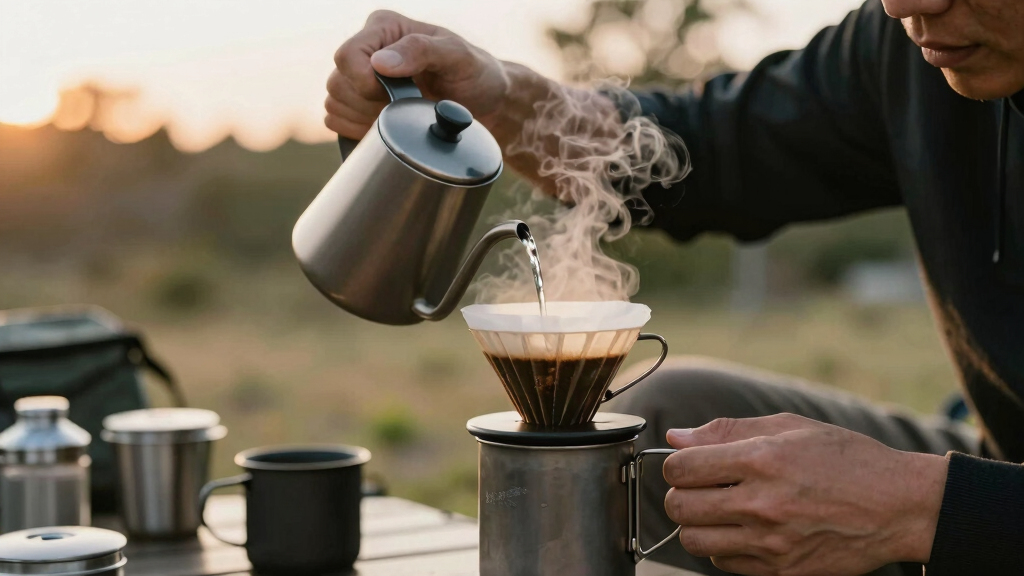
Choosing the right setup makes all the difference. A durable French press can handle rough terrain and delivers rich, full-bodied coffee. A percolator heats evenly and is nearly indestructible—perfect for campfire vibes. For something compact, a pour-over cone like an AeroPress or a collapsible dripper offers quick, clean brewing without taking up much space.
Here’s a quick comparison:
| Type | Pros | Cons | Best For |
|---|---|---|---|
| French Press | Rich flavor, easy to clean | Fragile glass models, takes longer | Full-bodied coffee, relaxed mornings |
| Percolator | Durable, heats evenly | Can over-extract if not careful | Strong, hot coffee in rugged conditions |
| AeroPress / Portable Dripper | Compact, fast, versatile | Requires careful pouring | Quick, clean brew on the go |
| Moka Pot | Espresso-like strength | Heats quickly, needs careful handling | Strong, concentrated coffee |
Pick based on your space, durability needs, and preferred coffee style. Remember, a sturdy kettle or pot to boil water is a must regardless of your brewing method. The choice of equipment affects not only flavor but also convenience, weight, and durability—factors that matter when you’re miles from the nearest café. Investing in reliable gear ensures consistent results and reduces frustration, allowing you to focus on enjoying your outdoor experience.
As an affiliate, we earn on qualifying purchases.
Choosing Coffee and Grind Size That Actually Works Outdoors
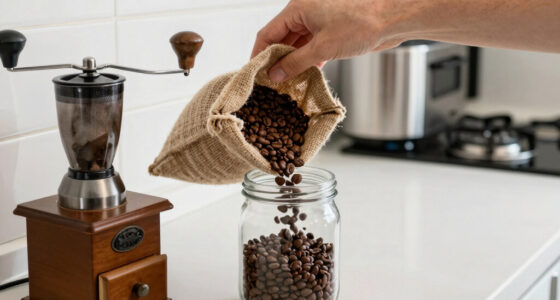
Freshly ground beans make a real difference—aroma, flavor, all of it. For camp stove brewing, coarser grounds are your friend. They prevent over-extraction and clogging, especially in methods like French presses or percolators. The grind size influences extraction rate: too fine, and the water struggles to flow through, leading to over-extraction that makes your coffee bitter; too coarse, and it may under-extract, resulting in a weak, watery brew.
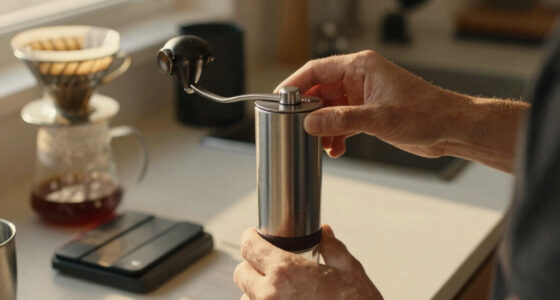
Think of it like this: a French press needs a grind similar to coarse sea salt, allowing water to steep slowly without over-extracting bitter compounds. A pour-over or AeroPress benefits from a medium grind, similar to sand, which balances extraction speed and flavor. Using the wrong grind can turn your morning coffee bitter or weak, diminishing the enjoyment of your outdoor experience. So, grind just before brewing to lock in freshness and optimize flavor extraction, which is crucial when your resources are limited and you want every cup to count.
As an affiliate, we earn on qualifying purchases.
Frequently Asked Questions
What is the easiest way to brew coffee on a camp stove?
The simplest method is boiling water with grounds directly in a pot or using a French press. Both require minimal gear and deliver decent flavor quickly.
What equipment do I need for camping coffee?
At minimum, a kettle or pot for boiling water plus a French press, percolator, AeroPress, or Moka pot. Add a coffee grinder if you prefer fresh grounds.
How do I prevent my coffee from tasting burnt or bitter?
Use coarser grounds, avoid vigorous boiling, and limit steeping time to 3–4 minutes. These steps help preserve the coffee’s natural sweetness and smoothness.
Can I use instant coffee instead of brewing?
Yes, instant coffee offers a quick, hassle-free option. Just add hot water—perfect when time or gear are limited or for a quick caffeine fix.
How do I keep my coffee hot while camping?
Transfer brewed coffee into an insulated mug or thermos. Pre-warming your mug with hot water also helps it stay warm longer.
As an affiliate, we earn on qualifying purchases.
Conclusion
Brewing coffee on a camp stove isn’t just about survival—it’s about savoring the moment. With a little practice, you can craft a rich, satisfying cup that fuels your outdoor adventures and makes mornings memorable.
Remember, simplicity and attention to detail turn a basic brew into a ritual. So next time you’re out in the wild, take that extra minute. Your taste buds will thank you—and so will your sense of self-reliance.
As an affiliate, we earn on qualifying purchases.
Fall Picks
fall essentials
As an affiliate, we earn on qualifying purchases.