
TL;DR
Open a free Amazon Business account
Business pricing, bulk buying and tax-exempt orders.
Create a free accountAs an affiliate, we earn on qualifying purchases.
Deep cleaning cast iron involves removing rust and buildup with salt, vinegar, or electrolysis, then re-seasoning. Proper maintenance keeps your cookware rust-free and long-lasting.
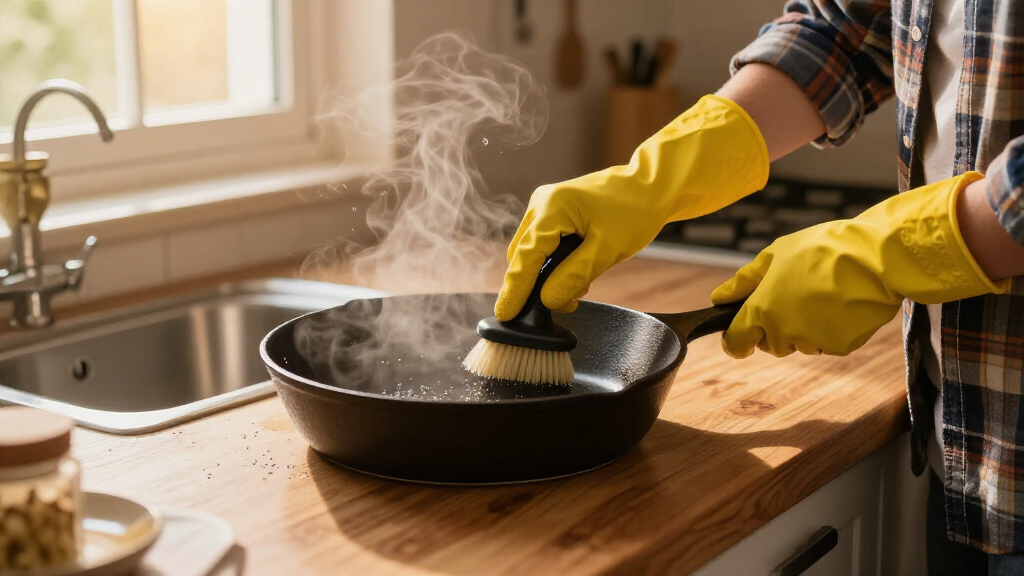
If your cast iron skillet has seen better days—rust creeping in, stubborn grime, or a dull surface—you’re not alone. Deep cleaning isn’t just about aesthetics; it’s about reclaiming the pan’s non-stick surface and ensuring it lasts for decades. This guide walks you through proven, practical ways to breathe new life into your cast iron, whether it’s a family heirloom or a daily workhorse.
Forget hype and gimmicks. Here, you’ll find straightforward methods, real-world examples, and tools that actually work. Ready to get your cast iron gleaming and performing like new? Let’s dive into the best practices for deep cleaning your favorite piece of cookware.
Use salt scrubbing for routine grime and light rust, avoiding damage to seasoning.
Vinegar soak is best reserved for heavy rust, but don’t overdo it—limit to 2-4 hours.
Electrolysis offers a chemical-free way to restore heavily rusted cast iron without damaging the surface.
Always dry thoroughly and re-season after deep cleaning to restore non-stick qualities.
Avoid harsh abrasives and prolonged water exposure to prevent unnecessary damage or rust.
Why Deep Cleaning Is Worth It (And When to Do It)
Deep cleaning cast iron isn’t just for rust or stubborn grime. It’s about restoring the surface to a non-stick, rust-free state that keeps your food tasting better and your pan lasting for generations. When you notice food sticking more than usual, rust spots, or a dull, gray finish, it’s time for a thorough scrub-down.
For example, after a summer of outdoor camping with your cast iron, you might find it needs a deep clean to remove old seasoning layers and residual moisture. Regular maintenance—like wiping with oil—prevents this, but deep cleaning is your rescue when the surface gets out of hand.
Remember, deep cleaning is the purpose of removing layers of old seasoning, rust, or baked-on food that regular washing can’t handle. It’s a necessary step if you want your cast iron to perform at its best for years to come.
As an affiliate, we earn on qualifying purchases.
Step-by-Step Guide to Deep Cleaning Cast Iron
- Remove loose debris with a stiff brush or steel wool, scrubbing until the surface is clear of food and rust.
- Choose your cleaning method: salt scrub, vinegar soak, or electrolysis, based on how stubborn the grime or rust is.
- If using salt, sprinkle generously and scrub with a damp cloth or chainmail scrubber, focusing on rust patches and stuck-on bits.
- For rust, soak in vinegar (1 part vinegar, 4 parts water) for a few hours, then scrub off rust with steel wool.
- If opting for electrolysis, set up a simple bath with water and washing soda, connect your pan and a battery charger, then let it work for a few hours.
- After rust removal, rinse thoroughly and dry completely—this is crucial to prevent new rust from forming.
- Re-season your cast iron by applying a thin layer of oil and baking at 450-500°F for at least an hour.
This process transforms a grimy, rusted piece into a smooth, non-stick masterpiece ready for use.
As an affiliate, we earn on qualifying purchases.
Salt Scrubbing: The Classic Cast Iron Rescue
Salt scrubbing is a tried-and-true method to tackle baked-on food and surface rust without harsh chemicals. It’s like using a natural abrasive that’s gentle on your seasoning but tough on grime.
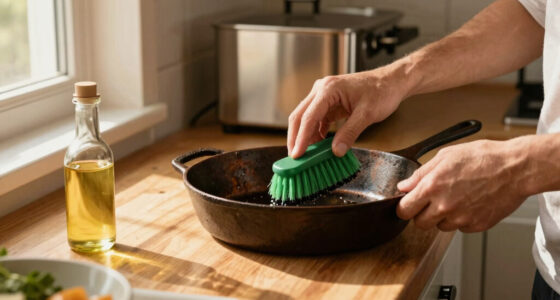
Imagine your skillet coated in a sticky film after cooking greasy bacon. Sprinkling a generous handful of coarse kosher salt and scrubbing with a damp cloth or chainmail pad cuts through grease and rust alike. The gritty salt grains lift away stubborn bits, revealing shiny, clean metal underneath.
Beyond just cleaning, salt scrubbing helps maintain your cast iron’s seasoning by removing only surface contaminants without stripping the entire layer. This means you can extend the time between full re-seasonings, saving effort and preserving that perfect non-stick surface. However, be mindful: excessive scrubbing or using fine salt can wear down delicate seasoning over time. Use this method judiciously, especially on seasoned surfaces, and always dry thoroughly afterward to prevent new rust from forming.
Pro tip: Use a light touch with salt if your pan has delicate seasoning, and always dry thoroughly afterward.
As an affiliate, we earn on qualifying purchases.
Vinegar Soak: When Rust Won’t Quit
Vinegar is a powerful acid that dissolves rust effectively—if used carefully. It’s perfect for heavy rust that refuses to budge with scrubbing alone. But here’s the catch: overexposing your cast iron to vinegar can weaken the metal over time or strip away seasoning, leaving the surface more vulnerable.
To use, mix about one part vinegar with four parts water, submerge your pan, and let it soak for 2-4 hours. This soaking period is critical: it needs to be long enough to loosen rust but not so long that it damages the integrity of your pan. Regularly checking the progress prevents over-etching. After soaking, scrub off rust with steel wool or a wire brush, rinse thoroughly, and dry immediately. This process reveals clean metal but also strips existing seasoning, so plan to re-season afterward.
Using vinegar sparingly and with attention to timing ensures you remove rust effectively without compromising your pan’s longevity. Think of it as a surgical strike—targeted and controlled for best results.
As an affiliate, we earn on qualifying purchases.
Electrolysis: The Modern Rust-Removal Hack
Electrolysis is a game-changing technique among enthusiasts for restoring heavily rusted cast iron without damaging the surface. It uses a simple electrical setup to lift rust off gently, which means less risk of stripping seasoning or creating pitting that can weaken the pan. This method is especially valuable for restoring vintage or heirloom pieces where preserving the original surface is critical.
By submerging your pan in a water and washing soda bath, and attaching it as the cathode of a power supply, you create an environment where rust particles are attracted away from the metal. In a few hours, this process can loosen even stubborn rust, revealing a clean, smooth surface. The beauty of electrolytic cleaning is that it’s gentle—preserving the pan’s original seasoning and patina—while effectively removing corrosion. This makes it a favorite among collectors and restorers aiming for authenticity and minimal damage.
However, safety considerations are paramount: always wear gloves, work in a well-ventilated area, and follow instructions carefully to avoid electrical hazards or chemical exposure. When used correctly, electrolysis offers a powerful, eco-friendly way to breathe new life into old cast iron.
Re-Seasoning: Making Your Cast Iron Non-Stick Again
Re-seasoning is the final and most crucial step after deep cleaning. It’s how you restore that coveted non-stick surface and protect against future rust. Think of it as giving your cast iron a fresh coat of armor that also enhances its cooking performance.
Applying a thin layer of high-smoke-point oil—like flaxseed, grapeseed, or vegetable oil—over the entire surface is essential because it creates a polymerized coating that bonds with the metal during baking. Placing the pan upside down in a preheated oven at 450-500°F ensures the oil melts into every crevice, forming a durable, non-stick surface. Baking for at least an hour allows this layer to develop fully, sealing the metal and preventing moisture ingress that causes rust. Letting it cool in the oven preserves this finish and ensures even curing.
Imagine your skillet emerging with a glossy, black sheen—almost like new. Regular re-seasoning maintains this finish, making your pan more resistant to sticking and rust over time. For heavily stripped pans, repeating the seasoning process multiple times ensures a robust, long-lasting coating that truly enhances your cooking experience.
Avoid These Common Mistakes That Damage Your Pan
Many cooks unknowingly harm their cast iron during deep cleaning. The biggest mistake? Using harsh abrasives or soaking for too long. These actions can strip away seasoning layers, weaken the metal, or cause pitting, which diminishes the pan’s structural integrity and non-stick qualities.
For example, excessive scrubbing with steel wool can remove the seasoned surface, exposing raw iron that’s vulnerable to rust. Similarly, soaking in vinegar for over 4 hours can lead to pitting or thinning of the metal, especially if the pan is thin or old. These damages aren’t just cosmetic—they compromise the pan’s durability and cooking performance.
Always dry your pan thoroughly—air drying or warming it on the stove helps prevent rust formation. Skipping re-seasoning after cleaning leaves the surface unprotected, making it more susceptible to rust and food sticking. Think of your cast iron as a delicate but durable tool: gentle handling and proper maintenance extend its lifespan significantly.
By understanding the trade-offs—like the risk of damage versus the need for thorough cleaning—you can make informed decisions that preserve your cookware’s health and functionality for decades.
Tools and Products That Make Deep Cleaning Easier
Equip yourself with the right gear to make deep cleaning effective and less labor-intensive. Here’s what you’ll want:
- Chainmail scrubbers — gentle but tough on grime, they combine the abrasive power needed without removing excessive seasoning if used carefully.
- Steel wool pads — ideal for rust and stubborn residue but should be used sparingly to avoid stripping seasoning.
- Vinegar and washing soda — natural cleaning agents that break down rust and grime, but require careful handling to prevent damage.
- High-smoke-point oils — flaxseed, grapeseed, or vegetable oil for re-seasoning, ensuring a durable, non-stick finish.
- Oven-safe baking sheets — for seasoning and re-curing your pan in the oven.
Investing in quality tools makes the difference between a frustrating scrape and a satisfying restoration. For example, a chainmail scrubber can remove rust in minutes, saving hours of elbow grease. Choosing the right tools and understanding their proper use can help you achieve professional-level results at home, preserving your cast iron’s longevity and performance.
Frequently Asked Questions
How often should I deep clean my cast iron skillet?
Deep clean your cast iron when food begins to stick or rust appears—usually every few months or as needed. Regular maintenance with wiping and light seasoning can extend the time between deep cleans.Can I use soap to clean cast iron?
Yes, for deep cleaning, a mild soap is fine, especially if you plan to re-season afterward. Just avoid harsh detergents that can strip seasoning unnecessarily. Focus on thorough drying to prevent rust.What’s the best way to remove rust without damaging the pan?
Use gentle abrasives like steel wool or perform a vinegar soak. Follow up with thorough drying and re-season to restore the non-stick surface. Patience is key to avoiding damage.How do I re-season cast iron properly?
Apply a very thin layer of high-smoke-point oil over the entire surface. Bake upside down at 450-500°F for about an hour. Let it cool in the oven, and repeat if necessary for heavily stripped pans.Is vinegar safe for frequent use?
Vinegar is safe for occasional use—about once or twice a year—to remove heavy rust. Overuse can weaken the metal or strip seasoning, so use it sparingly and always re-season afterward.Conclusion
Your cast iron pan’s lifespan depends on how well you clean and care for it. Deep cleaning isn’t about harsh scrubbing or shortcuts—it’s about patience, proper tools, and good habits. When you restore a rusted skillet, you’re not just fixing a piece of cookware; you’re reviving a cooking partner that can serve you for generations.
Remember, a well-maintained cast iron is a lifetime investment. Treat it right, clean it smartly, and enjoy the rich flavors and memories it helps create in your off-grid kitchen.
NFL season / tailgating Picks
team gear
As an affiliate, we earn on qualifying purchases.