
TL;DR
Listen free for 30 days with Audible
Thousands of audiobooks and originals — cancel anytime.
Start your free trialAs an affiliate, we earn on qualifying purchases.
The grind of your bread flour affects water absorption, gluten development, flavor, and nutrition. Fine, roller-milled flours offer consistency, while coarser, stone-ground options add flavor but require adjustments. Choosing wisely improves your bread every time.
Particle size impacts water absorption, gluten development, and flavor—coarser flours need more water and longer fermentation.
Stone-ground flours offer richer flavor and nutrients but require adjustments in hydration and handling.
Roller-milled flours provide consistency and predictability, ideal for baking with minimal fuss.
Experiment with different grinds to find what suits your bread style—don’t rely solely on tradition or hype.
Adjustments in hydration and fermentation are key when switching between flour types for best results.
What’s the difference between coarse and fine bread flour? It’s more than just texture.
Coarse bread flour, often stone-ground, has a rougher texture and retains more of the bran and germ. That adds a nutty flavor and more nutrients but can make gluten formation trickier because the larger particles interfere with gluten network development. Fine, roller-milled flour is smooth, consistent, and absorbs water more predictably, enabling a more reliable gluten structure. The choice impacts dough elasticity, fermentation, and crumb texture. Coarse flours may produce a rustic, chewy loaf with complex flavors, but often require longer rising times and adjustments in hydration. Conversely, fine flours lend themselves to lighter, airier bread, with less need for recipe tweaks. Recognizing these differences allows bakers to select a flour that aligns with their desired bread style and to anticipate how adjustments in hydration and fermentation might be necessary to compensate for the particle size effects.
As an affiliate, we earn on qualifying purchases.
How does particle size affect water absorption and dough handling?
Particle size influences not just how much water flour can absorb but also how that water interacts within the dough’s gluten network. Coarser, stone-ground flours tend to absorb more water because their larger particles increase the surface area exposed to moisture, often requiring 10-15% more water than finer flours. This higher absorption can lead to stiffer, less extensible doughs if not properly adjusted, which may challenge shaping and cause denser crumb structures. On the other hand, finer, roller-milled flours absorb water more efficiently and uniformly, resulting in smoother, more extensible doughs that are easier to handle and shape. To apply this practically: if you switch from a fine to a coarse flour, increase your water gradually, starting with 10% more, and observe how the dough feels. Adjust fermentation times accordingly—coarser flours may need longer to develop flavor and gluten. Practice by making small test batches when changing flours to calibrate your hydration and fermentation, ensuring consistent results and optimal dough handling.
As an affiliate, we earn on qualifying purchases.
Compare stone-ground and roller-milled flours side by side
| Feature | Stone-Ground Flour | Roller-Milled Flour |
|---|---|---|
| Texture | Coarser, grainy | Smoother, finer |
| Flavor | Rich, nutty | Neutral, clean |
| Nutrient Content | Higher, retains oils and germ | Lower, refined |
| Water Absorption | Higher, may need more water; test and adjust | Lower, predictable; use standard hydration |
| Consistency | Variable; expect differences batch to batch | Uniform; ideal for consistent results |
bread flour with high water absorption
As an affiliate, we earn on qualifying purchases.
As an affiliate, we earn on qualifying purchases.
How to pick the best grind size for your bread — 3 simple steps
- Decide on your bread style: rustic, hearty loaves benefit from coarser flours, while soft, airy breads prefer finer flours.
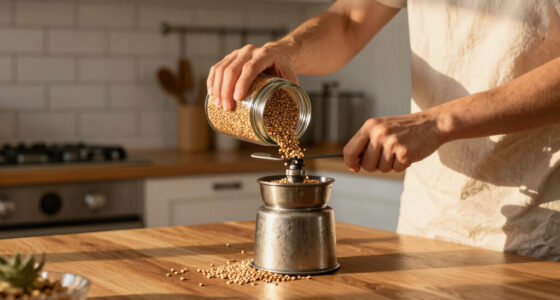
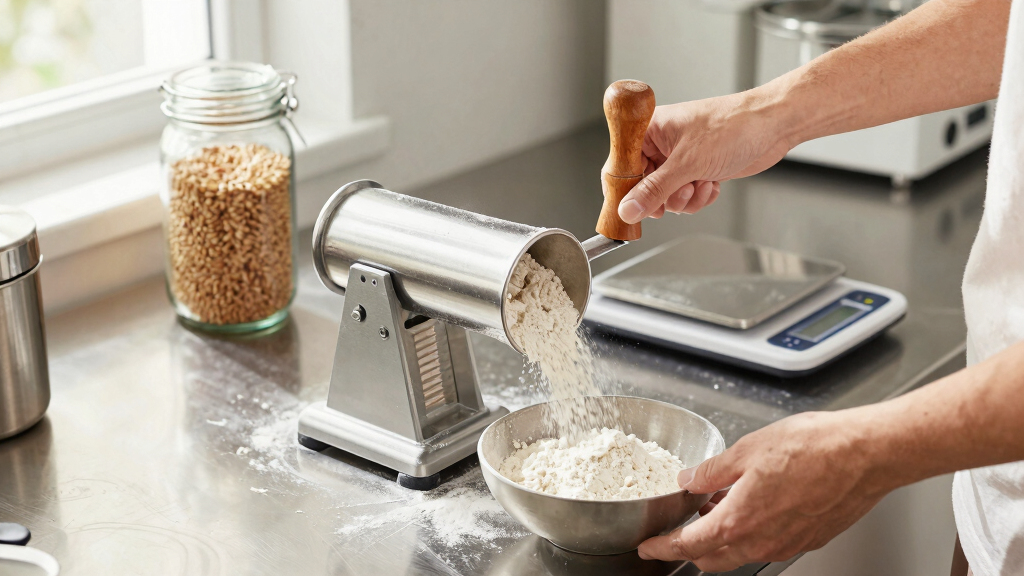
- Assess your equipment: do you have a mill to grind your own, or will you buy pre-ground flour? If grinding, experiment with different settings to find the balance between flavor and workability.
- Adjust hydration and fermentation: coarser flours typically need 10-15% more water and longer fermentation times to develop gluten and flavor. Start with small adjustments—add 10% more water when switching to a coarser grind, and extend fermentation by 30 minutes to an hour, observing how the dough handles and rises.
By testing these adjustments with small batches, you can fine-tune your process. Keep notes on hydration levels, fermentation times, and bread qualities to build a personalized guide. This proactive approach ensures you get consistent, high-quality loaves regardless of the flour’s grind size.
As an affiliate, we earn on qualifying purchases.
Why artisanal, local mills are changing the game
More bakers are seeking out small-scale, local mills that grind fresh, stone-milled flours. These flours often have a coarser grind, richer flavor, and retain more nutrients—making them ideal for rustic bread or sourdough with deep, complex flavors. While these flours may be less uniform and require more experimentation, they offer a unique opportunity to connect with traditional baking methods and produce bread with a distinctive character. To make the most of artisanal flours, start by baking small test loaves, adjusting hydration and fermentation times based on the flour’s coarseness and flavor profile. Keep detailed notes on how the dough responds—such as how much water it absorbs and how long it takes to ferment. Over time, you’ll develop a reliable process for incorporating these flours into your baking routine, creating bread that balances flavor, nutrition, and texture. Embrace the variability as part of the craft, and experiment with different grains and milling styles to find what best suits your taste and baking style.
Imagine grinding your own flour from heirloom wheat on a stone mill, then baking a loaf with a deep, nutty flavor that no supermarket flour can match. It’s about reconnecting with the craft—and tasting the difference.
Adjusting hydration and fermentation when switching flours
Switching grind types isn’t just about flavor; it fundamentally alters how your dough behaves during mixing, fermentation, and baking. Coarser, stone-ground flours tend to absorb more water—up to 15% more—due to their increased surface area and the presence of bran and germ, which can interfere with gluten development if not accounted for. This means that recipes designed for finer flours may need significant adjustments in hydration levels—often adding an extra 2-3% water—and longer fermentation times to achieve the desired dough strength and flavor. Conversely, finer flours absorb less water and can lead to overly slack or sticky doughs if hydration isn’t reduced slightly. To implement these changes practically: start by increasing hydration by 10% when switching to a coarser flour, then observe the dough’s handling and rise. Adjust fermentation time accordingly—coarser flours may require an extra 30 minutes to an hour. Keep detailed notes on how the dough responds, and use small test batches to dial in your hydration and fermentation schedule. This proactive approach ensures consistent results and helps you master different flours, making your baking more predictable and satisfying.
Frequently Asked Questions
What is the best grind size for bread flour?
Most bakers lean toward a fine to medium grind for consistent results. However, if you enjoy rustic, flavorful loaves, coarser, stone-ground flours can be fantastic—just be prepared to tweak hydration and fermentation times.
How does the grind affect bread texture and flavor?
Coarser flours add nuttiness, complexity, and a hearty feel, while finer flours produce a lighter, softer crumb. Your choice shapes the bread’s character and the baking process.
Can I substitute different grinds of flour in my bread recipe?
Yes, but expect to adjust water levels and fermentation times. Coarser flours absorb more water and may need longer rising, while finer flours work well with standard recipes. Always test small batches when changing flours to calibrate hydration and fermentation adjustments.
Is stone-ground flour better than roller-milled flour?
It depends on your taste and baking goals. Stone-ground offers richer flavor and nutrients but demands more recipe adjustments. Roller-milled provides consistency and ease of use, making it suitable for everyday baking.
How do I choose the right flour grind for sourdough baking?
Many sourdough bakers prefer coarser, stone-ground flours for depth of flavor. To optimize results, experiment with hydration levels—start with 10-15% more water—and extend fermentation times as needed. Small test bakes help determine the best approach for your sourdough loaf.
Conclusion
Choosing the right grind isn’t just a technical detail—it’s the secret to unlocking better bread. Whether you prefer the hearty complexity of stone-ground flour or the reliability of roller-milled, understanding their differences lets you bake with confidence. Keep experimenting, and your bread will keep getting better—grain by grain.Flea & tick season Picks
flea and tick prevention
As an affiliate, we earn on qualifying purchases.