
TL;DR
Open a free Amazon Business account
Business pricing, bulk buying and tax-exempt orders.
Create a free accountAs an affiliate, we earn on qualifying purchases.
Ricing potatoes produces a finer, fluffier mash than mashing or food processing. Choosing the right potatoes, cooking them properly, and handling them gently results in a velvety texture perfect for any meal.
There’s something satisfying about a perfectly smooth, fluffy mashed potato. It’s not just about taste — it’s the texture. When you rice potatoes, you’re using a simple tool to turn cooked spuds into a silky cloud. No gluey lumps or gummy texture, just pure, velvety goodness.
If you’re serious about off-grid cooking or want to sharpen your manual food prep skills, mastering potato ricing is a game-changer. It’s quick, reliable, and creates a better mash than traditional mashing or blending. Stick around — I’ll show you how to do it right, every time.
Choose starchy potatoes like Russet or Yukon Gold for the fluffiest, smoothest mash.
Pass hot, drained potatoes through a high-quality ricer immediately for best texture.
Handle the riced potatoes gently; overworking after ricing ruins the delicate consistency.
Warm your fats and liquids before mixing to keep the mash silky and prevent clumping.
Avoid over-processing with a food processor to prevent gluey, gummy potatoes.
Why Ricing Is the Secret to Ultra-Smooth Mash
Ricing potatoes isn’t just a fancy step — it’s a practical way to get that perfectly silky texture. Unlike mashing with a hand masher, which can leave lumps, ricing forces cooked potatoes through tiny holes, breaking them into delicate, uniform pieces. This process not only ensures a consistent texture but also minimizes the risk of overworking the potatoes, which can lead to a gluey consistency. The fine grains produced by ricing allow for better integration with fats and liquids, resulting in a smoother, more cohesive mash. The gentle nature of ricing preserves the delicate cell structure of the potato, maintaining lightness and fluffiness. For off-grid cooks, this method reduces the need for additional processing or corrective steps, making it a reliable technique for achieving professional-quality results with minimal equipment.
Deeply understanding why ricing offers these benefits helps you appreciate its importance. The uniformity of the rice ensures that fats and liquids are absorbed evenly, creating a cohesive, velvety texture without lumps or streaks. Overworking mashed potatoes—such as excessive stirring or mashing—breaks down starch granules, releasing amylose and creating a gummy, gluey consistency. Ricing minimizes this risk by breaking down the potato gently and in a controlled manner, making it especially valuable in off-grid settings where precision and equipment are limited. Ultimately, choosing ricing over other methods is about controlling the process to produce consistently superior results that elevate your dish’s quality and presentation.
As an affiliate, we earn on qualifying purchases.
Pick the Perfect Potatoes for Fluffy, Smooth Mash
The secret to a truly silky mash starts with the potatoes. Starchy varieties like Russet or Yukon Gold are your best friends here. They break down easily and turn fluffy when cooked. Waxy potatoes, such as Red Bliss, resist that delicate, airy texture and tend to stay firmer, which can compromise the smoothness of your mash. Choosing the right potato impacts the final texture because starch content determines how easily the potato disintegrates and how light the mash will be. Russets, with their high starch levels, create that cloud-like softness, but they can also be more prone to becoming gluey if overworked. Yukon Golds offer a balance with their buttery flavor and moderate waxiness, providing a versatile option that still rice well. Proper preparation, such as peeling evenly and cutting into uniform pieces, ensures consistent cooking and prevents uneven textures that could ruin the smoothness. This careful selection and preparation set the foundation for a flawless mash.
Understanding the implications of potato choice is crucial. High-starch potatoes like Russets are ideal for fluffiness because their starch content allows them to break down into fine, airy particles. However, their propensity to become gluey if overworked means you need to handle them carefully and avoid excessive mixing. Waxy potatoes, while holding their shape better, don’t disintegrate as easily and can result in a denser mash. The tradeoff involves balancing texture and ease of processing. Proper preparation—uniform peeling and cutting—ensures even cooking, which is essential because unevenly cooked potatoes can lead to lumps or undercooked bits that ruin the smoothness. Recognizing these factors helps you select the best potatoes based on your desired outcome and cooking environment, especially in off-grid settings where precision tools might be limited.
As an affiliate, we earn on qualifying purchases.
How to Rice Potatoes: Step-by-Step for Best Results
- Peel potatoes evenly, then cut into uniform chunks to ensure uniform cooking. Irregular sizes can lead to uneven softness, which complicates ricing and results in lumps or undercooked bits that detract from the smooth texture.
- Boil in salted water until completely tender — a fork should slide in easily, with no resistance. Overcooking can cause the potatoes to absorb excess water, making them difficult to rice smoothly and risking a watery mash. Undercooking leaves the potatoes firm, which can clog the ricer and require excessive force, risking damage to your tool and uneven ricing.
- Drain potatoes thoroughly, letting steam escape for a minute to dry excess moisture. Excess water can cause the mash to become gluey or runny, undermining the desired silky texture. Proper draining ensures the potatoes are dry enough to rice cleanly and mix smoothly with fats and liquids.
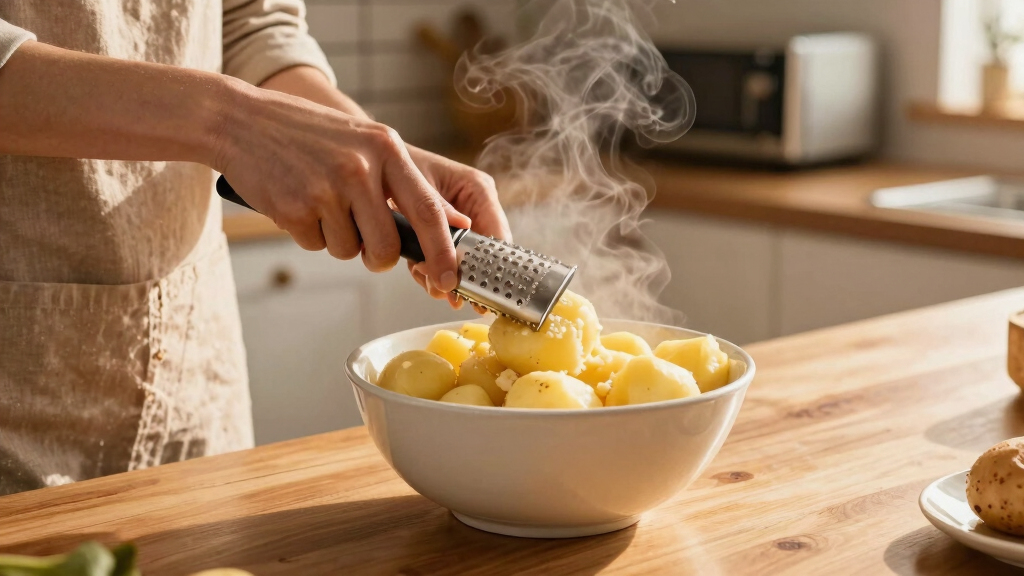
- Pass the hot potatoes through a high-quality potato ricer or food mill. Do this while they’re still steaming to keep them smooth and fluffy. Hot potatoes are more malleable and easier to process. Letting them cool makes the ricing more difficult and can produce a denser, less airy mash.
- Gently fold in warm butter, cream, or plant-based milk. Add liquids gradually, mixing just enough to combine. Overworking the mash after ricing can break down the delicate starch structure, leading to a gluey texture. Gentle folding preserves the lightness and ensures a silky finish.
Imagine the rich, earthy aroma filling your kitchen as you push tender potatoes through the ricer — that’s the moment your mash begins to transform into silky perfection. The key is maintaining the right temperature and handling the potatoes with care to preserve their airy, delicate structure.
Remember: Ricing hot potatoes is key. Cold potatoes resist passing through and won’t give you that delicate, airy texture. Patience and timing are essential to achieve the best results.
As an affiliate, we earn on qualifying purchases.
Comparing Ricing to Mashing and Food Processing
| Method | Texture | Ease of Use | Risk of Gummy Mash |
|---|---|---|---|
| Ricing | Very smooth, fluffy, delicate | Moderate — requires a tool and some effort | Low — gentle process that preserves structure |
| Mashing | Variable — lumps and unevenness common | Easy — no special tools, just a masher | Higher — over-mashing can break down the starch and create a gluey, gummy texture |
| Food Processor | Very fine, can be overly smooth or gluey if overused | Easy — quick setup and operation | Very high — easy to over-process, leading to a gummy consistency |
While a food processor offers speed and convenience, it often sacrifices the delicate, fluffy texture that ricing provides. Overprocessing can quickly turn your mash into a gluey, unappetizing mess. Ricing, although requiring a bit more effort and patience, guarantees a smooth, airy result that enhances the dish’s quality and presentation. Understanding these tradeoffs helps you choose the right method based on your priorities — speed versus texture finesse.
As an affiliate, we earn on qualifying purchases.
Tips for Perfect Ricing Every Time
- Use a high-quality, sturdy potato ricer or food mill. Cheap tools tend to clog, break, or produce inconsistent results, which can compromise the smoothness of your mash. Investing in a durable tool ensures you can process potatoes efficiently and with consistent quality, especially important when aiming for a silky texture.
- Pass potatoes through immediately after draining — they’re hottest and easiest to process. As potatoes cool, their starch structure changes, making them tougher to rice smoothly. Processing hot potatoes preserves their delicate texture and allows for a finer mash.
- Don’t overfill the ricer — work in batches if needed. Overloading can cause uneven pressure, clogging, or incomplete ricing. Smaller batches allow for better control and a more uniform, silky result.
- Handle the riced potatoes gently. Overworking after ricing can break down the starch granules, leading to a gluey consistency. Use gentle folding and avoid excessive stirring to maintain the airy, delicate texture.
- Warm your liquids and fats before mixing. Cold ingredients cause clumping and hinder smooth incorporation. Warming them ensures they blend seamlessly, preserving the mash’s silky feel and preventing lumps.
For example, warming your butter and milk on the stove while draining the potatoes keeps everything at the right temperature, ensuring a silky, uniform mash that’s free of lumps and gluey texture.
Vegan & Off-Grid Hacks for Smooth Mashed Potatoes
Going dairy-free? No problem. Use warmed plant-based milks like oat or almond milk, and swap butter for oils or vegan butter. These substitutions help you achieve a creamy, smooth mash without dairy, but keep in mind that the quality and temperature of your liquids influence the final texture. Warming plant-based milks and oils prevents clumping and ensures they integrate evenly, maintaining that silky consistency. Additionally, using a hand-powered ricer or food mill is ideal off-grid, as these tools are durable, simple, and don’t rely on electricity. They allow you to process hot potatoes directly, preserving their delicate structure and ensuring a smooth result. When mashing over a wood fire or in a cast-iron pot, controlling temperature and handling the potatoes carefully are key to achieving that same silky finish as with modern appliances. This approach combines resourcefulness with quality results, proving that off-grid cooking can match and even surpass conventional methods in finesse.
Imagine mashing in a cast iron over a wood fire, the aroma mingling with the smoky air. That’s the beauty of off-grid cooking — simple tools, real flavor, and pure satisfaction.
What You Need to Know to Keep Your Mashed Potatoes Perfect
Don’t overwork after ricing. Mix just enough to incorporate liquids and fats, or your mash turns gluey fast. Overmixing breaks down the delicate starch structure, releasing excess amylose that creates a gummy, sticky texture. Additionally, overcooking potatoes can cause them to absorb too much water, making them difficult to rice smoothly and increasing the likelihood of a watery, gluey mash. Properly cooked potatoes retain their structure and starch integrity, which is essential for a light, airy mash. Using a sturdy potato ricer helps produce uniform, delicate grains that require minimal handling—this is key to avoiding glueiness. Finally, serve your mash immediately for the best texture, as it can stiffen or lose its silkiness if left to cool and then reheated. If necessary, keep it warm and covered, but aim to serve promptly for optimal results.
Deep understanding of these factors means you can troubleshoot and refine your technique, ensuring each batch of mashed potatoes is as perfect as possible in any setting. Balancing cooking time, handling, and processing tools ensures your mash remains light, fluffy, and free of undesirable gluey texture, especially important in off-grid environments where adjustments are limited.
Frequently Asked Questions
Can I rice cold potatoes?
Ricing cold potatoes is challenging because they become firm and resistant. For best results, always rice potatoes while they’re still hot and steaming.
What if I don’t have a potato ricer?
You can use a fine-mesh sieve, food mill, or even a sturdy handheld masher. Just expect a slightly less silky texture if you skip the ricer, and handle the potatoes gently.
How do I avoid gluey mashed potatoes?
Avoid overworking the potatoes after ricing, and don’t overcook them. Also, add liquids gradually and handle the mash with care to keep it light and fluffy.
Can I make mashed potatoes dairy-free without sacrificing smoothness?
Yes. Use warm plant-based milks like oat or almond milk, and oils or vegan butter for richness. These substitutions maintain a creamy, silky texture.
Conclusion
Mastering the art of ricing potatoes transforms a simple dish into a silky masterpiece. It’s about patience, the right tools, and a gentle touch. Once you’ve tasted the difference, there’s no going back to coarse mash.
Next time you cook potatoes, remember: a smooth, delicate mash starts with hot, perfectly cooked spuds and a good ricer. Your taste buds will thank you — and your off-grid kitchen will feel a little more refined.
Labor Day sales Picks
labor day deals
As an affiliate, we earn on qualifying purchases.