TL;DR

Get kitchen gear delivered free with Prime
- Fast, free delivery on millions of items
- Prime Video, Amazon Music and more included
- Member-only deals all year
Proper knife handling starts with the right grip — the pinch grip offers better control and safety. Keeping blades sharp, using the claw technique, and storing knives safely cut down on accidents. Recent innovations in ergonomic design and safety tools make it easier to stay safe while chopping and slicing.
Ever had a knife slip when chopping? It’s frightening and often avoidable. Proper knife safety isn’t just about avoiding cuts; it’s about gaining control and confidence in your kitchen.
In this guide, you’ll learn the best way to hold knives, how to cut safely, and the latest safety innovations. Whether you’re a seasoned home cook or new to the kitchen, mastering these techniques can make your prep faster, safer, and more precise.
Use the pinch grip for better control and safety when holding knives.
Always curl your fingers in the claw position to protect your fingertips.
Keep your knives sharp—dull blades are a major safety hazard.
Store knives securely to prevent accidental cuts in your kitchen.
Modern ergonomic and safety features can make cutting safer and easier.
How to Hold a Knife for Maximum Control and Safety
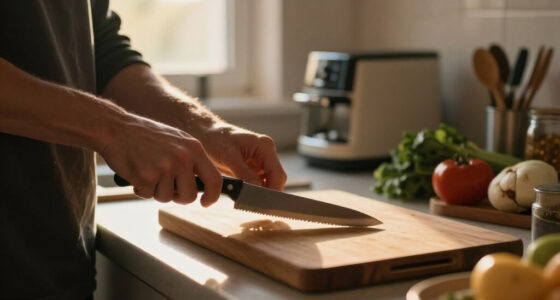
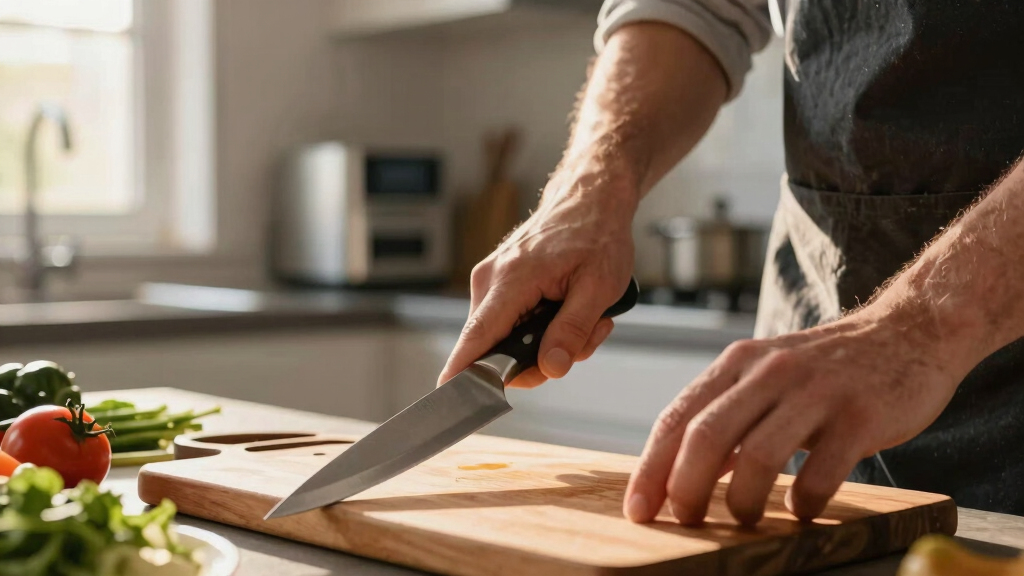
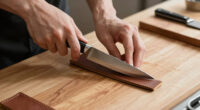
The **pinch grip** is the gold standard for knife handling. It involves pinching the blade just in front of the handle with your thumb and index finger, while the remaining fingers wrap around the handle. This grip gives you the most control and reduces fatigue.
Imagine slicing a firm carrot or julienning peppers. With this grip, you feel the knife as an extension of your hand, making precise cuts easier and safer. It also minimizes the risk of the knife slipping out of your grip during tough cuts.
Here’s a quick tip: practice holding the knife with your thumb and forefinger pinched on the blade, and rest your other fingers on the handle. Move your hand as a unit, not just your wrist, for smoother control.
As an affiliate, we earn on qualifying purchases.
Why Your Cutting Technique Can Make or Break Safety
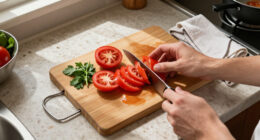
Using the **claw grip** is key to protecting your fingers. Curl your fingertips inward, so your knuckles face the blade. As you cut, guide the knife along your knuckles, which act as a natural fence.
Picture slicing a shiny apple. Your curled fingers stay tucked away, avoiding the blade’s path. This simple habit stops accidental nicks and cuts, especially when slicing small, slippery items.
Practice this by holding the food with your fingertips curled under, then move your knife back and forth in a rocking motion. It’s the most reliable way to keep your fingers safe while slicing or dicing.
Understanding why this technique works is crucial: it creates a physical barrier that prevents your fingers from slipping into the blade’s path. This is especially important when working with tricky ingredients like soft berries or slippery vegetables, where a misstep could lead to injury. Mastering the claw grip reduces the risk of cuts significantly, but it also encourages more deliberate, controlled movements, making your prep more precise and less frantic.
As an affiliate, we earn on qualifying purchases.
The Danger of Dull Knives — Why Sharpness Matters
Few things increase risk more than a dull knife. A dull blade requires more force to cut, which can cause slips or loss of control. It’s like trying to cut through frozen butter with a butter knife.
According to an anonymous researcher, a sharp knife is **three times safer** because it slices effortlessly, reducing the chance of accidental slips. Regular honing keeps your edge in shape, while periodic sharpening restores the blade’s full sharpness.
Imagine chopping onions with a dull chef’s knife. You’ll need to press harder, and the knife might slide sideways. Keep your blades sharp—your safety depends on it.
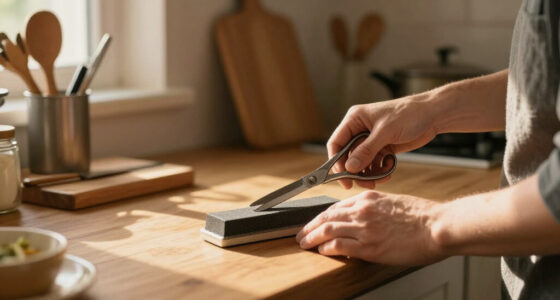
Maintaining sharpness isn’t just about convenience; it’s a critical safety measure. Dull knives require increased force, which compromises control and increases the likelihood of accidents. Regular honing aligns the edge, but sharpening actually restores the blade’s cutting bevel, ensuring it performs optimally. Investing in proper sharpening tools or professional services ensures your knives remain safe and effective, reducing fatigue and accidental slips during prolonged prep work.
As an affiliate, we earn on qualifying purchases.
Safe Handling and Storage — Keep Your Kitchen Accident-Free
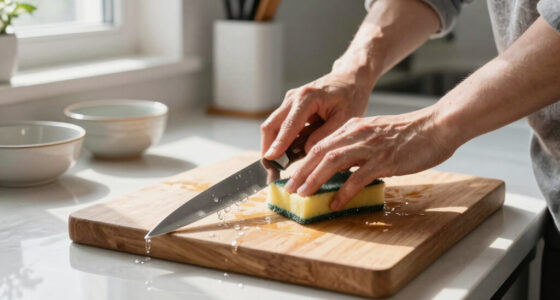
Handling knives safely isn’t just about how you cut; it’s where you store them. Always cut away from your body and keep your fingers clear of the blade path. After use, clean and dry your knives thoroughly to prevent rust and slipping.
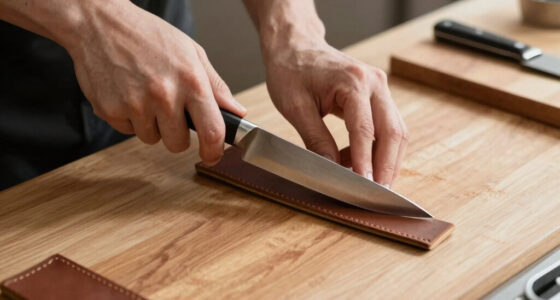
Storing knives securely is crucial—use knife blocks, magnetic strips, or sheaths. Avoid tossing them loosely in drawers where they can cause serious cuts. Think of your knives as tools that need respect and proper care.
In a busy kitchen, a magnetic strip mounted at eye level keeps knives accessible yet out of accidental reach. It’s a simple step toward preventing injuries.
Proper storage not only keeps your knives safe but also preserves their sharpness longer. When knives are stored loosely, they can rub against other utensils, dulling the blades faster. Organized storage solutions like magnetic strips or dedicated knife drawers prevent accidental cuts when reaching for a knife and help maintain the blade’s integrity over time, ultimately promoting a safer cooking environment.
As an affiliate, we earn on qualifying purchases.
Latest Innovations Making Knives Safer and Easier to Use
Modern knives now feature ergonomic handles, non-slip grips, and safety guards that make cutting less risky. Some models include finger guards that prevent slips, especially when applying force.
Cut-resistant gloves and guiding tools are also gaining popularity, especially for beginners or in professional kitchens. These aids protect your hands while letting you focus on your technique.
Advanced materials like ceramic blades or corrosion-resistant steels keep edges sharp longer and reduce the need for frequent sharpening, making your kitchen safer and more efficient.
Understanding these innovations helps you select tools that enhance safety. Ergonomic handles reduce fatigue, which can lead to careless movements. Safety guards and cut-resistant gloves provide physical barriers against accidental slips, especially when working with tough or slippery ingredients. Investing in these technologies can significantly reduce injury risk and make your kitchen experience more confident and enjoyable.
Frequently Asked Questions
How do I hold a knife safely?
The **best way** is the pinch grip—pinch the blade just in front of the handle with your thumb and index finger, while the rest of your hand wraps around the handle. This provides maximum control and reduces slipping risks.
Why does my knife slip sometimes?
Most slips happen when the blade is dull or the cutting surface is unstable. Sharpen your knives regularly and always use a sturdy, non-slip cutting board for safer slicing.
What’s the safest way to cut small or slippery foods?
Use the claw grip to curl your fingertips under, guiding the knife along your knuckles. This keeps your fingers protected and prevents accidental cuts, especially on slippery items like cherry tomatoes or soft peaches.
How often should I sharpen my kitchen knives?
For home cooks, every 2-4 weeks is a good rule of thumb. If you notice more effort needed to cut or increased slipping, it’s time for a touch-up. Professional chefs often sharpen weekly or biweekly.
Are safety knives or gloves worth using?
Yes. Safety knives with finger guards and cut-resistant gloves can provide extra protection, especially when learning or working with tough or slippery ingredients. They’re a smart addition to your safety toolkit.
Conclusion
Mastering the proper grip and cutting techniques is the simplest way to cut down on accidents. Think of your knife as an extension of your hand—trust it, control it, respect it.
With a few adjustments, you’ll sharpen your skills and stay safe, turning a potentially risky task into a breeze. The next time you pull out your knife, remember: safety starts with your grip.
Halloween Picks
halloween
As an affiliate, we earn on qualifying purchases.