TL;DR
Outfitting an RV kitchen for real cooking requires smart layout, quality appliances, good ventilation, and reliable power. Focus on durability and efficiency to cook confidently on the road or off-grid.
Imagine standing in your RV kitchen, the aroma of fresh herbs and sizzling food filling the air. It feels just like home — because now it can. Outfitting your RV for real cooking isn’t about squeezing in a tiny stove; it’s about creating a space where you confidently prepare hearty, satisfying meals, no matter where you are.
Whether you’re off-grid in the woods or parked at a remote lake, your kitchen should be a place of durability, efficiency, and ease. This guide walks you through the key steps to turn your small space into a real, capable kitchen — with tools and tips that stand up to the demands of manual, off-grid cooking.
Focus on smart layout with fold-out counters and vertical storage to make the most of limited space.
Choose high-quality, energy-efficient appliances suited for manual or off-grid use, like propane stoves and induction units.
Prioritize ventilation, using range hoods or exhaust fans to keep fumes and odors out.
Build a reliable power system combining batteries, inverters, and solar to run your appliances off-grid.
Organize your storage for quick access and freshness, using airtight containers, magnetic strips, and labeled bins.
How to Outfit an RV Kitchen for Real Cooking
Real cooking on the road isn’t about squeezing in a tiny stove — it’s about smart layout, quality appliances, proper ventilation, and reliable power that let you prepare hearty, satisfying meals anywhere, from deep woods to remote lakesides.
Maximize Your Space Without Sacrificing Function
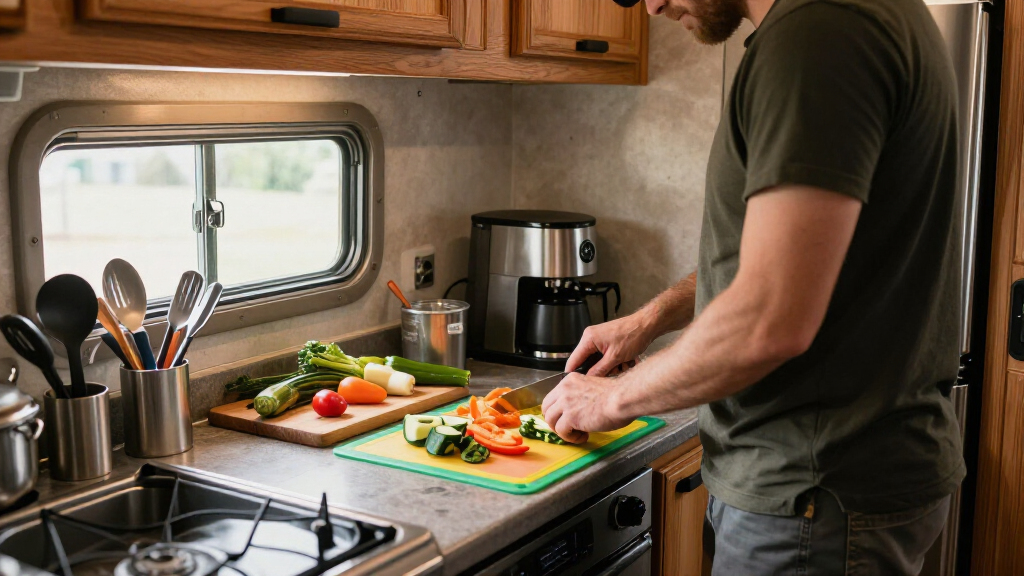
In an RV, space is king. Every inch counts. Think multi-functional: fold-out counters, slide-out shelves, stacking storage, and vertical space with magnetic knife strips and hanging spice baskets. A sliding countertop extension can double your prep area in seconds.
Prep Zone
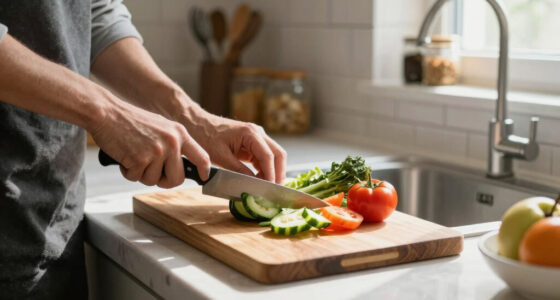
Fold-up cutting board stows flat against the wall, revealing a full prep surface when needed.
Cook Zone
Stove, oven, and induction cooktop clustered for tight, efficient heat management.
Clean Zone
Deep sink with good drainage keeps clutter down and workflow smooth.
Choose Appliances Built for Real Cooking
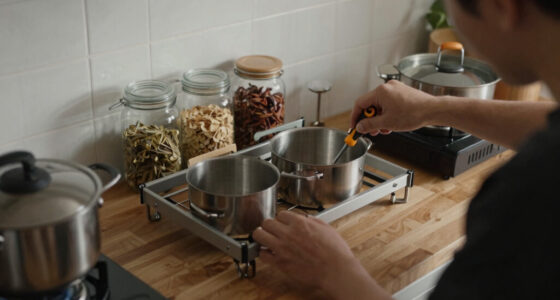
Quality over size: a 2-burner propane stove with a cast iron skillet handles everything from breakfast to dinner — and lasts for years, even when you’re miles from the nearest appliance store.
2-Burner Propane Stove
Real heat, multiple burners, works anywhere with zero power draw. Pair with cast iron for full-range cooking.
Induction Cooktop
Heats fast, cools quickly, and works well with portable power systems. The fastest-growing trend in RV kitchens.
Convection Microwave
Combines baking, roasting, and reheating in one compact unit — a small standalone oven expands options further.
Keep Fumes Out and Power Flowing
Cooking in a small space gets smoky fast. A range hood or even a battery- or solar-powered exhaust fan pulls out fumes, grease particles, and odors — protecting your health, your appliances, and your interior surfaces. Meanwhile, batteries + inverters + solar keep everything running off-grid.
| Off-Grid Power Component | Typical Draw | Runs On | Off-Grid Ready | Best For |
|---|---|---|---|---|
| Propane stove (2-burner) | No electricity | Propane tank | ✓ Excellent | Real heat, any location |
| Induction cooktop (portable) | ~1,000–1,800W | 200W solar + battery + inverter | ~ With solar setup | Fast, safe, efficient cooking |
| 12V compressor fridge | 40–60W | Solar + deep-cycle battery | ✓ Excellent | Days of fresh vegetables & dairy |
| Convection microwave | ~1,000W+ | Shore power / large inverter | ✗ Limited | Baking when hooked up |
| Exhaust fan (solar/battery) | <20W | Battery or small panel | ✓ Excellent | Ventilation & safety |
Organize for Access, Preserve for the Long Haul
Stackable containers, magnetic strips, labeled bins, and airtight jars mean you see what you have at a glance — months of rice, beans, and pasta without a restocking trip. For perishables, match your refrigeration to your trip length.
Affordable & flexible; needs regular ice maintenance.
Keeps perishables safe for days without power.
Convenient but limited capacity and power needs.
Days of fresh food, fully off-grid. Top choice for extended trips.
Protect Your Kitchen — and Yourself
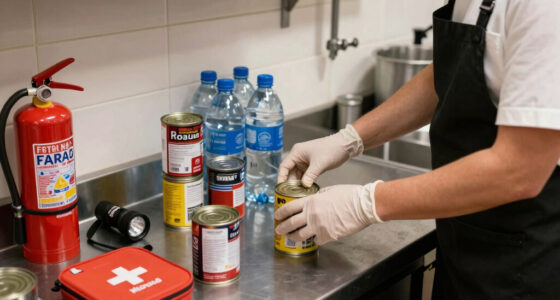
Cooking safety is non-negotiable. One RVer caught a small gas leak early thanks to a detector — quick access to the right gear turns a potential disaster into a minor pause in dinner.
Alarms & Detectors
Smoke detectors and carbon monoxide alarms, tested regularly. Check gas lines for leaks on a schedule.
Fire Extinguisher & Blanket
Small, accessible, and within arm’s reach of the stove — never stored behind gear.
Airflow = Safety
Proper ventilation prevents dangerous fume buildup and reduces fire and poisoning risk.
Maximize Your Space Without Sacrificing Function
In an RV, space is king. Every inch counts. The goal is to make your kitchen feel roomy while packing in everything you need. Think multi-functional: fold-out counters, slide-out shelves, and stacking storage. Use vertical space with magnetic strips for knives or hanging baskets for spices. For example, a sliding countertop extension can double your prep area in seconds.
Imagine a compact RV kitchen with a fold-up cutting board that stows flat against the wall, revealing a full prep surface when needed. When planning, focus on creating zones: prep, cook, clean. This helps keep clutter down and improves workflow, even in tight quarters.
As an affiliate, we earn on qualifying purchases.
Choose Appliances Built for Real Cooking
Real cooking demands reliable appliances. Instead of tiny, underpowered units, look for robust, manual, or energy-efficient options. A propane stove with multiple burners offers real heat, and a small oven or convection microwave allows baking and roasting. Induction cooktops are gaining popularity due to their efficiency and safety — they heat fast, cool quickly, and work well with portable power systems.
Investing in durable appliances means you can cook complex, satisfying meals without compromise. For example, a 2-burner propane stove paired with a cast iron skillet can handle everything from breakfast to dinner. Adding a small, standalone oven can expand your cooking options significantly. Remember, choosing quality over size ensures your setup lasts longer and performs reliably, which is crucial when you’re miles from the nearest appliance store or power source.
As an affiliate, we earn on qualifying purchases.
Ensure Good Ventilation to Keep Fumes and Odors Out
Cooking in a small space gets smoky fast. Proper ventilation is essential because it directly impacts both safety and comfort. Without adequate airflow, fumes, grease, and odors can quickly accumulate, leading to poor air quality and potential health hazards. A range hood or exhaust fan should be a priority — even a simple, battery-powered vent can make a big difference. It pulls out harmful fumes, grease particles, and lingering odors, which helps maintain a fresh, safe environment.
Take a real-life example: a friend installed a small, solar-powered exhaust fan above their portable stove. It kept the space cool and odor-free even during long cooking sessions, preventing the buildup of grease and smoke that can cause interior damage or health issues over time. In tight spaces, proper airflow isn’t just about comfort — it’s about protecting your health and prolonging the life of your appliances and interior surfaces. Investing in good ventilation systems is a tradeoff worth making for a safer, more enjoyable cooking experience.
As an affiliate, we earn on qualifying purchases.
Power Up with Reliable, Off-Grid Energy Sources
Your kitchen needs energy — but off-grid, that’s not always easy. A combination of battery banks, inverters, and solar panels can keep your appliances running smoothly. For example, a 200-watt portable solar panel paired with a deep-cycle battery can power a small induction cooktop and LED lighting for hours, enabling you to cook and see clearly without grid power.
Choosing the right power system depends on your needs. Small, low-wattage appliances work well with portable batteries, while larger setups can handle more demanding tools. The key is to match your energy needs with a system that’s durable and expandable. In practice, this means considering future upgrades and ensuring your system can handle peak loads during cooking times. A well-designed off-grid power setup not only supports your current needs but also provides flexibility as your cooking ambitions grow, giving you confidence to prepare complex meals anywhere.
As an affiliate, we earn on qualifying purchases.
Organize Storage for Easy Access and Freshness
Storage in an RV isn’t just about fitting everything — it’s about quick access and keeping ingredients fresh. Use stackable containers for dry goods, magnetic strips for knives, and deep drawers for pots and pans. A dedicated spice drawer or jar rack speeds up cooking and cuts down clutter.
For example, a well-organized pantry with clear labels and airtight containers can store months of dry staples like rice, beans, and pasta. This not only reduces the frequency of restocking trips but also helps keep your kitchen tidy and ingredients fresh longer. Thoughtful storage means you can see what you have at a glance, minimizing waste and ensuring ingredients stay in good condition for more complex, flavorful meals. In small spaces, every item should serve a purpose; multi-purpose storage solutions make your kitchen more functional and help you focus on cooking, not searching for supplies.
Select Food Storage and Preservation That Lasts
Keeping food fresh in an RV means choosing the right refrigeration options. Portable coolers with ice packs, small RV fridges, or even chest freezers can work, but each has tradeoffs. Portable coolers are affordable and flexible but require regular ice and maintenance. Small RV refrigerators are more convenient but may have limited capacity and power needs. For longer trips or when off-grid for extended periods, a solar-powered fridge or a well-insulated cooler with dry ice can keep perishables safe for days without power.
For example, a camper using a 12V compressor fridge powered by solar panels can store fresh vegetables and dairy for several days, reducing trips to restock. Canned and preserved foods stored in sealed jars or pantry shelves provide meal variety and security during extended stays. Understanding these options allows you to balance convenience, cost, and reliability, ensuring you can prepare a variety of healthy, flavorful meals even in remote locations.
Safety First: Protect Your Kitchen and Yourself
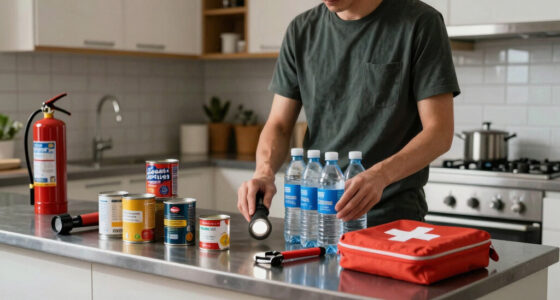
Cooking safety is non-negotiable. Install fire extinguishers, smoke detectors, and carbon monoxide alarms, and ensure they are functioning properly. Regularly check gas lines for leaks, and keep a small, accessible fire blanket nearby. Proper ventilation is part of safety — it prevents the buildup of dangerous fumes and reduces the risk of fire or poisoning. Being proactive about safety means understanding potential hazards and having the right equipment to address them quickly.
For example, a friend experienced a small gas leak but caught it early thanks to a detector. Quick access to safety gear prevented a disaster. Regularly inspecting gas lines, using safety devices, and maintaining good ventilation are essential practices. Remember, safety isn’t just about compliance — it’s about protecting your health and your investment in your mobile kitchen. Prioritizing safety ensures that your passion for cooking remains a source of joy, not risk.
Latest Trends That Make RV Cooking Easier and More Enjoyable
Innovation is making RV kitchens more capable. Induction cooktops, with their quick heat and energy efficiency, are replacing traditional burners, offering safer and more precise cooking. Solar power is expanding, making off-grid cooking more sustainable and less reliant on fuel sources. Foldable cookware and stackable tools save space, and smart appliances enable remote monitoring and control, enhancing convenience and safety. These trends reflect a move toward more efficient, eco-friendly, and space-conscious solutions that empower you to cook real, satisfying meals anywhere.
For example, a recent trend involves portable induction burners paired with solar panels, enabling full meal prep without grid power. Eco-friendly materials and modular designs also help keep your setup lightweight and durable, which is critical for mobile lifestyles. Staying current with these innovations can transform your RV kitchen from basic to highly capable, giving you the tools to cook gourmet meals in the most remote locations with ease and confidence.
Frequently Asked Questions
Can I use regular home appliances in my RV?
Some home appliances can work, but most are not designed for limited power and space. Look for compact, energy-efficient versions or appliances specifically made for RVs. Always check voltage, size, and power requirements before installing.
What’s the best way to prevent odors from lingering in my RV kitchen?
Good ventilation is key. Use range hoods or exhaust fans, and open windows when cooking. Regular cleaning and using airtight containers for leftovers also help keep odors at bay.
How can I cook gourmet meals in such a small space?
Plan ahead with multi-use ingredients, invest in quality portable tools like cast iron, and master simple techniques like slow simmering or broiling. Focus on flavor-building methods that don’t require a lot of space or equipment.
Is solar power enough for running my RV kitchen appliances?
For small, low-wattage appliances like induction burners and LED lighting, yes. Larger appliances may need supplemental power sources. A well-sized solar panel system with batteries can power your kitchen sustainably in most off-grid scenarios.
What’s the most important safety tip for RV cooking?
Never ignore gas leaks or smoke detector alerts. Regularly check gas lines, keep fire extinguishers handy, and ensure good ventilation. Safety gear and vigilance are your best defenses.
Conclusion
Outfitting an RV kitchen for real cooking isn’t about cramming in every gadget from a kitchen store. It’s about choosing durable tools, smart organization, and reliable energy. When these pieces come together, your RV transforms into a true kitchen — capable of hearty, satisfying, off-grid meals.
Think of your RV kitchen as a tiny but mighty workspace. With good planning, you’ll cook confidently anywhere. So next time you roll into a new spot, imagine the smells, the sounds of your cast iron sizzling, and the satisfaction of a meal made with your own hands — all in your mobile kitchen.