
TL;DR

Get kitchen gear delivered free with Prime
- Fast, free delivery on millions of items
- Prime Video, Amazon Music and more included
- Member-only deals all year
A Good Housekeeping report describes eight practical ways to reuse old pillowcases, including as garment bags, tote bags, storage covers and protective wrapping. The suggestions come from designers and textile professionals; they are reuse ideas, not independently tested product recommendations.
Good Housekeeping has outlined eight ways to reuse old pillowcases, offering readers options ranging from a simple garment cover to sewn projects such as a tote bag or laptop sleeve. The ideas, shared by designers and textile professionals, show how spare household fabric can be put to use, though the report does not provide testing or measurements for how well each project performs.
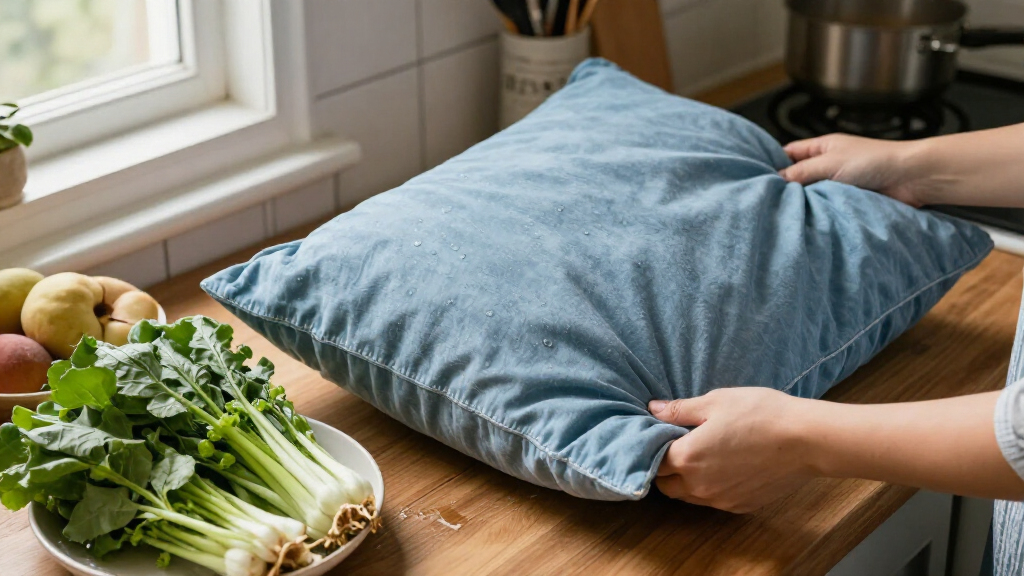
The suggested projects vary in effort. For a quick storage solution, the report recommends sliding a pillowcase over a dress or suit and cutting a small opening at the closed end for a hanger. It also suggests placing boots inside pillowcases to reduce contact with other items in storage, and using a case to wrap fragile glassware, candles or souvenirs while packing.
Other ideas involve changing the fabric’s form or purpose. A pillowcase can be folded and sewn along two sides to make a laptop or tablet sleeve, or turned into a tote bag with a few seams. The report also proposes using fabric as reusable gift wrap, tying the opening around a present, or patching pieces together into curtains.
The remaining suggestions are to use pillowcases as removable covers for bar stools and to create simple protective coverings for household items. The report attributes the ideas to several professionals, including designer Mike Bowman, Linens N Love founder May Wang, textile artist Arounna Khounnoraj and interior designer Ciera Perkins. It does not specify fabric condition, project dimensions or detailed sewing instructions for every use.
Practical Uses for Spare Fabric
For households with mismatched or unused linens, the list offers alternatives to throwing them away. Some options require little or no sewing, such as covering clothing or putting fragile objects inside a case; others can turn fabric into a more durable everyday item. Reuse may also reduce the need to buy a dedicated cover or wrapping material, although the report does not quantify savings or environmental effects.
The recommendations are most useful as starting points rather than guarantees. A thin or worn case may not provide substantial cushioning for electronics or breakables, and a reused fabric cover should be checked for cleanliness and wear before protecting delicate belongings. The intended benefit depends on the material and the way each item is stored or carried.
Products Worth Considering

Instant Pot Vortex Plus 10-Quart 7-in-1 Air Fryer Oven

Le Creuset Enameled Cast Iron Round Bread Oven, 9.5-Inch, Cerise

Ninja Flip Toaster Oven & Air Fryer, Large Capacity, Stainless, SP151
As an affiliate, we earn on qualifying purchases.
From Linen to Household Projects
The source is a Good Housekeeping home and craft report titled “Don’t Toss Old Pillowcases — Try These 8 Smart Uses Instead.” It gathers suggestions from people working in design, textiles and home furnishings. The article frames the ideas around mismatched or otherwise unused pillowcases and includes both storage solutions and do-it-yourself projects.
The report’s recommendations are not presented as a formal product test or a comparison of materials. It gives selected instructions—for example, sewing two straight lines for a sleeve and cutting a hanger opening for a garment cover—but does not offer a full pattern for each project. Readers may need to adapt the ideas to their pillowcase size, fabric and intended use.
“Fold a pillowcase in half and sew two straight lines to create padded sleeves for laptops or tablets.”
— Mike Bowman, designer and furniture specialist, as quoted by Good Housekeeping
How Well Each Idea Works
The report does not establish how much protection a pillowcase provides against impact, moisture, dust or scratches. In particular, a fabric sleeve should not be treated as equivalent to a padded or waterproof device case, and a pillowcase used to wrap glassware may need additional cushioning for transport. The source also does not state whether the projects were tested for durability, washing or repeated use.
It is also unclear how much fabric each project requires, what sewing skill is needed beyond the examples provided, or whether all pillowcase materials are suitable. Results will vary with fabric thickness, condition and construction. The report offers ideas and expert suggestions, not performance guarantees.
Choosing a Suitable Reuse
Readers can start by checking whether a spare pillowcase is clean and intact, then choose a use that matches its condition: a less robust case may work for light dust protection, while a sewing project may call for stronger fabric. For electronics and fragile items, add suitable padding rather than relying on cloth alone. Anyone making curtains or covers should measure the space and item before cutting or sewing.
Good Housekeeping’s article provides no announced follow-up or testing schedule. The next step for readers is to adapt one of the eight suggestions to the fabric they have, while treating protective claims as practical guidance rather than verified product specifications.
Key Questions
What are the eight suggested uses for old pillowcases?
The Good Housekeeping report suggests making a laptop sleeve, tote bag, garment cover, reusable gift wrap, patch curtain or bar stool cover, and using a case for shoe storage or to wrap delicate items.
Can a pillowcase protect a laptop?
The report says a pillowcase can be sewn into a sleeve that may help guard against scratches in a bag. It does not establish impact protection, so a cloth sleeve should not be assumed to replace a padded device case.
Do these projects require sewing?
Some suggestions need little or no sewing, including using a case as a garment cover or protective wrapping. The report describes sewing for the laptop sleeve and tote, and minimal sewing for patch curtains, but does not provide full instructions for every project.
Can pillowcases be used to store leather boots?
The report suggests placing boots in pillowcases to reduce scuffs, scratches or light fading during storage. It does not verify that cotton will manage moisture in every situation, so boots should be clean and dry before storage.
Source: rss