TL;DR

Get kitchen gear delivered free with Prime
- Fast, free delivery on millions of items
- Prime Video, Amazon Music and more included
- Member-only deals all year
To boil water fastest off-grid, use a lidded pot matched to your burner size and shield the flame from wind. A compact canister stove with dry fuel usually beats a campfire for small volumes, while larger volumes benefit from efficient wood stoves.
You’re cold, you’re tired, and you just want a hot cup of coffee or safe drinking water. The fire is sputtering, the wind is howling, and it feels like the water will never reach a boil. We’ve all been there. But boiling water off-grid isn’t just about turning up the heat; it’s about physics and preparation.
Many people assume a roaring campfire is the fastest way to boil water. In reality, uncontrolled heat often wastes more energy than it delivers. The secret to speed lies in minimizing heat loss, choosing the right fuel, and matching your equipment to the task. This guide breaks down exactly how to boil water fastest when off-grid, using proven techniques that save fuel and time.
You don’t need expensive gear to get results. You need to understand how heat transfer works in the wild. Let’s get that water boiling.
Always use a lid to trap heat and reduce boiling time by up to 25%.
Match your pot size to your burner; a wide, shallow pot heats faster than a tall, narrow one.
Shield your flame from wind using a proper windscreen or natural barriers, but never enclose a canister stove.
Use dry, small-diameter wood for wood stoves; wet wood wastes energy evaporating moisture.
Boil only the amount of water you need; less volume means less time and fuel.
Why Your Pot Matters More Than Your Flame
The vessel holding your water dictates how efficiently heat transfers from the fuel to the liquid. A wide, shallow pot boils faster than a tall, narrow one because it exposes more surface area to the heat source. If you’re using a small backpacking stove, a large pot is a mistake. The flame licks up the sides, heating the air instead of the water.
Material matters, too. Thin aluminum or titanium cookware heats up quickly due to high thermal conductivity. Cast iron is durable but slow to heat, making it poor for speed. However, cast iron retains heat well, which is great for cooking but not for boiling water fast. Always choose the lightest, thinnest metal pot that fits your burner diameter.
Consider the base. A flat bottom ensures maximum contact with the stove grate or fire. A warped or rounded bottom creates air gaps, insulating the water from the heat source. Check your pots before you go off-grid. A quick visual inspection can save you ten minutes of waiting in the cold.
Products Worth Considering

Instant Pot InstantChill Ice Cream Maker with Rolled Ice Cream, No Pre-Freezing, 2-Pint

Instant Pot Vortex Plus 6-Quart Air Fryer

Traeger Woodridge Pro Wood Pellet Grill and Smoker, 970 sq. in.
As an affiliate, we earn on qualifying purchases.
The Lid: Your Secret Weapon Against Heat Loss
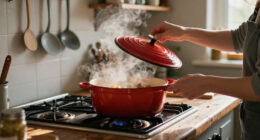
Leaving the lid off is the single biggest mistake people make. Evaporation accounts for a massive amount of energy loss. As water heats, molecules escape as steam, taking heat with them. A lid traps that steam, keeping the energy inside the pot. Studies and field tests consistently show that covering a pot can reduce boiling time by up to 25%.
It’s not just about speed; it’s about fuel conservation. If you’re off-grid, every gram of fuel counts. Using a lid means you burn less gas or wood to achieve the same result. If your lid doesn’t fit tightly, improvise. A plate, a piece of foil, or even a flat stone can work in a pinch. Just ensure it’s clean and stable.
One caveat: if you’re boiling water for purification, you need a rolling boil. You can keep the lid on until the water reaches a boil, then remove it or vent it slightly if you’re worried about overflow. For speed, however, keep it sealed until the last minute. The difference between a lidded and unlidded pot is often the difference between a five-minute wait and a seven-minute wait.
Wind Is the Enemy: How to Shield Your Flame
Wind strips heat away from the pot and disrupts the flame, causing incomplete combustion. A gusty breeze can double your boiling time by cooling the pot and blowing out the flame. If you’re in an open field, you’re fighting physics every second. The solution is a windscreen, but you must use it correctly.
For canister stoves, be extremely careful. Enclosing the fuel canister with a windscreen can cause overheating and potential explosion. Only use windscreens designed for your specific stove model, and never enclose the canister itself. For liquid-fuel stoves or wood stoves, a windscreen is generally safer and highly effective. It creates a pocket of still air around the flame, allowing it to burn hotter and more efficiently.
If you don’t have a manufactured windscreen, use natural barriers. A large rock, a log, or even your backpack can block the wind. Position yourself upwind of the stove to create a human windbreak. Just stay clear of the heat. The goal is to create a calm zone around the burner without creating a fire hazard.
Stove Showdown: Which Method Boils Fastest?
Not all stoves are created equal. The fastest method depends on water volume and conditions. Canister stoves are typically the quickest for small amounts (under 1 liter) in mild weather. They provide a consistent, high-heat flame that transfers energy directly to the pot bottom. Alcohol stoves are slower and less efficient, often taking twice as long. Wood stoves are variable but excellent for larger volumes if you have dry fuel.
Campfires are rarely the fastest option for small pots. Building a fire takes time, and the heat is diffuse. A well-built rocket stove, however, can rival canister stoves for efficiency and speed because it concentrates heat and uses less wood. The key is dry, small-diameter wood. Wet wood wastes energy evaporating its own moisture.
| Method | Best For | Speed Factor | Key Limitation |
|---|---|---|---|
| Canister Stove | Small volumes (<1L) | High | Poor in cold/wind; fuel cost |
| Wood Rocket Stove | Medium/Large volumes | Medium-High | Requires dry wood; setup time |
| Alcohol Stove | Lightweight kits | Low | Very slow; weather sensitive |
| Campfire | Large pots/cooking | Low-Medium | Hard to control; slow start |
Fuel Quality and Preparation Techniques
The fuel you use determines how much heat is available. Dry, seasoned wood burns hotter and cleaner than green wood. Green wood contains water, which must be boiled off before the wood can generate useful heat. This wastes energy and time. If you’re using a wood stove, gather small, dry sticks and kindling. Avoid large logs until the fire is established.
For gas stoves, temperature matters. Cold fuel canisters lose pressure, resulting in a weak flame. Keep the canister warm (inside your jacket or sleeping bag) before use, but never heat it directly. In cold weather, liquid-fuel stoves often outperform canister stoves because they vaporize fuel more effectively. Always check your fuel gauge. A low canister produces a weaker flame, extending boiling time significantly.
Start with the right amount of water. Boiling 500ml takes half the time of boiling 1 liter. Don’t boil more than you need. If you have access to warm water from a previous use or a solar-heated source, use it. Starting with warm water cuts heating time dramatically. Just ensure the water is safe to drink or will be purified later.
Altitude and Cold: Adjusting Your Expectations
Altitude changes the physics of boiling. Water boils at lower temperatures at high elevations. At 5,000 feet, water boils at around 203°F (95°C) instead of 212°F (100°C). This means it reaches a boil faster, but the water is cooler. For cooking, this can slow down food preparation. For purification, you need to boil longer to compensate for the lower temperature.
Cold ambient temperatures also slow things down. A cold pot absorbs heat from the water, delaying the boil. Pre-warming the pot with a small amount of hot water can help, but it’s often not worth the fuel. Instead, focus on insulation. Wrapping the pot in a reflective emergency blanket or a towel can reduce heat loss from the sides. This is especially effective for canister stoves where the flame only heats the bottom.
Be patient in extreme conditions. If the wind is biting and the temperature is freezing, expect longer boil times. Adjust your fuel supply accordingly. It’s better to plan for slower boiling than to run out of fuel mid-process.
Safety First: Don’t Rush Into Danger
Speed should never compromise safety. Never use a camping stove inside a tent or enclosed space. Carbon monoxide is odorless, colorless, and deadly. Always set up your stove on a stable, non-flammable surface. Clear away dry leaves, pine needles, and grass. A stray spark can start a wildfire in seconds.
When using windscreens, ensure proper ventilation. If you’re using a canister stove, never enclose the canister. Overheating can cause the canister to rupture. Keep a fire extinguisher or water source nearby. If you’re using a wood stove, ensure it’s on bare earth or a fire pit, not on dry grass or wood.
Stay with your stove while it’s running. Unattended stoves are a leading cause of camp kitchen accidents. If you need to step away, turn it off. It’s better to wait a few extra minutes than to risk a fire or burn. Safety is the foundation of self-reliance.
Frequently Asked Questions
Does a campfire boil water faster than a camping stove?
Not usually for small amounts. A campfire takes time to build and is hard to control. A backpacking stove provides consistent, direct heat, making it faster and more predictable for boiling a mug or small pot of water.Can I use any windscreen with my canister stove?
No. Only use a windscreen approved by the manufacturer. Enclosing the fuel canister can cause it to overheat and explode. Always follow the specific safety guidelines for your stove model to prevent dangerous pressure buildup.Does altitude make water boil faster?
Yes, water reaches its boiling point sooner at higher elevations because the boiling temperature is lower. However, the water is cooler, so you may need to boil it longer to ensure it is safe to drink.Is boiling enough to purify water?
Boiling kills most pathogens but does not remove chemicals, heavy metals, or sediment. If the water source is suspected of chemical contamination, boiling is not sufficient. Filter or treat the water appropriately before boiling.What is the best pot material for speed?
Thin aluminum or titanium heats up the fastest due to high thermal conductivity. Cast iron is durable but slow to heat, making it less ideal for quick boiling. Always choose a pot with a flat bottom that matches your burner size.Conclusion
Boiling water fast off-grid is a skill, not just a function of gear. By combining a lidded pot, wind protection, and the right fuel, you can cut your wait time in half. Remember, efficiency is self-reliance. The less fuel you burn, the longer you can stay off-grid.
Next time you’re cold and hungry, don’t just crank the flame. Check your setup. Is the lid on? Is the wind blocked? Is the fuel dry? Small adjustments yield big results. Stay warm, stay safe, and keep that water boiling.