
TL;DR
Controlling heat on a wood stove hinges on adjusting airflow, using seasoned hardwoods, and regular maintenance. Smart use of dampers and fuel management keeps your fire predictable, safe, and efficient.
When you’re off-grid or cooking outdoors, a wood stove’s heat is your lifeline. Yet, controlling that heat isn’t magic — it’s a skill. Adjusting airflow, choosing the right wood, and keeping everything clean make all the difference. If you’ve ever cooked chili that was too hot or too cold, you know how vital this control is.
This guide walks you through the practical steps to master your stove’s heat. No hype, just real-world tips to keep your fire burning steady, safe, and efficient. Whether you’re new to wood stoves or looking to sharpen your skills, these techniques will bring more warmth with less fuss.
Adjust dampers or vents to instantly control fire intensity.
Use well-seasoned hardwoods for predictable, steady heat.
Properly load and stack wood for efficient combustion and heat stability.
Maintain firebricks and baffles to keep heat inside and prevent uneven burning.
Regularly clean your stove and chimney to sustain safe, reliable heat control.
Turn Fire Into Predictable Heat
Heat control is not guesswork. It comes from three levers working together: airflow, seasoned hardwood, and a clean stove. Adjust the vents, load the firebox with intention, and keep firebricks, baffles, and the chimney in working order for steady warmth with less smoke and fewer spikes.
Seasoned wood burns cleaner, hotter, and far more predictably than fresh fuel.
Control levers
Five moves that steady the burn
A wood stove responds to small changes. Treat dampers, fuel quality, loading style, internal components, and cleaning as one connected system rather than separate chores.
Use vents like a throttle
Start open when lighting, then close slowly as the firebox warms. More oxygen means hotter, faster flames; less oxygen slows the burn.
Choose seasoned hardwood
Dry oak, maple, and hickory give you sustained heat and fewer temperature swings than green wood or fast-burning softwood.
Leave room for air
Crisscross split logs with small gaps. Overloading can spike heat; underloading forces constant refueling and uneven output.
Protect bricks and baffles
Firebricks hold heat. Baffles direct gases for cleaner combustion and help prevent hot spots inside the stove.
Keep the path clear
Ash, soot, damaged seals, and creosote reduce control. Clean, inspect, and repair before small issues become fire risks.
Let features assist
Thermostatic controls, catalytic systems, and secondary combustion chambers can make long burns more stable and efficient.
Airflow sequence
From ignition to steady heat
The damper setting that is right at startup is rarely right once the stove is hot. Move in stages and watch flame behavior, smoke, and stove temperature.
Open air
Give kindling and small splits enough oxygen to establish strong draft.
Build coal bed
Add split logs only after the fire is lively and the stove is warming evenly.
Close gradually
Reduce primary air in small steps to avoid smothering the fire.
Fine-tune
Use secondary air, if available, to clean up smoke and stabilize output.
Monitor
Stay near the efficient range and correct smoke, roaring flames, or sudden drops.
Heat data
Fuel and temperature signals
Good heat control depends on predictable fuel. Dry hardwood gives the most stable output, while green wood wastes energy evaporating moisture before it can warm your space.
Typical stove-temperature target
Comparison table
What helps and what hurts control
Use this as a field guide when the stove feels hard to manage. Most heat-control problems trace back to air, moisture, load size, or maintenance.
| Factor | Best practice | Heat stability | Smoke risk | Overfire risk |
|---|---|---|---|---|
| Damper control | Adjust in small steps after startup | ✓ High | ✓ Lower | ~ Medium if left open |
| Seasoned hardwood | Dry 6-12 months before burning | ✓ High | ✓ Lower | ✓ Manageable |
| Green wood | Avoid for controlled heating | ✗ Low | ✗ Higher | ~ Unpredictable |
| Full firebox | Fill without packing tightly | ~ Depends on airflow | ~ Medium | ✗ Higher if overloaded |
| Clean chimney | Inspect and clean at least yearly | ✓ High | ✓ Lower | ✓ Safer |
Stove anatomy
Why bricks and baffles matter
Heat control is not only about the flames you see. The stove’s internal parts shape airflow, hold warmth, and keep combustion cleaner.
Firebricks hold the line
Firebricks insulate the firebox, absorb heat, and release it gradually. Cracked or missing bricks create uneven hot spots and faster temperature swings.
- Inspect for cracks before the heating season.
- Replace damaged bricks that expose the stove body.
- Keep ash from burying airflow paths.
Baffles guide the burn
Baffles route hot gases through the stove instead of straight up the flue. That improves combustion, lowers waste, and makes heat output easier to manage.
- Check for warping or heavy soot buildup.
- Clean gently according to the stove manual.
- Confirm the baffle is seated correctly after cleaning.
Traceability chain
The control system in one line
Each choice changes the next result. Stable heat comes from connecting the whole chain instead of chasing the fire after it misbehaves.
Maintenance routine
Keep control from slipping
A clean stove drafts better, burns cleaner, and reacts more predictably to damper changes. Maintenance is heat control before the match is struck.
Excess smoke, poor draft, and cool smoldering fires can build flammable deposits in the chimney. Clean regularly and schedule professional inspection when use is heavy.
Empty ash with restraint
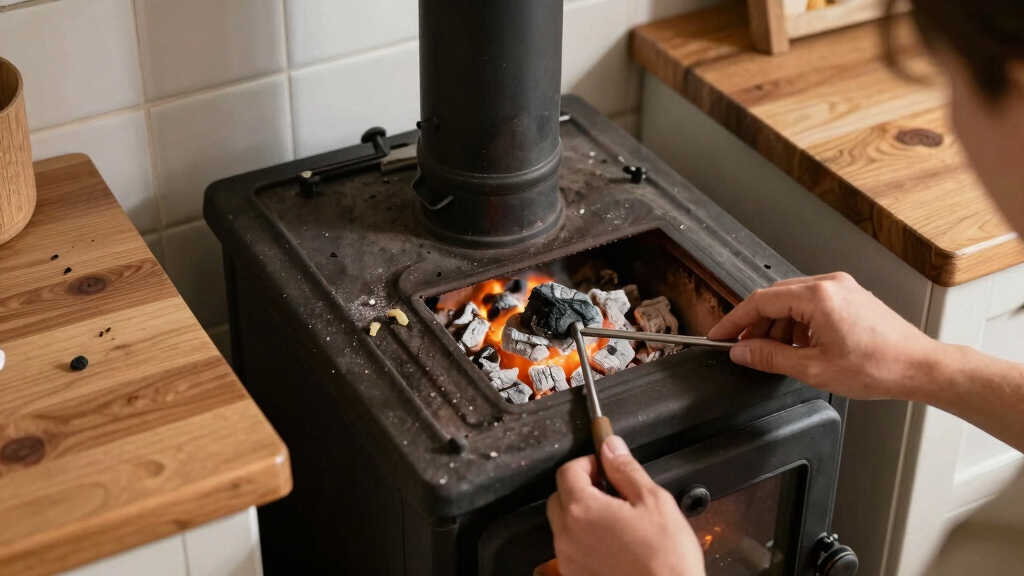
Keep a thin insulating ash bed when your stove manual allows it, but do not let ash block air inlets.
Inspect door seals
Leaky gaskets feed the fire with uncontrolled oxygen, making overheating more likely.
Clean chimney and flue
Remove soot and creosote at least once a year, or more often with frequent burning.
Watch flame behavior
Roaring flames, heavy smoke, or rapid temperature swings mean airflow or fuel needs correction.
Quick answers
Common heat-control questions
When the stove feels unpredictable, start with these practical checks before making bigger changes.
How do I adjust the heat?
Control air intake with dampers or vents. Opening them boosts heat; closing them gradually reduces fire intensity.
What wood gives the best control?
Well-seasoned hardwoods such as oak or maple burn longer, hotter, and with less smoke than pine or spruce.
How do I prevent overheating?
Avoid overloading, use dry wood, and close dampers partly once the stove is hot and drafting well.
What signals poor control?
Excess smoke, wild temperature swings, or a fire that is difficult to slow down all point to air, fuel, or cleaning issues.
How to Use Airflow Controls to Tame or Boost Your Fire
Adjusting the airflow is the fastest way to control your stove’s heat. Most wood stoves have dampers or vents that regulate oxygen entering the firebox. Think of it like turning a faucet — open more for hotter fires, close to cool down.
Start with the damper open when you light your fire. As it warms, slowly close it to reduce oxygen and lower the heat. If your stove has a secondary air control, use it to fine-tune the burn. Remember: more air equals hotter, faster fires.
Understanding how your damper settings influence heat is crucial because it affects not just how hot your fire gets, but also how completely it burns fuel. An overly open damper can cause overfiring, risking damage and wasted fuel, while a closed damper might smother the fire, leading to poor combustion and excess smoke. Finding the right balance ensures safety, efficiency, and consistent warmth. Practice and observation are key—over time, you’ll learn how small adjustments impact your specific stove’s behavior.

6 Inch Stove Pipe Damper, Wood Burning Stove Pipe Can Control Airflow, Wood Stove Damper Can Improve Fuel Combustion Efficiency and Reduce Smoke and Carbon Monoxide
- Size: 6 inch diameter for stove pipe
- Airflow Control: Regulates chimney airflow for efficiency
- Fuel Efficiency: Improves combustion and reduces fuel use
As an affiliate, we earn on qualifying purchases.
As an affiliate, we earn on qualifying purchases.
The Secret to Steady Heat: Choosing and Preparing Your Wood
Using the right wood is the foundation of good heat control. Hardwoods like oak, maple, and hickory burn longer and hotter than softwoods, giving you more predictable warmth. Softwoods ignite quickly but tend to burn fast and produce more smoke, making control trickier. The type of wood influences not just how much heat you get, but also how easy it is to regulate that heat over time. Hardwoods tend to burn more steadily, allowing you to maintain a consistent temperature, which is especially important for cooking or heating a space evenly.
Always use well-seasoned wood, ideally dried for 6-12 months. Fresh or green wood contains excess moisture — it smokes, sizzles, and doesn’t produce stable heat. This moisture causes the fire to work harder to evaporate water, which cools the flames and leads to uneven burning. Properly seasoned wood burns cleaner, hotter, and more predictably, reducing the risk of dangerous creosote buildup and inefficient fuel use. To test dryness, tap two pieces together; if they sound hollow, they’re ready. Investing in good-quality, seasoned wood means less hassle and better control over your heat output, making your stove safer and more effective.
seasoned hardwood firewood for stove
As an affiliate, we earn on qualifying purchases.
As an affiliate, we earn on qualifying purchases.
How to Load Your Stove for Consistent, Safe Heating
Loading your stove properly influences how evenly it heats and how easy it is to control. Stack your wood in a crisscross pattern, leaving gaps for airflow. Overloading can cause excessive heat spikes and strain your stove; underloading may leave you cold. The way you load your stove affects how air circulates around the fuel, impacting combustion efficiency and heat stability. Proper stacking ensures that oxygen reaches all parts of the fire, promoting complete combustion and steady heat output. If you overload, you risk creating a smothered fire that struggles to burn cleanly, leading to smoke and creosote buildup. Underloading might not generate enough heat, forcing you to constantly add fuel and risking fluctuations.
For example, if you’re cooking stew, load a few well-sized split logs that fill the firebox without crowding. Keep the fire centered and avoid packing too tightly. This allows air to circulate and keeps the burn steady. Adjust your damper in tandem with load size: a lightly loaded stove with small splits may need a more open damper to keep the fire lively, while a full load can be managed with a slightly closed damper. Striking the right balance between load size and damper setting is key to maintaining consistent, safe heat.
As an affiliate, we earn on qualifying purchases.
Using Firebricks and Baffles to Keep Your Heat Steady
Firebricks line the inside of your stove, insulating it and helping maintain a consistent temperature. Baffles are shields that direct airflow, making your burn cleaner and more controlled. Think of them as traffic controllers for your flames. Firebricks absorb and retain heat, releasing it slowly over time, which stabilizes the stove’s temperature and reduces the need for constant damper adjustments. Baffles, on the other hand, guide the hot gases and airflow, ensuring complete combustion and preventing hot spots that can damage the stove or cause uneven heating. A well-designed system of firebricks and baffles minimizes temperature swings, keeps your stove operating efficiently, and prolongs its lifespan. Regular inspection and cleaning prevent buildup, ensuring these components continue to perform their role effectively, which directly impacts your ability to maintain steady heat.
As an affiliate, we earn on qualifying purchases.
Modern Features That Make Heat Control Easier
Newer wood stoves come with features that help you manage heat more precisely. Thermostatic controls or external dampers let you set a target temperature, reducing guesswork and allowing for more consistent comfort. Some models include secondary combustion chambers that burn gases more completely, which not only provides steadier heat but also lowers emissions and increases fuel efficiency. These innovations respond quickly to changes in fire conditions, adjusting airflow automatically or with minimal manual input. For example, a stove with a built-in thermostat can maintain a steady room temperature, freeing you from constant damper fiddling. While traditional models rely on manual dampers and user judgment, modern features provide a more reliable, hands-off approach that benefits both safety and comfort, especially during long burns or overnight heating.
Frequently Asked Questions
How do I adjust the heat on my wood stove?
Control the airflow with dampers or vents. Opening them boosts heat; closing reduces it. Managing the type and size of wood also plays a key role in maintaining steady warmth.
What type of wood provides the best heat control?
Well-seasoned hardwoods like oak or maple burn longer, hotter, and with less smoke. They give you more predictable and manageable heat compared to softwoods like pine or spruce.
How can I prevent my stove from overheating?
Avoid overloading your fire, keep dampers partially closed when needed, and always burn dry, seasoned wood. Regular maintenance also helps prevent dangerous heat spikes.
What are the signs of poor heat control?
Excess smoke, fluctuating temperatures, or a fire that’s hard to reign in indicate trouble. If your stove’s temperature swings wildly, it’s time to check your dampers, wood quality, and cleaning routine.
Are there modern stoves with better heat control features?
Yes, some models include thermostats, secondary chambers, and electronic dampers. These features help you keep a steady temperature with less manual fuss.
Conclusion
Mastering heat control on your wood stove boils down to understanding airflow, fuel, and routine maintenance. Small adjustments—like closing a damper or swapping in dry wood—make a big difference in safety and comfort. With practice, your fire becomes a reliable source of warmth, not an unpredictable blaze.
Think of your stove as a living thing — responsive, adaptable, manageable. The more you learn its language, the better your off-grid heating becomes. Keep your wood dry, your dampers handy, and your stove clean. That’s the real secret to steady, safe heat.