TL;DR

Get kitchen gear delivered free with Prime
- Fast, free delivery on millions of items
- Prime Video, Amazon Music and more included
- Member-only deals all year
Propane cooking safety starts with using each appliance only where its manufacturer approves it: outdoor grills and camp stoves stay outdoors, while indoor use requires an appliance specifically listed for indoor use and installed as instructed. Check connections for leaks without a flame, store cylinders upright outdoors according to local rules, and leave immediately if you smell gas or suspect carbon monoxide exposure.
A propane grill in a garage can turn a familiar dinner into a carbon monoxide emergency, even with the big door raised. Fresh air at the doorway does not make an enclosed space safe, and the risk grows when a burner runs for more than a few minutes.
Propane is a convenient fuel for grilling, camp cooking, and some household appliances, especially when the power is out. But safe use depends on using equipment as designed: an outdoor stove stays outside, while an appliance used indoors must be specifically approved for that location and installed according to its instructions and local codes.
This guide shows you how to choose a safe cooking location, check a propane connection, store a cylinder, and respond to gas smells, carbon monoxide symptoms, or a grill flare-up. You’ll get a practical routine you can use whether you’re cooking on a patio on a calm evening or feeding the family during a winter outage.
Keep outdoor-rated propane grills and camp stoves outside, even in a garage with the door open.
Use an appliance indoors only when its manufacturer lists it for indoor use and it is installed and operated as instructed.
Check hoses, regulators, valves, and fittings before use; use the maker’s leak-check method and never test with a flame.
Store portable cylinders upright and secured outdoors, away from heat and ignition sources, under local rules.
If you smell gas or suspect carbon monoxide exposure, leave for fresh air and call for help from a safe location.
A field guide to safer cooking · Home, patio & outage use
Propane Safety for Indoor and Outdoor Cooking
Propane is useful for grills, camp stoves and some household appliances. Safe cooking starts with matching the appliance to its approved location, checking the equipment, and knowing when to leave.
At a glance
Four habits, one safer routine
Use the maker’s directions and local requirements for your exact appliance and cylinder.
- OUTSIDEOutdoor grills & camp stoves
- NO FLAMEFor leak checks
- UPRIGHTCylinder position
- LEAVEIf gas or CO is suspected
Key insight: A garage with its door open, a tent with its flap back, or a vehicle with cracked windows can still be enclosed or partly enclosed. A leak can create a fire or explosion hazard, while incomplete combustion can produce carbon monoxide (CO), a colorless, odorless gas that can be fatal.
Before the first flame
Check the setup from end to end
A short inspection catches common hazards before cooking begins.
Match the appliance to the place
Keep outdoor grills and portable camp stoves outdoors. Indoors, use only a product the manufacturer lists for indoor use, installed and operated according to its instructions and local codes.
Inspect and leak-check
Check hoses, regulators, valves and fittings for wear, corrosion or damage. Use the maker’s leak-check method; soapy water may reveal growing bubbles. Never test with a flame.
Secure it upright outdoors
Keep cylinders secured against tipping and away from heat and ignition sources. Do not store them in a home, basement, garage or vehicle. Follow local storage and transport rules.
Give heat clear space
Set the grill outdoors on a stable, level surface. Follow the manual’s clearances from buildings, railings, overhead structures and vegetation; keep children and pets away.
Follow the maker’s sequence
If a burner does not light, turn off the gas and wait the specified time before trying again. After cooking, turn off burner controls and the cylinder valve as directed.
Maintain; replace damaged parts
Clean burners and grease trays, check for blockages and wear, and use approved replacement parts. Have fixed propane appliances installed and serviced by qualified professionals.
If something seems wrong
Know the warning signs
Take a gas smell, hissing sound, failed leak check or possible CO symptoms seriously.
Suspected propane leak
Propane is highly flammable. Its added odor can smell like rotten eggs, but odor is not the only clue: hissing, visible damage or bubbles at a connection also matter.
Avoid flames · Do not smoke · Do not operate electrical switches
Possible carbon monoxide exposure
CO has no color or smell. A burner can appear ordinary while incomplete combustion creates danger, especially in enclosed or poorly ventilated spaces.
Headache · Dizziness · Nausea · Weakness · Confusion
A repeatable routine
Before, during, after
Keep the sequence simple, and stop if equipment fails an inspection or behaves unexpectedly.
Place & inspect
Choose an approved location, stable surface and clear zone. Inspect the equipment and perform the prescribed leak check before lighting.
Stay present
Follow lighting instructions and keep the grill attended. Keep people and pets out of the cooking zone; never leave a lit grill unattended.
Shut down & store
Turn off controls and the cylinder valve as directed. Store the cylinder upright, secured outdoors, following manufacturer guidance and local rules.
Trace the response
From warning sign to safer ground
Use this chain for a suspected leak or possible carbon monoxide exposure.
Keep outdoor grills and camp stoves outside
Propane safety for indoor and outdoor cooking starts with the appliance label: outdoor grills and portable camp stoves belong outdoors, while an appliance may be used indoors only when its manufacturer specifically lists it for indoor use. A garage with its door open, a tent with a flap rolled back, or a car with cracked windows still counts as an enclosed or partly enclosed space.
That rule protects you from two different dangers. A leak can let flammable gas collect near an ignition source, while incomplete combustion can produce carbon monoxide, a colorless, odorless gas that can be fatal. The gas has no visible cloud to warn you; a burner may look ordinary while an unseen hazard builds.
Consider a power outage on a freezing night: you wheel a camping stove into the mudroom to heat soup. The room feels drafty, but that does not turn an outdoor stove into an indoor appliance. Cook outside in a suitable, stable spot, or use only a device listed for indoor use and follow its instructions and local codes.
Working carbon monoxide alarms belong in the home, but they do not make indoor use of an outdoor stove safe. Think of the appliance location as a boundary you don’t cross, much like keeping a campfire out of a tent.
Opening a window or garage door does not make an outdoor cooking appliance safe to use indoors.
For a camper, tent, or vehicle, check the exact appliance and setting instructions instead of assuming that “portable” means suitable for enclosed spaces. If a product is not specifically approved for that setting, keep it outside.
Products Worth Considering

KitchenAid Artisan 5-Quart Tilt-Head Stand Mixer, Almond Cream

KitchenAid 5.5-Qt Bowl-Lift Stand Mixer, Porcelain White (KSM55SXXX)

Traeger Woodridge Pro Wood Pellet Grill and Smoker, 970 sq. in.
As an affiliate, we earn on qualifying purchases.
Check for leaks before the burner lights
Check the hose, regulator, valve, and fittings before you cook, and use only the leak-check method specified by the appliance or cylinder manufacturer. A common approach applies soapy water to the connections; growing bubbles point to escaping gas. Never search for a leak with a match or lighter.
Make the check part of setting up for dinner, before the grill is hot and before anyone brings food outside. Look for cracked or abraded hoses, corrosion, loose fittings, and damaged valves. If you replaced a cylinder after the last cookout, pay extra attention where the regulator meets the cylinder. A connection that looks snug still needs the prescribed check.
For example, if bubbles grow at a fitting during a soap-and-water check, close the cylinder valve if you can do so safely and stop there. Don’t light a burner to see whether it works. Follow the manual’s repair or replacement guidance, and use approved components; if you cannot resolve the issue, contact the supplier or a qualified service professional.
Propane is highly flammable, so a small leak deserves a real response. If you smell its added rotten-egg odor, hear hissing, or otherwise suspect a leak, avoid flames, smoking, and electrical switches. Leave the area, move well away from the appliance and cylinder, then call emergency services or your propane supplier from a safe location.
That smell is a useful warning, but it is not your only clue. Odor can be hard to notice in some circumstances. Hissing, visible damage, or a connection that fails its leak check should also stop the cooking plan.
Store and move cylinders with care
Keep portable propane cylinders upright, secured, and outdoors in a well-ventilated place away from heat, flames, and other ignition sources. Never store them in a living space, basement, garage, or vehicle. Exact storage and transport rules vary by location, so check local requirements and the cylinder maker’s instructions instead of relying on a one-size-fits-all limit.
A stable upright cylinder is less likely to tip and damage its valve. When you move one, keep it secured so it cannot roll or bang against hard objects. In a pickup, for instance, tie the cylinder upright for the trip home rather than letting it slide around among tools. Don’t leave it in a hot vehicle while you run errands.
After cooking, close the cylinder valve as the appliance instructions direct. Follow the grill maker’s advice about whether to disconnect the cylinder for longer storage, and store the disconnected cylinder only in a permitted outdoor location. A covered patio might work only if it meets the manufacturer’s and local rules; “outside” by itself does not guarantee good ventilation or safe clearance.
These habits suit an off-grid kitchen as much as a suburban backyard. If your family keeps a spare cylinder for outages, choose its storage spot before a storm arrives: secure, upright, accessible, and away from the house’s heat sources. Check it periodically for damage, and never use a cylinder with a suspect valve or body.
For fixed propane appliances, installation and service belong with qualified professionals. Gas work can involve local codes and permit requirements, so don’t improvise a line or fitting as a weekend repair.
Set up your grill so heat and people stay clear
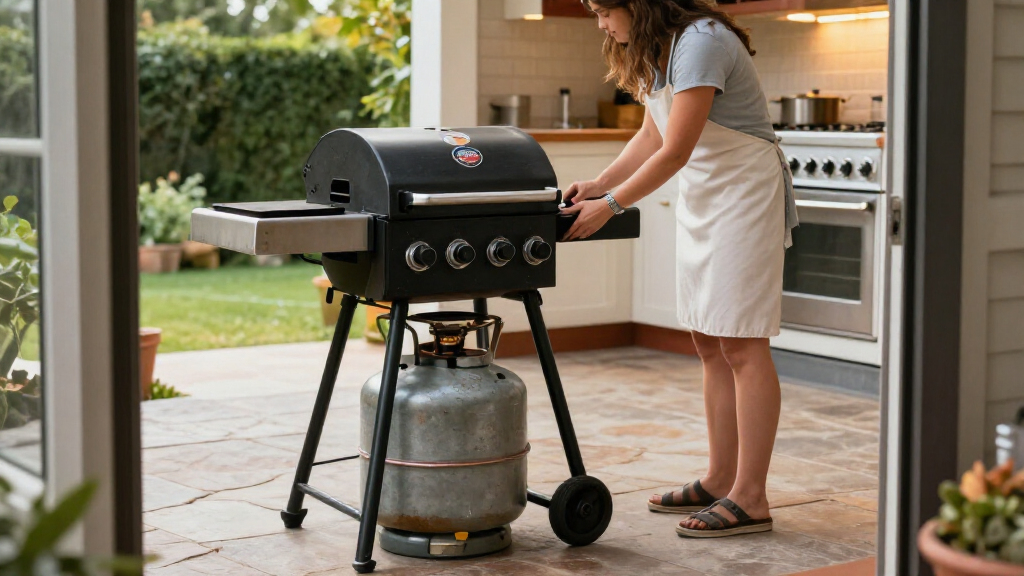
A safe grill sits outdoors on a stable, level surface with clear space around and above it. Keep it away from buildings, railings, overhead structures, dry vegetation, and busy footpaths. Follow the clearance distances in the grill manual and any local fire rules, because the right spacing can depend on the model and location.
Picture a family barbecue on a wooden deck: a chair gets nudged close to the grill, and a child cuts through the path carrying a plate. A thoughtful setup gives the hot lid room to open and keeps the cooking zone away from foot traffic. Put children and pets at a safe distance, and never leave a lit grill unattended.
Before lighting, check that the grill stands firmly and that wind or a sloping surface won’t make it unstable. Keep the cylinder positioned as the manufacturer specifies. Clear dry leaves and other easy-to-ignite material from the area, and keep tools and food where you can reach them without leaning over a flame.
Use the appliance’s lighting steps in order. If a burner does not light, turn off the gas and wait for the time stated in the instructions before trying again; gas can collect when you keep clicking the igniter. After cooking, shut down the burner controls and cylinder valve as the manual directs.
Grease fires can flare suddenly, especially when old residue collects in a tray. Clean burners and grease trays as instructed, and inspect for blocked ports or worn parts. If flames spread beyond what you can control immediately, move everyone away and call emergency services. Never pour water on a grease fire.
Spot carbon monoxide symptoms and act fast
Headache, dizziness, nausea, weakness, or confusion can signal carbon monoxide exposure. If anyone develops these symptoms near a fuel-burning appliance, move everyone to fresh air immediately and contact emergency services. Don’t wait for an alarm, and don’t go back inside to investigate.
Carbon monoxide is colorless and odorless, so you cannot judge the air by sight or smell. It can form when fuel burns incompletely, which is one reason a propane appliance needs the right location, setup, and maintenance. An outdoor camp stove in a tent or garage can put people at risk even if it burns with a steady flame.
Suppose you’re cooking during an outage and someone complains of a sudden headache in the kitchen. Stop treating the room as a safe place to troubleshoot. Get people and pets outside, call for help from fresh air, and tell responders that a fuel-burning appliance was operating. If an alarm sounds, follow its instructions and leave the building.
Install and maintain working carbon monoxide alarms in the home according to the alarm maker’s instructions and local requirements. Some jurisdictions have specific alarm rules. An alarm is a backstop, not permission to run outdoor-rated equipment inside; keeping the stove outdoors remains the safer choice.
Once an incident has occurred, don’t restart the appliance until the cause has been addressed. A qualified professional should check a fixed indoor propane appliance if it may have malfunctioned, and you should follow emergency responders’ guidance about returning to the building.
Use this routine before, during, and after cooking
A short routine catches common propane hazards before dinner gets underway. Start with the appliance manual and use its lighting, leak-check, and shutdown steps. The details can vary by model, so keep the manual where you can find it instead of relying on memory from last summer.
- Choose the right place. Use outdoor-rated grills and camp stoves outside, on a level surface with the clearances the manual calls for. For indoor cooking, use only an appliance specifically listed for indoor use.
- Inspect the setup. Check the hose, regulator, valve, fittings, and cylinder for wear or damage. Follow the maker’s leak-check procedure; if it calls for soapy water, watch for growing bubbles. Never use a flame to test.
- Light as directed. Keep the area clear, follow the lighting sequence, and turn off the gas if a burner fails to light. Wait the specified time before trying again.
- Stay nearby. Don’t leave a lit grill unattended. Keep children and pets back, and watch for an unusual flame, smell, hiss, or change in performance.
- Shut down and store safely. Turn off controls and the cylinder valve as directed. Let equipment cool, then handle and store cylinders according to the manual and local rules.
For instance, before grilling vegetables on a weeknight, you can check the hose and cooking area while the cast-iron pan warms inside. That minute at the start can prevent a rushed repair after the grill is lit. If a flame looks yellow or uneven, turn the grill off, let it cool, and inspect or service it according to the manual before using it again.
Use approved replacement parts and keep burners clear of blockages. Fixed propane appliances need qualified installation and service; if the work involves gas lines, follow local code and permit requirements rather than guessing.
Frequently Asked Questions
Can I use a propane grill in a garage if the door is open?
No. An open garage door does not make a garage safe for an outdoor grill; fire and carbon monoxide risks remain. Move the grill fully outdoors and follow its clearance instructions.
Can I use a camp stove inside a tent, camper, or car?
Do not use an outdoor-rated camp stove inside a tent, vehicle, or enclosed camper space. Use equipment only in settings its manufacturer specifically approves, and follow the appliance’s ventilation and operating instructions.
What does a propane leak smell like?
Propane is naturally odorless, but suppliers add an odorant that many people describe as rotten eggs, sulfur, or a skunk-like smell. Hissing or damaged equipment can also point to a leak, and odor may be hard to notice in some circumstances.
How do I check a propane connection for leaks?
Follow the cylinder or appliance maker’s leak-check instructions. A common method uses soapy water on connections and looks for growing bubbles; never use a flame to search for a leak. If you find one, stop and follow the manual or contact the supplier.
What should I do if I smell gas?
Avoid flames, smoking, and electrical switches. Leave the area, move well away from the cylinder or appliance, and call emergency services or your propane supplier from a safe location.
Can I store a portable propane cylinder indoors?
No. Store portable cylinders outdoors in a secure, upright, well-ventilated place away from heat and ignition sources. Follow local storage rules and cylinder instructions; never keep one in a home, basement, garage, or vehicle.
What should I do if a grill flame looks yellow or uneven?
Turn the grill off and let it cool before inspecting it. Dirty or blocked burners, an incorrect air-to-fuel mixture, or another equipment problem may affect the flame; follow the manual for cleaning or arrange service before cooking again.
Conclusion
Match the appliance to the place before you light it. Outdoor cooking gear stays outdoors, and indoor propane use calls for a device designed for that setting, proper installation, and careful operation. Add a connection check, a stable grill setup, and safe cylinder storage to your routine.
If gas smells wrong, a connection bubbles, or someone feels dizzy near a fuel-burning appliance, stop cooking and move away. A good propane routine should leave you with a hot meal, a quiet burner, and clear air around the table.