
TL;DR

Get kitchen gear delivered free — and shop member deals
- Fast, free delivery on millions of items
- Access to Prime Big Deal Days deals on October 6–7
- Prime Video, Amazon Music and more included
Bitterness in French press coffee often comes from over-extraction caused by too fine a grind, too long steeping, or high water temperature. Adjusting these factors leads to a smoother, more balanced brew.
If your French press coffee tastes like it’s been overrun by bitter notes, you’re not alone. It’s a common frustration for coffee lovers who want a rich, smooth brew but end up with harsh, astringent flavors instead. The good news? Many of these bitter surprises stem from simple mistakes or overlooked details in your brewing process.
In this guide, you’ll learn exactly what causes bitterness in French press coffee and how to fix it with practical, easy-to-implement steps. Whether you’re new to manual brewing or have brewed for years, these tips will help you craft a cup that’s balanced, flavorful, and free of unwanted bitterness.
Over-extraction is the main cause of bitterness; keep brewing time to 4–5 minutes.
Use a coarse grind size, similar to sea salt, to avoid pulling out bitter compounds.
Maintain water temperature between 195°F and 205°F to prevent scalding or under-extracting.
Regularly clean your French press to remove rancid oils that can taint flavor.
Start with fresh, high-quality beans and grind just before brewing for best taste.
Why Your French Press Coffee Tastes Bitter
Bitterness usually means the brew has crossed into over-extraction: grounds are too fine, the steep runs too long, water is too hot, or old oils are sneaking into the cup. A few measured adjustments can bring the brew back to smooth, rich, balanced territory.
Coarse grind. Four to five minutes. Water just off the boil.
Three variables usually push French press coffee from rich to harsh.
Extraction is not just strength. It is the order in which flavor compounds leave the grounds. Sweetness and aroma arrive first; prolonged contact, fine particles, and excessive heat pull more bitter compounds into the cup.
Grind Size
Fine grounds expose too much surface area, speeding extraction and allowing tannic, astringent notes to overpower the coffee’s natural sweetness.
Steeping Time
Longer steeping can seem like the route to a stronger cup, but after the sweet spot it trades smoothness for bitter, flat, drying flavors.
Water Heat
Water above 205°F extracts aggressively and can make coffee taste scorched. Water below range may taste sour, hollow, or under-developed.
Flavor Balance Spectrum
How each brewing choice changes the taste in your cup.
The fastest fix is to change one variable at a time. Start with grind size, then steeping time, then water temperature, because each one changes extraction speed.
| Variable | Risk Signal | Status | Best Practice | Taste Result |
|---|---|---|---|---|
| Grind Size | Too fine, muddy, hard to plunge | ✗ | Use coarse grounds similar to sea salt | Smoother body with less harshness |
| Steeping Time | Left sitting past five minutes | ~ | Keep total contact time near 4–5 minutes | Full flavor without a drying finish |
| Water Temperature | Boiling water poured immediately | ~ | Maintain 195°F to 205°F | Clean extraction with sweetness intact |
| Equipment Cleanliness | Rancid aroma or oily filter residue | ✗ | Disassemble, scrub, rinse, and air dry | Cleaner cup with fewer stale flavors |
| Bean Freshness | Old beans, pre-ground coffee, dull aroma | ✓ | Use fresh beans and grind before brewing | Brighter aroma and rounded flavor |
A simple brew reset for less bitter French press coffee.
Small adjustments are easier to taste than total reinvention. Change one step, brew again, and let the cup tell you whether to keep moving.
Coarsen the grind
A sea salt texture slows extraction and keeps fine sediment from creating an overly bitter finish.
Set a timer
Stop the steep at 4–5 minutes, then decant so the coffee does not keep extracting in the press.
Control the heat
Let boiling water rest briefly, aiming for the 195°F to 205°F range before it hits the grounds.
Clean the press
Take apart the plunger and filter so old oils cannot carry stale bitterness into the next brew.
Bitterness can also come from what is left behind.
Even a perfectly timed brew can taste off when stale beans, dark roast bitterness, hard water, or rancid oils are in the mix.
Clean flavor checklist
- ✓Use fresh, high-quality beans and grind just before brewing.
- ✓Choose lighter roasts when you want a milder, sweeter profile.
- ✓Use filtered water if hard or chlorinated water dulls flavor clarity.
- ✓Wash the beaker, plunger, mesh, and frame after each brew.
- ✓For stubborn oils, use mild soap, vinegar solution, or baking soda, then rinse thoroughly.
Bitterness pressure map
Use this as a quick read on which factor is most likely driving harshness.
Common bitter French press questions, answered fast.
The same symptoms can come from different variables, so these answers point to the highest-impact adjustment first.
How can I tell if I am over-extracting?
If the cup tastes harsh, dry, astringent, or aggressively bitter, shorten the steep or coarsen the grind.
Does finer grind really cause bitterness?
Yes. More surface area extracts faster, pulling bitter compounds before the brew has a chance to stay balanced.
Can water quality change the taste?
Absolutely. Hard or chlorinated water can make coffee taste flat, sharp, or more bitter. Filtered water often improves clarity.
What is the best first experiment?
If your last brew was bitter, reduce steeping by 30 seconds and check that the grind looks coarse, not sandy.
Better French press coffee comes from controlled extraction.
Use coarse grounds, brew for 4–5 minutes, keep water between 195°F and 205°F, clean the press thoroughly, and start with fresh beans. Master those basics and bitterness gives way to a smoother, fuller cup.
Why Over-Extraction Turns Your Coffee Bitter
Over-extraction is the main culprit behind bitter French press coffee. It happens when you steep the grounds too long or use grounds that are too fine. The extra time pulls out undesirable compounds—tannins and chlorogenic acids—that give that harsh, astringent flavor.
Think of over-extraction as pulling too many flavors from your coffee, including the undesirable ones that create bitterness. When you extract too much, you risk losing the nuanced, complex flavors that make coffee enjoyable. This imbalance can also mask the coffee’s natural sweetness and aroma, resulting in a flat or harsh profile. The tradeoff is that while longer steeping might seem to yield a stronger brew, it often sacrifices smoothness for bitterness, making your coffee less pleasant overall.
Tip: Keep your steeping time between 4 and 5 minutes. Use a coarse grind, similar to sea salt, to prevent too much surface area from releasing bitter compounds. Balancing steep time and grind size is crucial because it directly influences how much of the coffee’s desirable flavors are extracted versus the bitter elements.
French press coffee grinder coarse grind
As an affiliate, we earn on qualifying purchases.
As an affiliate, we earn on qualifying purchases.
How Grind Size and Water Temperature Fuel Bitterness
Grind size and water temperature are two critical variables that influence the extraction process. Using too fine a grind increases surface contact, leading to over-extraction and bitterness. This is because finer grounds release solubles more rapidly, including bitter chlorogenic acids and tannins, which can overwhelm the coffee’s inherent sweetness and body. Conversely, a coarse grind limits surface area, resulting in a slower extraction that favors smoother, balanced flavors.
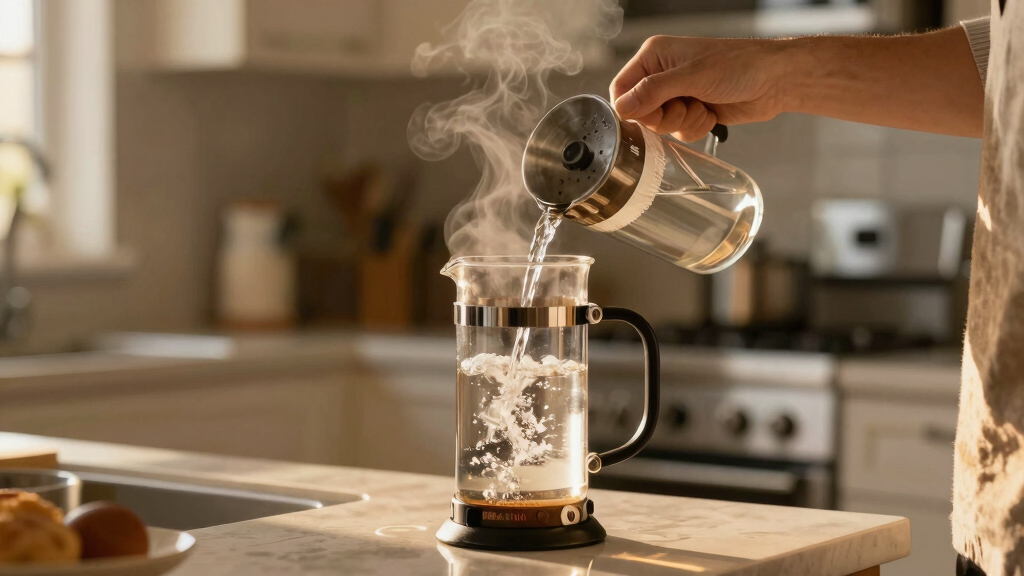
Water temperature also matters significantly. Hotter water accelerates extraction, pulling out bitter compounds faster, especially if the grounds are fine. If your water exceeds 205°F, it can scald the grounds, exaggerating bitterness and creating a burnt or harsh flavor. On the other hand, water that’s too cold may under-extract, leading to a flat or sour taste but usually not bitterness. The optimal range—around 195°F to 205°F—ensures a controlled extraction that highlights sweetness and acidity without bitterness.
Balancing these variables involves understanding their interaction: a coarser grind paired with water within this temperature range minimizes undesirable extraction while maximizing flavor clarity and smoothness. The tradeoff lies in the need to experiment slightly to find your ideal combination, as factors like bean origin and roast level can influence the optimal settings.
French press coffee maker with temperature control
As an affiliate, we earn on qualifying purchases.
As an affiliate, we earn on qualifying purchases.
A Side-by-Side Comparison: How Different Variables Affect Taste
| Variable | Effect on Taste | Best Practice |
|---|---|---|
| Grind Size | Too fine = Bitter, harsh; Coarse = Smooth, balanced | Use sea salt-sized grounds to control extraction rate and flavor profile |
| Steeping Time | Too long = Bitter; Too short = Weak or sour | Limit steeping to 4–5 minutes to avoid over-extraction while ensuring proper flavor development |
| Water Temperature | Too hot = Bitter, scorched; Too cold = Under-extracted, sour | Maintain water between 195°F and 205°F for optimal extraction without bitterness |
As an affiliate, we earn on qualifying purchases.
Cleaning Your French Press to Keep Flavors Pure
Residual coffee oils build up quickly and can turn bitter over time. If your French press smells rancid or your coffee tastes off, it’s time for a thorough clean. Use hot water and a mild soap or a mixture of vinegar and water to scrub away old oils.
Make sure to disassemble the plunger and filter, and scrub all parts. Regular cleaning prevents rancid flavors and keeps your brew tasting fresh each time.
Pro tip: Rinse thoroughly and let parts air dry. This simple step pays off with cleaner, brighter coffee.
As an affiliate, we earn on qualifying purchases.
How Freshness and Bean Quality Impact Bitterness
Old or stale beans often taste flat or even bitter because oxidation and age change their chemical makeup. Conversely, freshly roasted, high-quality beans offer a balanced flavor profile that’s less prone to bitterness.
Imagine biting into a stale loaf versus a fresh one. The fresh beans give a rich aroma and rounded flavor, whereas stale beans can produce harsh, bitter notes. Roasting level also matters: dark roasts tend to be more bitter, so choose lighter roasts if you want a milder brew.
Always grind just before brewing for maximum freshness and flavor clarity. The timing of grinding affects the coffee’s exposure to oxygen, which accelerates staling. The tradeoff is that grinding in advance can lead to flavor loss over time, so for the freshest taste, grind immediately before brewing.
Practical Tips to Brew Less Bitter, More Delicious Coffee
- Use coarser grounds, about the size of sea salt.
- Steep for 4–5 minutes—no more, no less.
- Maintain water temperature around 195°F to 205°F.
- Always start with fresh, high-quality beans.
- Clean your French press thoroughly after each use.
For example, if your last brew was bitter, try reducing steep time by 30 seconds and check your grind size. Small tweaks can make a big difference.
Frequently Asked Questions
How can I tell if I’m over-extracting my coffee?
If your coffee tastes harsh, astringent, or overly bitter, you’re likely over-extracting. Try shortening the steeping time or coarsening your grind to fix this.
Does using a finer grind really cause bitterness?
Yes. Finer grounds increase surface area, which speeds up extraction and pulls out bitter compounds. Always opt for a coarse, sea salt-sized grind for French press brewing.
Can water quality affect bitterness?
Absolutely. Hard water or chlorinated water can influence extraction, often making coffee taste more bitter or flat. Using filtered or soft water improves flavor clarity.
What’s the best way to clean my French press?
Disassemble all parts and wash with hot water and mild soap. For stubborn oils, use a vinegar solution or baking soda scrub. Rinse thoroughly and air dry regularly.
How do I balance extraction to avoid both sour and bitter flavors?
Use a coarser grind, keep brewing around 4–5 minutes, and maintain water temperature near 200°F. Taste and adjust slightly until you find your sweet spot.
Conclusion
Getting rid of bitterness in your French press coffee boils down to simple adjustments—correct grind size, timing, temperature, and cleanliness. Master these, and each cup becomes a smooth, rich experience that truly rewards your effort.
Think of your French press as a garden—tend to it carefully, and your coffee will flourish in flavor. Now, go brew a cup that’s as satisfying as the process itself.
Fall Picks
fall essentials
As an affiliate, we earn on qualifying purchases.