
TL;DR

Get kitchen gear delivered free with Prime
- Fast, free delivery on millions of items
- Prime Video, Amazon Music and more included
- Member-only deals all year
The spout shape of a gooseneck kettle is crucial for controlling water flow, which directly impacts brewing consistency and flavor. A well-designed spout helps achieve a perfect pour every time, making it essential for serious coffee and tea enthusiasts.
A narrow, curved spout offers unmatched control, essential for brewing precision.
Choosing the right spout shape depends on your brewing style — pour-over needs finesse, while boiling water does not.
Material matters: copper heats fast, stainless is durable, cast iron retains heat but is heavy.
Recent innovations like digital controls and micro-channel spouts improve consistency and ease of use.
Practicing your pour and testing flow before brewing helps you pick the best kettle for your needs.
Why the spout shape turns a kettle into a precision brewing tool
The short version: a narrow, curved gooseneck spout controls water flow, reduces splashing, and helps saturate coffee grounds or tea leaves evenly. That smoother pour is what separates casual boiling from repeatable, flavor-focused brewing.
A simple curve can change the cup.
The spout governs flow rate, pour angle, and accuracy. In pour-over brewing, those details shape extraction, aroma, body, and clarity.
Potential reduction in flow variability when the spout is narrow, curved, and engineered for controlled pouring.
Start, stop, and steer the stream with fine adjustments.
Gentle circular pours help avoid channeling.
Precision spouts reward technique and patience.
Digital temperature and micro-channel spout designs.
The shape controls the stream before it reaches the grounds
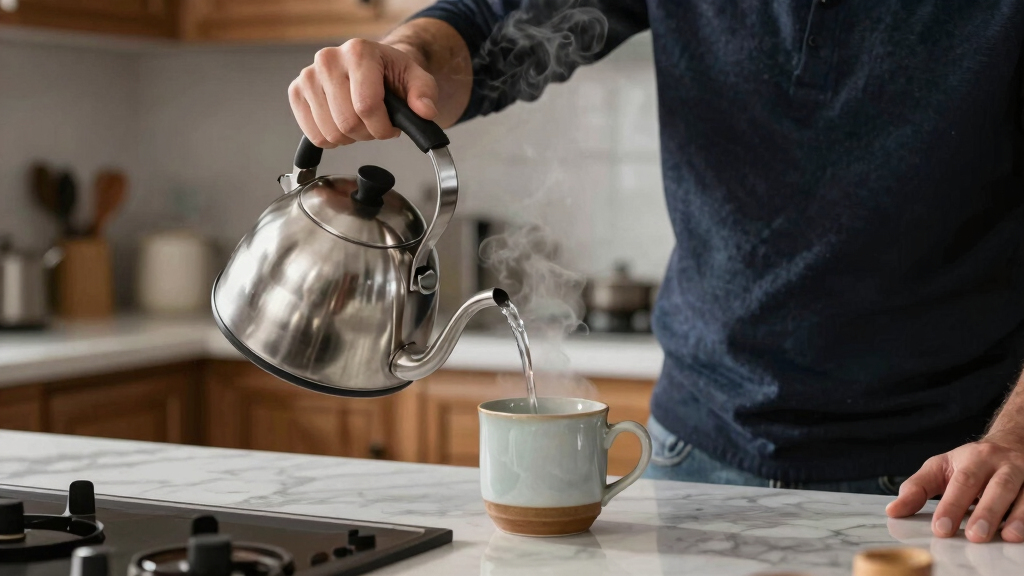
A standard kettle can rush, splash, or dump water unevenly. A gooseneck spout narrows the outlet and extends the pour path, making the stream slower, smoother, and easier to place exactly where you want it.
Slow by design
The long, narrow curve naturally limits how quickly water leaves the kettle, giving you time to control saturation instead of chasing a runaway pour.
Point-and-pour accuracy
A focused stream makes it easier to wet specific areas of the coffee bed, maintain a circular motion, and avoid disturbing the grounds.
More even flavor
Consistent saturation reduces channeling, helping extraction stay balanced instead of drifting flat, sour, harsh, or bitter.
From kettle angle to cup flavor: the control chain
Great manual brewing is not only about temperature or grind size. The spout turns hand movement into water placement, and water placement shapes extraction.
Spout curve
Length and bend slow the stream and make flow easier to modulate.
Pour control
You can hold a steady stream, pause cleanly, and target the coffee bed.
Even saturation
Water reaches more grounds at the same pace, reducing weak channels.
Cleaner cup
Balanced extraction improves clarity, aroma, sweetness, and body.
What the data says about spout design
The practical advantage is consistency. A gooseneck kettle does not magically brew better coffee by itself, but it makes repeatable technique easier by reducing flow variability and improving placement.
Pour performance by kettle type
Flow-control sweet spot
The ideal pour is slow enough to control, but not so restricted that brewing feels stiff. Most pour-over users benefit from a spout that supports steady circular movement and clean starts.
Choosing a kettle: shape matters, but material matters too
Spout design drives pour precision, while the body material affects heat behavior, durability, weight, and maintenance. The best choice depends on how you brew and how much control you want.
| Feature | Stainless Steel | Copper | Cast Iron | Smart Electric |
|---|---|---|---|---|
| Pour-over precision | ✓ Strong with good spout design | ✓ Strong with responsive handling | ~ Stable but heavier | ✓ Strong plus temperature presets |
| Heat conduction | ~ Reliable and balanced | ✓ Excellent | ~ Slow but steady | ✓ Controlled by electronics |
| Durability | ✓ High and easy to clean | ~ Needs more care | ✓ Very sturdy | ~ Depends on electronics |
| Weight and handling | ✓ Comfortable for most users | ✓ Often responsive | ✗ Heavy for fine pouring | ~ Base adds bulk |
| Best fit | Daily brewing | Heat-focused enthusiasts | Heat retention fans | Precision temperature users |
Trace the brew: one curve, five linked outcomes
The spout is the first physical constraint in the brewing chain. When it shapes the stream well, the rest of the process becomes easier to repeat.
Narrow outlet
Water exits in a focused stream.
Steady hand
Small wrist movements matter less.
Even bed
Grounds saturate more uniformly.
Balanced extraction
Fewer weak or bitter pockets form.
Better cup
Flavor becomes clearer and repeatable.
Quick answers for smarter buying and better pouring
A gooseneck kettle is most valuable when your brewing method rewards precision. For fast boiling alone, a standard kettle may be simpler. For craft coffee or tea, the spout earns its place.
Why does the spout matter so much?
Because it controls flow rate and direction. A slow, steady stream supports even extraction and reduces splashing during delicate brewing.
Can it boil water quickly?
Yes, but it is optimized for controlled pouring. For rapid, high-volume boiling, a standard kettle can be more practical.
How should I practice?
Fill the kettle with water and pour into a cup. Practice slow circles, clean starts, and consistent stream height before brewing.
What should I look for first?
Choose a comfortable handle, a balanced body, a narrow curved spout, and temperature control if you brew coffee or tea often.
Why the Spout Shape Turns a Good Kettle into a Great One
The spout shape of a gooseneck kettle is the key to precise pouring. Unlike a standard kettle, the narrow, curved spout channels water slowly and smoothly. This control helps you avoid splashes, uneven pours, and overflows that ruin your brew.
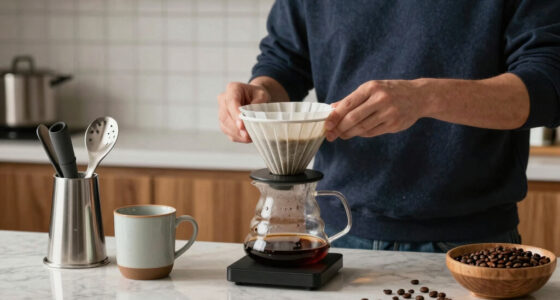
Imagine pouring hot water onto coffee grounds. A steady, slow flow ensures even saturation, extracting the best flavors. If your spout is wide or awkwardly shaped, the water gushes out, splashes everywhere, and messes up your timing. That’s why the design of the spout isn’t just about looks — it’s about how well you can control the flow. An example: a barista pouring into a pour-over dripper needs that narrow, steady stream to avoid disturbing the coffee bed and to ensure even extraction.
Deeply understanding this control reveals its importance: it allows for a tailored brewing process, where the pace of water flow can be adjusted to optimize flavor extraction. The tradeoff, however, is that more precise spouts often require some practice to master, and may be less forgiving for quick, casual pours. The investment in learning to control the flow pays off in a more consistent and nuanced cup.
gooseneck coffee kettle with narrow spout
As an affiliate, we earn on qualifying purchases.
As an affiliate, we earn on qualifying purchases.
How a Narrow, Curved Spout Enhances Your Pouring Control
A gooseneck spout’s long, narrow curve is designed to give you maximum control over the flow rate and angle. It’s like steering a fine-tipped paintbrush compared to a broad brush. You can start, stop, and adjust your pour with precision. This is especially useful for pour-over coffee, where a steady, gentle stream influences extraction quality.
For example, when brewing pour-over, a slow, circular pour with a gooseneck kettle allows you to evenly wet the coffee grounds. You can maintain a consistent flow, avoiding the rapid gushing of a wider spout. This consistency is crucial because it directly affects the extraction process: too fast, and you risk under-extracting; too slow, and over-extraction can occur, leading to bitter flavors. The tradeoff here is that mastering this control takes practice, but once you do, it unlocks a level of finesse that elevates your brewing from good to exceptional. The precise control also minimizes waste and mess, which can be costly in terms of time and ingredients. Ultimately, the shape’s design enables a more thoughtful, deliberate brewing process, emphasizing the importance of technique alongside equipment quality.
As an affiliate, we earn on qualifying purchases.
Understanding the Impact of Spout Shape on Brewing Outcomes
Beyond the immediate control benefits, the shape of the spout can influence the overall quality of your brew. A well-designed gooseneck spout facilitates a more even and consistent pour, which is critical during delicate extraction processes like pour-over coffee. When water is poured in a controlled, circular motion, it helps saturate the coffee grounds evenly, reducing the risk of channeling—where water finds the path of least resistance and creates uneven extraction.
This uniform saturation enhances flavor clarity, aroma, and body in your final cup. Conversely, a poorly shaped spout that produces irregular flow can cause uneven saturation, leading to flat or bitter flavors. Therefore, choosing a kettle with a properly designed spout isn’t just about ease of pouring; it’s a key factor in achieving the best possible flavor profile from your brewing method. This understanding helps you select equipment that supports your brewing goals and encourages more consistent, high-quality results over time.
stainless steel gooseneck kettle for coffee
As an affiliate, we earn on qualifying purchases.
As an affiliate, we earn on qualifying purchases.
Frequently Asked Questions
Why does the spout shape matter so much in a gooseneck kettle?
Because it controls the flow of water, allowing for slow, steady pours that are essential for even extraction and better flavor. The shape reduces splashing and improves precision, especially in pour-over brewing.Can I use a gooseneck kettle for boiling water quickly?
You can, but they are designed for controlled pouring, not rapid boiling. For quick, high-volume boiling, a standard kettle might be more practical. Use a gooseneck mainly for brewing where pour control matters most.What materials should I look for in a gooseneck kettle?
Stainless steel is durable and easy to clean, copper offers superior heat conduction, and cast iron retains heat well but adds weight. Choose based on your brewing style and handling preferences.How do I practice pouring with a gooseneck kettle?
Start by filling it with water and pouring into a cup to gauge flow. Practice slow, circular movements to develop a steady, controlled pour. Over time, you’ll get a feel for the right angle and speed for your brewing method.digital control gooseneck tea kettle
As an affiliate, we earn on qualifying purchases.
As an affiliate, we earn on qualifying purchases.
Conclusion
A well-designed spout turns a simple kettle into a tool of mastery. The next time you brew, pay attention to that curve — it’s what separates a good cup from a great one. Mastering your pour transforms your coffee and tea into a sensory experience you can control, every time.Halloween Picks
halloween
As an affiliate, we earn on qualifying purchases.