TL;DR

Get kitchen gear delivered free with Prime
- Fast, free delivery on millions of items
- Prime Video, Amazon Music and more included
- Member-only deals all year
Water-bath canning is safe for high-acid foods like fruits and jams, while low-acid foods like vegetables and meats need pressure canning. Following tested recipes and proper techniques prevents botulism and spoilage.
Imagine filling jars with your homemade strawberry jam or crisp green beans, knowing they’ll stay safe and tasty on the shelf. The secret is choosing the right canning method for each food. But with evolving guidelines and new equipment, it’s easy to get confused. This guide clears up which foods you can water-bath can versus pressure can, so your preserves are both safe and delicious.
In the world of food preservation, safety is everything. Using the wrong method — or ignoring proper processing times — can turn your pantry into a source of foodborne illness. So let’s walk through what makes each canning style unique, what foods fit where, and how to do it right. You’ll gain practical tips to keep your family safe and your efforts worth it.
Foods with a pH of 4.6 or lower are safe for water-bath canning; above that, pressure canning is necessary.
Always use tested recipes and follow the processing times precisely to avoid botulism risks.
Adding acid (lemon juice, vinegar) makes some low-acid foods safe for water-bath canning.
Modern canners with digital controls improve safety but require proper setup and maintenance.
Regularly check your canner’s gauge and follow manufacturer instructions for safe operation.
Which Foods Are Safe for Water-Bath vs Pressure Canning
TL;DR: Water-bath canning is safe for high-acid foods like fruits, jams, pickles, and acidified tomatoes. Low-acid foods like vegetables, meats, seafood, soups, and stews need pressure canning because boiling water alone cannot reliably destroy botulism spores.
pH 4.6 is the dividing line.
At or below 4.6, acidity helps control dangerous bacteria. Above 4.6, pressure canning is the safe route.
212°F / 100°C
Effective for properly prepared high-acid foods processed for tested times.
240°F / 116°C
High enough to process low-acid foods when pressure, timing, and altitude are correct.
4.6
pH at or below this point supports water-bath canning.
1-2″
Water should cover jars during water-bath processing.
Tested
Use USDA or university extension recipes for safe times.
Check
Pressure canner gauges need regular accuracy checks.
The Method Depends on Acidity
High-acid foods naturally resist the growth of Clostridium botulinum. Low-acid foods do not, so they need the higher temperatures created inside a pressure canner.
High-acid foods
Fruits, jams, jellies, pickles, relishes, and properly acidified tomato products can be water-bath canned with tested recipes.
Low-acid foods
Vegetables, meats, poultry, seafood, most soups, and stews require pressure canning for safe shelf storage.
Tomatoes vary
Tomatoes can sit near the safety threshold, so tested recipes often require bottled lemon juice, citric acid, or vinegar.
Food-by-Food Safety Map
The safest shortcut is simple: match the food type to the method, then follow the tested recipe exactly for jar size, headspace, processing time, pressure, and altitude.
| Food | Water-Bath Safe? | Pressure Required? | Safety Notes |
|---|---|---|---|
| Fruits: berries, peaches, apples | ✓ Yes | ✗ No | Natural acidity makes water-bath canning suitable when tested sugar, acid, and timing ratios are followed. |
| Jams, jellies, preserves | ✓ Yes | ✗ No | High acid plus tested processing helps protect safety, set, flavor, and shelf quality. |
| Pickles and relishes | ✓ Yes | ✗ No | Vinegar-based brines must keep the finished product acidic enough; do not dilute vinegar in tested recipes. |
| Tomatoes with added acid | ~ Yes, if acidified | ~ Sometimes | Use bottled lemon juice, citric acid, or vinegar exactly as the tested recipe states. |
| Vegetables: green beans, corn, carrots | ✗ No | ✓ Yes | Low acidity means boiling water is not enough to destroy spores that may survive storage. |
| Meat, poultry, seafood | ✗ No | ✓ Yes | These foods require pressure, correct psi, and tested processing times to reduce botulism risk. |
| Soups, stews, mixed meals | ✗ No | ✓ Yes | Use tested recipes only; density, thickeners, dairy, and mixed ingredients affect heat penetration. |
Safe Canning Workflow
Pretty jars are satisfying, but the safety comes from repeatable steps: identify acidity, use a tested recipe, process with the correct method, and confirm a real seal after cooling.
Classify
Identify whether the food is high acid or low acid using pH guidance or a trusted recipe.
Prepare
Clean jars and lids, measure headspace, and keep ingredients within the recipe limits.
Process
Use boiling water for high-acid foods or calibrated pressure for low-acid foods.
Cool
Let jars rest undisturbed so seals can form without siphoning or food disturbance.
Verify
Check seals, label jars, and store only properly processed jars in a cool, dry place.
Heat, Acid, and Equipment
Modern canners can make the process easier, but equipment does not replace correct recipes, gauge checks, venting, altitude adjustments, and careful timing.
Do not improvise
Changing jar size, ingredients, acid, salt, sugar, density, or processing time can change safety.
Adjust pressure
Higher elevation changes boiling behavior, so pressure and time must match the tested instructions.
Check the gauge
Dial gauges, seals, vents, and digital controls need routine inspection before the canning season.
Common Mistakes That Raise Risk
A sealed lid does not prove the food inside was safely processed. Safety depends on enough acidity or enough heat for the exact food in the jar.
Botulism risk is invisible.
Food can look, smell, and seal normally even when unsafe processing allowed spores to survive. That is why tested recipes matter more than appearance.
Tomato pH varies, so added acid is often the step that keeps water-bath processing safe.
Green beans, corn, carrots, and similar foods require pressure canning for safe shelf storage.
Wrong pressure can mean the canner never reaches the temperature needed for low-acid foods.
Processing times are calibrated for food density, jar size, acidity, and heat penetration.
Trace the Decision
Use this chain every time you move from fresh food to pantry storage. The method comes after the food type, acidity, and tested recipe are known.
Fruit, pickle, tomato, vegetable, meat, soup
At or below 4.6, or above 4.6
USDA or extension source
Water bath or pressure canner
Correct time, psi, and altitude
Cool, sealed, labeled jars
How to Tell if a Food is High or Low Acid — The Key to Safe Canning
High-acid foods have a pH of 4.6 or lower, which means they naturally resist bacteria that cause food poisoning. Think fruits like berries, citrus, and tomatoes (especially when acidified). Low-acid foods, like green beans or chicken, have a pH above 4.6 and need pressure canning to stay safe.
Understanding the acidity level is crucial because it directly impacts the safety of your preservation method. High-acid foods create an environment hostile to bacteria like Clostridium botulinum, which causes botulism—a deadly foodborne illness. When acidity is sufficient, water-bath canning is effective because the vinegar or natural acids prevent bacterial growth during processing. Conversely, low-acid foods lack this natural defense, and the heat from boiling water isn’t enough to destroy spores that can survive in such environments. Pressure canning, which reaches higher temperatures through increased pressure, is essential here. The tradeoff is that pressure canning is more complex and requires precise equipment and timing, but it’s the only safe method for these foods. Knowing your pH helps you decide not just the method but also how carefully you need to follow tested procedures to prevent risks.
This isn’t guesswork. Test strips or buying foods with tested recipes gives you reliable guidance. Many canned foods now come with explicit pH info, especially if you’re experimenting with new recipes.
As an affiliate, we earn on qualifying purchases.
Which Foods Are Safe for Water-Bath Canning (And Which Aren’t)
| Foods | Safe for Water-Bath? | Notes |
|---|---|---|
| Fruits (berries, peaches, apples) | Yes | High acidity naturally inhibits bacterial growth, making water-bath canning suitable. Using tested recipes ensures proper sugar and acid ratios for safety and quality. |
| Tomatoes (with added acid) | Yes | Tomatoes are borderline because their natural pH can vary. Acidifying them with lemon juice or vinegar ensures they stay below 4.6, making water-bath canning safe. This step is critical because unacidified tomatoes are at risk of botulism if processed improperly. |
| Pickles and relishes | Yes | Vinegar-based products maintain high acidity, which is why they are safe for water-bath. Properly prepared, they prevent bacterial growth and spoilage, but following tested recipes is essential for consistent acidity levels. |
| Vegetables (green beans, corn, carrots) | No | Most vegetables are low-acid and can host spores of bacteria like botulinum. Even if they look and smell fine, improper processing can lead to dangerous bacteria surviving. Pressure canning is necessary because it reaches temperatures above boiling water, effectively destroying spores. Failing to do so risks serious illness, which is why understanding their pH and processing needs is vital. |
| Meat and seafood | No | These are low-acid and require pressure canning to reach the high temperatures needed to kill bacteria and spores. Using water-bath methods on these foods leaves residual risk of botulism, which can be fatal. Proper pressure regulation and timing are critical to ensure safety and prevent spoilage or illness. |
In short, if it’s high-acid, it’s usually safe for water-bath. If it’s low-acid, you need the higher heat of pressure canning. Recognizing the acidity helps you choose the right method and avoid dangerous pitfalls.
As an affiliate, we earn on qualifying purchases.
Step-by-Step Guide to Canning Your Favorite Foods Safely
- Identify if your food is high or low acid. Use pH testing or trusted recipes. Understanding this distinction helps you choose the correct processing method, which is critical for safety. High-acid foods can typically be water-bath canned because their acidity inhibits bacterial growth. Low-acid foods require pressure canning to reach temperatures capable of destroying spores.
- Prepare your jars and lids, ensuring everything is clean and sterilized. Proper sanitation prevents contamination that could cause spoilage or illness later.
- Follow your tested recipe precisely, especially processing time and method. Deviating from tested procedures can compromise safety because the timing and temperature are calibrated to eliminate pathogens and spores effectively.
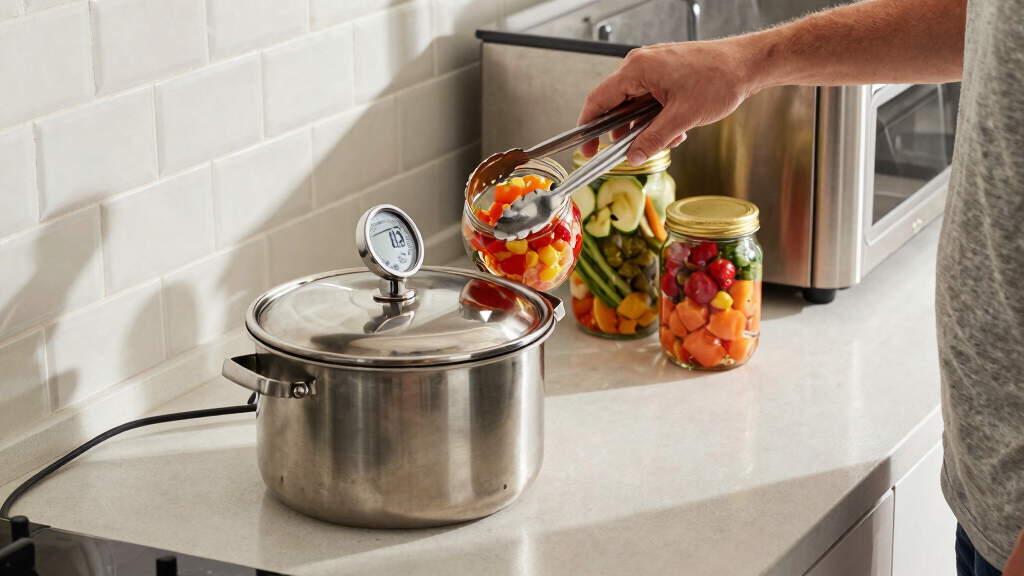
- For water-bath: Submerge jars in boiling water, ensuring they’re covered by at least 1-2 inches. Maintain a full rolling boil for the time specified. This consistent heat ensures even processing, killing bacteria and enzymes that could cause spoilage.
- For pressure canning: Use a calibrated pressure canner, follow manufacturer instructions, and regulate pressure at the correct psi for your altitude. Proper pressure is vital because it directly correlates with temperature, ensuring spores are destroyed without overprocessing the food, which can affect quality.
- After processing, let jars cool undisturbed. Check seals before storing. Proper sealing prevents air and bacteria from entering, preserving safety and quality over time.
Seeing your jars bubble and seal is satisfying, but don’t skip steps. Proper processing—accurately timed, at the correct temperature and pressure—is the key to safe, long-lasting preserves. Understanding why each step matters helps you troubleshoot and ensures your effort results in safe, delicious food.
As an affiliate, we earn on qualifying purchases.
Common Mistakes That Can Turn Your Preserves Unsafe
Rushing the process or using untested recipes can be dangerous. For example, skipping the acid addition on tomatoes may leave the pH too high, risking botulism. Without proper acidity, low-acid foods are vulnerable because spores can survive and produce toxins during storage if not processed correctly. Using unverified recipes or improvising can lead to inconsistent acidity or processing times, increasing health risks.
Another mistake: not checking your canner’s gauge regularly or overfilling jars. Both can lead to uneven heat distribution or inadequate sterilization. Overfilling jars can hinder proper heat circulation, and inaccurate gauges can cause under- or over-pressurization, both risking spoilage or botulism. Remember, a good seal doesn’t guarantee safety if processing wasn’t done correctly. Even jars that look perfect might harbor dangerous bacteria or spores if the process was flawed.
Follow trusted sources like USDA guidelines or university extension recipes — they’re tested for safety and reliability. Investing time in understanding the science behind each step helps prevent mistakes that could compromise your food’s safety and your family’s health.
As an affiliate, we earn on qualifying purchases.
Frequently Asked Questions
Can I water-bath can vegetables?
No, vegetables are low-acid foods and require pressure canning to ensure safety from botulism. Using pressure canning reaches higher temperatures needed to kill bacteria in low-acid foods.What if my tomatoes are borderline pH? Can I still water-bath can them?
Yes, but only if you add enough acid—like lemon juice or vinegar—to bring the pH below 4.6. Using tested recipes designed for acidified tomatoes helps ensure safety.How often should I check my pressure canner’s gauge?
Check it before each use, following the manufacturer’s instructions. Calibrate annually and ensure it reads correctly to maintain consistent pressure and temperature.Are there new methods or equipment that improve safety?
Yes, electric water-bath canners and modern pressure canners with digital controls make the process more consistent and safer, especially for beginners.What’s the biggest mistake home canners make?
Ignoring tested recipes and not following proper processing times. This can lead to unsafe canned foods, especially in low-acid foods that need pressure canning.Conclusion
Knowing which foods are safe for water-bath versus pressure canning saves you from spoilage and illness. It’s about understanding acidity, following tested recipes, and respecting the process. When you get it right, your pantry becomes a treasure chest of safe, delicious preserves.
Remember: a little effort now keeps your family safe and your food tasting just as fresh months later. So, pick your foods carefully, can with confidence, and enjoy the fruits of your labor — safely preserved and ready to share.
Halloween Picks
halloween
As an affiliate, we earn on qualifying purchases.